
Thank you very much for taking the time to meet with us today, Mr. Noguchi. It’s clear that you’ve taken great care in preparing for this conversation, and we truly appreciate that. Please don’t feel pressured to answer exactly as written—think of this more as a relaxed discussion.
Japan has emerged as one of the fastest-growing tourism markets in Asia, alongside Sri Lanka and Thailand. Last year, the country welcomed nearly 37 million inbound tourists—an impressive rebound following the pandemic. This year, it’s expected that number could exceed 40 million visitors. From your perspective, what makes Japan such an attractive destination for travelers from around the world?
Japan has been captivating visitors for more than 150 years—and continues to do so today—because of its deep cultural heritage, fascinating history, and extraordinary natural beauty. International rankings, such as those by the World Economic Forum, consistently place Japan among the world’s top tourist destinations.
In addition to these cultural and historical attractions, Japan’s reputation for safety is a major factor that gives travelers peace of mind. Visitors know they can explore comfortably and securely. And, recently, the relatively weak yen has also made Japan an affordable destination, which certainly adds to its appeal.
Moreover, Japan offers an incredible diversity of experiences—from world-renowned cuisine and traditional arts to modern pop culture, including manga and anime. These elements, combined with Japan’s safety and hospitality, create a very compelling reason for travelers to visit.
That’s a wonderful perspective. I’d like to shift to what many call the “Phase Two” of Japan’s tourism growth. The government has set an ambitious target of welcoming 60 million international tourists by 2030, with an annual tourism spend of around 15 trillion yen.
This next phase emphasizes “quality over quantity,” encouraging travel beyond the traditional “Golden Route” of Tokyo, Kyoto, and Osaka, and promoting more regional, experiential, and sustainable tourism. In this context, what role do you think ferry-based tourism can play?
Certainly. In Japan, one of the challenges we face is a shortage of hotel rooms, especially in popular tourist areas. Accommodation costs can also be quite high.
Our ferries operate between two key gateways—one in Kansai and the other in Kyushu. Departing at night and arriving the following morning, they provide travelers with both transportation and accommodation in one package. This allows passengers to save both time and money while enjoying a comfortable, restful journey.
We already see travelers using our ferries for leisure and even to access attractions such as Universal Studios Japan from Kyushu. This dual function of transportation and accommodation is one of the unique advantages ferries can offer within Japan’s evolving tourism landscape.
That’s a fascinating point—the idea of combining travel and rest. Could you expand on what makes ferry travel distinct compared with other forms of transportation, such as the Shinkansen or airplanes?
The Shinkansen, of course, is designed for speed and efficiency. In contrast, ferry travel offers something entirely different—a slower, more relaxed, and even luxurious experience. Passengers can spend the night comfortably, enjoy the onboard facilities, and take in the scenery along the way.
So, rather than simply moving from one point to another, ferry travel allows people to savor the journey itself. This slower pace and sense of relaxation are central to the charm of ferry tourism.
I can personally relate to that. When I lived in Ehime, I often found that taking the overnight ferry from Toyo Port to Osaka was not only more affordable but also much more relaxing.
For a long time, we saw travelers moving toward low-cost air travel and high-speed options. But recently, there’s been a growing interest in more mindful, sustainable, and comfortable journeys. Travelers today seem to be seeking experiences that reduce their carbon footprint and allow them to enjoy travel more meaningfully.
Given this trend, what kind of strategies are you adopting to appeal to these more sustainability-minded travelers?
That’s a very timely question. Sustainability is becoming increasingly important in travel decisions, and we recognize that ferries can play a role in promoting more environmentally conscious mobility.
When we say “sustainable travel,” we’re referring to experiences that minimize environmental impact while providing authentic, culturally meaningful journeys. Is your approach focused more on marketing toward that audience, or on developing more sustainable operations themselves?
I see. In our case, it’s a combination of both. Our marketing approach focuses on highlighting the convenience and comfort of ferry travel while also appealing to regional customers. Unlike airlines or train networks, ferry routes are limited, so our marketing must focus geographically on the Kansai and Kyushu regions—our key markets.
Through our subsidiary, City Line Travel, we promote a wide variety of tour packages that highlight seasonal attractions such as cherry blossoms in spring and autumn foliage later in the year. We use television, radio, online media, and social platforms to reach potential customers.
We also offer flexible packages for travelers who wish to bring their own cars aboard—allowing them to explore their destinations freely upon arrival. This combination of convenience, comfort, and flexibility has proven very appealing.
Let’s continue on the theme of sustainability. Maritime shipping accounts for roughly 3% of global CO₂ emissions, and Japan has set its own ambitious sustainability goals under the 2050 carbon-neutrality targets.
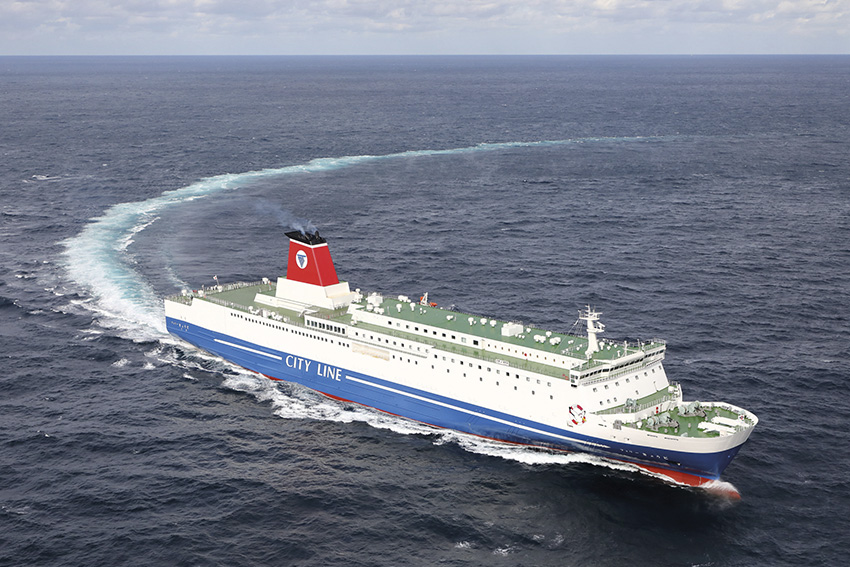
Your vessels, such as the Ferry Kyoto and Ferry Fukuoka, feature hybrid propulsion systems designed to reduce emissions. Could you tell us more about how this technology contributes to Japan’s environmental goals and your company’s own sustainability strategy?
Yes, our long-term goal aligns with Japan’s target to achieve carbon neutrality by 2050. The Ferry Kyoto and Ferry Fukuoka were both designed with hybrid technology to reduce CO₂ emissions.
Freight transport represents a larger share of emissions than passenger travel, so one of our strategies is to increase vessel capacity. By doing so, we can reduce emissions per unit of freight.
Ultimately, achieving zero emissions will require new fuel technologies. We are currently studying the most efficient and safe alternative fuels, but this effort cannot be achieved by one company alone. We are collaborating closely with shipbuilders and petroleum companies to explore solutions such as hydrogen or ammonia.
Because ferries are typically replaced every 25 years, our next generation of vessels will likely be introduced around 2040. By that time, we aim to have identified and adopted the safest and most efficient energy source available.
Safety is equally important to us, so any new fuel—particularly something like ammonia—must be tested extensively to ensure it’s suitable for passenger vessels. We are continuing research in this area and will implement changes as technology matures.
That’s very forward-looking. Let’s return to the topic of inbound tourism. The surge in international visitors is happening at the same time that Japan faces a demographic challenge—a declining and aging population. How critical do you think inbound tourism will be in helping the ferry industry and Japan more broadly address these demographic issues?
I believe inbound tourism will play an increasingly vital role in offsetting the demographic decline Japan is experiencing.
Currently, only about 1% of our ferry passengers are international visitors, compared with much higher ratio for the Shinkansen. This means there’s considerable potential for growth. To attract more international travelers, we are improving our online booking systems and payment options to make them more user-friendly for foreign tourists.
Our largest inbound markets are South Korea, China, and Taiwan. In the past, most travelers from these countries visited as part of group tours, but now we’re seeing a strong shift toward independent travelers—FITs (Free Independent Travelers). We’re adapting our strategy to reach this segment through partnerships with local travel agencies and by enhancing our digital presence.
Our goal is to increase the share of inbound travelers from 1% to 3%, and eventually to 5%, particularly following major events like the Osaka Expo.
That’s a clear and ambitious target. Among these inbound travelers, which customer segments do you find most drawn to ferry travel—families, couples, solo travelers? And are you looking to attract visitors from beyond Asia, such as from the U.S. or Europe?
We’re already seeing an increase in visitors from Europe and the United States, which is very encouraging.
Asian travelers, particularly from nearby countries, tend to travel as families or couples. Western visitors, on the other hand, often travel as couples or solo adventurers—sometimes even backpackers. We’re seeing growing interest from both segments.
You mentioned working with local partners to strengthen your reach. Are you considering collaborations with international online travel agencies (OTAs) or other ferry services in the future?
At the moment, we do not have partnerships with foreign ferry companies, but we do work with domestic travel agencies.
So, no OTAs at the moment?
Not yet. For now, we’re focusing on improving our online discoverability—our website, SEO, and digital advertising—so potential travelers can easily find us. Once awareness and volume increase, we can look at forming partnerships with major OTAs abroad.
Group travel, such as for schools or sports teams, still relies on agencies in Japan, but for individual travelers, digital engagement is the key.
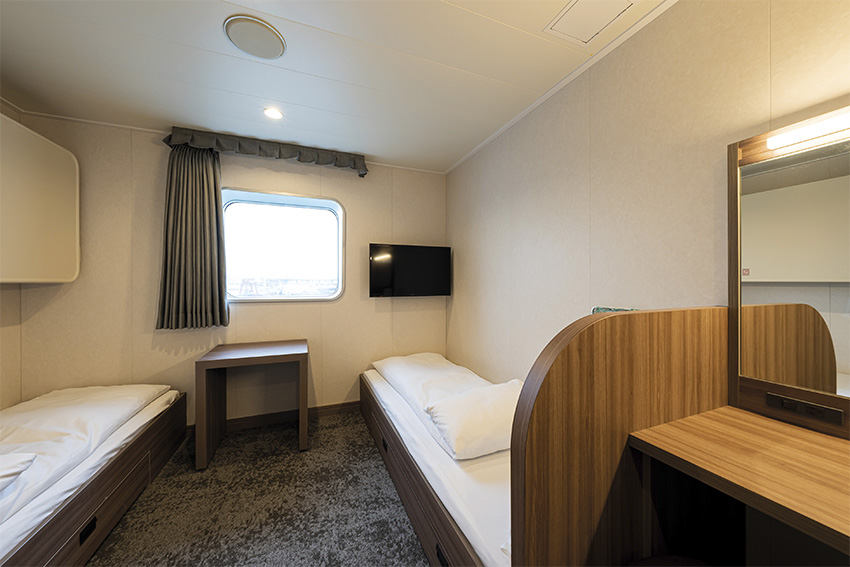
Let’s turn to the onboard experience. The Ferry Kyoto and Ferry Fukuoka represent a new era in sea travel, combining comfort, privacy, and quiet luxury as they cross Japan’s Seto Inland Sea. Could you describe what guests can expect during their journey?
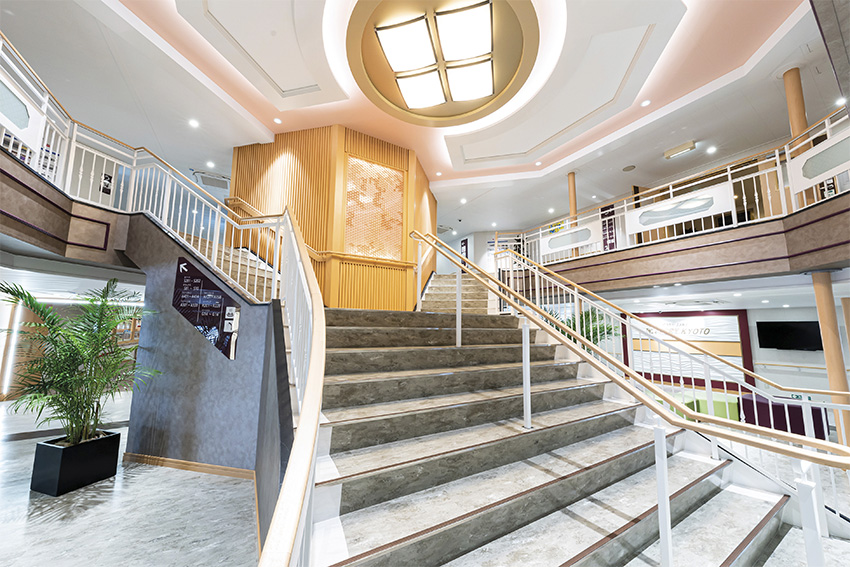
Onboard, guests can enjoy a buffet-style restaurant offering a range of cuisines, as well as an observation lounge with panoramic views of the Seto Inland Sea. The scenery is stunning—particularly at sunrise and sunset—and the calm waters mean the voyage is exceptionally smooth and comfortable.
We also provide observation areas at the rear of the ship where guests can take in the vast, tranquil beauty of the islands. It’s a unique and elegant travel experience that truly captures the essence of slow, scenic travel.
Are there any particular sights along the route that you recommend passengers look out for?
Yes, there are three major bridges along our route that are especially worth seeing: the Akashi Kaikyō Bridge, the Seto Ōhashi Bridge, and the Kurushima Kaikyō Bridge. Depending on the timing of the voyage—often late at night or early in the morning—guests can see these bridges beautifully illuminated, as well as the picturesque island landscapes at dawn. It’s a truly memorable experience.
We understand you’ve also hosted collaborative events onboard, such as with SKE48 (※1) supporter and Tokai Radio. Do you see entertainment collaborations as a potential growth area for ferry travel?
(※1) SKE48:
Nagoya-based idol group formed in July 2008.
They are the first nationwide expansion of AKB48. Based on the concept of “idols you can meet,” they hold performances all over Japan.
Yes, in addition to SKE48 fan events, we also focus on fan events for Cerezo Osaka, a professional soccer team in Japan. In collaboration with Cerezo Osaka, their chairman who was a former striker for the Japan national team, also boarded the ferry and held a fan event, which was very popular among fans.
While collaborations like these are interesting ways to introduce ferry travel to new audience, the experience of sharing time with passengers who have the same hobbies in the special space of a ship is creative, and we believe demand will increase in the future.
The Ferry Kyoto, launched in December 2021 and built in collaboration with Mitsubishi Shipbuilding, was designed to evoke the atmosphere of an ancient city. Could you tell us more about this design concept?
Certainly. We wanted each vessel to have its own unique identity. Ferry Kyoto incorporates the refined elegance of Kyoto—the “Miyabi” aesthetic—with elements such as soft pink tones and Japanese washi paper used in the décor.
In contrast, Ferry Fukuoka captures the brightness and modern energy of a bustling port city. Together, they represent two distinct expressions of Japanese beauty—traditional and contemporary—while maintaining harmony with their surroundings.
How have passengers responded to these design choices?
From what we’ve observed, passengers appreciate the subtlety of the design. We don’t replicate temples or cultural monuments on board; rather, we evoke the feeling and atmosphere of Kyoto through elegant and understated details. It’s about harmony and ambiance rather than literal representation.
I look forward to seeing more of your passenger feedback in future surveys—it sounds like the design has been very well received.
Yes, we hope so. Each vessel has a distinctive atmosphere, and we believe that sense of harmony is what passengers feel most strongly.
Finally, looking ahead—if we were to meet again five years from now, what would you hope to have achieved as President, and where do you see the company by that time?
In the coming years, our focus will be on expanding both capacity and comfort. We currently operate four vessels, including Ferry Kyoto and Ferry Fukuoka, as well as two older ships. My goal is to replace or expand these older vessels with larger, more modern ones, and to upgrade our port facilities accordingly.
This may take more than five years to fully realize, but in the long term, we want to offer even greater comfort and convenience for our passengers, while continuing to support regional mobility and sustainable logistics between Kansai and Kyushu.
That’s an excellent vision, Mr. Noguchi. Thank you so much for your thoughtful insights and for sharing your time with us today.
Thank you very much. It’s been a pleasure speaking with you.
For more information, please visit their website at: https://www.cityline.co.jp/english/
AloJapan.com