
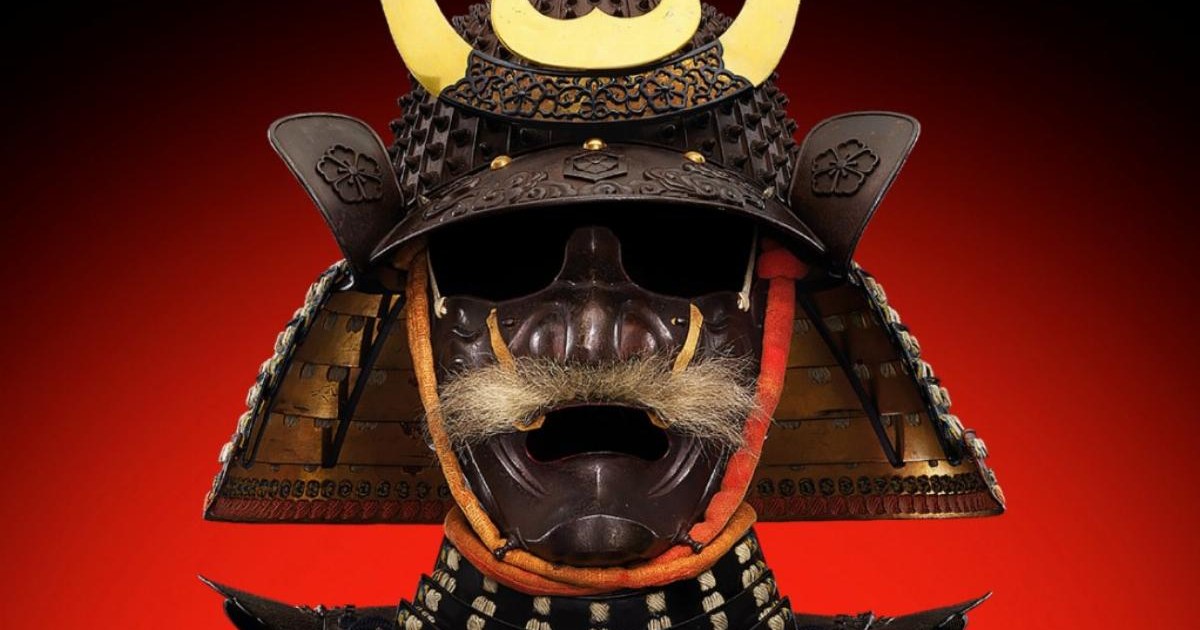
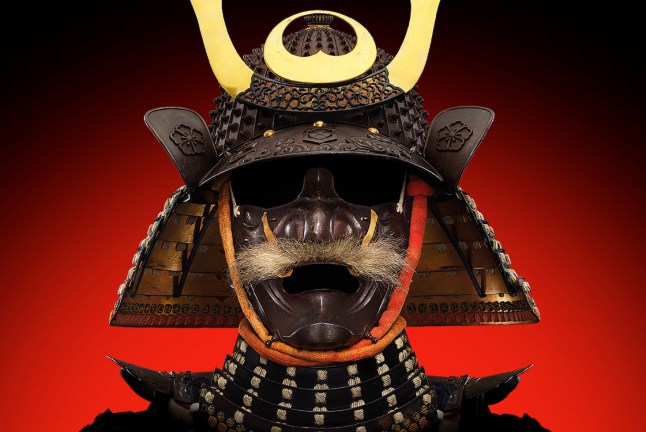
The new Samurai exhibition reveals the fascinating history of these legendary warriors
The British Museum’s wildly anticipated Samurai exhibition is now underway. And we are, safe to say, obsessed…
While everyone is fascinated by Japan’s legendary warriors, much of what we think we know about them is more myth than reality.
Luckily, the truth is even more amazing, as the exhibition reveals, using real-life samurai objects, from swords and armour to paintings, clothing and porcelain.
But for an even deeper understanding of samurai history and culture, you can travel to Japan itself.
There, you’ll discover places where the samurai legacy lives on, from the castles they lorded over to mountain passes that once echoed with the sound of their footsteps.
To give you some inspiration, we’ve consulted the experts at the Japan National Tourism Organization for their ideas on the best places to visit.
Best of Metro Deals
Get exclusive discounts with Metro Deals – save on getaways and spa days. Powered by Wowcher
Bannatyne Spa: Spa day for two with treatments, lunch & prosecco — save up to 57% off.
Get deal now
Mystery Escape: Hotel stay with return flights from as low as £92pp — save on worldwide holiday packages.
Get deal now
Beach Retreat (Lanzarote): 4* Lanzarote beach holiday with flights — save up to 58%.
Get deal now
We’ll also reveal the details of an incredible competition to win a two-week, samurai-themed tour of Japan. So, keep your eyes peeled!
Nagoya Castle
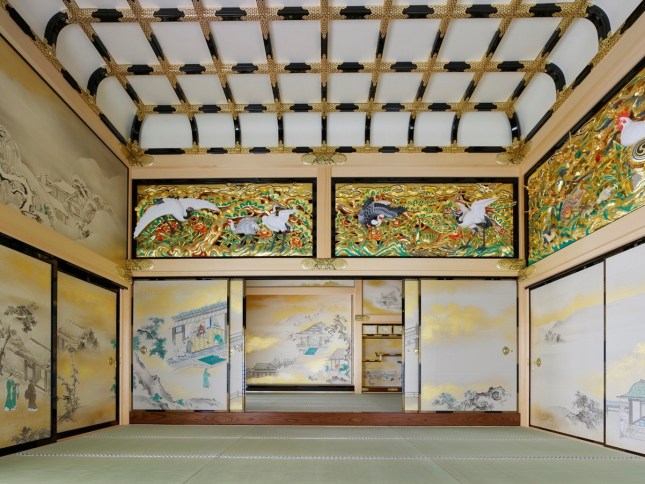
Nagoya Castle, still towers over the modern city of Nagoya, and is a must-visit for any samurai enthusiast. Photo credit ©Nagoya Convention & Visitors Bureau
One of the warlords appearing in the Samurai exhibition is Oda Nobunaga, whose quest to unify Japan in the 16th century inspired Nobunaga’s Ambition, a long-running video-game.
Nagoya Castle ,where he spent some of his childhood, still towers over the modern city of Nagoya and is a must-visit for any samurai enthusiast.
As you walk around the grounds, keep an eye out for the armour-clad warriors (don’t worry – they’re actors), before admiring the wall and screen paintings in the magnificent Honmaru Palace.
Like the castle keep, the palace is a reconstruction, but that doesn’t make it any less impressive!
Nobunaga is known today as one of the ‘Three Unifiers’ of Japan alongside fellow samurai Toyotomi Hideyoshi and Tokugawa Ieyasu , who were also raised locally.
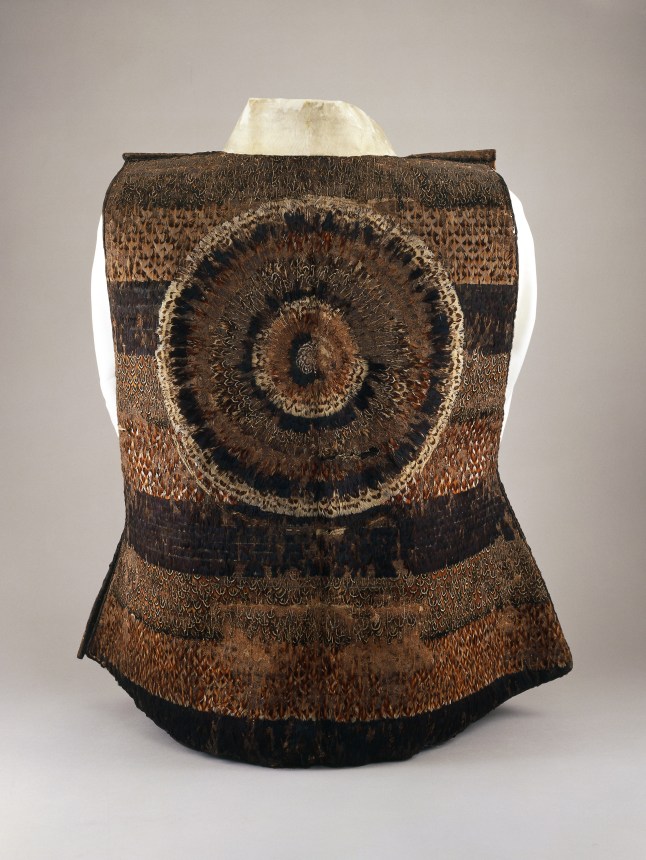
The exhibition at the British Museum features Hideyoshi’s supposed jinbaori
A jinbaori (surcoat) supposedly owned by Hideyoshi appears in the British Museum’s exhibition.
Meanwhile, artefacts relating to the life and rule of Ieyasu are housed in the Tokugawa Art Museum, just down the road from Nagoya Castle.
Right next door is Tokugawaen Garden, a peaceful spot with a koi pond surrounded by walkways – the perfect place for a wander. And if all that walking makes you peckish, you’re in luck.
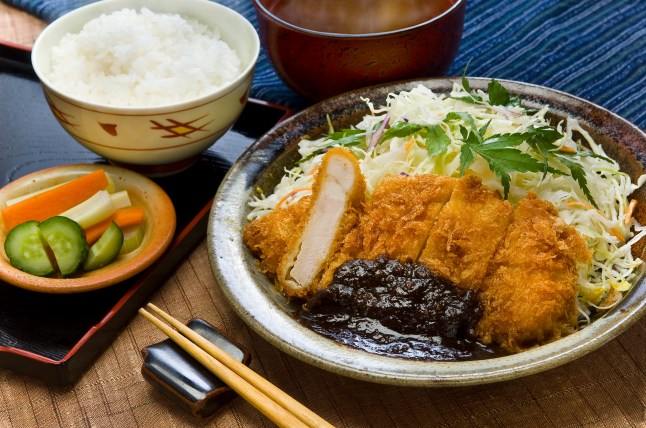
Like most Japanese cities, Nagoya has a thriving food scene, with local specialties including hitsumabushi – slices of grilled eel served over rice – and miso katsu, a pork cutlet topped with Hatcho miso, a strong, dark red miso sauce. Delicious!
Day trip idea – Inuyama
If you’ve been staying in Nagoya and fancy a day trip, head to Inuyama, a historic town centred on the medieval Inuyama Castle, one of Japan’s 12 original castle keeps and a designated National Treasure.
With its narrow lanes and traditional dark wooden houses, Inuyama feels pleasingly old-fashioned, with a particular highlight being the idyllic Urakuen Garden, where you can sip matcha in the seventeenth-century Jo-an teahouse.
Don’t forget to pop into the Karakuri Exhibition Museum to view its collection of traditional mechanical dolls. After all, even samurai needed a bit of downtime!
Matsumoto Castle
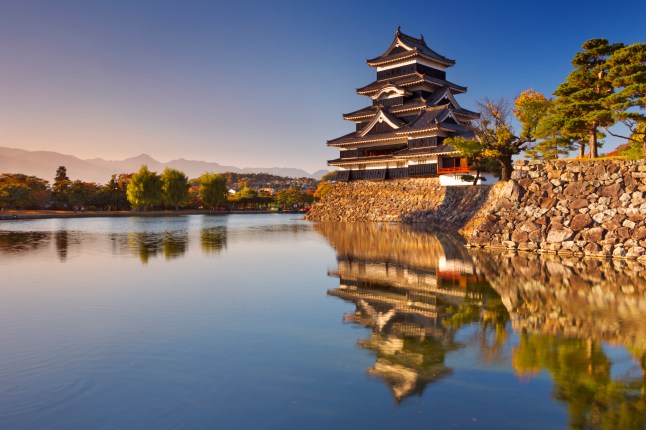
Matsumoto Castle’s five-tiered, six-storey main tower is considered one of the grandest – and oldest – in Japan
A striking woodblock print in the Samurai exhibition shows the legendary warlord Takeda Shingen resplendent in a white-maned helmet.
The image refers to the Battles of Kawanakajima, which saw Shingen go up against his great rival, Uesugi Kenshin, in a series of fierce battles between 1553 and 1564.
According to legend, Kenshin launched a surprise attack on Shingen’s camp and slashed at him with his sword, whereupon Shingen parried the blow using his war fan, a type of metal hand fan used as a weapon or for signalling. You can see an 19th-century war fan next to the print of Takeda Shingen in the exhibition.
This moment may be mythical, but many of Shingen’s other martial exploits were very real.
They include his successful capture of Matsumoto Castle in 1550 while lord of the Takeda clan, a powerful samurai family renowned for their skilled horsemanship.
The castle – located right in the centre of Matsumoto city – was built in the late 16th century in the decades after Shingen’s successful siege, and its five-tiered, six-storey main keep is considered one of the grandest – and oldest – in Japan.
Climbing up the steep staircases inside its original wooden interior is a one-of-a-kind experience, with breathtaking views waiting for you at the top.
More spectacular sights await at the Matsumoto City Museum of Art, which houses a permanent collection of works by contemporary sculptor Yayoi Kusama, who was born in the city in 1929.
Another highlight is Nakamachi Street, a historic route known for its traditional storehouses, known as kura, many of which sell Japanese handicrafts that work wonderfully as presents for folks back home.
The street is known as one of the best places to pick up a bowl of soba (noodles made with buckwheat flour), and plenty of soba-making workshops are available locally if you’d like to try making your own.
Oh, and you simply must make the short hop to Nawate Street, nicknamed ‘Frog Street’ after the Kajika frogs that once lived along the adjacent Metoba River!

The animals are honoured today with a giant sculpture showing two frogs in samurai gear, while local shops do a healthy trade in frog-themed souvenirs and ceramics.
Nakasendo Trail
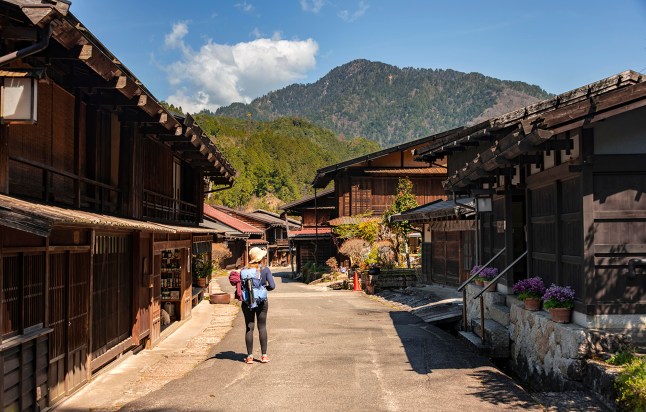
The Nakasendo trail – or ‘Road through the mountains – is the pathway connecting Kyoto and Tokyo
You’ll be familiar with the phrase ‘following in the footsteps of history’, but it’s rare that you get to do so in real life.
Built to connect Kyoto and Edo in Japan’s Edo period (1603–1868), the Nakasendo Trail – or ‘road through the mountains’ – would have been bustling in the age of the samurai.
As well as serving merchants and travellers, it also had a ceremonial function, with the ruling Tokugawa shogunate ordering daimyo (feudal lords) to fund expensive processions with their retainers to Edo, the old name for Tokyo.
These long journeys, which are mentioned in the British Museum exhibition, were meant to prevent rebellions by draining the daimyos’ resources, while also allowing the shogunate to keep them under surveillance.
Fortunately, travelling the modern Nakasendo Trail is less of a chore, with lots of wonderful places to visit (and no need to drain your bank account!).
The best preserved portion of the ancient highway runs through the picturesque Kiso Valley in southwestern Nagano Prefecture.
For a classic Japanese experience, stay in a minshuku – a type of family-run bed and breakfast – or a ryokan inn, a more luxurious option offering formal service. The friendly town of Kiso Fukushima is at the halfway point of the trail, making it the perfect place to stay.
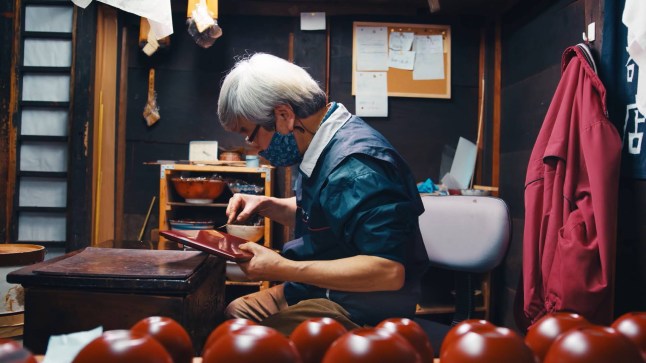
Pop into a local shop to pick up a regional specialty, Kiso lacquerware, or Kiso shikki, made by applying layers of sap to carved wood
While you’re there, keep an eye out for oyaki, traditional dumplings from Nagano Prefecture that come filled with fresh vegetables, red bean paste or pickles.
The wider Kiso Valley area is also famous for wood carving, which you can experience for yourself by taking part in a chopstick-making class using wood from local hinoki, or cypress trees.
And don’t forget to pop into a local shop to pick up another regional specialty, Kiso Lacquerware, or Kiso Shikki, made by applying layers of sap to carved wood.
This coating becomes harder the longer it’s used, making it ideal for household implements like bowls, cups and saucers.
Samurai homes – and sword lessons!
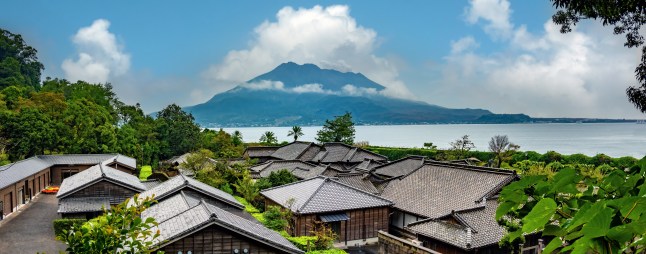
The roofs of ancient Japanese houses with the iconic Sakurajima volcano in the background, Sengan-en, Kyushu island
To connect with people who lived in the past, nothing beats visiting the places where they lived.
You can do just that with a visit to Nagamachi Samurai District, a neighbourhood of Kanazawa City that was once home to the powerful Maeda clan.
Among its winding streets is Nomura House, or Nomura-ke, an Edo-period mansion of a prosperous samurai family with all the things that a samurai might own.
Another popular attraction is Sengan-en, a stately home and garden just north of Kagoshima City.
The house once belonged to the powerful Shimazu clan and is set within a beautiful garden with views of Mount Sakurajima, an active volcano. If you’re looking to get a sense of what it was like to be a real-life samurai, there’s an even more active option: learning how to wield a samurai sword!
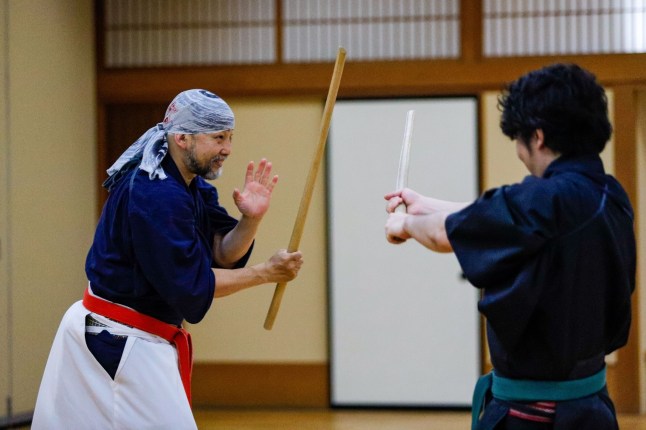
The Samurai Way of the Sword is a workshop led by master swordsman Tetsuro Shimaguchi in Aizu, a historic region where samurai fought some of their final battles.
Under careful supervision, you’ll train in sword techniques before trying your hand at some choreographed fight scenes alongside experienced instructors. It’s a day you won’t forget!
Plan your holiday now at https://www.japan.travel/en/uk/
Book tickets to the British Museum’s five-star Samurai exhibition, which runs until 4 May.
Win a Samurai-inspired adventure across Japan for two
The Japan National Tourism Organization (JNTO) and the British Museum have teamed up with tour operator InsideJapan to offer one reader a very special prize.
InsideJapan’s newly designed ‘Samurai Footsteps’ trip takes you on a 13-day cultural adventure across Japan to trace the legacy of the samurai.
As well as exploring lesser-known districts of Tokyo, Kyoto and Osaka, you’ll discover off-radar destinations including Nagoya, Tokoname and Kiso Fukushima – all of which we’ve mentioned above.
Comment now
Comments
Add Metro as a Preferred Source on Google
Add as preferred source
AloJapan.com