
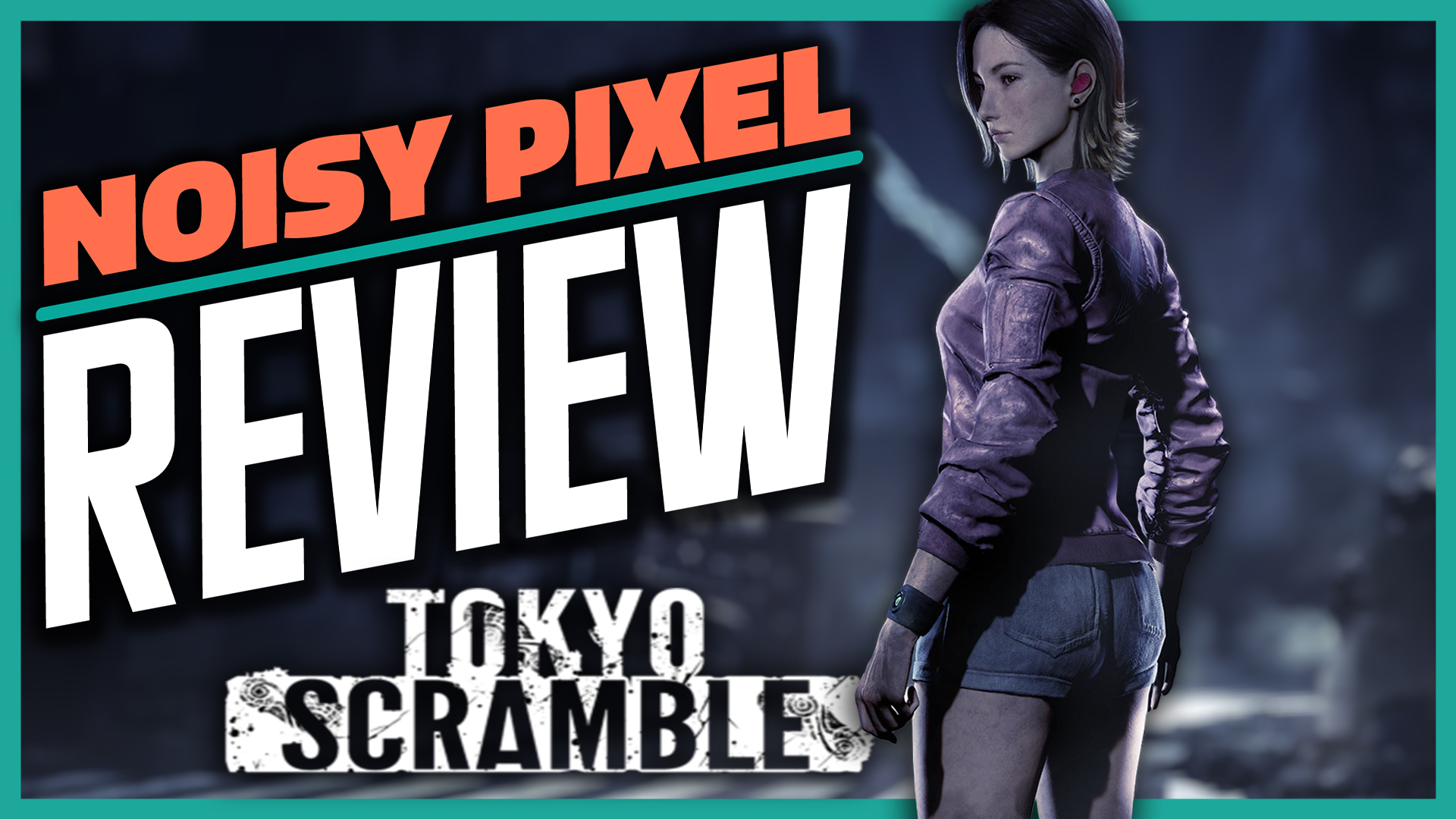
One of the bigger outliers in the most recent Nintendo Direct was the reveal trailer for Tokyo Scramble, sporting a release date only a week after its reveal. I love a new IP, and I appreciate when developers try new things, but I’ve got to be honest with you all, this isn’t it. Where Tokyo Scramble succeeds is in some clever gameplay ideas. Where it fails is in almost everything else.
Story and Narrative Flaws
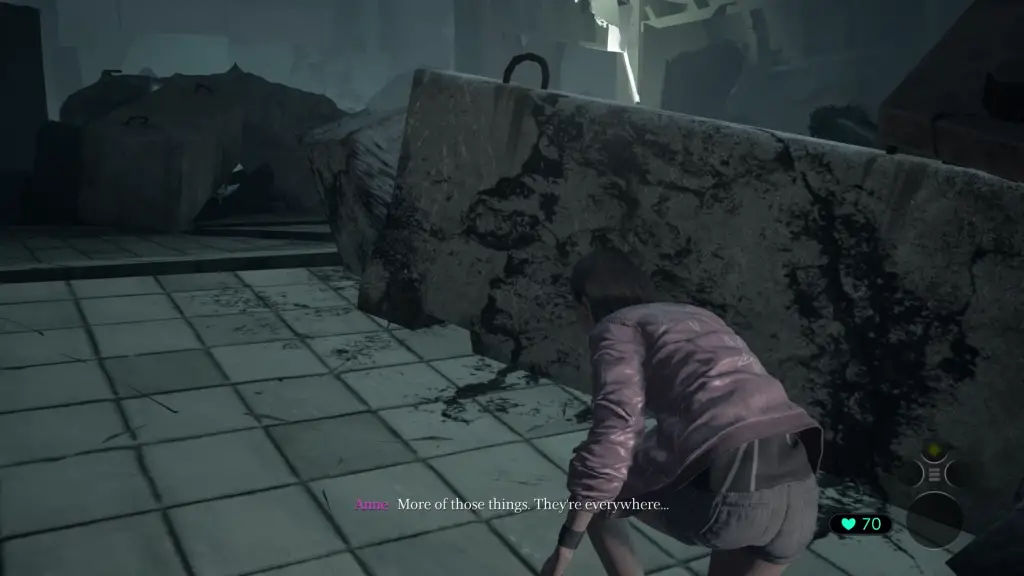
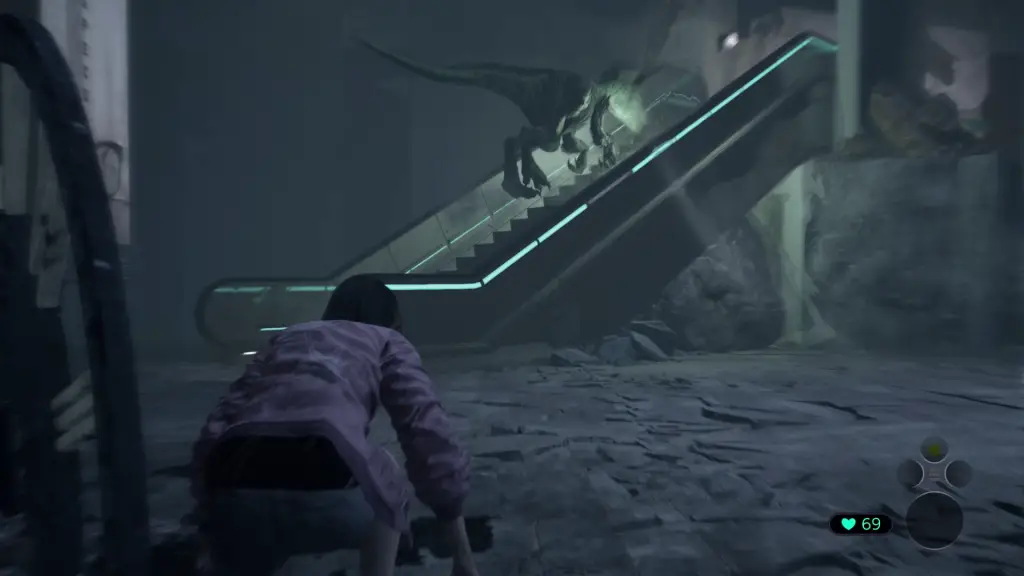
Tokyo Scramble opens with our lead character, Anne, heading out to meet up with her friends when suddenly the world falls out from beneath her. Following the traumatic event, her luck gets worse when she awakens in a cavern that’s home to dinosaurs, or Zinos as Anne likes to call them. It appears these Zino creatures have been living underneath Tokyo for some time, and Anne’s only hope for survival is to escape this Jurassic world.
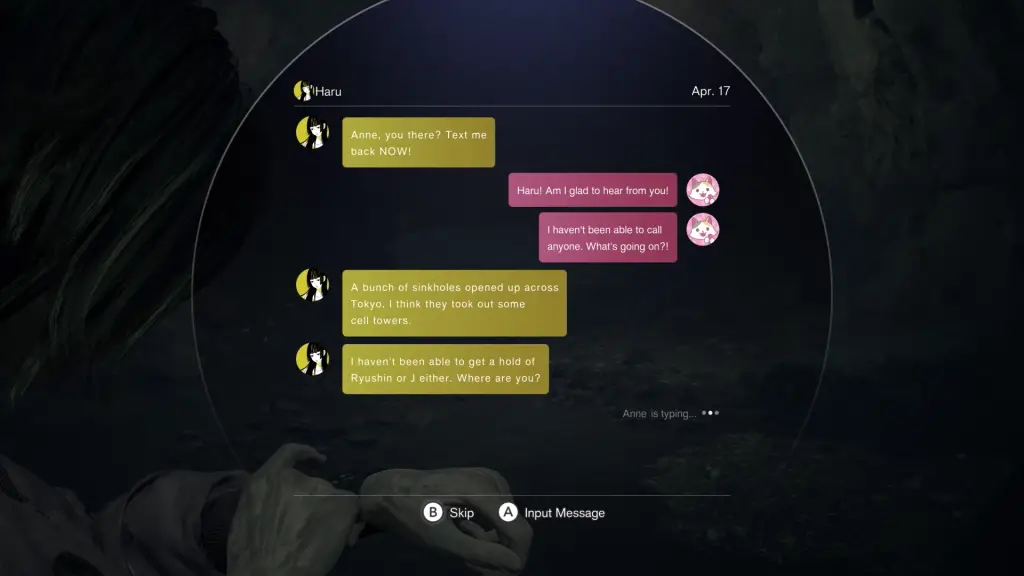
That premise alone would be enough to tell a story. I can picture it clearly, a shy girl who lacks confidence falls into a hole and discovers her true strength by doing hard things. However, that’s not what happens here. Instead, the story unfolds between chapters, after Anne discovers she can contact her friends at various points through text messages. What makes these exchanges so strange is how uncanny they are, given Anne’s current situation.
Good luck to anyone trying to pull any emotional or psychological threads from this reptile adventure, because absolutely no part of the story makes sense. First off, Anne’s friends are awful. They’re messy narcissists who only have time for their troubled friend when it’s convenient for them. When she brings up her experiences in this hellhole, they often change the subject to crushes or recent rifts in their friendships. Things get even stranger when her older brother, Ray, appears. The immediate lack of chemistry between the two nearly made me sick. The game gaslights you into thinking they’re constantly separated by circumstance, even when a simple railing is all that stands between them, forcing them to explore alone. There’s even a literal cutscene where Ray saves Anne, yet when gameplay resumes, they’re separated again.
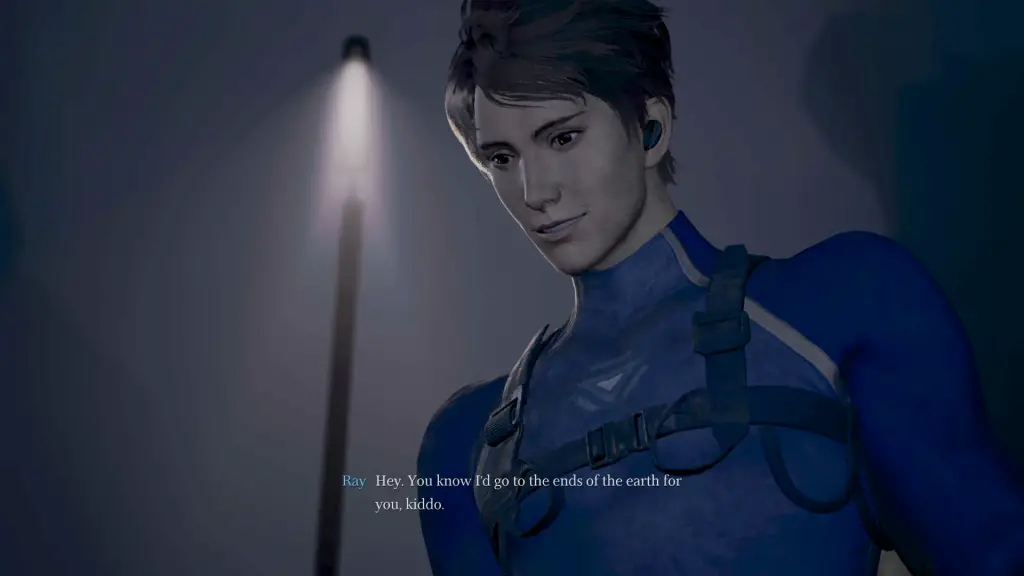
I’m no stranger to campy stories. I’d even say I enjoy campy moments in games, but Tokyo Scramble takes it too far. You’re left desperately trying to connect the dots and make sense of the uncanny ramblings about Anne’s dreams of starting a band with her friends, yet none of it pays off. The game actively distracts you from what the story’s trying to say, almost hoping you’ll forget about it altogether. It attempts to wrap everything up in a mature and nuanced way, but reaching the end doesn’t improve the narrative. That might be fine if the gameplay could lift the slack, but it doesn’t.
Stealth Gameplay and Mechanics
Tokyo Scramble is a stealth game. In the opening chapter, Anne discovers a strange app on her phone and, for some reason, names it Diana. This app can interact with technology, ranging from forklifts to alarms and escalators. Each interaction is meant to distract enemies or open a path forward. You can also collect charges throughout the levels to flash enemies, leaving them stunned. The goal of each stage is simple, reach the end. Some levels are fairly strict in how you approach them, but most allow for some creativity. There were moments where I simply darted to the exit in a desperate rush to get through the game faster.
Players also need to manage Anne’s heart rate, which’ll bring her to her knees if you sprint for too long. Running does create noise, but the heart rate system mainly adds challenge during boss encounters, where you’re forced to manage flashes and sprinting over extended sequences. At the end of each level, you’re scored based on performance, along with points for completing optional objectives. I barely tried and still managed decent scores, even after getting caught over 30 times, so I’m not sure how the grading system actually works.
Enemy Variety and Level Design
The enemies are interesting in the opening chapters. Each chapter introduces a new enemy type that pushes a different stealth approach. Aside from the raptors, or rather, sigh, Goblins, most enemies excel at a single sense, such as heightened sight or hearing. Early on, the game suggests it’ll continue introducing new enemy types in later chapters, but that promise quickly falls apart. The enemy pool is surprisingly small, and later levels rely on cluttered spaces filled with mixed enemy types, forcing you to slow things down.
I can see the vision here. Setting enemies in a line and ramming them with a car can be fun, but you’re asked to look past so much jank that you start questioning why you’re even playing. It became a game I finished purely out of stubbornness. There’s a moment where Anne starts humming a song, and I wanted to scream for it to stop. With no relief in sight, you’re left to grit your teeth and push forward.
Comparisons and Overall Execution
Some moments reminded me of the Deception series, though it never reaches those highs. Instead, it mirrors my experience with Left Alive, shout out to the ten other people who played that. I’m not saying you shouldn’t play Tokyo Scramble. I’m saying there are far better games competing for your time. This project could’ve been something, but it feels like the developers tried to do too much with too little. The camera lingering on Anne’s butt isn’t enough to excuse what this game throws at you, though clearly it was enough to keep me playing. I hate when games make me rethink my ideals.
Visuals and Presentation
Visually, this is the most Switch 2 game I’ve seen so far. Many assets look like they were pulled from licensed packs, and the enemy AI borders on idiotic. There are two difficulty modes, but just play on Hope and hope you make it to the end. The voice acting’s about as rough as you’d expect, though the performances themselves aren’t the issue. Nothing could’ve saved this story, but at the very least, the characters’ mouths could’ve moved.
Final Verdict
Tokyo Scramble feels like a game built around a handful of decent ideas that never come together into something satisfying. The stealth mechanics show flashes of creativity, and there are moments where the setup almost works, but those moments are buried under a confused story, repetitive encounters, and presentation issues that are hard to ignore. What should’ve been a tense, character-driven descent turns into a slog that constantly pulls you out of the experience.
I respect the ambition behind trying something strange and new, especially for a fresh IP, but ambition alone doesn’t carry a game this far. Tokyo Scramble left me frustrated more often than engaged, and by the end, I was playing out of obligation rather than curiosity. If you’re desperate for a new stealth experience, you might find something to latch onto here. Otherwise, this is an easy one to skip in favor of games that know exactly what they want to be.
Tokyo Scramble (Switch 2)
4
Poor
Tokyo Scramble is an ambitious stealth adventure that introduces a handful of clever mechanics but struggles to unify them into a satisfying whole. While its dinosaur-infested setting and gadget-driven stealth show flashes of creativity, those moments are undermined by an incoherent story, repetitive encounters, and rough presentation. The result is a game that feels more exhausting than engaging, one that hints at a stronger experience it never quite becomes.
The Good
Stealth concepts: Enemy senses and environmental interactions encourage varied approaches early on.
The Bad
Disjointed narrative: Character interactions and story beats lack logic and emotional payoff.
Repetitive enemy design: New enemy types dry up quickly, leading to cluttered and slow levels.
Weak presentation: Stiff animation, poor lip syncing, and uneven visuals break immersion.
Inconsistent systems: Heart rate and scoring mechanics feel underdeveloped and unclear.
Jank and pacing issues: AI behavior and forced separation sequences frustrate more than challenge.
AloJapan.com