
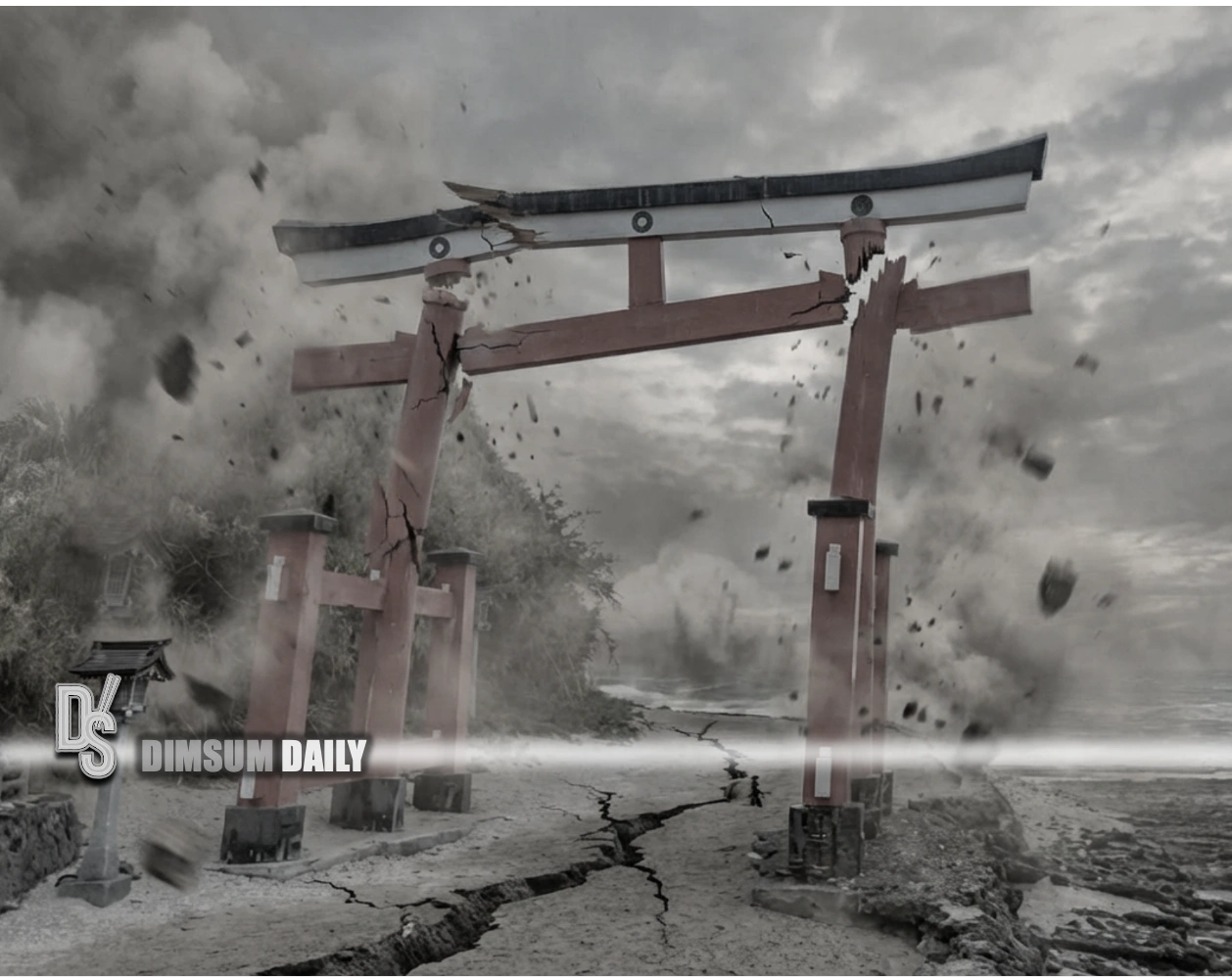
 AI-generated image for illustration purpose only.
8th February 2026 – (Tokyo) A catastrophic “once-in-400-years” megaquake could strike off the northern coast of Japan’s Hokkaido island at any time, according to a new scientific analysis. Researchers warn that tectonic stress has been steadily building in the seabed and may have reached a critical point.
A team from Shizuoka Prefectural University and the Japan Agency for Marine-Earth Science and Technology (JAMSTEC) published their findings on February 6th. By analysing seismic data from the Japan Meteorological Agency recorded between 2000 and 2025, they calculated the stress accumulating along the plate boundary off Hokkaido’s Tokachi coast. Their study indicates a clear zone where stress is not only present but has been increasing each year, suggesting the area is reaching a “mature stage” for a major seismic event.
This aligns with the long-term assessment by Japan’s Earthquake Research Committee, which states that so-called “supergiant” earthquakes occur in this region approximately every 340 to 380 years. The last event of this scale happened in the 17th century, meaning roughly 400 years have now passed. The committee estimates the probability of another magnitude 9-class earthquake occurring within the next 30 years at between 7% and 40%, noting that the timing could be “imminent.”
The potential earthquake would originate from the Kuril Trench, a deep oceanic trench where the Pacific Plate subducts beneath the Okhotsk Plate. A rupture here could trigger a massive tsunami, posing a severe threat to coastal communities in Hokkaido. These latest findings intensify concerns for residents and authorities, reinforcing the need for continuous vigilance and robust disaster preparedness in a region all too familiar with seismic devastation.
AloJapan.com