
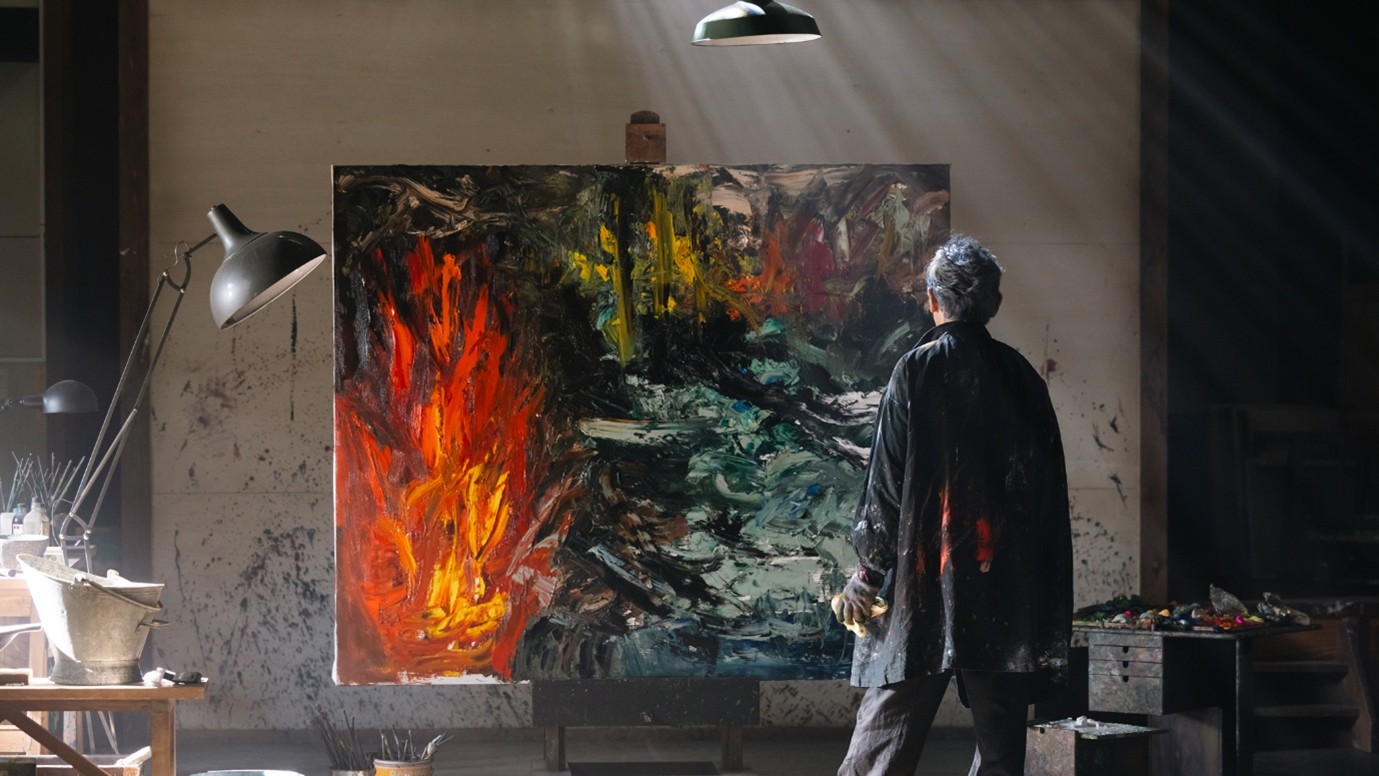
Writer: Sô Kuramoto
Director: Setsurô Wakamatsu
Sentimental and confusing, veteran director Setsurô Wakamatsu’s art mystery is also terribly dull. At a prestigious exhibition where the Culture Minister is in attendance, famous artist Shuzo Tamura spots something odd about one of his paintings, a canvas that he hasn’t seen for years. At the end of the opening night, he returns to the picture to study it some more. He’s convinced that it isn’t his creation; the sea is too finely painted. He declares it a forgery.
The discovery is an embarrassment for the Culture Ministry, and the gallery owner begs Tamura to keep the forgery a secret, at least until the end of the exhibition. But taciturn Tamura holds a press conference where he announces that the painting is not his. He also admits that the forgery is a better piece of work than the original.
With various ministers and gallery owners meeting to deal with the repercussions of such a scandal, the film appears to be heading towards an examination of Japanese concepts of shame and honour. Indeed, Silence of the Sea would be more successful if it focused entirely on cultural and political humiliation, but Sō Kuramoto’s story turns towards the romantic when the real painter is revealed.
Ryuji Tsuyama has specialised in forgeries since he was at university. However, he suggests that his versions of Degas and Van Gogh – and, of course, Tamura – are improvements upon the originals. He is not, then, a forger, but instead a great artist. And like all great artists we see on the screen, he is troubled, complex and harrowed by his genius.
At university, he dated Tamura’s wife, Anne, and it is her story that is at the heart of Silence of the Sea. She is a kind of artist herself, fashioning creepy candles in the shape of faces that cry wax once they are burnt. After the brouhaha at her husband’s exhibition, she meets Tsuyama once more. She gifts him a candle.
Looking too young – but he is, in fact, 60 – to play the part of Tsuyama, Masahiro Motoki is suitably grand and precious. His character is also hard to like, especially when we discover that his manager procures young women who offer up their backs to be tattooed by the great artist. These women then appear to fall in love with him, despite being labelled as “human catalogues of tattoos”. One woman even takes her own life when Tsuyama dumps her for a younger canvas.
Kyôko Koisumi plays Anna with reserve, and her sedate life as Tamura’s wife contrasts with the torrid life of her ex-flame, who throws paint and sprays blood onto his final picture. If violent passion equals talent, then it’s clear who Wakamatsu regards as the greater artist. However, it’s difficult to have sympathy for any of the characters as the film enters its second hour.
Perhaps with reference to the title, Wakamatsu’s own canvas is peppered with silent scenes of waves breaking, gulls flying and traffic flowing. These noiseless interruptions are strange and give the impression that the film remains unfinished.
The Japan Foundation Touring Film Programme 2026 takes place in cinemas around the UK from 6 February to 31 March 2026. For further information: https://www.jpf-film.org.uk/
The Reviews Hub Star Rating
AloJapan.com