
Writer and Director: Masanori Tominaga
According to writer and director Masanori Tominaga passive-aggressiveness is so deeply engrained in the culture of Kyoto nothing can be taken at face value. Strangers in Kyoto explains, in such an ambiguous environment, the invitation to take green tea over rice is not an offer of refreshment but a veiled insult letting a guest know they have overstayed their welcome.
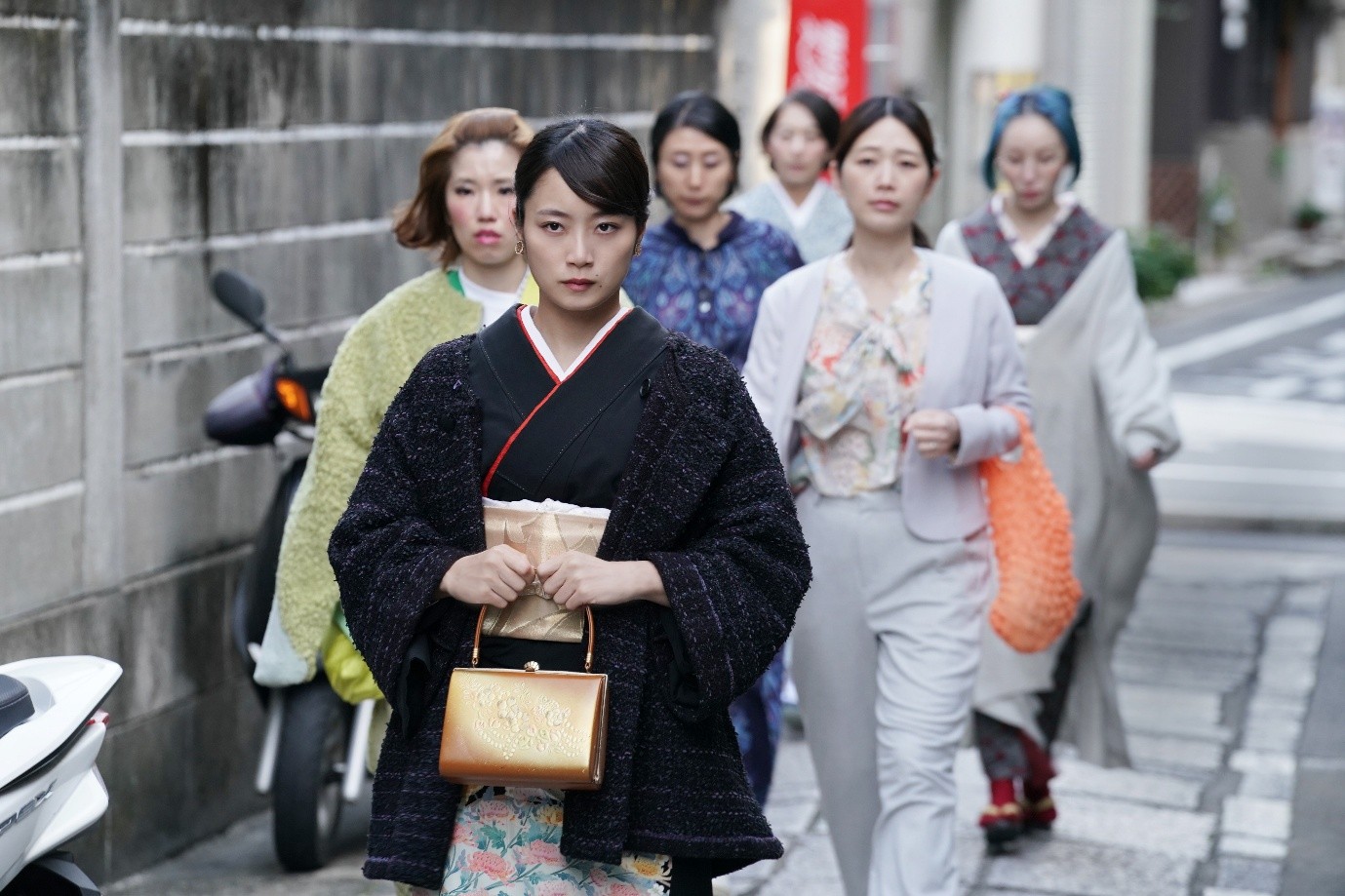
Madoka (Mai Fukagawa) visits the parents of her husband in Kyoto planning to write a manga comic about their 450-year-old artisan hand fan shop. She is greeted politely when interviewing the female proprietors of the various shops in the neighbourhood but fails to appreciate her questions are being deflected rather than answered and she is simply being passed around like an intrusive visitor.
Nevertheless Madoka becomes enamoured by Kyoto and, upon finding evidence of her husband’s infidelity, offers to work in her in-laws’ shop. A surprise visit by a documentary TV crew gives Madoka the opportunity to promote the traditional values on display in the community but, in her eagerness to impress, she makes so many social errors she offends her neighbours who let her know that she is regarded as an outsider.
Director Tominaga excels in drawing humour from the social nuances on display in Kyoto. The complex system of smiled insults is displayed as if nothing untoward is happening. It is only toward the conclusion of the film that Madoka is pointedly advised honesty does not work and a person who speaks plainly is categorised as a fool.
There are universal themes in Strangers in Kyoto. The gentrification of neighbourhoods which sees residents displaced in favour of wealthy newcomers who set about removing the features which make the area unique are worldwide problems. So too is the influx of tourists whose behaviour disrupts commerce and impinges upon the privacy of residents.
Director Tominaga regards the clash between tradition and modernity as something of a devil’s bargain. Tourists might be a nuisance but their expenditure is welcome. The estate agent buying up properties is disliked for forcing unwanted change but sometimes the results are beneficial allowing former owners to make a financial profit and remain as mangers of the stores they used to own.
Tominaga is also sceptical of the value of tradition. Madoka’s in-laws enjoy red rice as a celebratory treat but cannot remember the event they are celebrating. It is agreed rice tastes better when cooked in the traditional manner over an open fire but the process is so arduous no-one can be bothered.
The tone is kept light with many visual jokes. Having discovered her husband’s infidelity Madoka storms out of their apartment but cannot resist stealing a snack on the way. A protest march to the office of the real estate agent gradually dwindles as participants drop out. Madoka discovers the totem to which she has been offering prayers is not a religious symbol but a warning against public urination.
Mai Fukagawa plays Madoka as a comic innocent, baffled by the unspoken rules and regulations of the community and mortified by constantly causing offence. Most of the characters in the film are, however, drawn broadly. It is dead easy to guess why Madoka’s artist friend Anzai behaves in a flustered manner and a dishevelled university lecturer serves less as a character more as a muse to prompt Madoka’s writing.
The conclusion has an ironic point that people who refuse to state clearly what they desire cannot complain when they do not get what they want. However, the conclusion seems rushed with the unexplained return of the adulterous husband and the motivations of the in-laws becoming apparent in a manner which is certainly unexpected but not especially convincing.
It is difficult for a viewer from outside of the culture to appreciate fully a film like Strangers in Kyoto, as subtle speech-differences within different regions cannot be reflected in subtitles. Nevertheless, Masanori Tominaga’s approach makes for an eccentric but charming film.
The Japan Foundation Touring Film Programme 2026 takes place in cinemas around the UK from 6 February to 31 March 2026. For further information: https://www.jpf-film.org.uk/
The Reviews Hub Star Rating
60%
Eccentric but charming
AloJapan.com