
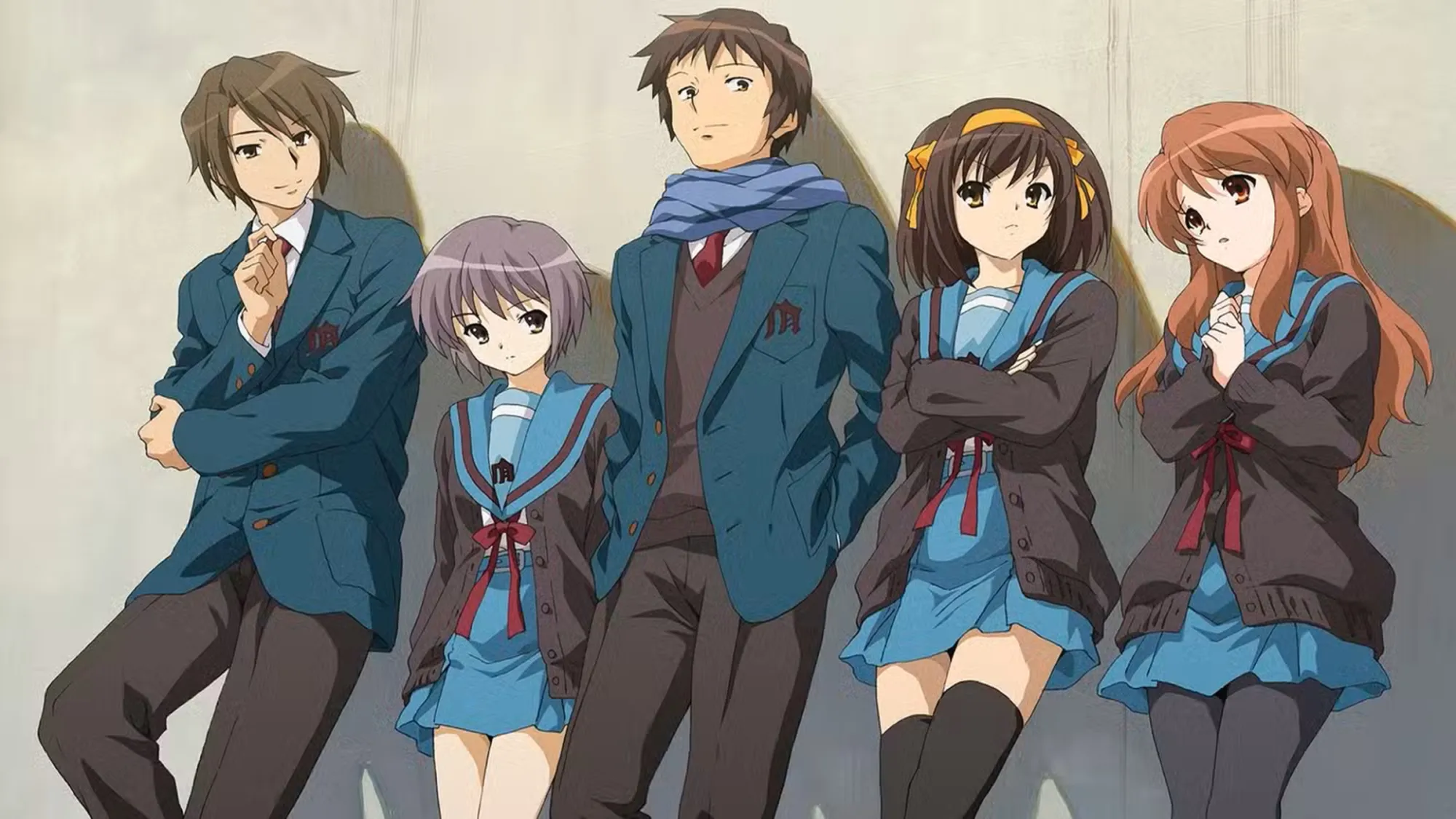
On February 6, 2010, Kyoto Animation released The Disappearance of Haruhi Suzumiya in Japanese theaters. For fans who did not live through late 2000s anime internet culture, here is the short version of why the date still gets cited. KyoAni had just taken a very public hit to fan trust, and this film was the moment many people decided the studio still “had it.”
The Melancholy of Haruhi Suzumiya began as light novels by Nagaru Tanigawa, then became a TV anime that exploded in popularity. Haruhi is a high school girl with reality-warping powers she does not understand. Kyon, an ordinary classmate, gets pulled into her club, the SOS Brigade, alongside characters who turn out to be an alien interface, a time traveler, and an esper. The premise let the series bounce between comedy, sci-fi, and meta commentary on storytelling itself. In the mid to late 2000s, Haruhi was a cornerstone title.
That “wrong step,” of course, was Endless Eight. In the summer of 2009, Kyoto Animation aired an arc that repeated the same basic story across eight episodes, with variations in animation and direction but an intentionally looping narrative core. Whether you saw it as high-concept performance art or a weeks-long practical joke depended on your tolerance for being trolled by a studio at the height of its power.
Why “Endless Eight” Became Controversial
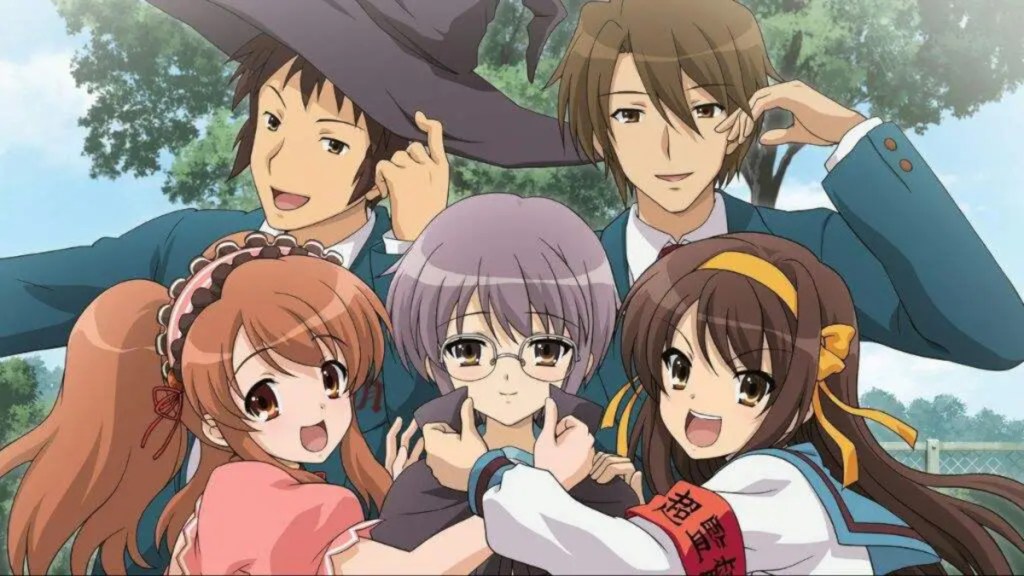
The core idea — trapping the characters (and viewers) in an almost-identical summer vacation loop — was conceptually clever and thematically aligned with the story’s existential dread. But the execution asked something brutal of a weekly audience: sit through what felt like the same episode again…and again…and again. Plenty of people admired the production challenge of re-animating each entry with new layouts, acting beats, and subtle changes. Plenty more felt that the show was wasting their time on purpose.
The backlash got so loud that it spilled beyond the usual fan grumbling. Before the arc even finished, an ex–Kyoto Animation director named Yamamoto reportedly apologized on behalf of the studio, insisting he had been against the idea and calling the direction “inexcusable.” Even Haruhi’s voice actress issued an apology in the wake of the arc. That’s how intense the temperature got.
This is the part people forget: the anger was about trust. If KyoAni could take a beloved franchise and do this, what else might they do? And would they still deliver the emotional payoff that Haruhi fans had been waiting for?
Then KyoAni Dropped a 162-Minute Movie
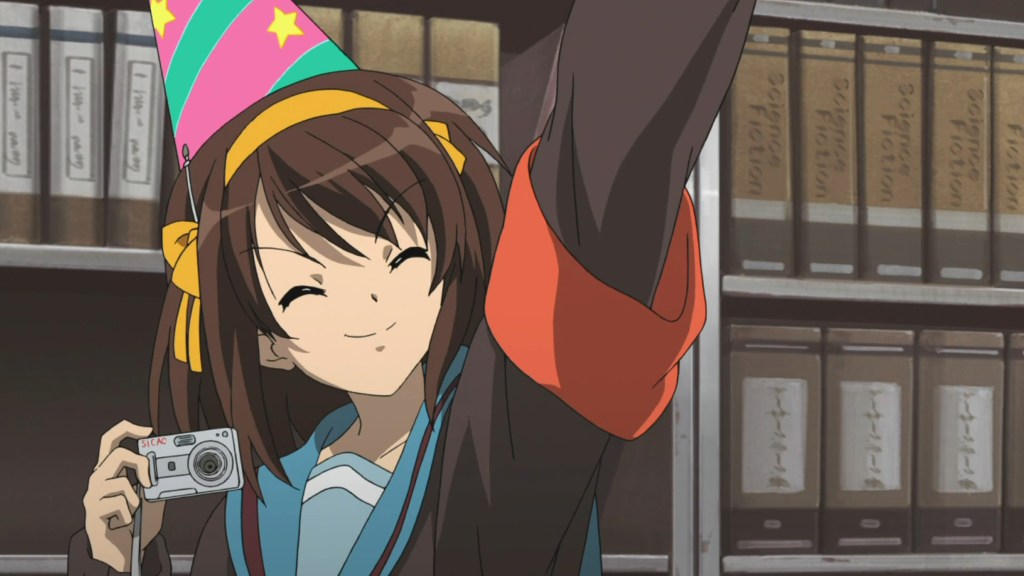
Kyoto Animation’s answer arrived less than a year later. The Disappearance of Haruhi Suzumiya is listed at 162 minutes. It is a full-length adaptation of one of the most beloved Haruhi novels, produced with theatrical ambition. At the time, the film’s high quality and massive budget were widely seen as Kyoto Animation trying to win back goodwill after Endless Eight, and the perception stuck because the movie looks and feels like a studio going all in.
Where Endless Eight stretched a small piece of story across two months of broadcast, Disappearance does the opposite. It takes a dense, emotionally loaded premise and gives it the time and clarity it needs. It is still recognizably Haruhi, but it is paced like a film that expects the audience to pay attention, not like a series trying to sustain weekly suspense. A big reason it works is that it shifts the center of gravity toward Kyon. The TV series often uses Kyon as a commentator, the person reacting to Haruhi’s momentum. In Disappearance, he becomes the person making decisions under pressure. Instead of asking viewers to tolerate a structural gimmick, it asks them to follow a character through a problem that keeps escalating in understandable ways.
On MyAnimeList, the movie sits around an 8/10, which is solid and stable for a long running franchise film. More revealing than the number is what happened to the discourse. After Endless Eight, discussion often centered on frustration and skepticism. After Disappearance, conversation shifted toward respect for execution, and toward recommending the film as one of the more successful anime features adapted from a TV property. In 2010, that recommendation culture mattered. Fans were constantly sorting shows into categories like “good weekly” versus “good overall” versus “you had to be there.” Disappearance leaned toward “good overall.” It rewarded familiarity with the series, but it also played like a complete narrative with a deliberate beginning, middle, and end.
There’s also a bittersweet weight to revisiting Disappearance now. One of the film’s directors, Yasuhiro Takemoto, was among the losses in the 2019 Kyoto Animation arson attack. He also wrote the script for six of the eight Endless Eight episodes, yet he also helped direct the film many fans cite as the restoration point. That is worth stating plainly because it cuts against simplistic narratives. It was never “bad creators versus good creators.” It was a studio making a risky adaptation choice in a weekly format, then later executing a long-form theatrical story with exceptional discipline.
What do you think? Leave a comment below and join the conversation now in the ComicBook Forum!
AloJapan.com