
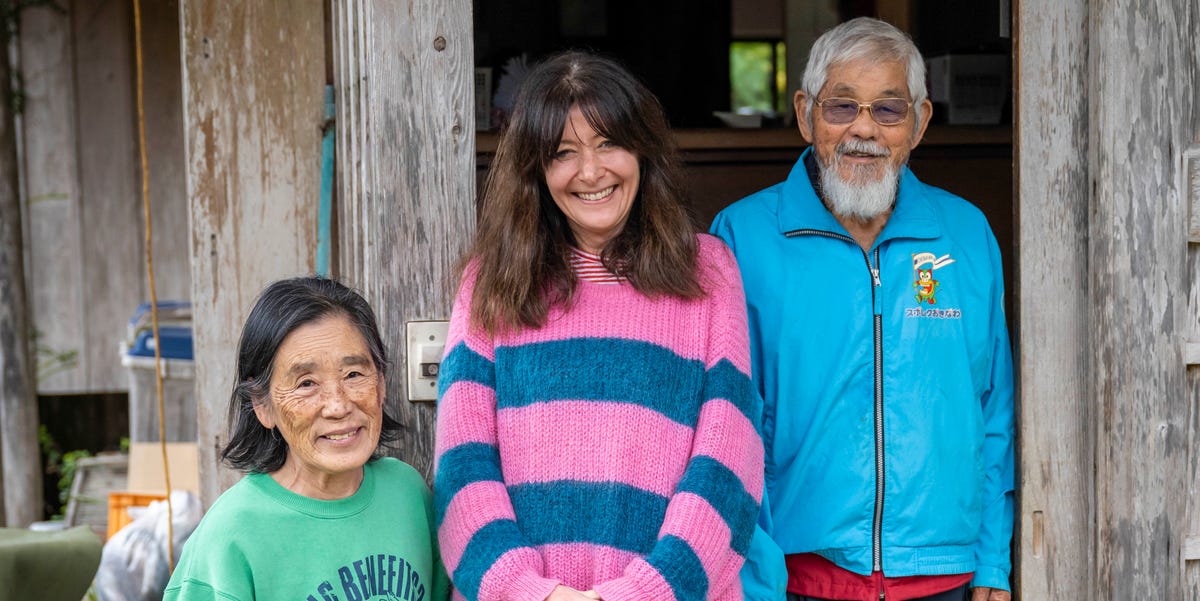
Rikio Yokoda, 82, kneels effortlessly on the floor as we share an early dinner and tells me about his family and work. His joints are strikingly mobile; he sports a fine head of hair; and his eyes sparkle as he recounts a day spent working in the fields, growing mushrooms and potatoes. He lives in Okinawa, Japan with wife Etsuko (73) – and the couple are part of a community of other seniors who are all ageing with few health problems and seemingly endless energy.
Rikio puts his good health and long life down to eating plenty of vegetables, taking naps and working long days in his garden… and I can’t help comparing him to my grandma, who loved a Mars bar and was pretty much housebound from 75 despite two knee replacements.
Then again, she wasn’t living in a Blue Zone. Okinawa is one of the pockets of the world where scientists have identified unusually long life expectancies – the Blue Zones – and residents commonly live to over 100, often avoiding chronic diseases. There are five Blue Zones in total – Sardinia, Italy; Nicoya, Costa Rica; Ikaria, Greece and Loma Linda, California – and all share similar lifestyle habits. So, what are they – and can we really replicate these healthy living habits at home? Here’s what I learned – and the changes I’ve put in place at 55.
Keep moving; avoid too much sitting
The Okinawans I met had one thing in common – they were rarely still and spent their days tending their gardens and growing their own food well into their 70s, 80s and 90s. I met one remarkable 84-year-old who had recently laid a steep, uphill path leading from his garden to the road. ‘Older Okinawans are active walkers and gardeners,’ says Dan Buettner in his book Blue Zones: 9 Lessons For Living Longer From The People Who’ve Lived The Longest. ‘The Okinawan household has very little furniture; residents take meals and relax sitting on tatami mats on the floor. The fact that old people get up and down off the floor several dozen times daily builds lower body strength and balance, which help protect against dangerous falls.’ At 55, I know I spend too long sitting – whether that’s on the commute, at my desk or in front of screens. I vowed to do better – since returning, I kneel on the floor to watch TV and have switched to a standing desk.
Eat seaweed – lots of it
The Okinawans have seaweed for breakfast, seaweed for lunch and seaweed for dinner, served in a variety of ways… with miso, with pickles, with pork, with noodles. They are particularly keen on kombu, a nutrient-dense kelp seaweed. It’s exceptionally rich in iodine and essential for thyroid function, metabolism regulation and energy production.
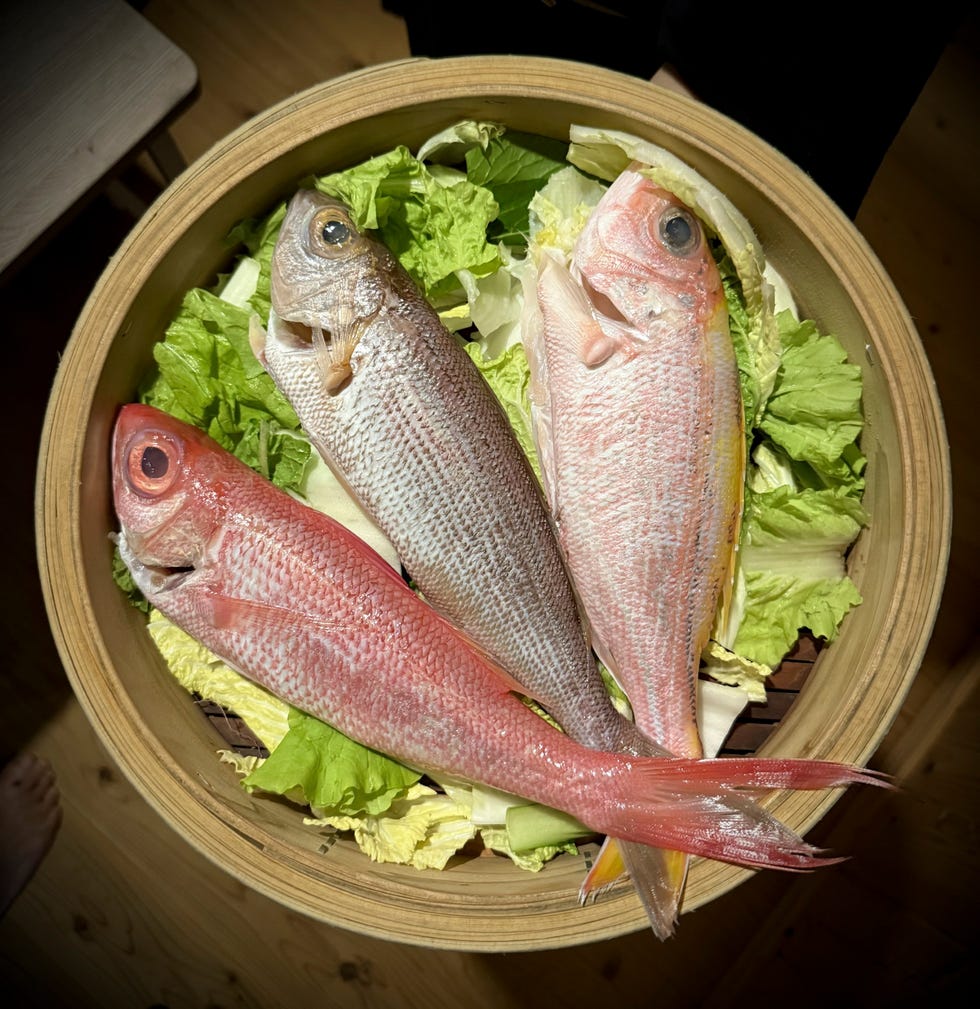
That’s not the only healthy addition Okinawans make to their diets. According to Drs Bradley and Craig Willcox, authors of The Okinawa Way, Okinawan elders eat an average of seven servings of vegetables a day, including plenty of purple sweet potato – which research suggests may help reduce blood pressure, enhance immune function, improve digestion and lower blood sugar levels. Okinawans also eat two servings of flavonoid-rich soy products a day – think miso or tofu; omega-3 rich fish several times a week and minimal dairy products. They also snack on home-grown, tiny citrus fruits, known as shikuwasa, plucked directly from a garden tree. Since returning, I have stocked up on miso soup, sprinkle salads with nori and make sure I’m eating enough oily fish. If I struggle to eat well – and rest effectively – I supplement…
The Fourth Angel
Drink jasmine tea
In Okinawa, jasmine tea is the most popular drink – not plain Japanese green tea. But they’re still reaping all the goodness… jasmine tea is made from green tea leaves, packed with potent polyphenols. An easy change to make back home.
Avoid stress
There’s a stark difference between the pace of life in Okinawa and the pace of my life in London. ‘Okinawans like to use the term taygay to refer to people or their society in general,’ say Bradley and Craig Willcox. ‘It’s a word from the Okinawan dialect that can be translated as ‘easy-going’ or ‘laid-back’. Social relations in Okinawa tend to operate on this principle, in that they lean toward a flexible, non-hierarchical, loose style. Nothing seems to be set in stone.’ The antithesis of our ‘hurry-sick’ Western culture, their research found that Okinawan centenarians scored extremely low in ‘time urgency and tension’ – and high in self-confidence and unyieldingness – or determination.
Clearly, we can’t banish all stress from our lives, as much as we might like to. But learning to meditate is something we can do. ‘Slowing yourself down to reduce stress and its negative effects is learned behaviour,’ say Bradley and Craig Willcox. ‘We can learn how to unlearn Western time. This doesn’t mean that we have to be half an hour late for that important business meeting. It simply gives you a choice between feeling in control of time or feeling controlled by it.’
Find your ikigai
‘Ikigai’ is a powerful sense of purpose that Okinawans feel well into old age. Rikio found his ikigai in his garden, tending his crops. Etsuko, his wife, visits people in the community who need help. When interviewing people for his book Ikigai: The Japanese Secret To A Long And Happy Life, co-author Héctor Garcia says: ‘When we asked what their ikigai was, they gave us explicit answers, such as their friends, gardening and art. Everyone knows what the source of their zest for life is and is busily engaged in it every day.’ Your ikigai could be your work, your family, your garden, your movement, your community… I’m still working on finding mine, but I’ll keep you posted.
Related StoryRelated Story
AloJapan.com