
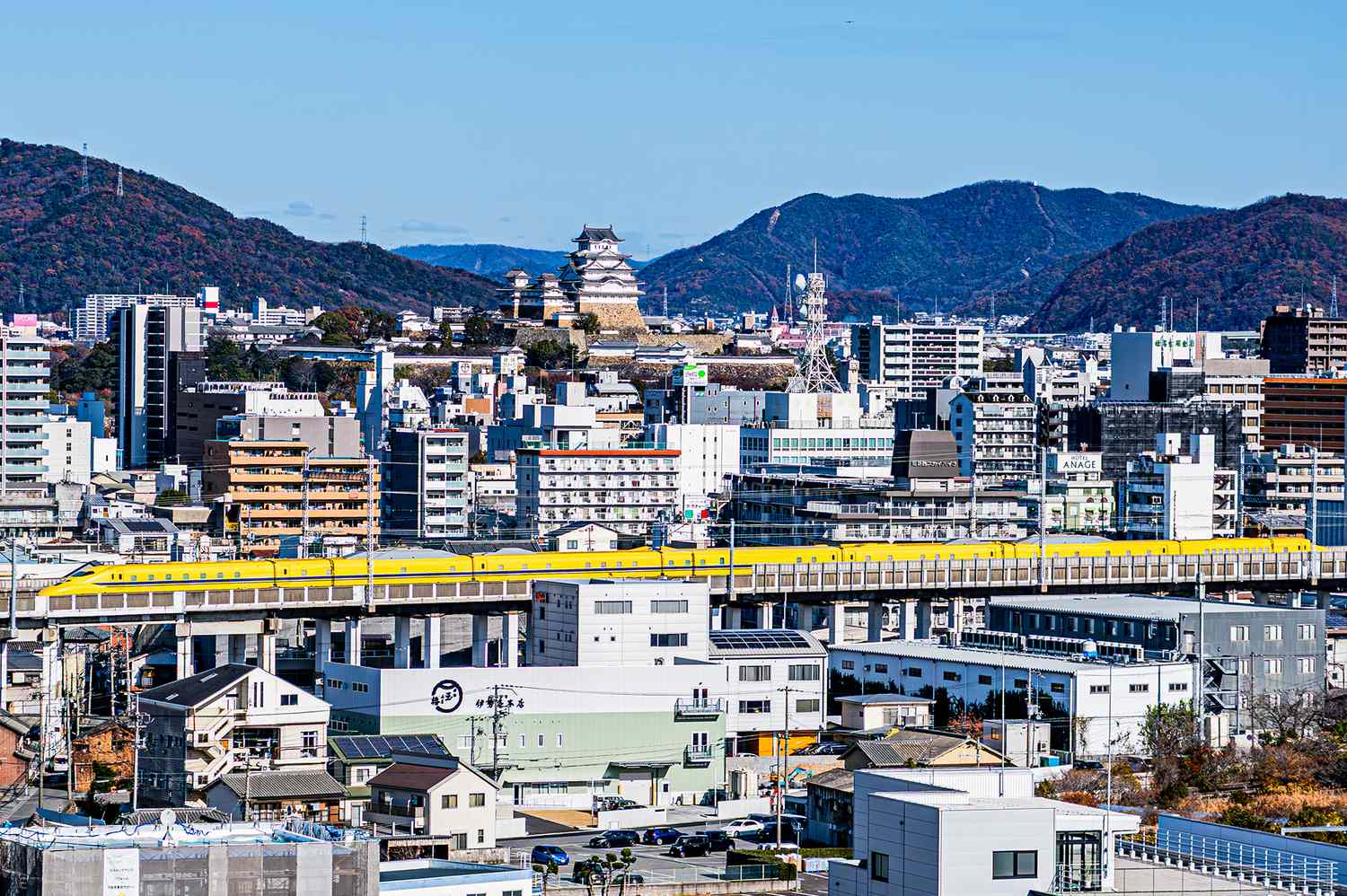
In a country famous for punctuality—where the Shinkansen runs on a schedule measured in seconds—there is one bullet train in Japan that appears on no public timetable. It is a phantom on the charts, a flash of industrial yellow streaking through a sea of white-and-blue commuters. They call it Doctor Yellow, and spotting it is said to bring good fortune.
About once every 10 days, word quietly spreads. Rail fans gather on platforms, photographers stake out scenic curves, and the faithful scan the horizon, waiting for the yellow “bee” to buzz past. Tokyoites who have lived in the city for decades will tell you they’ve never seen it, while densha otaku—Japan’s devoted train enthusiasts—trade predictions online, tracking its movements with near-scientific rigor.
The superstition may be magical, but Doctor Yellow’s mission is pure engineering. Traveling at a blistering 270 km/h (168 mph), the train performs a full diagnostic sweep of the Tokaido Shinkansen line, scanning overhead wires for wear and checking track alignment down to the millimeter. It must run at full speed to avoid disrupting passenger service, covering the route from Tokyo to Hakata in Fukuoka before typically returning the following day. Its bright yellow livery, originally chosen for high visibility during night maintenance, has become its calling card—and its legend.
In my case, I spotted a rumor on Twitter that Dr. Yellow might be heading west toward Hakata, so I checked tracking sites while in Himeji. Knowing a good viewpoint near Himeji Castle by the aquarium at Tegarayama Heiwa Park, I went up alone after sunset to confirm the run. It passed in near darkness, but the timing checked out. Confident it would return east the next day in daylight, I changed my Shinkansen plans. The next morning, a small group of trainspotters gathered. When Dr. Yellow burst from the tunnel, it was a yellow blur of pure adrenaline—followed, improbably, by the Hello Kitty Shinkansen as a bonus.
Doctor Yellow has watched over Japan’s high-speed rail system in various forms since the Shinkansen debuted in 1964, with the current design introduced in 2001. But its days are numbered.
Of the two remaining inspection trains, one was retired in January 2025 amid emotional farewells. The last, operated by JR West, is scheduled to retire in 2027, and it will not be replaced. New N700S trains now carry hidden sensors and LiDAR, performing inspections quietly during regular passenger runs. The dedicated “doctor” is becoming obsolete.
For travelers visiting Japan this year, spotting Doctor Yellow is no longer just lucky—it’s historic. The so-called “Golden Guardian” of the Tokaido Shinkansen is taking its final laps. If you catch that flash of yellow on the horizon, don’t just make a wish. Take a picture. You’re witnessing the sunset of a legend.
AloJapan.com