
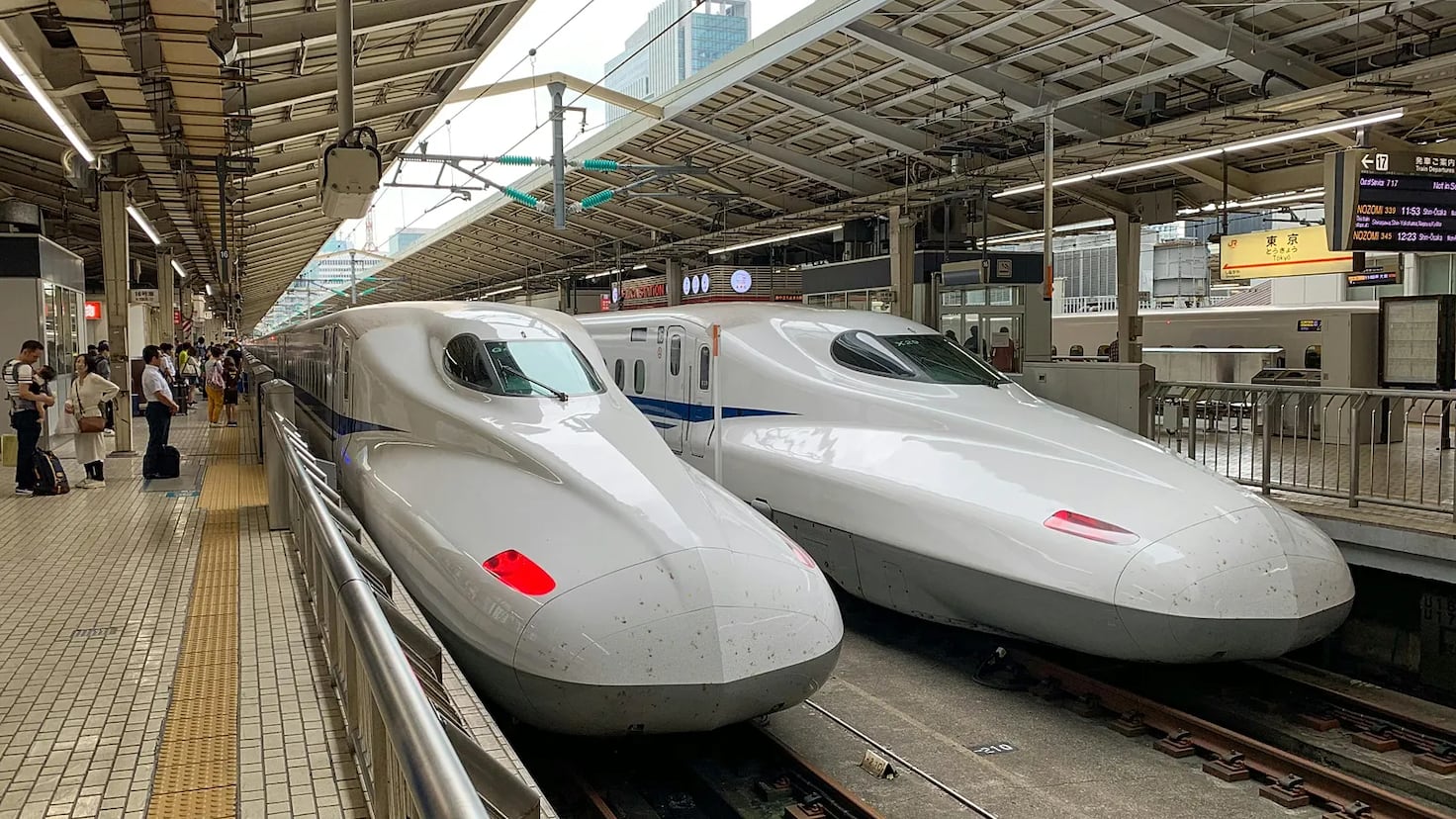
Japan has set a new target date for what is expected to become the fastest train in the world, capable of exceeding 600 kilometers per hour (about 373 miles per hour). Central Japan Railway Company has confirmed that the long-awaited debut of its next-generation maglev train has been pushed back. Originally scheduled to begin operations in 2027, the service is now expected to launch in 2034 or 2035.
A new global speed benchmark
Once operational, the Japanese maglev will surpass China’s Shanghai maglev, which currently holds the title of the world’s fastest commercial train with a top speed of 460.2 kilometers per hour (roughly 286 miles per hour).
In Europe, the fastest trains in regular service are far slower by comparison. France’s TGV and Italy’s Italo AGV typically operate at top speeds ranging from about 190 to 220 miles per hour, depending on the route.
How the technology works
The new Japanese train relies on magnetic levitation technology, allowing the cars to float above the track while being propelled by powerful electric motors. Eliminating wheel to rail contact dramatically reduces friction, making previously unthinkable speeds possible.
The project comes with a massive price tag. Current estimates put the total cost at approximately $70.7 billion.
Travel times transformed in Japan
When the L0 Series enters service, it will fundamentally change long-distance travel within Japan. Trips that can currently take up to two and a half hours are expected to be cut to just 40 minutes, reshaping commuting patterns and regional connectivity.
Why Europe is unlikely to follow
According to Euronews, taking this type of system to Europe would be extremely challenging. The main issue is that the Japanese approach does not align well with how Europe’s rail market currently operates.
European high-speed rail has traditionally emphasized balance, comfort and affordability. In contrast, countries like China and Japan tend to prioritize raw performance and technical capability, even when costs are significantly higher.
Another obstacle is the train itself. The L0 maglev cars are smaller than most European high-speed trains and considerably more expensive given their power and advanced technology. In many regions, entirely new tunnels and dedicated infrastructure would be required to run them safely and efficiently, further driving up costs.
For now, Japan appears set to redefine the upper limits of rail travel, while Europe continues to focus on making fast trains practical, comfortable and widely accessible rather than pushing for record-breaking speed.
Related stories
Get your game on! Whether you’re into NFL touchdowns, NBA buzzer-beaters, world-class soccer goals, or MLB home runs, our app has it all.
Dive into live coverage, expert insights, breaking news, exclusive videos, and more – plus, stay updated on the latest in current affairs and entertainment. Download now for all-access coverage, right at your fingertips – anytime, anywhere.
AloJapan.com