
To begin our conversation, Japan’s travel industry has experienced a strong rebound following the impact of COVID-19. Last year, approximately 350,000 international travelers visited Japan, and this year that number is expected to reach around 400,000, with a long-term outlook of up to 600,000 visitors. Japan is increasingly regarded as an essential travel destination for people around the world. To start, how do you personally view Japan today as a destination, and what do you believe makes it so compelling as a world-class tourism location?
Japan offers an exceptionally wide range of experiences within a relatively compact country. Because the country stretches long from north to south, visitors can enjoy both warm and cold climates in a single nation. That diversity alone is very appealing. In addition, Japan is extremely safe, which is a major factor for travelers. Public transportation is well developed and reliable, making it easy to move around with confidence. Beyond that, Japan offers a rare balance between historical architecture and nature-based tourism. Visitors can explore centuries-old cultural heritage while also immersing themselves in natural environments, enjoying landscapes, forests, coastlines, and islands. This combination of safety, accessibility, history, and nature is what continues to make Japan highly attractive to travelers from around the world.
One issue that often comes up is that international visitors tend to concentrate on what is known as the Golden Route, Tokyo, Kyoto, and Osaka. Many travelers are unfamiliar with destinations beyond these major cities, and creating connections or pathways to regional areas is a challenge. How can tourism flows be guided beyond the major hubs in a way that encourages regional revitalization?
This is a very difficult challenge, and it is not unique to one area. Across Japan, remote islands face similar issues. Inbound tourism to the islands remains very limited. Most international visitors come to Japan, visit Honshu and the large metropolitan areas, and then move on. They use public transportation, they shop, and they enjoy the cities, but they rarely go on to the islands. One reason may be psychological resistance to traveling by ship, concerns about distance or safety, or uncertainty about accessibility. As a result, inbound travelers to islands nationwide remain low. In our case, international passengers account for only about five percent of total users.
The most important solution is promotion. First, people need to know these destinations exist. Second, we need to clearly communicate that access is easy, safe, and convenient. Ferry travel tends to feel intimidating to some travelers, but in reality, it is now as simple as everyday transportation. Communicating this clearly is not easy, but it is essential. Inbound travelers often prioritize easy access, shopping, and convenience in cities. Only a small percentage currently choose to visit islands. To address this, we must remove anxiety by clearly explaining distance, travel time, and safety, and by promoting ferry travel as simple and stress-free.
Oshima is relatively well known, but there are many lesser-known islands. How can these islands encourage more visitors? What kinds of experiences can travelers expect, and how much time does it take to reach them?
Among the Tokyo metropolitan area, we are unique in that we serve eleven islands. The closest is Oshima, and the farthest is the Ogasawara Islands. Each island is like a dot on a map. Our strategy is to connect those dots into lines, and then expand those lines into an area. We promote them collectively as the Tokyo Islands. This area-based strategy is essential.
Each island has its own distinct character. Their cultures, foods, and natural environments are all different. Miyake Island, for example, is known as a bird island. However, when a small island promotes itself only as a bird island, it may not immediately resonate with a broad audience. That is why promoting the islands as a collective destination first is important. Once people are drawn to the Tokyo Islands as a whole, we can then differentiate and highlight the individual characteristics of each island. We often describe the islands as unpolished gemstones. Each island is a raw stone that can shine once polished, and each shines differently, like diamonds with unique facets. Our vision, together with the Tokyo Metropolitan Government, is to polish these islands and transform Tokyo into a treasure island. We work closely with local governments on each island to refine their appeal, promote the area as a whole, and then differentiate each island within that framework.
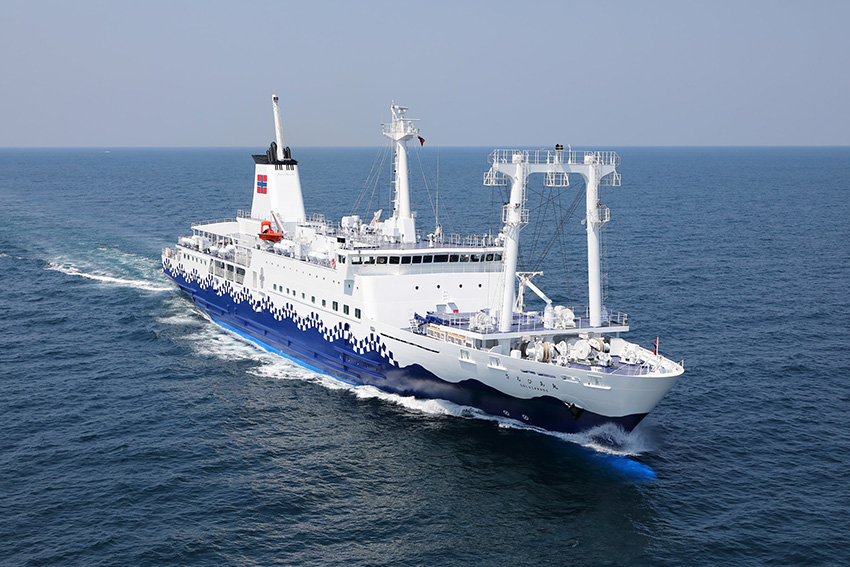
Large Passenger Ship Salvia Maru
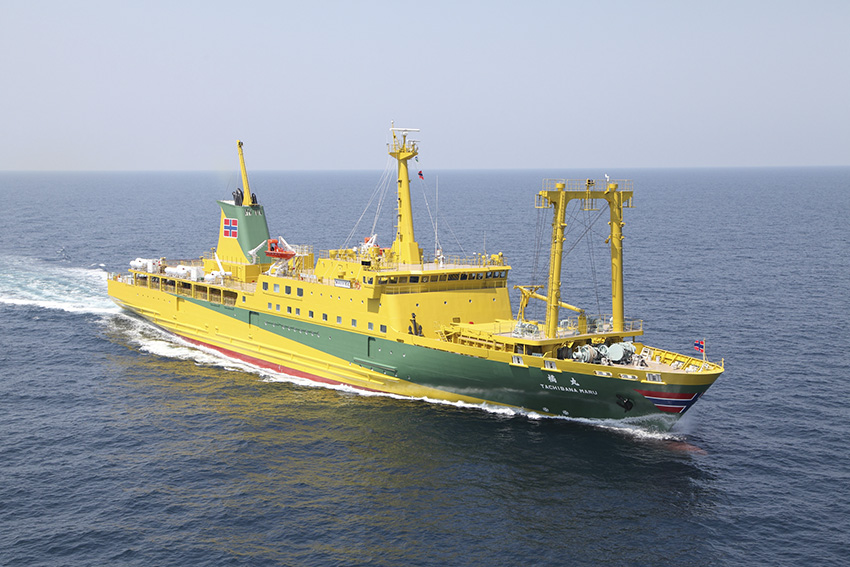
Large Passenger Ship Tachibana Maru
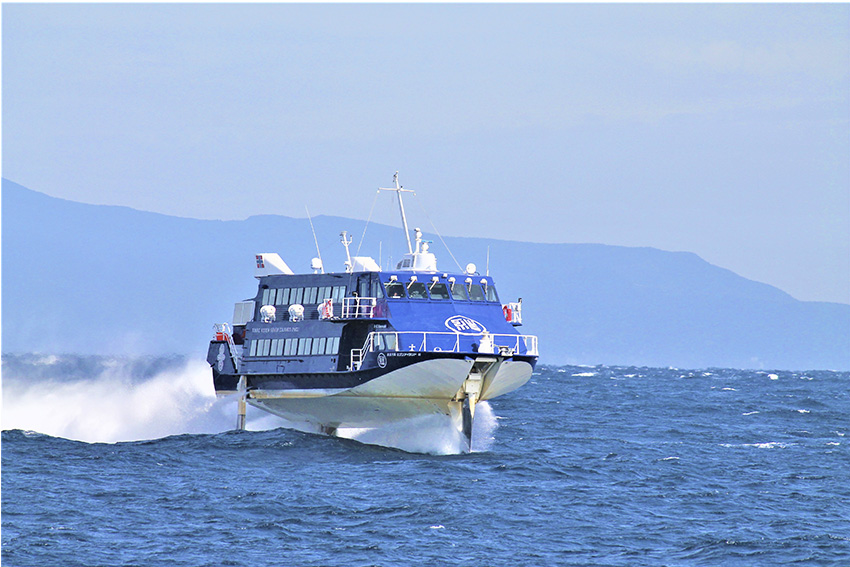
High-Speed Jet Boat Seven Island Yui
Previous Next
There has been a global shift from fast-paced sightseeing toward slow travel, with travelers seeking immersion and meaningful experiences. Ferry travel offers scenic views of the Izu Islands and a more relaxed pace. How are you thinking about leveraging the global slow travel trend to enhance passenger experience and attract new travelers?
Before high-speed vessels were introduced 23 years ago, all of our services were essentially slow travel. The introduction of jetfoil vessels changed our customer base significantly. These vessels do not sway much and feel similar to traveling by car, which attracted families and travelers with children. Because travel time was shortened, day trips became possible. On the other hand, conventional ferries represent slow travel. One challenge we face is that our services are also essential transportation for island residents. About 30 percent of our passengers are local residents. Because of this, we cannot raise fares freely, and port infrastructure on the islands is limited. Piers are small, and we cannot operate very large vessels. As a result, it is difficult to offer luxury-style amenities or entertainment facilities onboard, unlike large cruise ferries.
Some passengers who love ships may feel that the onboard experience is limited, and that is something we are aware of. However, because our vessels serve as lifelines for island communities, we must balance comfort with practicality. This balance between transportation infrastructure and tourism experience remains one of our biggest challenges.
In terms of experiences on the islands themselves, what kinds of long-stay or immersive experiences are possible, and how do you see these contributing to regional revitalization?
One defining feature of the Izu and Tokyo Islands is that every island has hot springs. About 100 years ago, before World War II, Europeans visited islands like Shikinejima and built hotels and cottages around hot springs, staying for extended periods. At that time, the islands were used as healing destinations, what we might now call healing islands, where people came for wellness and recuperation.
We want to build on that history by making use of the islands’ rich natural environments. Beyond scenery, there is also human warmth and community. We want travelers to engage with both nature and people through what we might call interactive or immersive travel. At the same time, island communities face population decline, aging, and low birth rates. Increasing permanent population is not easy. Instead, our strategy focuses on increasing weekly, monthly, and annual populations through long-stay tourism. By encouraging longer stays through wellness, nature-based experiences, and hot springs, we aim to revitalize island economies. Each island is different, but by incorporating nature into product development and encouraging longer stays, we hope to support sustainable revitalization.
Are you considering developing new hotels, or offering packages such as day trips with hiking or birdwatching experiences?
Ideally, we want to develop all of those offerings. On Oshima, for example, there is the Oshima Onsen Hotel, and a new hotel is being developed nearby under the guidance of the Tokyo Metropolitan Government. Accommodation capacity has historically been limited, so strengthening lodging infrastructure is important. At the same time, we want to expand experiential offerings such as hiking, birdwatching, and daily activity tours as part of comprehensive travel packages.
Turning to inbound tourism and regional revitalization, inbound travelers currently account for about five percent of your passengers. As the government promotes inbound tourism, are you considering new strategies or specific target segments such as particular age groups or nationalities?
When it comes to inbound tourism, it is still difficult to define very specific targets. Domestically, Japanese travelers effectively span all segments. Seasonality plays a major role. During peak seasons, we see more young travelers, while during shoulder seasons, travel patterns differ. Young travelers today tend to move in small groups of two or three rather than large groups. Often, they travel without a specific agenda. The act of going to an island itself becomes the purpose, rather than a checklist of activities. They simply want to place themselves in a natural environment. This nature-based tourism trend is becoming more prominent.
Because of this, it is difficult to define a single target segment. Ideally, we want people of all ages to visit. To make that possible, language support and accommodation infrastructure are critical. For inbound travelers, communication barriers and lodging availability remain key challenges that must be addressed.
For inbound travelers, partnerships with overseas travel agencies and tour operators are often essential. Are you actively seeking international partners, and what kinds of platforms are you currently using?
We currently operate several platforms. For inbound travelers, we have created a dedicated reservation site called Tokyo Islands, which allows overseas customers to make reservations directly, even from abroad. There can be some time lag, but the system allows full booking access internationally.
We also work with online travel agencies. For example, Direct Ferries handles ferry ticket distribution, and we receive bookings daily through such platforms. However, demand tends to concentrate in peak seasons. One of our ongoing challenges is how to distribute demand more evenly throughout the year.
Could you share some examples of unique local culture, arts, or crafts found on the islands?
Each island has its own traditional culture. In the Izu Islands, salt production is limited, so locals developed preservation methods using sauces aged for over 100 years to make dried fish. This technique has been passed down for generations. The Izu Islands boast unique culinary traditions and crafts. Due to salt’s scarcity, a culture developed where dried fish is prepared using a sauce preserved for about 100 years. Additionally, Niijima Island possesses a stone called Koga stone, found only on Niijima and in certain regions of Italy, which is used in glass crafts and stone art. Each island possesses such distinct cultures, and we believe supporting local artists and artisans is essential.
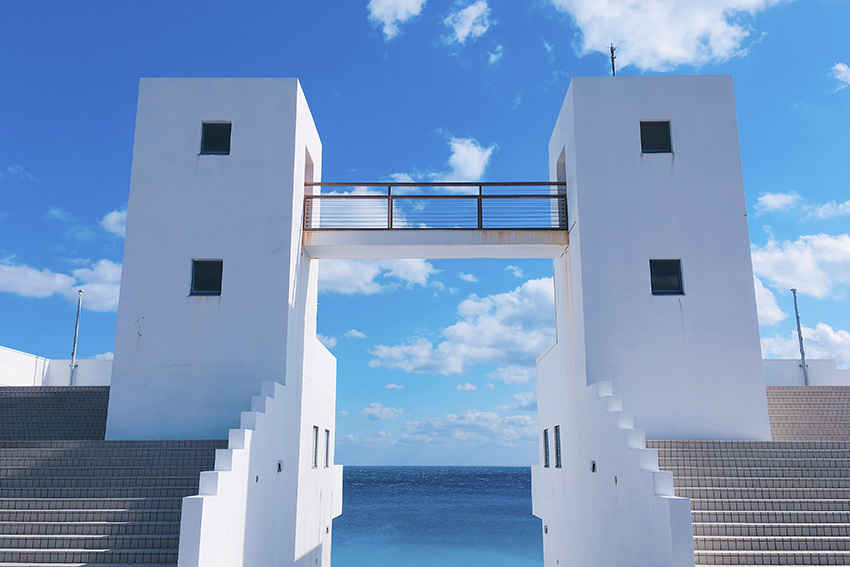
Main Gate at Habushiura Beach on Niijima
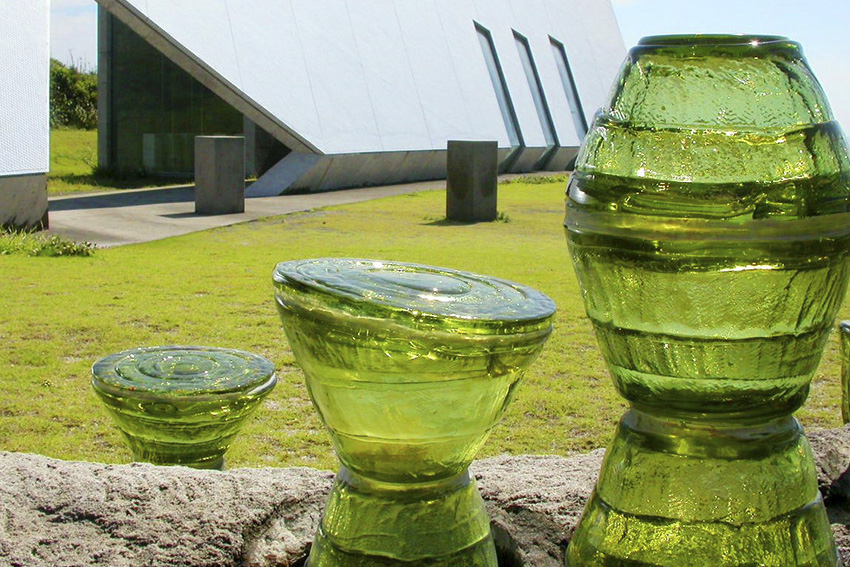
Glass Art on Niijima
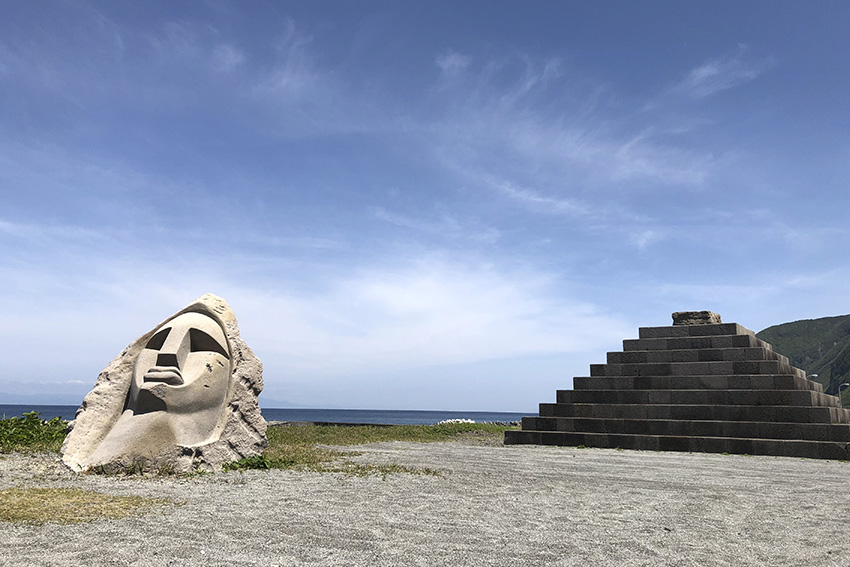
Stone Art on Niijima
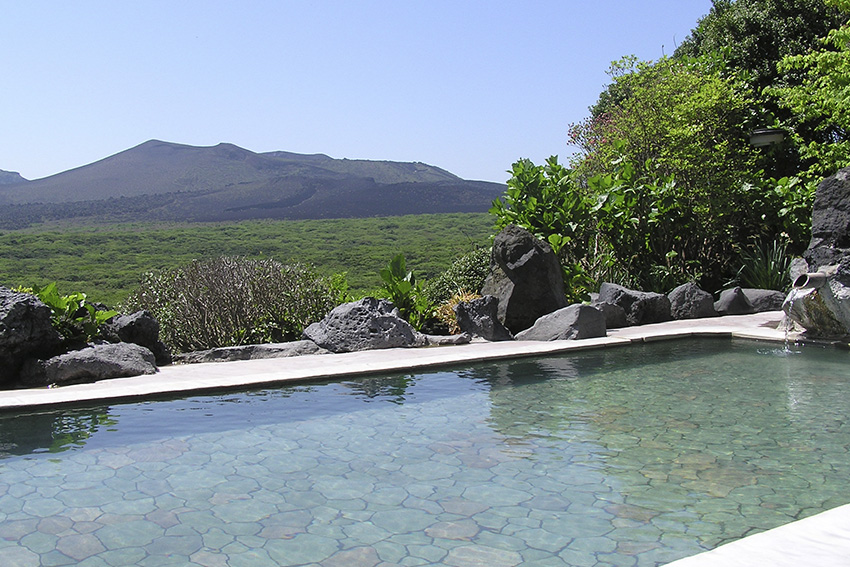
Oshima Onsen Hotel Open-Air Bath Overlooking Mt. Mihara
Previous Next
Are international visitors able to observe or participate in these traditional crafts?
Yes, absolutely. Niijima hosts a world glass festival that attracts artists and visitors from around the world. Participants can observe and work with glass using local materials. These festivals are very popular with international visitors and help showcase the islands’ unique cultural assets.
The Shimajiman Festival reportedly attracted over 100,000 visitors in 2025 and is actively supported by local organizations to promote sustainable tourism. How do initiatives like this contribute to regional revitalization in the long term?
This festival is organized by the Tokyo Metropolitan Government. Its purpose is to create island fans and promote both the islands and Minato Ward, which is the only ward in central Tokyo with ferry ports. The festival is held every two years and serves as a large-scale promotional event. Many former island residents also participate, strengthening ties between urban and island communities. These events help build long-term awareness, loyalty, and sustainable interest in the islands.
Finally, your company has a history of over 130 years, and you are the 23rd president. What legacy do you hope to leave before passing the company on to the next generation?
Our company has been in operation for about 136 years, and I am only the second president to have come up through the company itself, rather than from a bank. Over the past ten years, we have renewed more than ten vessels, so from a fleet perspective, we are well prepared.
Now, the key question is how to ensure our ships are fully utilized in a way that benefits island communities. Our future lies in coexistence and shared prosperity with the islands. As island populations age and local economies weaken, ferry companies must become more deeply involved in regional revitalization. At the same time, we are a shipping company, so safety must always come first. By prioritizing safety and building trust on that foundation, we can continue to serve both residents and travelers while supporting the sustainable future of the islands.
For more information, visit their website at: https://www.tokaikisen.co.jp/en/
AloJapan.com