
This article is written by a student writer from the Her Campus at Wake Forest chapter and does not reflect the views of Her Campus.
Inspired by stories of the “underwater world” that Naomi Osaka reads to her daughter, she entered her 1st Round Australian Open Match in an ensemble that has sparked a widespread debate.
The Australian Open begins the Grand Slam Season in mid-January and lasts until the end of the month. This year, Japanese-American tennis player Naomi Osaka opened her season dressed in a jellyfish inspired outfit (The Guardian), drawing heavily upon the imagery of the sea creature. A white sheer veil lined around her hat as she made her way onto court to face Antonia Ruzic. Osaka’s hat was Brummel-esque and evoked elements of 19th-century dandyism. She took this inspiration even further as she completed the look with a white parasol.
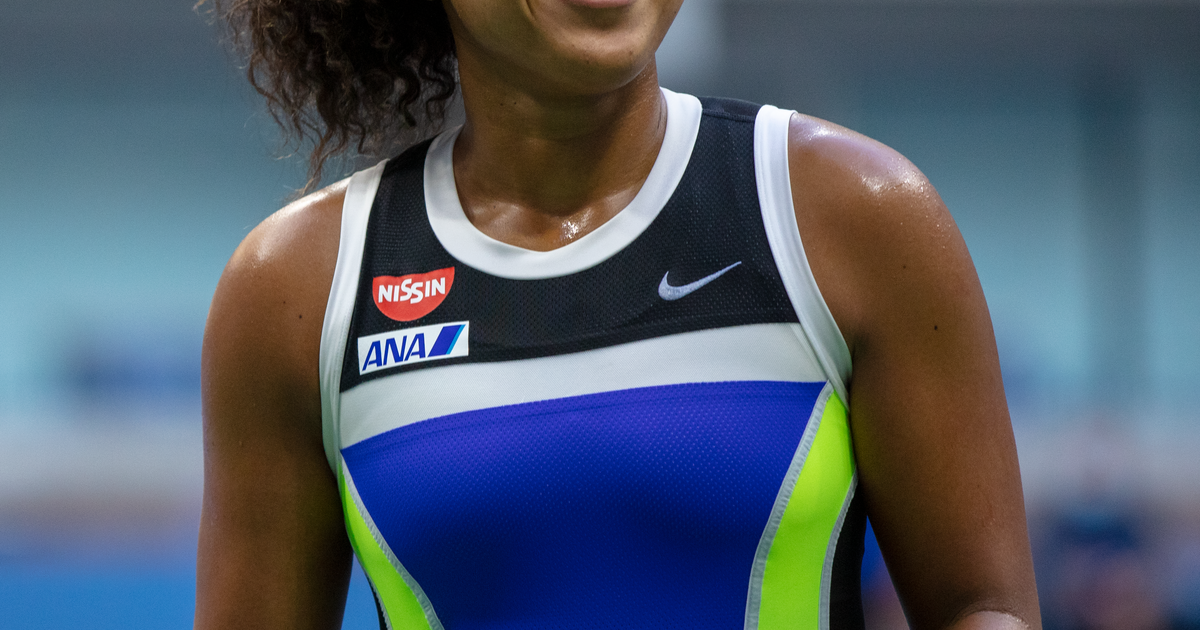
Osaka collaborated with Nike, Marty Harper, and Robert Wun in her appearance. When creating parts of the look, Wun was inspired by an iconic moment during the 2021 AO when a butterfly landed on Osaka’s nose (The Guardian), which became an accent on the white hat. The hat wasn’t the only show-stopping moment of the look though. Her layered pleated pants matched the upper part of her ensemble with fluidity and grace, while her razor back turquoise tennis dress —completed with baby yellow and light green ruffled tendrils — pleasantly contrasted the white.
The attire evoked a range of opinions. Coco Gauff, the two time Grand Slam champion, remarked, “I think what she’s doing for the sport and the fashion is cool and bringing new eyes to the sport.” Australian Open commentators positively remarked on Osaka’s outfit, calling it the “ultimate walk-on” and “brilliant”. However, others differed in opinion, claiming that it took away from the traditional aspect of the game that should be preserved. Jamie Murray, a doubles champion and brother of renowned tennis player Andy Murray, was not impressed, noting how Osaka’s getup resembled that of Mary Poppins (Sky Sports) and even going as far as to state, “she’s on something.”
Despite the comments, Osaka has expressed that “I don’t do this for them though — they will never get it, and I don’t want them to. I do this for the people that are like me.” Her comments came after an onset of backlash that followed her subsequent match against Romanian veteran Sorana Cîrstea. The two shared a curt handshake after Cîrstea expressed frustration with Osaka’s self-affirming “come on” shouts between points, which are permitted by Australian Open rules and across most professional tour events.
But how warranted is the critique of Osaka’s outfit as being “classless” when similar disruptions of tradition have been accepted from other sports, especially where white players are concerned? From catsuits at Wimbledon and the French Open to tutus at the US Open, there have been a variety of stylistic choices to evolve fashion (Vogue) and represent individuality on the world stage. We see it in almost every sporting event, whether it’s NBA and NFL players walking through the tunnel or soccer players walking on to the pitch. Tennis has the additional element of a “walk-out,” a moment where players can choose to bask in the spotlight and are entitled to means by which they express themselves
Osaka’s performance (both on the court and in her outfits) has the ability to bridge the sport with new audiences and evolve the game in a positive way. Her outfit did not erode tennis tradition; it exposed whose expressions have historically dictated the norms.
AloJapan.com