
Voters are less likely to support female politicians when they are wearing face masks, while there was no such effect for their male counterparts, according to a study by a Japanese university research team.
The findings, published last month ahead of Sunday’s general election, underscored the differences in how the public perceived politicians following the Covid-19 pandemic, when wearing masks became more common for politicians across the world.
“Differences in how masked faces are perceived could work against women candidates,” said Kiho Muroga, an associate professor on labour economics at Kyushu University, who jointly conducted the survey with Charles Crabtree, then affiliated with Dartmouth College in New Hampshire.
She urged female politicians to figure out creative ways to communicate during election campaigning and asked voters to watch for bias in how they judge women politicians.
The survey was conducted in August 2020 with 1,508 people in Japan aged between 18 and 74 who were shown photos of politicians, such as the late prime minister Shinzo Abe and Tokyo Governor Yuriko Koike, with and without masks.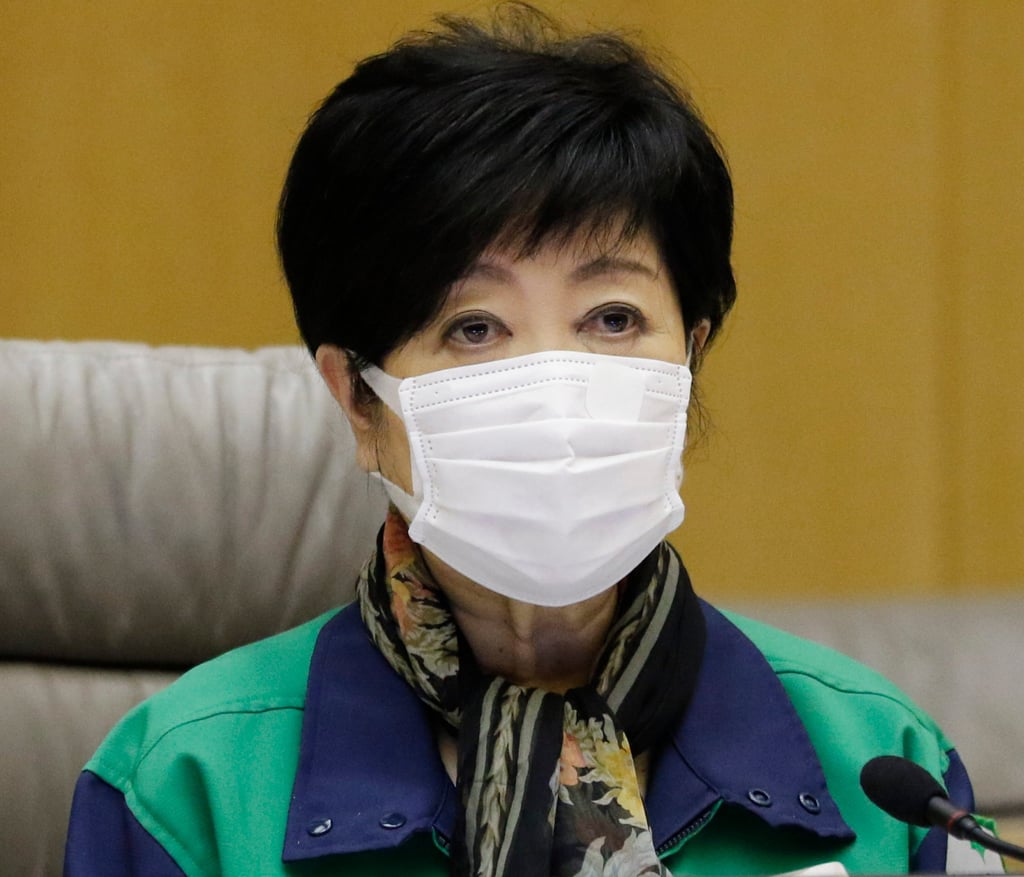 Tokyo Governor Yuriko Koike speaks during a Covid-19 meeting in September 2021. Photo: dpa
Respondents rated the images on a five-point scale for support, attractiveness, competence, intelligence, strength and trustworthiness.
AloJapan.com