
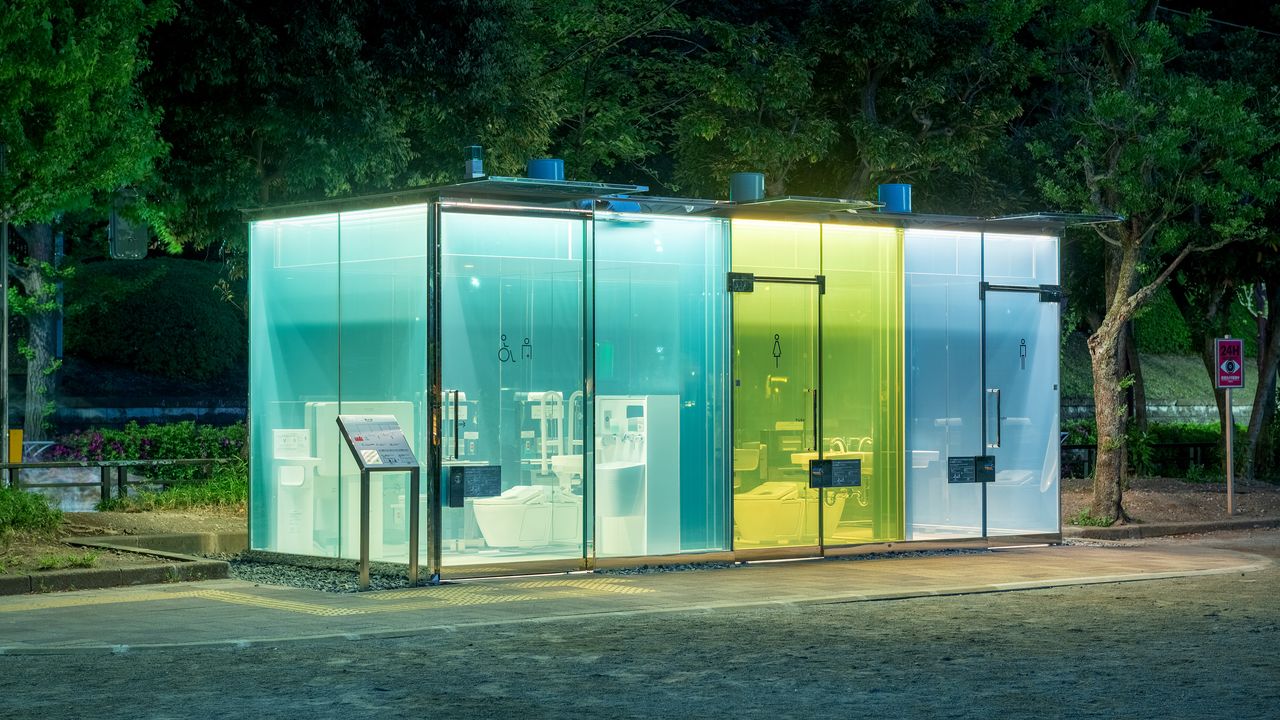
At first glance, the concept sounds absurd—maybe even inappropriate. How can a city council commission transparent toilets as vestiges of urban privacy? The surprising answer comes from Japan’s Shigeru Ban, winner of the Pritzker Prize among other honors. Why glass, you may ask? For a reason that we may take for granted. Shigeru Ban’s design is one of many under the Tokyo Toilet initiative, which is managed by the Shibuya City (and additionally supported by the Nippon Foundation, Toto, and other sponsors.) It aims to bring innovative design to the public hygiene sector. “There are two things that people are concerned with when they enter a public toilet, especially one located in a park,” a toilet manifesto states on the website. “The first is cleanliness, and the second, when someone is inside using the toilet, is privacy.” Transparent walls speak to the first concern, allowing people outside to judge the cleanliness of a toilet before deciding to enter. But what about privacy?
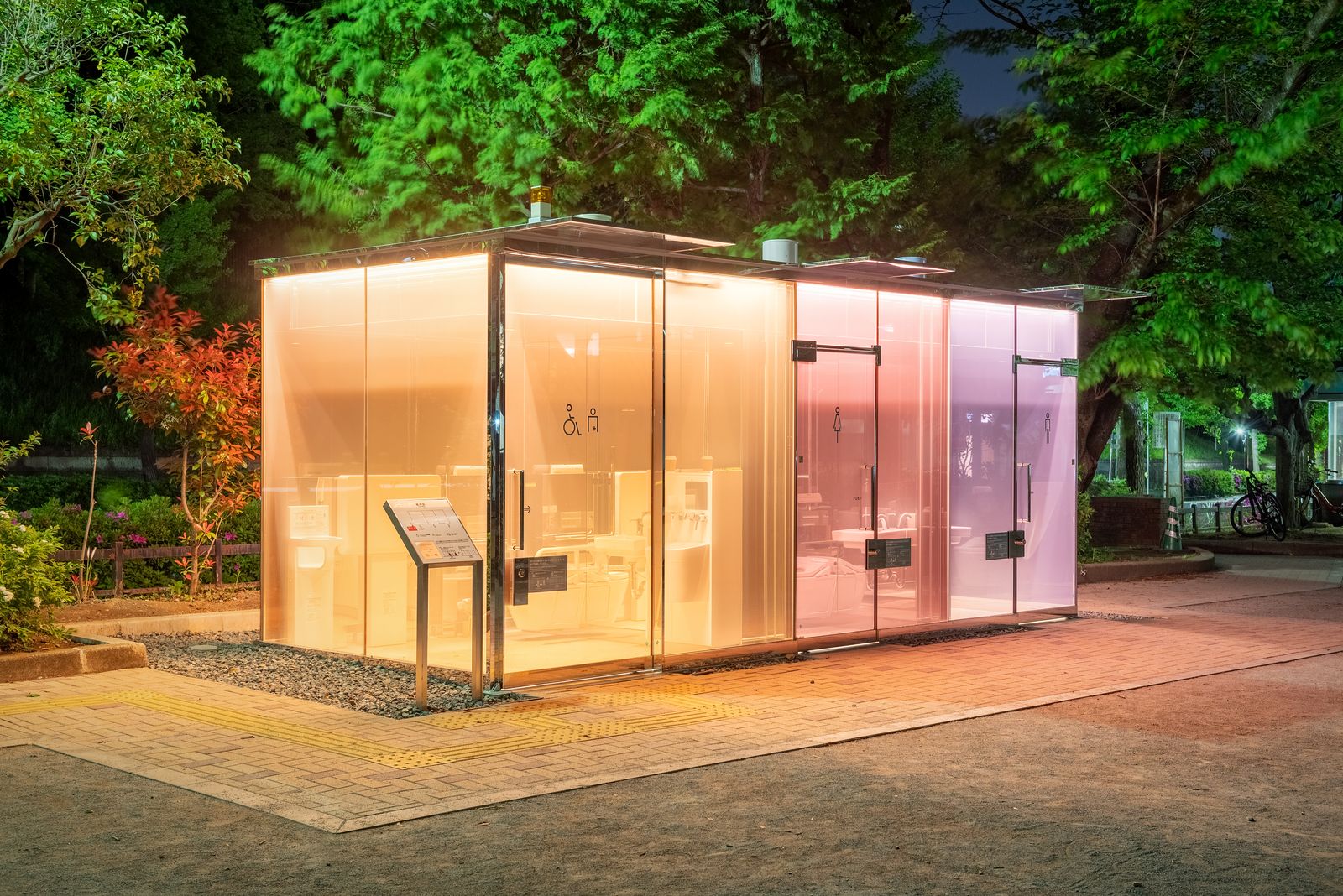
The public toilets that Shigeru Ban designed for Tokyo, seen here in a warm range of colors.
High design meets flawless functionalism
Located in Tokyo’s Yoyogi Fukamachi and Haru-no-Ogawa Parks, the blue and orange toilets appear like beacons. They can be spotted by passers-by at every hour of the day thanks to their striking design, but they take on an especially magical appearance while glowing at night. Their colored glass walls are not only stylish but functional as well, allowing users to check whether the toilet is occupied before entering, as well as get a sense of how clean it is from the outside. Once the door is locked, however, the latest smart glass technology ensures the exterior becomes opaque. Another functional feature of these toilets is that they are divided into three different spaces, with ones reserved respectively for women, men, and people with reduced mobility.
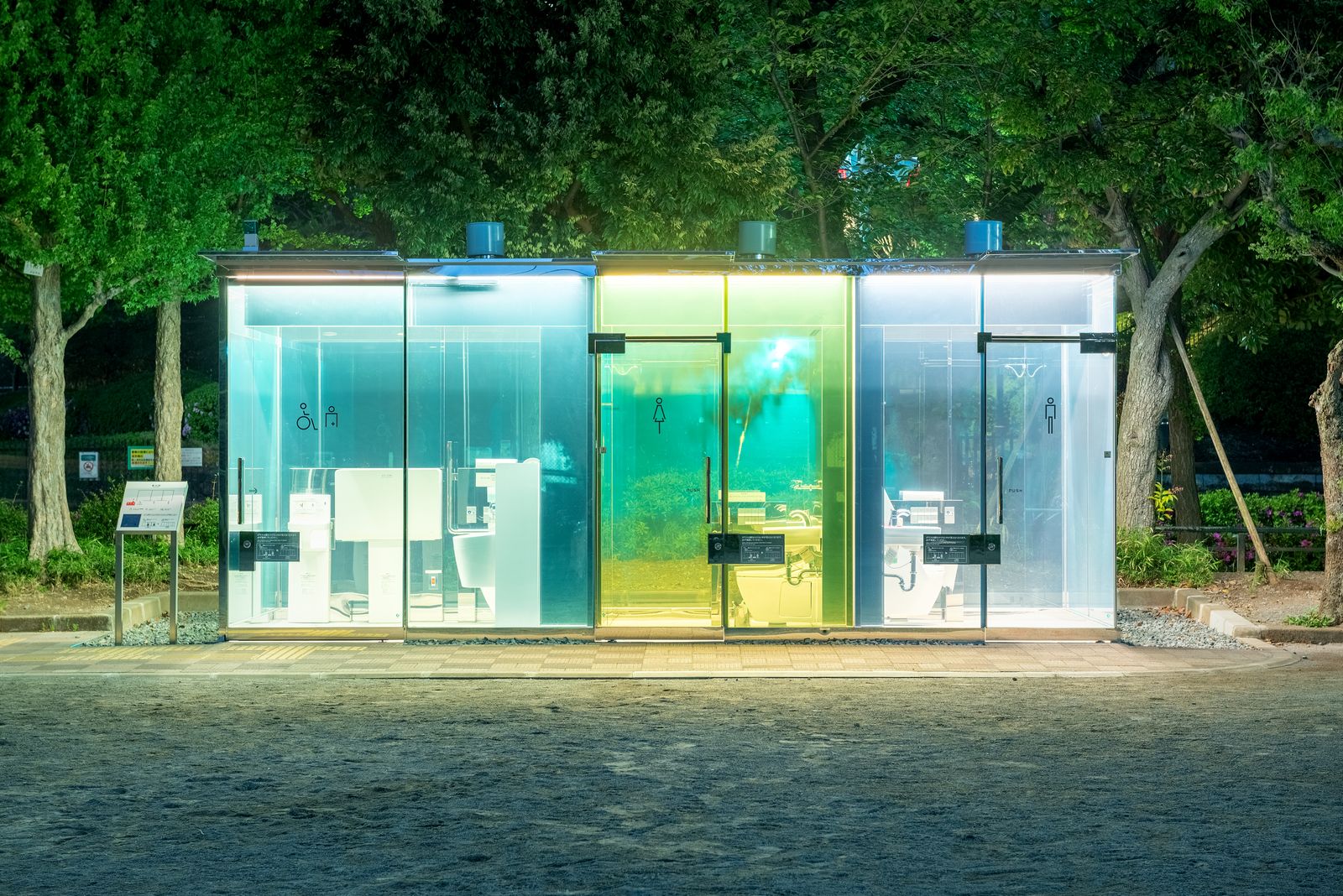
Here, the public toilets that Shigeru Ban designed for Tokyo are seen in a cool trio of colors.
AloJapan.com