
Summary
Akio Isshiki Architects built a 96-square-meter Osaka home featuring a charred cedar exterior and traditional shinkabe construction
The design uses dual-purpose cedar boards for floors and ceilings, maximizing efficiency in a flagpole-shaped lot
An engawa veranda and tokonoma alcove blend heritage with modern life
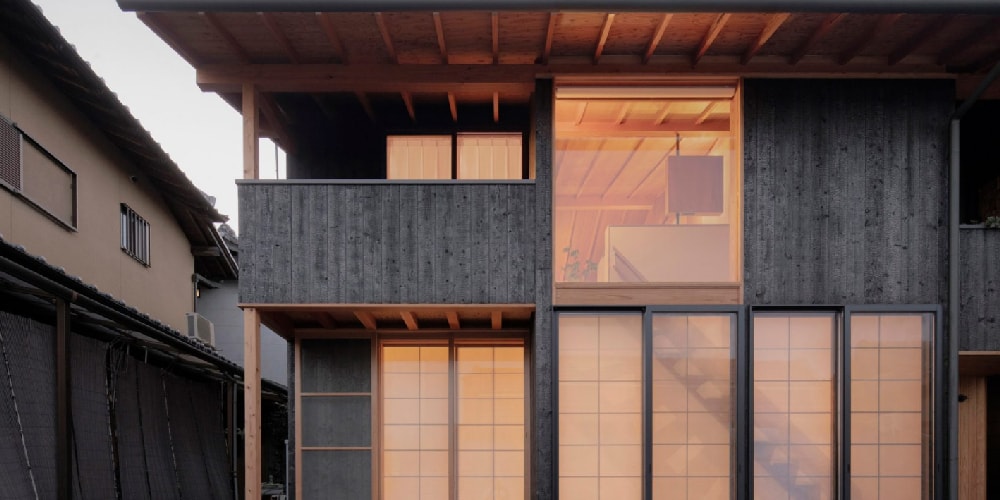
In Osaka, Japan, Akio Isshiki Architects has completed a 96-square-meter residence in Saidera, designed to harmonize traditional Japanese wisdom with contemporary living. Built on a challenging flagpole-shaped lot, the home adopts a simple two-story gabled form finished in charred cedar (shou sugi ban) to blend with its eclectic neighborhood. The architects utilized shinkabe construction, a traditional method where the timber structural frame is exposed,
Inside, the design prioritizes openness and efficiency by using a single layer of cedar boards as both the second-floor flooring and the first-floor ceiling. This dual-use approach reduces materials and construction processes while maintaining a sense of spaciousness. The kitchen and dining area, placed at the heart of the home, reflect the couple’s passion for cooking and serve as a central gathering space.
Toward the east, where the land drops, a large opening and an engawa veranda extend the living experience outdoors, blurring boundaries between interior and exterior. Traditional elements such as tatami flooring, a floating storage closet, and a small tokonoma alcove are integrated with modern furnishings, creating a dialogue between heritage and contemporary domestic life.
The project embodies Isshiki’s vision of a “neutral Japanese house” that balances tradition with modern needs. Sliding doors framed by exposed beams, foldable wooden panels that disappear into built-in furniture, and carefully considered proportions all reflect a philosophy of mobility, dual-use, and understated beauty.
AloJapan.com