
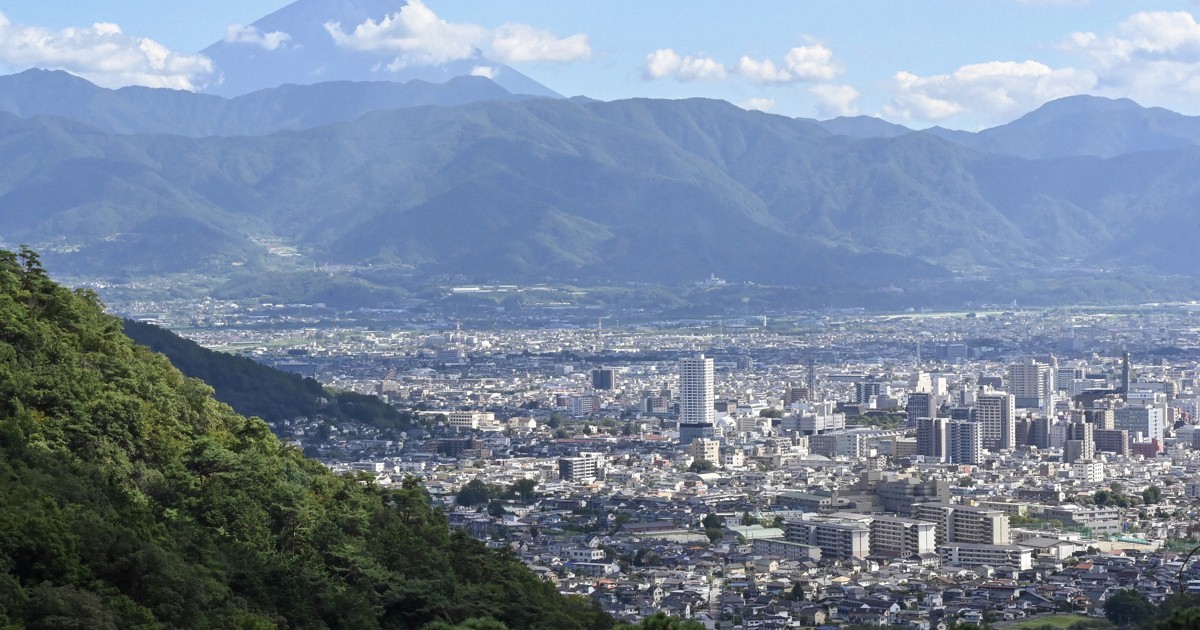
One of a minority of Japanese cities that don’t share a name with the prefecture they are the capital of, Kofu is the economic, cultural and political center of Yamanashi Prefecture, located just a 90-minute express train hop away from Tokyo’s Shinjuku Station.
The city lies at the heart of the Kofu Basin under the watchful gaze of Mount Fuji, surrounded by majestic mountain ranges featuring some of the most iconic peaks in Japan. It stretches across a long 41-kilometer strip, boasting convenient metropolitan living at its center, rural agricultural charm in the south, and scenic hikes in the Chichibu-Tama-Kai National Park in the north. Where one would typically find rice fields attached to every other house are lush trellis-style vineyards, which thrive in Kofu’s sun-soaked climate and produce high-quality Japanese wine — which Kofu is officially recorded as the birthplace of — that can hold its own on the international scene.
With ever greater numbers of tourists flocking exclusively to the Fuji Five Lakes area to get their postcard views of Japan, it appears more important than ever to shine a spotlight on Kofu as the ideal gateway to Yamanashi’s rich treasure trove of cultural heritage and natural resources, and a hidden gem destination in its own right.
A gateway to majestic nature
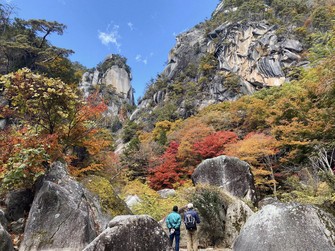
Visitors gaze up at Kakuenpo Peak, Shosenkyo’s most iconic sight. (Photo courtesy of the author)
Hiking afficionados will want to mark Kofu as the perfect base from which to start their journey to Japan’s three highest mountains, as well as visit other equally stunning, more accessible peaks (such as Kinpu, Daibosatsu and Mizugaki, all featured on the 100 Mountains of Japan list) and seasonal locations. Among those is Shosenkyo Gorge, registered as a Japan Heritage site since 2020, which boasts a reputation as “Japan’s Most Beautiful Gorge;” a mostly self-proclaimed title, but one you would have a hard time arguing against after a gentle trek along its serene streams, spectacular cliff faces, vibrant greenery in early summer/fiery foliage in the fall, and dynamic waterfalls.
While a visit to Shosenkyo is doable as a day-trip from Tokyo, I would be bad at my job if I didn’t recommend staying one or two nights in town so you can avoid a race against the clock, treat yourself to local delicacies — such as “hoto,” a hearty dish of thick noodles simmered in a rich broth with plenty of vegetables — and a post-hike soak in one of the city’s many onsen facilities, and enjoy the rest of what the city has to offer.
A slip through time to feudal Japan
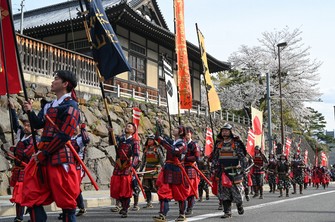
Parade of the “Koshu Battalion Deployment,” a reenactment of Takeda Shingen’s troop mobilization during the Battle of Kawanakajima against rival warlord Uesugi Kenshin, and the main event of the Shingen-ko Festival. (Photo courtesy of the author)
While in town, take the time to learn about the local figure whose name is on everybody’s lips, every sign and every souvenir box. The solemn figure of Takeda Shingen greets you the moment you step out of Kofu Station, in the form of an imposing bronze statue flanked by a cherry blossom tree. Once you spot his famous four-diamond crest, it’s all you will ever be able to see in the city.
Lord of Kai Province (present-day Yamanashi) from 1541 to 1573, Takeda Shingen was a major figure of the Warring States period, a turbulent time where rival warlords fought for control of a splintered Japan. Shingen was a strong contender, but died of a sudden illness at the age of 53, and his clan did not survive much longer. But his popularity was such that in 1919, nearly 350 years after his death, people demanded that he be deified and a shrine bearing his name built on the ruins of what was once the clan’s fortified residence, which visitors can learn more about at a nearby museum. When visiting Takeda Shrine, don’t leave without grabbing a box of “Shingen-mochi;” bite-sized rice cakes sprinkled with soybean flour and drizzled with brown sugar syrup, and Kofu’s go-to souvenir.
Shingen’s achievements are commemorated through an exciting succession of events every April, starting with the Shingen-ko (“Lord Shingen”) Festival, which takes place on its first weekend and features parades, battle reenactments and theatrical performances against a backdrop of cherry blossoms. Its main highlight is a giant procession featuring over 1,000 participants dressed as Warring States era warriors, which holds the Guinness World Record for the “Largest Gathering of Samurais.” Shingen-ko is followed by a smaller-scale event on April 12, commemorating the anniversary of Shingen’s death: the Horseback Procession of the 24 Generals of Takeda Shingen, where anyone can apply for a chance to step into the (straw) shoes of a samurai general for a day and parade through Kofu on horseback.
A rich tradition of artisanship and creativity
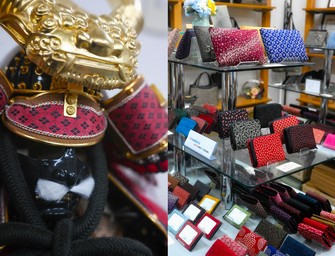
Koshu Inden products lined up at “Inden no Yamamoto,” one of two Inden businesses in Kofu, and a recreation of what Inden-adorned armor might have looked like. (Photos courtesy of the author)
Another glimpse into Kofu’s feudal past can be seen proudly displayed in every gift shop in the city. “Koshu Inden” is a style of leathercraft which originated in the golden age of samurais, when sturdy deerskin painted with lacquered patterns was used to adorn the helmets and armors of warriors. With changing times came changing needs, but skilled craftsmen still follow the ways of the past to produce modern accessories spanning wallets, pouches and handbags, carefully crafting each piece by hand in a unique blend of tradition and modernity. Each design is packed with symbolism, reflecting Japan’s tradition of embedding protective and auspicious elements in everyday art; more than a functional souvenir, every item is a lucky charm, and a piece of living history.
The mountains that formed Shosenkyo also helped shape a major pillar of Kofu’s industry. Their once abundant deposits of rock crystal fostered the development of polishing techniques, which were passed down and honed by generations of skilled craftsmen who have remained concentrated in the area and now produce one third of Japan’s jewelry, handling all areas of the production line and earning Kofu recognition as the “Jewelry Capital of Japan.” Gazing at the glittering city lights of the Kofu Basin is famously likened to looking into a jewelry box; and Kofu’s future is shaping up to be just as bright.
City information
Population: 182,605 (as of December 2025)
Number of foreign residents: 7,850 (as of December 2025)
Area: 212.47 square kilometers
Convenient access to the city: Kofu Station (90 min. from Shinjuku Station by express train, or 2 hours by highway bus). Direct access from both Haneda and Narita airports by highway bus.
About the writer
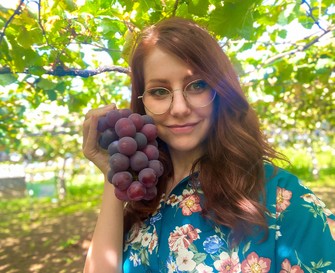
Fanny Orange is seen posing at a grape farm in Kofu, holding a bunch of Kyoho grapes. (Photo courtesy of the author)
Name: Fanny Orange
Country of origin: France
Years living in Japan: Six
Favorite Japanese foods: Ramen, tonkatsu, agedashi dofu
Favorite things about Japan: Train station stamps and shrine ema. people’s appreciation for nature and the changing seasons.
Instagram (coolkofu) https://www.instagram.com/Coolkofu/
Facebook (Cool Kofu En) https://www.facebook.com/coolkofu.en
***
In this “Japan Uncovered” series, coordinators for international relations from around the world introduce the charms of the municipalities where they live and work in Japan.
AloJapan.com