
 The Yomiuri Shimbun
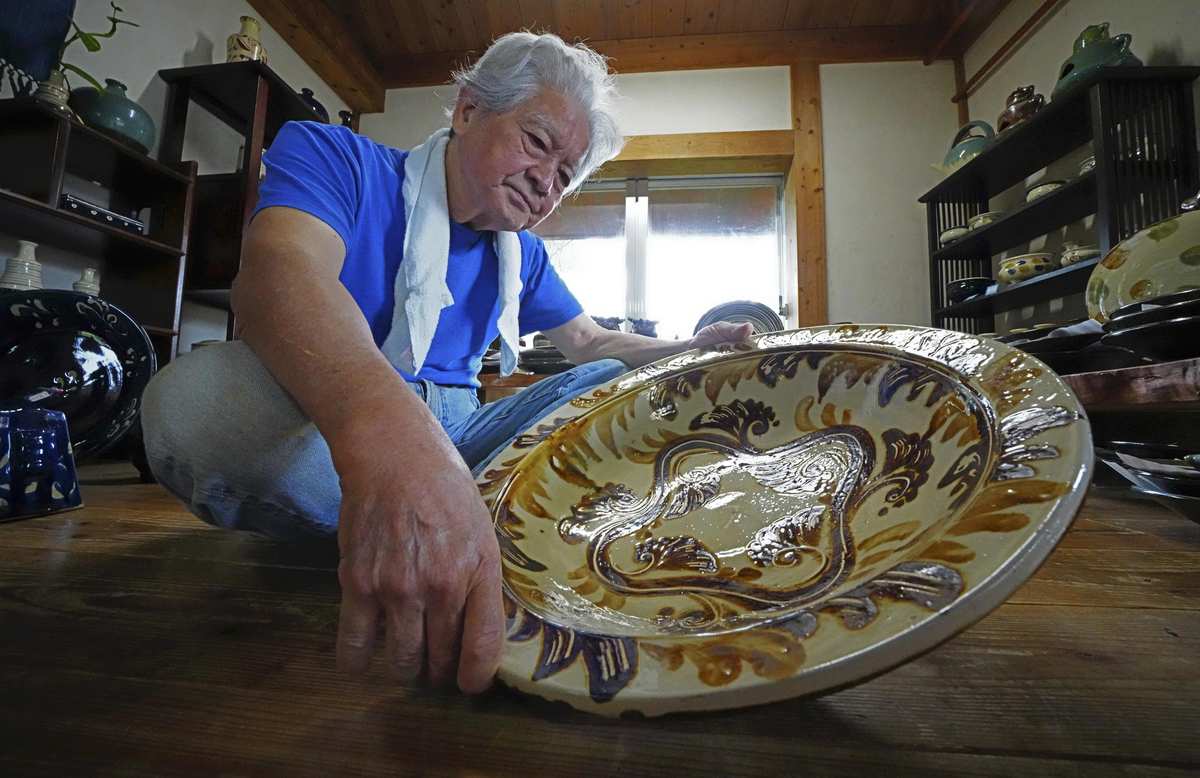
Tsunehide Shimabukuro holds a large plate measuring over 50 centimeters in diameter that he produced about 15 years ago.
11:44 JST, January 31, 2026
YOMITAN, Okinawa — Tsuboya ware, a representative form of Okinawan pottery, is said to have begun in 1682, when the administration of the Ryukyu Kingdom consolidated three kilns from Okinawa Island in the present-day Tsuboya district of Naha.
 The Yomiuri Shimbun
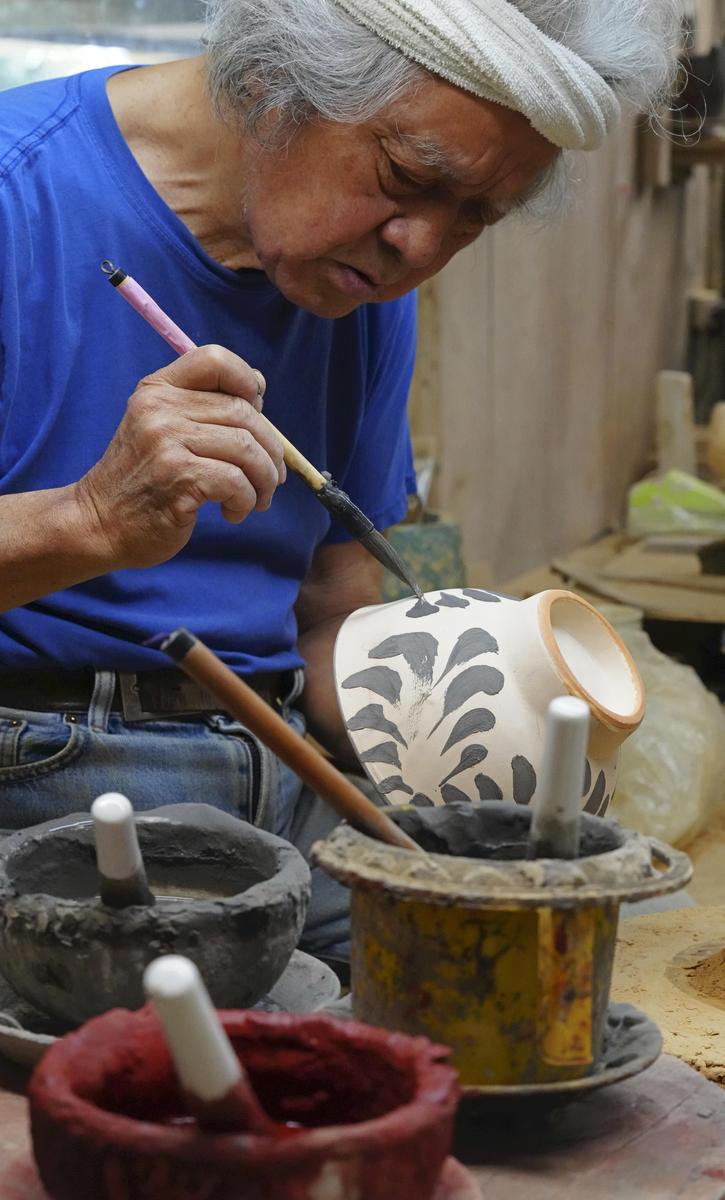
Shimabukuro uses Japanese brushes to paint traditional arabesque patterns.
Traditional Shisa guardian lion figurines are classic Tsuboya ware souvenirs for travelers to Okinawa, but tableware essential to daily life is also well-known.
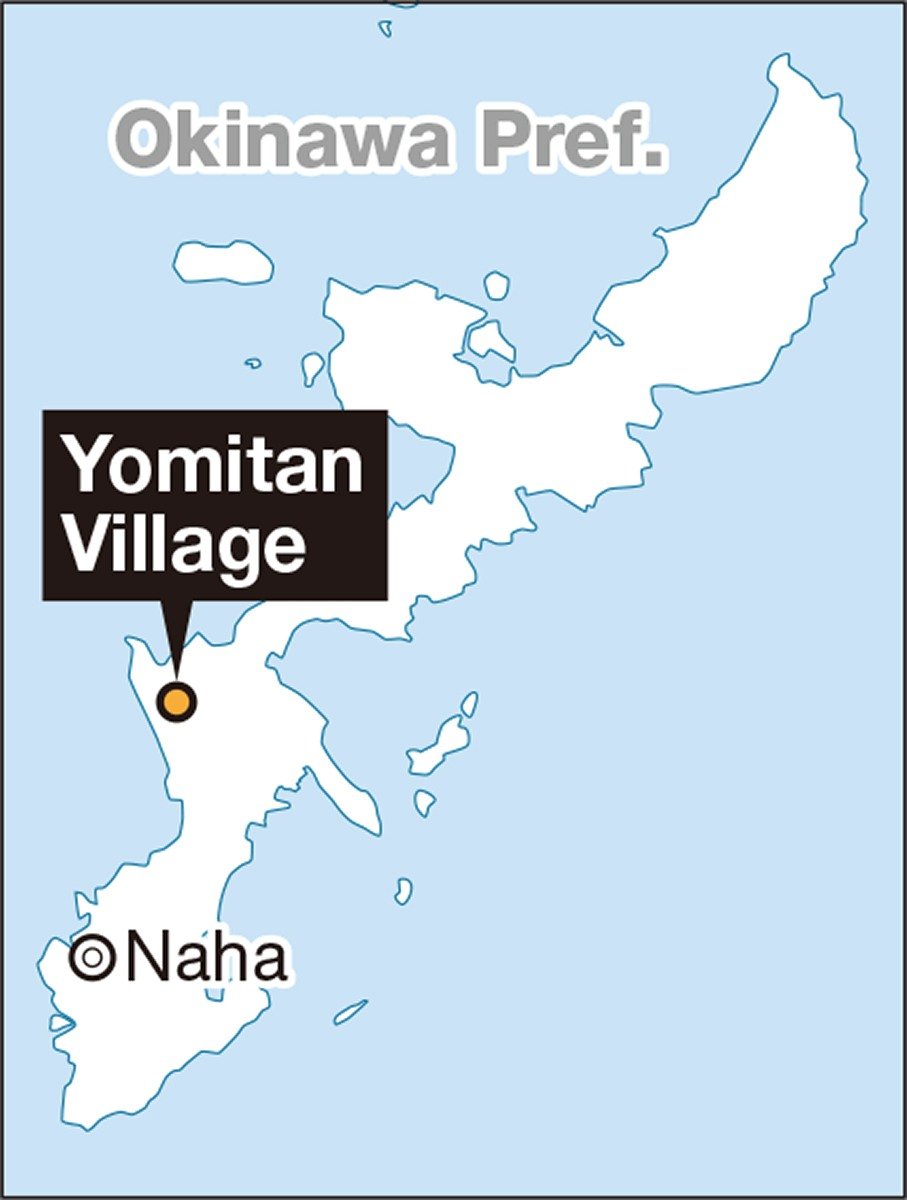
Potter Tsunehide Shimabukuro, 77, heads the Tsunehide Kobo studio in the village of Yomitan, 30 kilometers from Naha, which preserves the Tsuboya ware tradition.
The wares are painted with a traditional chrysanthemum arabesque pattern passed down since the Ryukyu Kingdom era, and Shimabukuro is the only artist at his studio who paints this onto the wares using Japanese brushes. In 2025, he was designated a holder of important intangible cultural property of Okinawa Prefecture.
 The Yomiuri Shimbun
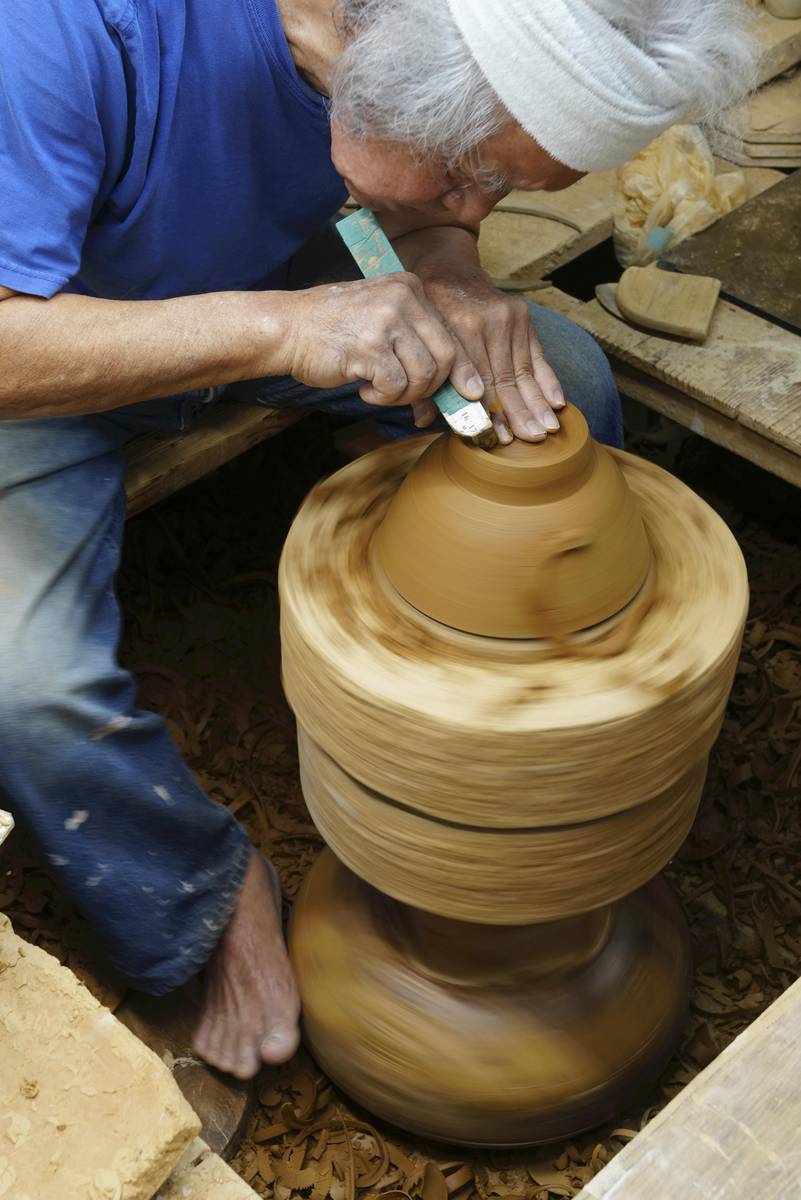
Shimabukuro spins a potter’s wheel with his foot and carves a ware.
The potter’s wheel that he uses was inherited from his father. He uses it to roll the clay and shape the wares, as well as to trim semi-dried clay using tools.
The wheel is spun by kicking the Ryukyu pine base, which is polished and has a luster — probably because Shimabukuro has used it almost daily for over 50 years. He has decided this will be the only wheel he will ever use.
“My body remembers the movements of this wheel, so I can’t use an electric one either,” he said.
‘Please give birth’ to wares
Shimabukuro was born in Naha’s Tsuboya district. In 1987, he became independent from his father’s studio and moved to Yomitan in the center of Okinawa Island, seeking the unique feel produced by climbing kilns.
 The Japan News
During the Battle of Okinawa in World War II, the island was set ablaze, but the Tsuboya district escaped major damage. Potters made tableware and other items to support the residents’ livelihoods. However, smoke from the burning wood became a problem for the surrounding areas with increased urbanization, forcing potters to switch from climbing kilns to gas ones and other means. Those who insisted on using climbing kilns moved to Yomitan.
One such potter was Jiro Kinjo (1914-2004), who went on to become a living national treasure. In 1972, he built the Jiro Kinjo Kiln in the village, which still produces a large volume of pottery three times a year. Shimabukuro continues to use the kiln today.
 The Yomiuri Shimbun
A potter places plates and other wares in the kiln chamber.
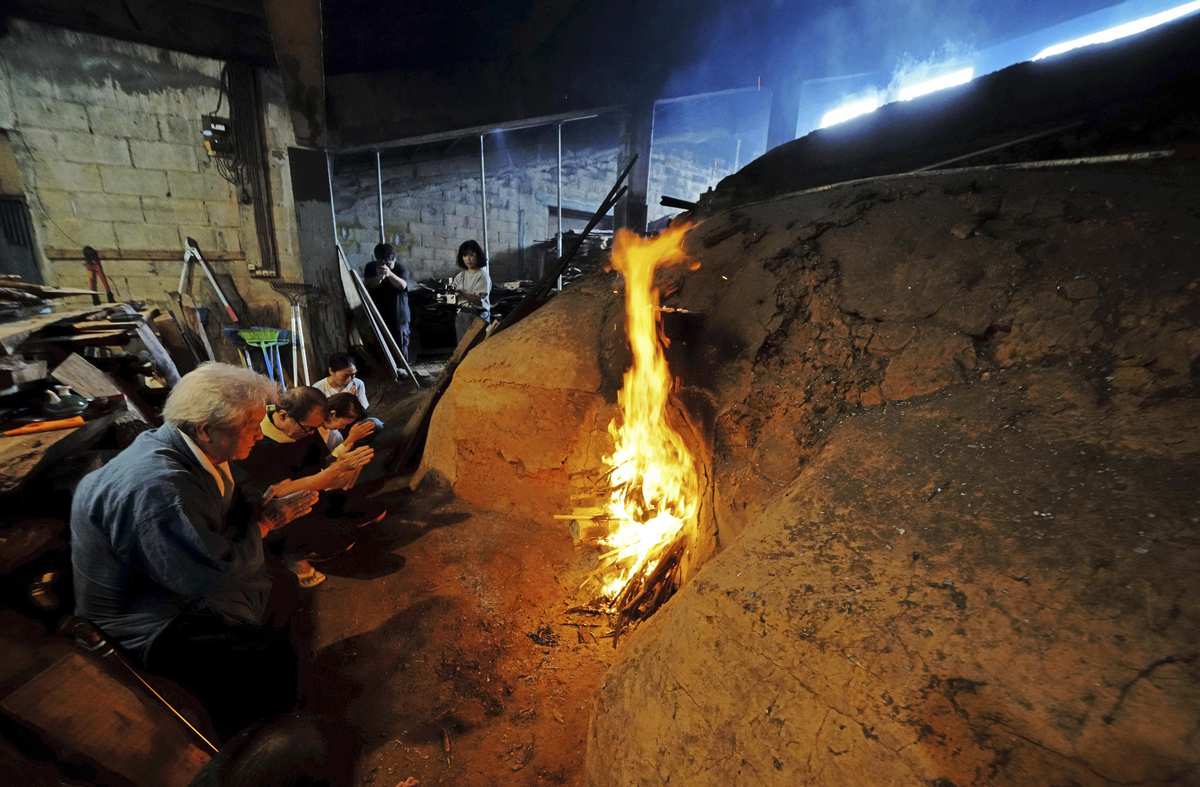
At 9 a.m. on Nov. 10, there was a firing ceremony, in which workshop masters and others got together and ignited the kiln. Eight workshops share the kiln’s six firing chambers. The section used by Shimabukuro’s studio is about 3.5 meters deep, with a width and height of about 1.8 meters. It is covered by an arched roof made of firebricks.
The firing began while Shimabukuro, the eldest member, chanted, “Please give birth [to the wares].”
Forty hours after the fire was lit, at around 12:40 a.m. on Nov. 12, the potters began throwing wood into the firing chambers, which had already been red-hot. This continued for over three hours until the temperature in the chambers had risen above 1,200 C.
< The Yomiuri Shimbun
Potters set a fire at the mouth of the kiln and clasp their hands together.
A potter used an iron rod to retrieve a small jar from within the kiln a few times. Once they had judged the glaze to have melted sufficiently, no more wood was added, and the kiln’s entrance and windows were sealed with earth and other materials. The kiln was slowly cooled to prevent cracking.
On Nov. 18, all the pottery was removed.
“Looks excellent,” Shimabukuro said with a satisfied smile.
Limited resources
Two techniques can be used in the production process of Okinawan pottery, which has been designated as a national traditional handicraft. One is firing molded clay pieces unglazed, and the other is applying glaze before firing. At Shimabukuro’s studio, the second method is predominant.
Both techniques primarily use Okinawan red clay, which is rich in iron and sourced mainly from areas on Okinawa Island. However, the price of the raw material has been going up due to scarcity.
 The Yomiuri Shimbun
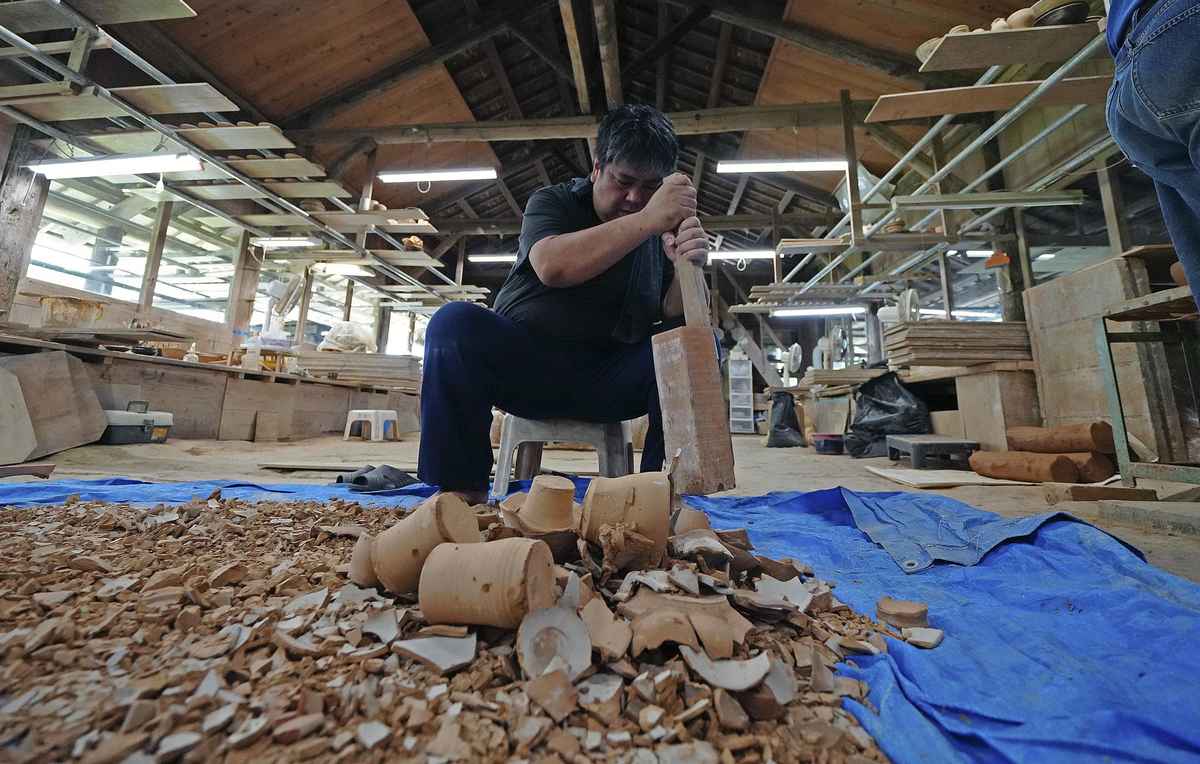
The potters gather failed wares and destroy them.
In early September, potters at Tsunehide Studio were destroying wares that had failed during production before going into the kiln.
After being carefully destroyed, water was added to restore them to workable clay. Potters used to tread on the restored clay with their feet, but in recent years, they use a special machine to knead it.
Shimabukuro relies on his sense of touch when adjusting the amount of water and determining whether the process is complete.
“Resources are limited and decreasing year by year,” said Shimabukuro. “We want to cherish them.”
AloJapan.com