
This essay is an installment of The Long Game, a Big Think Business column focused on the philosophy and practice of long-term thinking by Eric Markowitz, a partner at Nightview Capital and forthcoming author of OUTLAST. Follow him on X (@EricMarkowitz) and LinkedIn.
Not long ago, I traveled to Kyoto while researching my book project, which explores the secrets of endurance among some of the oldest companies in the world.
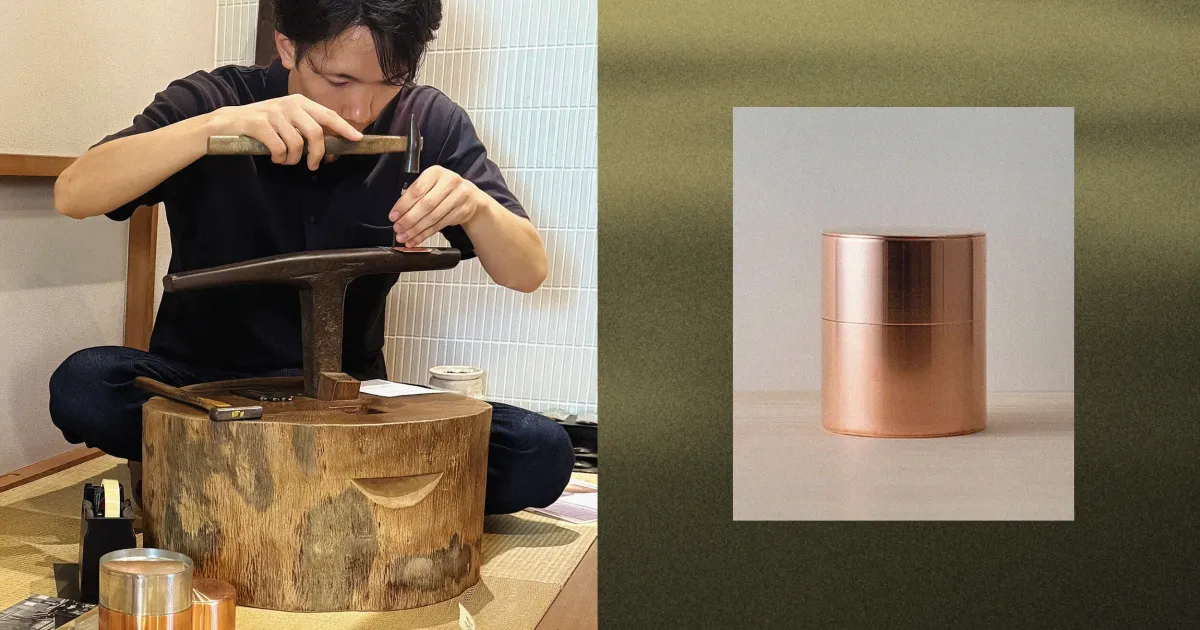
On the morning before I left Japan, I decided to take a last-minute walk to a small tea caddy shop I had heard about. According to popular legend, this shop helped inspire Steve Jobs’ design philosophy for the iPhone box. The cylindrical tea caddies here are hammered so precisely that the lid appears to float downward when you close it, sealing with an almost magical sense of inevitability.
Winding through residential streets lined with low wooden buildings, I eventually found the shop. A simple sign on the door read: Kaikado. For a first-time visitor, it’s easy to miss — and even a little hard to figure out how to enter. Unlike many Western storefronts, there’s no attempt to impress passersby. If you weren’t deliberately searching for it, you’d likely walk straight past without noticing.
Which, in a way, is the point.
Kaikado was founded in 1875, shortly after Japan emerged from centuries of isolation. Its purpose was narrow then and remains unchanged today: to make tea caddies — chazutsu — that preserve tea at its freshest. The company does not make many things. It has grown only modestly over nearly 150 years. And it remains in the hands of the founding family, now led by Takahiro Yagi, the sixth-generation owner.
The workshop still sits in Kyoto, and the tools haven’t changed much over a century. The pace is slow by modern standards, and certainly glacial by Silicon Valley hustle culture.
Inside the shop, there was no music playing. Light spilled in through the windows, illuminating a workbench where sheets of brass, copper, and tin waited to be transformed.
In the corner of the shop, a young man tapped steadily with a small hammer against a tea caddy about the size of a coffee mug. I watched him for a while as he coaxed the metal into shape, giving it tiny taps again and again. Eventually, I introduced myself and struck up a conversation. I learned that he was early in his apprenticeship — though “early” is a relative term here. Kaikado’s apprenticeship lasts roughly 10 years.
To begin with, apprentices don’t assemble full tea caddies at all. Instead, they practice individual motions repeatedly: cutting, shaping, polishing. Only much later are they entrusted with assembling a piece from start to finish.
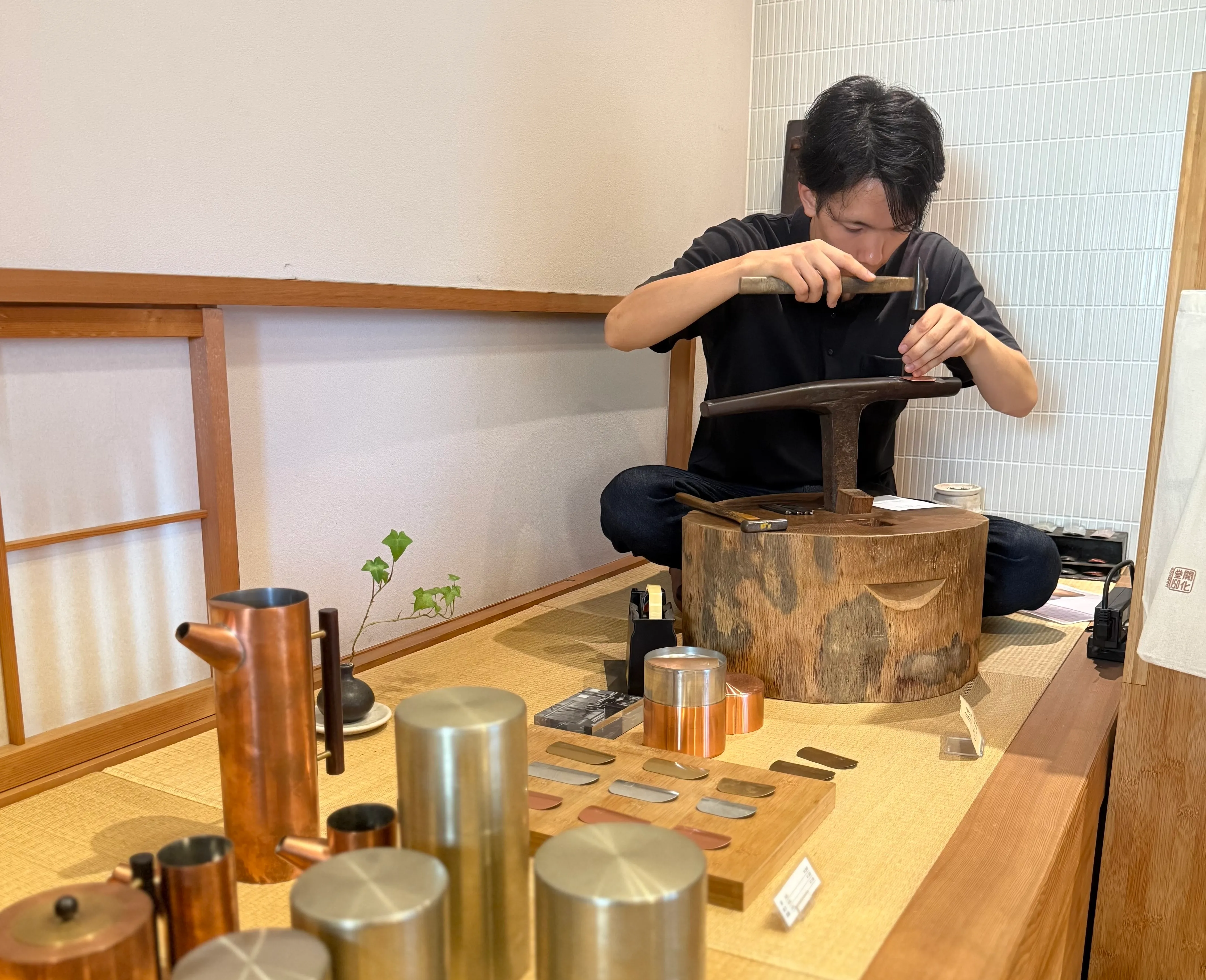
An apprentice at Kaikado in Kyoto, Japan. Credit: Eric Markowitz
Each tea caddy consists of more than a hundred production steps, many of them invisible to the untrained eye. The tolerances are so exact that no rubber gasket is needed. The lid seals itself through precision alone — and when crafted perfectly, it releases an almost musical whoosh of air when opened or closed.
As we made small talk, I asked him what he enjoyed about his work. Coming from the United States — where many young people dream of becoming YouTube stars or launching billion-dollar startups — I was curious what motivated him to pursue this path.
He paused, as if the question wasn’t one he’d been asked often.
Then he told me that the work was a form of meditation.
When he was shaping metal — when his hands were steady and his attention fully absorbed — his mind settled. The repetition wasn’t boring to him. Each day, he returned to the same motions, the same materials, the same standards. And each day, he noticed something slightly different: a tiny improvement, a mistake corrected, a cleaner edge. Growth and ambition weren’t the goal. Refinement was.
As he spoke, I realized how foreign this idea has become to many of us.
Today, meditation is something we do outside of work. We download apps. We schedule sessions with therapists. We carve out time to steady our minds because our days rarely allow for it naturally. Behavioral health has become a booming industry.
This is not an accident.
We live in a time when very few people are allowed — or encouraged — to pursue mastery in a deep, patient sense. Work has become fragmented. Attention is constantly interrupted. Success is measured in metrics and outputs rather than quality or depth. We bounce between tasks, inboxes, and platforms, rarely staying with any one thing long enough to become truly good at it.
And so we seek meditation as a corrective — a counterbalance — a way to reclaim focus in an environment that seems designed to fracture it.
The tragedy of modern work is not that we ask too much of people — it’s that we ask too little of their attention. We keep people busy but not engaged. Productive but not absorbed.
What struck me in that Kyoto workshop was the inversion of this logic.
For that craftsman, meditation was not separate from work. It was embedded in it. The act of making — slowly, carefully, repeatedly — was the practice. Mastery produced calm, not the other way around.
As a business, Kaikado has survived because of this relentless devotion to mastery and care. The company has resisted expansion out of respect for the limits of quality. There are only so many tea caddies you can make properly in a year. Push beyond that, and something breaks — perhaps not immediately, but inevitably.
This lesson extends far beyond craft.
We often treat focus as a personality trait, or meditation as a wellness accessory. But focus is structural. It emerges when we design our lives and work around fewer, more meaningful pursuits. It appears when we allow ourselves to stay with something long enough for depth to replace novelty.
The tragedy of modern work is not that we ask too much of people — it’s that we ask too little of their attention. We keep people busy but not engaged. Productive but not absorbed. In doing so, we deprive them of one of mastery’s great rewards: the feeling of being fully present in what you’re doing.
You don’t need to move to Kyoto or spend 10 years in an apprenticeship to apply this idea. Most of us can’t leave our busy jobs and demanding careers. But the principle itself is remarkably accessible — even for the busiest among us.
Here are three takeaways I carried home from my visit to Kaikado.
First: Slow down — not everywhere, but somewhere
Slowness doesn’t need to be universal to be effective. You don’t need to slow every part of your life. But you do need at least one domain where speed isn’t the primary metric — one place where you allow yourself to work deliberately, without racing to the next thing. This might be how you write emails. How you prepare for meetings. How you think through a problem before responding. The activity itself matters less than the permission to resist haste. Slowness creates space for attention. And attention is the soil in which mastery grows.
Second: Focus on something worthy — even if it’s small
Not every pursuit needs to be world-changing to matter. The craftsman at Kaikado isn’t reinventing the tea caddy or building a world-conquering app. He’s refining a process, again and again. You can bring this same mindset to something as ordinary as an email. Write it clearly and thoughtfully. Or apply it to a presentation, a report, or a conversation — anything. When you treat small tasks as worthy of care, they become something more valuable for both you and the recipient. They stop being obstacles to clear and become practices to engage with.
Third: Try to get a little better every day
Mastery isn’t dramatic, and it’s rarely noticed until it’s felt. It accumulates through marginal gains that are nearly invisible in the moment. The craftsman I met didn’t expect to be great anytime soon. He expected to be better — over many years.
This is far more sustainable than chasing constant excellence or overnight success. Improvement compounds. Over weeks, months, and years, it reshapes how you think and what becomes possible. Given a steady object of focus, the mind settles. The noise recedes. The work becomes its own reward.
We often assume that peace comes from escape — from stepping away from work and responsibility. But sometimes it comes from the opposite direction: from leaning in, narrowing our focus, and committing to doing one thing well for a very long time.
Mastery, it turns out, may be one of the oldest — and most underrated — forms of meditation we have.
AloJapan.com