
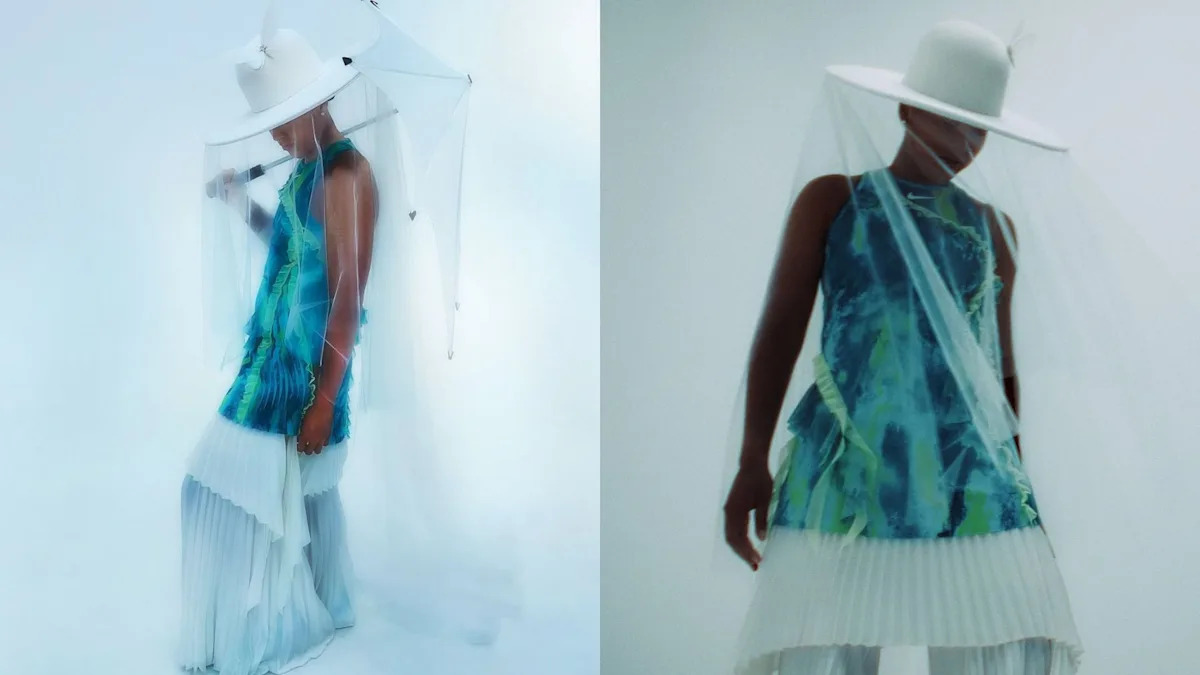
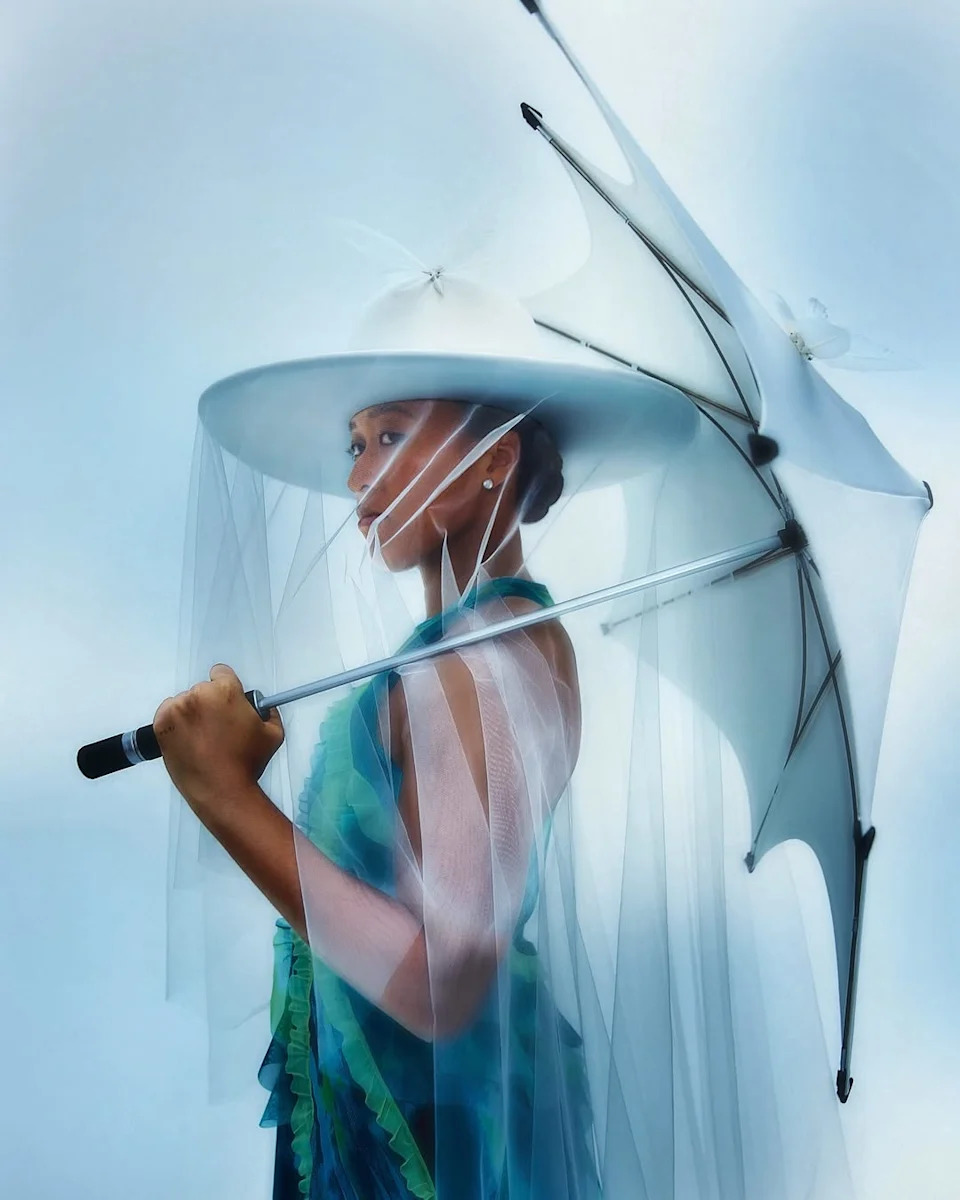
When Naomi Osaka walked into Rod Laver Arena for her opening match at the 2026 Australian Open, it was impossible not to notice her. The wide-brimmed hat. The veil. The parasol. The jellyfish-inspired details that felt closer to haute couture than standard tennis whites. For some athletes, that kind of entrance would be a distraction. For Osaka, it wasn’t. She backed it up with a three-set win to advance, reminding everyone that the performance still matters most. Style didn’t replace substance. It framed it.
Fashion as intention, not indulgence
Osaka has long used fashion as a form of self-expression, but this Australian Open look felt more deliberate than past outfits. In interviews with outlets including Vogue, she explained that the jellyfish and butterfly motifs were inspired by stories she reads to her young daughter. The outfit wasn’t random. It was personal.
That context matters. Too often, women athletes are forced into a false choice: seriousness or self-expression. Osaka rejected that binary. Her entrance said she could be competitive, creative, and emotionally grounded all at once.
.jpg)
Naomi Osaka arrives at the 2026 Australian Open with a parasol and veil as part of a jellyfish-inspired look that drew attention before she delivered a first-round win on court.
(Naomi Osaka/Instagram)Motherhood has changed the narrative
Since becoming a mother, Osaka’s public presence has shifted in subtle but meaningful ways. She has spoken openly about how motherhood reshaped her priorities and perspective. At the Australian Open, that evolution was visible without being announced.
The inspiration behind her outfit tied her role as an elite athlete to her life off the court, not as a contrast but as a continuum. Motherhood didn’t soften her edge. If anything, it sharpened her sense of purpose.
A silhouetted Naomi Osaka makes a striking entrance at the Australian Open, using fashion as a form of self-expression alongside her return to competitive momentum.
(Naomi Osaka/Instagram)Why this moment landed now
The timing is crucial. Osaka is no longer framed as a prodigy or a comeback project. In 2026, she occupies a different space in tennis — one defined less by expectations placed on her and more by expectations she sets herself.
At a tournament known for tradition and intensity, she introduced a visual disruption without disrupting the game itself. That balance is hard to strike. Yet she managed it by keeping the focus where it belongs: on winning points. The fact that her fashion moment came alongside a victory is why it stuck. Had the result gone the other way, the narrative would have shifted. Instead, the image became one of momentum.
More than a runway metaphor
Calling the Australian Open her runway works because it captures attention, but it undersells the deeper shift at play. Osaka isn’t turning tennis into fashion week. She’s expanding what elite athletic identity can look like.
Her entrance echoed something modern audiences understand instinctively: authenticity resonates more than conformity. Fans aren’t drawn to perfection anymore. They’re drawn to intention.
What this says about her next chapter
I didn’t read this as a comeback statement or a manifesto. It felt quieter than that. It looked like Naomi Osaka simply showing up as herself, fully and without apology or explanation.
Watching her blend fashion, motherhood, and momentum didn’t feel like a distraction from competition. It felt like a redefinition of it. She didn’t soften her edge—she reshaped it. And in that moment, she reminded me that presence in sport isn’t only measured by rankings or trophies. It’s also about how you arrive, and what you’re able to carry with you once you’re there.
AloJapan.com