

January 18, 2026 — 5:00am
Save
You have reached your maximum number of saved items.
Remove items from your saved list to add more.
Save this article for later
Add articles to your saved list and come back to them anytime.
Got it
AAA
This article is part of Traveller’s Destination Guide to Tokyo. See all stories.
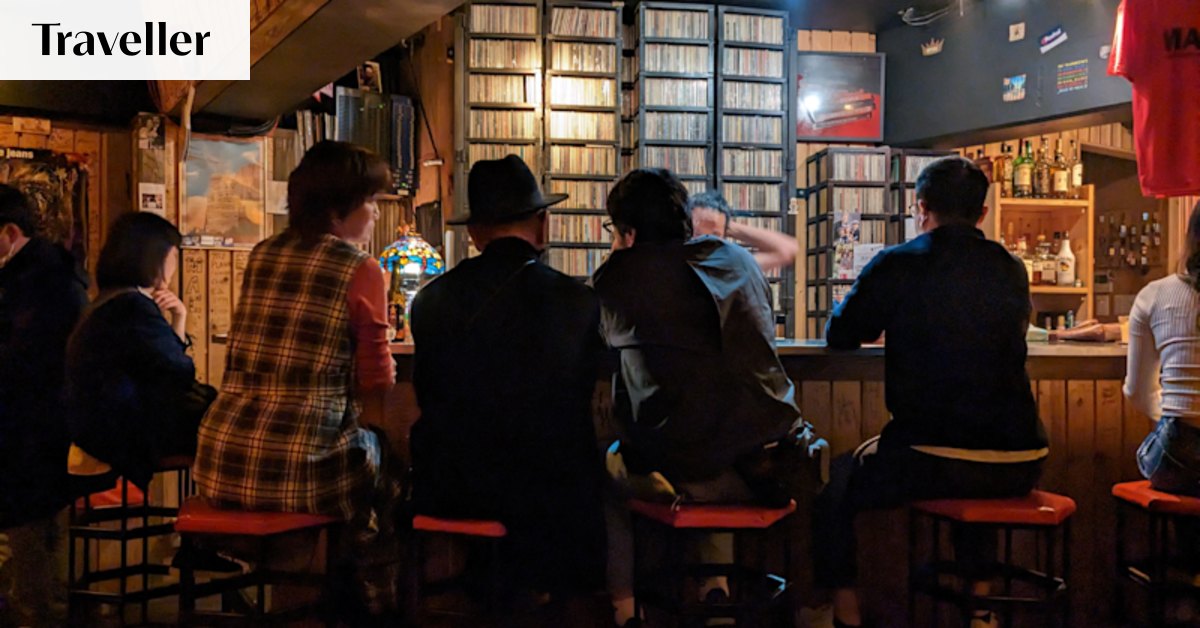
I’m a sucker for a Japanese record bar. The drinks, the decor, and of course, the music are all sublime, coming together to create an experience where you share more than just a beer with the people sitting next to you. If you ever find yourself in one of these bars (and you absolutely should), nothing will make you look cooler to the locals than requesting Happy End.
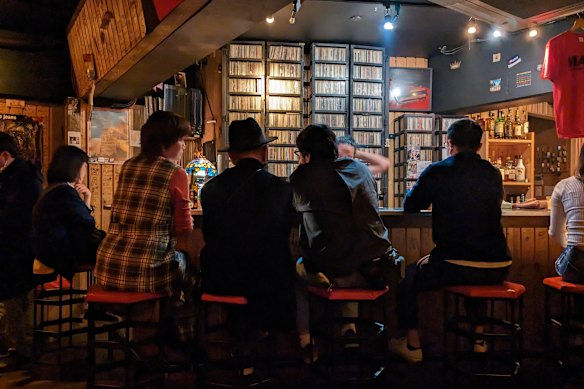 Music at a record bar in Japan is like a conversation.James Mackinson
Happy End (pronounced Happī Endo) is widely considered the greatest rock band to ever come out of Japan. They’re the Beatles of Japan and yet the majority of the Western world has never heard of them. If you have heard one of their songs, then you most likely caught a glimpse of it in Lost In Translation but this doesn’t do justice to just how good they are.
They were credited as being one of the first rock acts to sing in Japanese, combining Japanese lyrics with Western sensibilities and inadvertently paving the way for generations of Japanese musicians to come.
The band holds a special place in the hearts of music lovers in Japan and every single record bar I’ve been to has had at least one of their three albums, if not the whole discography. The most popular is Kazemachi Roman. If you’re a fan of late-60s, early-70s rock with some psychedelics sprinkled in, do yourself a favour and give it a listen.
Anytime I’ve gone into a record bar and requested Happy End, the result has generally followed the same pattern.
 Happy End’s album Kazemachi Roman.
First, the bartender does a double-take, and will repeat “Happī Endo?” loud enough for the rest of the bar to hear. This is shortly followed by a synchronised snapping of heads as everyone else puts down their beers and cigarettes, wondering how a gaijin could know about their slice of music history. Then the bartender whips out the album, whacks it on the record player, and nostalgic smiles spread across every man and woman at the bar.
It’s one of the reasons why I love these bars so much. The music there is like a conversation. You might not be able to communicate with the people around you, but your choice of song says more to them than a few words of badly cobbled-together Japanese ever could.
Asking for Happy End tells the locals around you that you’re more than just another tourist, there to eat your sushi and see your temples and then go back to wherever you came from. It shows that you’ve gone that little bit deeper into their culture and fallen in love with music that is uniquely theirs.
For the sake of this article, I’ve used the term ‘record bar’ as opposed to ‘listening bar,’ which are somewhat interchangeable – but there are subtle differences.
A listening bar stems back to music cafes (or ongaku kissa) of the 1920s, where people would listen to jazz records from America. Live music was restricted, sound systems were expensive, so people were forced to gather together in these listening bars to enjoy foreign music.
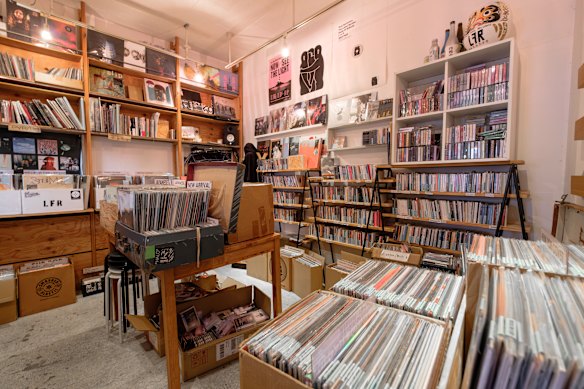 Like A Food Records in Tokyo.James Mackinson
There are some listening bars in Tokyo that still try to hold onto the essence of what the experience has always been about; the music. They invest in great sound systems and people go there to enjoy the music first, the company second. It’s polite to keep your voice low, your conversation to a minimum, and to appreciate the hi-fi quality of the sound.
It’s for this reason that I personally prefer searching for ‘record’ bars as they’re less about the listening, more about the bar. They have a more relaxed atmosphere and treat the music as an interactive part of the experience. You can go, drink, and laugh with strangers, bonding over a love of common songs and sharing the joy of discovering new music.
I went into one of these bars in complete ignorance and came out as a fan of Japanese psychedelic rock. Happy End was a happy byproduct of the experience and now, they’re the first band I request whenever I sit down at one of these bars. If not for my own love of their music, then to see the love reflected on the people sitting next to me.
Related Article THE DETAILS
Fly
Various airlines fly daily from Australia’s major cities to Tokyo, including Qantas, Jetstar, ANA and Japan Airlines.
More
japan.travel
The writer travelled at his own expense.
Sign up for the Traveller Deals newsletter
Get exclusive travel deals delivered straight to your inbox. Sign up now.
Save
You have reached your maximum number of saved items.
Remove items from your saved list to add more.
 Paul Marshall is a Sydney-based travel writer who left his heart on the Banana Pancake Trail. With more than 10 years’ experience in the film, television, and video game industries, he now writes about his former life as a digital nomad and is always plotting his next escape. Whether it’s cycling across Korea or living in a Japanese fishing village, he loves a little-known destination and an offbeat adventure.Connect via email.Traveller GuidesFrom our partners
AloJapan.com