
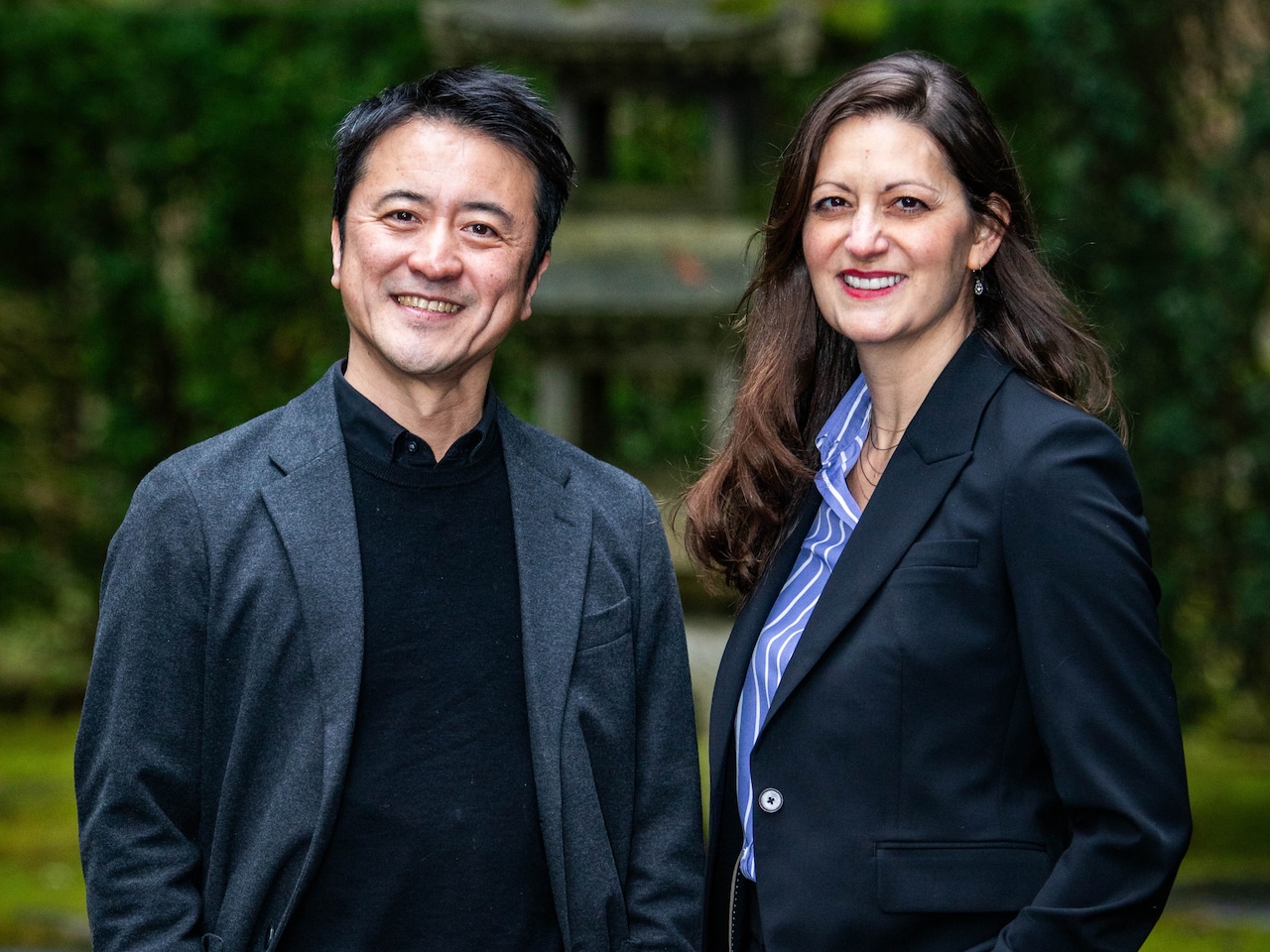
The newly named CEOs of the Portland Japanese Garden and its Japan Institute are longtime directors of the nonprofit organizations who plan to build on the 63-year-old mission to inspire harmony and peace through initiatives, programs and the landscape.
Co-CEOs Lisa Christy and Aki Nakanishi, whose new roles were announced Friday, said they intend to expand the more than 250 events offered each year, from festivals to tea ceremonies, and host more programs across the city to welcome more people.
The 12.5-acre property in Southwest Portland’s Washington Park with eight distinct gardens and programming operated through its global cultural initiative, Japan Institute, is widely acclaimed for its authenticity and beauty.
There were more than 425,000 visits to the garden last year by residents of all 50 states and from more than 90 nations, according to the garden.
Portland Japanese Garden was founded in 1963 as a place for cross-cultural understanding after World War II. Japan Institute was established in 2020 to be a leading global voice for cultural understanding in pursuit of a more peaceful, sustainable world.
“World peace is a big goal,” said Christy, adding that the two organizations, recognized among the world’s leading Japanese cultural organizations, already offer the building blocks of peace that include facilitating conversations to form relationships and work toward shared goals.
Nakanishi added, “For us, this is a place of serenity and quiet repose, but it can be a platform for civic discourse for what really matters for our society right now” like the environment, cultural preservation and ancient wisdom in modern times.
The two new leaders have worked together for more than seven years, in each of their areas of expertise.
Christy has been at the organization since 2014 and was the garden’s executive director. In her new position, she will oversee the garden’s administrative and operational functions, including guest experience, finance and organizational management.
Nakanishi joined the organization in 2018 and has been the director of Japan Institute and the Arlene Schnitzer Curator of Culture, Art, and Education. He will lead programmatic and cultural oversight, guiding the garden’s educational and cultural initiatives and stewarding its Japanese and bi-cultural integrity.
In his work at the organizations, Nakanishi has overseen more than 1,000 programs, including exhibitions of traditional and contemporary artists and craftspeople, culinary and cultural demonstrations, conferences and concerts.
Prior to these roles, he spent 10 years at the U.S. Embassy in Tokyo, where he led cultural initiatives advancing U.S.-Japan relations while also founding a nonprofit organization dedicated to regional revitalization and youth empowerment.
“The garden is a living place of learning and beauty and connection,” said Nakanishi, who first visited the Portland Japanese Garden in 2015 to attend the groundbreaking of the $37.5 million Cultural Crossing expansion project.
From the start, he said, he was impressed by the “world-class” garden and the community that created and supports it.
The leaders will work together on fundraising and mapping out the strategic vision for the organizations.
Their shared focus on the landscape will continue with Hugo Torii as garden curator and director of the Japanese Garden Training Center, which offers the Waza to Kokoro garden design, construction, maintenance and preservation program.
New training programs might explore healthy and sustainable aspects of Japanese gardens. Discussions on “garden therapy” will be based on research that time spent in nature, gardens and particularly Japanese gardens improves physical and mental health, said Christy.
Nakanishi said in today’s tumultuous world, “the garden is not an escape but a practice. It teaches patience and perspective, and offers a rare space where people can breathe and reflect and remember what harmony can actually look like.”
There are also plans for more interactive learning opportunities on topics like moss and bonsai, and an upcoming global forum in collaboration with the nearby nonprofit World Forestry Center will look at the role of water to improve living conditions.
Fostering cross-cultural understanding and championing environmental care through community engagement programs that “spark curiosity and creativity” is increasingly important and relevant, said Christy, who also serves on the Board of Directors for Travel Portland.
The two leaders part ways on their favorite places in the garden to ponder or relax. Nakanishi said he finds the walk up the hill from the parking lot each workday a reset, where he can “pause for contemplation.”
During the workday, beauty is steps away, he said. “We have the great privilege of being able to walk away from our desk, and go to a place that is restorative,” he said.
Christy said she finds it fulfilling to stand on the arched Moon Bridge in the Strolling Pond Garden to watch and listen to the replenishing sound of water. “I can look up at the newer architecture and look back at the century-old lanterns, and see how this garden bridges old and new.”
On the way back to her office, she said she enjoys talking to people strolling in the garden and hearing the reason for their visit. “It’s really gratifying to know that the garden means so much to so many different people in so many different ways,” she said.
Steve Bloom was CEO from 2005 until his retirement at the end of 2024.
“We are incredibly excited for Lisa and Aki to take Portland Japanese Garden and Japan Institute forward,” Board of Trustees president Paul Schommer said in a news release. “The two of them have been instrumental in helping the organization maintain much-needed stability during a time that has been demanding for cultural institutions across the nation.”
AloJapan.com