
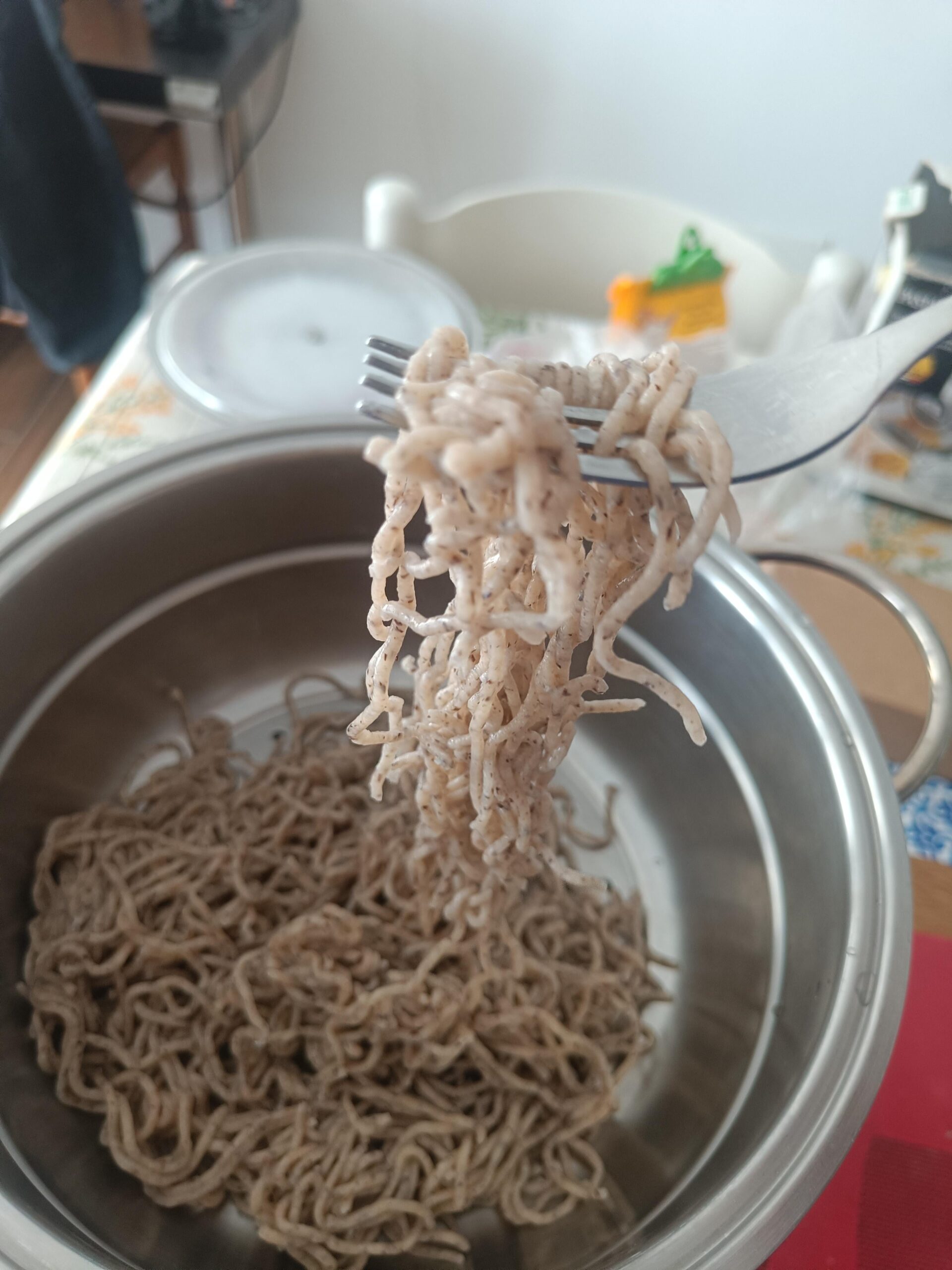

When I was in Japan in September I fell in love with zaru soba, a dish so simple and yet so familiar for an Italian like me. It was like eating a combination of spaghetti and pizzoccheri served with just soy sauce. It was also the perfect summer dish, it was so hot back then but all I had until that moment were heavy, hot dishes like curry rice, so it was nice to find something cold and light for a change.
And I have to say that even in winter just right after the holidays were we italian eat a lot, it is nice and a good change from classic pasta al pomodoro.
There was a problem, I didn't get buckwheat flour in Japan, I figure it was not needed since I can buy it in Italy (since we use it for pizzoccheri, a traditional pasta) and I remember it was possible to find soba too.
Too bad soba is crazy expensive here and pizzoccheri flour is coarse buckwheat (you also got a much finer version) so my first try failed since I was using the recommend ratio of 4 part buckwheat, 1 part AP flour. I actually was able to make soba but the result was pieces of noodles.
After failing once I tried again with a 1:1 ratio (50% hydration) and this time I succeeded. The dough was much more elastic and I was able to boil them and put them in ice without breaking them.
Just a few suggestion if you want to use a pasta machine:
– the hydration of 50% is a little bit high but almost a necessity so when you are making a sheet you don't need to dust but when your are making the noodles with the spaghetti setting dust the sheet with corn starch and dust again after the dough pass to avoid that they stick to each other.
– keep the sheet width shorter then the machine width, if you have just cut in half on the long side.
– on my marcato machine I need to reach at least width 2 to use the spaghetti without any issues but each machine is different.
I think this is a great and fast way to make soba from scratch, I was able to make it in my 1 hour lunch break, eat it and write this post too
by LiefLayer
AloJapan.com