
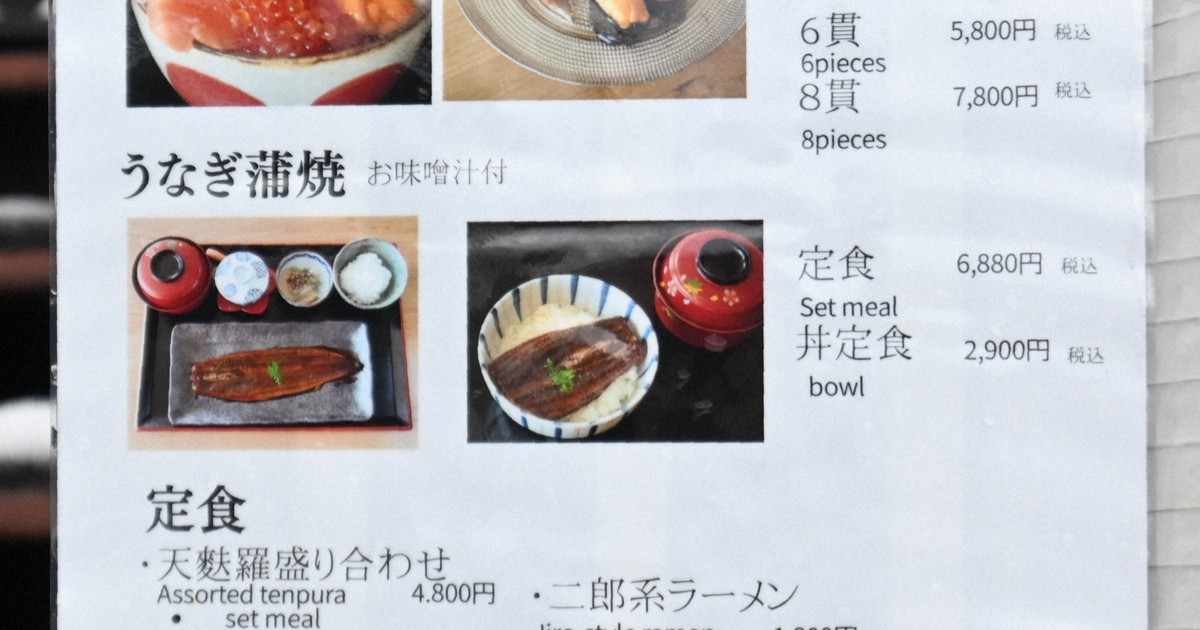
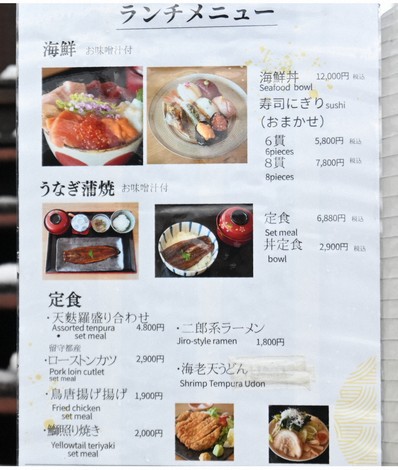
A menu listing a seafood rice bowl priced at 12,000 yen, among other dishes, is seen at a restaurant in the Niseko Hirafu Area, in the town of Kutchan, Hokkaido, Oct. 29, 2025. (Mainichi/Ayako Morihara)
Niseko, one of Japan’s premier ski resorts in Hokkaido, has been labeled “foreignized” in a wave of online rumors. Posts on social media platforms such as X (formerly Twitter) have mocked the area’s prices, claiming that “A bowl of ramen in Niseko costs 3,000 yen (about $20)! A tempura bowl is 5,000 yen (around $32)!”
The resort is indeed a global destination known for its powder snow and mineral-rich hot springs. In the 2024 fiscal year, Niseko attracted more than 260,000 foreign visitors from Australia, Hong Kong, Singapore and other countries. But do high prices and international crowds really mean the town has been overtaken by foreign influence? To find out, this reporter visited Niseko in late October to examine the reality behind the claims.
Located about 60 kilometers west of Sapporo, the “Niseko area” spans the towns of Niseko, Kutchan and Rankoshi, with ski resorts spread across them. Kutchan’s “Niseko Hirafu Area” is particularly popular, with long-term accommodation and a variety of dining options. Upon arriving in Kutchan, I checked the menu prices at local restaurants. Burgers were priced at 2,000 yen (approx. $13), ramen ranged from 2,000 to 3,000 yen, and a bowl of seafood on rice was 12,000 yen (about $77). The prices seemed consistent with what was seen on social media.
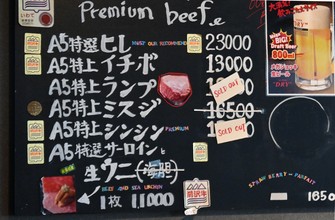
A menu for a “yakiniku” barbecue restaurant listing premium quality meat is seen in the Niseko Hirafu Area, in the town of Kutchan, Hokkaido, Oct. 29, 2025. (Mainichi/Ayako Morihara)
At one “yakiniku” barbecue restaurant, only courses featuring branded beef were offered in winter. Prices were 28,000 yen (around $180) for adults and 13,000 yen (roughly $83) for children. It was apparently not uncommon for a table of five, enjoying premium sake, to have a bill exceeding 1 million yen (approx. $6,400). When asked, a staff member explained that nearly all winter customers are inbound tourists from China and Singapore, who found the prices reasonable compared to their home countries.
Australian woman says prices feel cheap
An Australian woman, Cora Surcess, 23, has been working at a hotel in Kutchan while skiing regularly. Despite staying in a room with a kitchen, she dines out for ramen and sushi at least twice a week.
The Australian dollar has strengthened, rising from the upper 80-yen range in spring 2025 to 104 yen by December. With the higher exchange rate, she said prices here feel the same or slightly cheaper than back home. She added that since she gets paid in yen, she tries not to spend too much.
Is ‘Niseko’ really expensive?
Efforts are underway to counter the perception that “Niseko is expensive.” The Niseko Municipal Government has been addressing concerns that social media claims of “high prices making it unlivable for Japanese people” are deterring potential newcomers. To combat this, the town’s commerce and tourism division launched an unusual initiative in March 2025.
Officials have focused on a “curry and rice price index,” which calculates the cost of ingredients and utilities for a single serving of the dish based on conditions in Niseko. Each month, the town publishes on its website how those costs compare with the national average curry and rice price, as estimated by a private research firm. From January to October, Niseko’s prices were consistently 40 to 80 yen (around 25 to 50 cents) lower than the national average, asserting that “The town of Niseko’s cost of living is not high.”
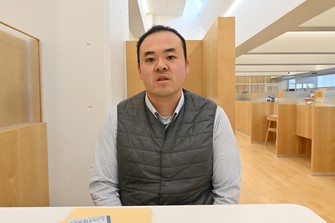
Shun Yoneda, section chief of the Niseko Municipal Government’s commerce and tourism division, explains the concept of “the curry and rice price index” in Niseko, Hokkaido, Oct. 29, 2025. (Mainichi/Ayako Morihara)
Shun Yoneda, section chief of the division, pointed out that the dissemination of curry and rice prices is driven by preconceived notions. “Price hikes are limited to very few areas like near the ski resorts in the ‘Niseko Hirafu Area,'” he emphasized. Yoneda also pointed out that the area’s name, “Niseko Hirafu Area,” actually in the town of Kutchan, often leads to confusion with “the town of Niseko,” contributing to the misconception that prices in Niseko are also high.
“Even in the Sapporo area, the distinction between towns is not well known, let alone outside Hokkaido,” Yoneda commented. The town is striving to promote an understanding of the actual situation.
Visiting the local supermarket A-Mart, I found carrots priced at 106 yen (roughly 70 cents) each and curry roux in the 200-yen range, comparable to supermarkets frequently visited in Sapporo.
A woman in her 20s, who had lived outside the town, shared her experience. Whenever she mentioned she is from the town of Niseko, people would say, “That’s the place famous for having beef bowls priced at 3,000 yen, right?” She explained, “It’s not that everything is available here, so there’s some inconvenience, but prices are no different from a typical rural area. I avoid the Hirafu area because it’s expensive.”
Benefits for residents
In the town of Kutchan, where the Hirafu area is located, efforts are underway to pass the benefits of inbound tourism on to residents. In November 2024, the town government and the Kutchan Tourism Association launched the digital resident ID service “Kutchan ID+.” After verifying their identity with their My Number national ID card, residents can display their resident ID on their smartphones to receive discounts and perks at about 40 participating stores in the town. At the MaxValu Kutchan supermarket, residents can receive a 50-yen (about 30 cent) discount for every 1,000 yen (around $6.40) spent, and the curry restaurant Taj Mahal offers a 10% discount.
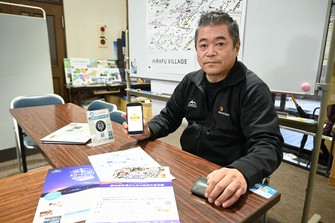
Norihiko Suzuki, secretary-general of the Kutchan Tourism Association, introduces the digital resident identification service “Kutchan ID+” in the town of Kutchan, Hokkaido, Dec. 1, 2025. (Mainichi/Ayako Morihara)
So where does the funding for these discounts come from? According to Norihiko Suzuki, secretary-general of the tourism association, participating stores generally bear the cost themselves. In recent years, many shops in the town have passed on higher costs — driven by inbound tourism and rising raw material prices — to consumers. Under the system, tourists pay the post-price-hike rates, and a portion of the resulting profits is returned to residents. “By passing on costs, stores can secure high profits while setting lower local prices for residents,” Suzuki explained.
Lift tickets valid at two resorts in Kutchan are also supported by the town’s efforts to promote skiing among residents. When using the lifts, residents receive a 50% discount on season passes and a 70% discount on day passes. These discounts are funded by the lift operators and a portion of the accommodation tax introduced by the town in 2019. The town’s accommodation tax revenue for fiscal 2024 was approximately 568 million yen (approx. $3.63 million), amounting to about 37,000 yen (around $236) per resident.
The tourism association also launched the “Magical Dining” initiative, selling 10,000 yen (about $64) worth of dining vouchers usable at resort hotel restaurants and other establishments in the town for half price, exclusively to residents, from March to May and October to November in 2025. All 2,900 vouchers sold out. This initiative is also supported by the accommodation tax and aims to attract visitors during the off-season and improve services through year-round staff employment.
“We want residents to feel the benefits in monetary terms, fostering an understanding of tourism,” Suzuki said.
While prices near the ski resorts are indeed high, a walk through Niseko and nearby Kutchan shows that this is not a phenomenon affecting the entire area. Local governments are working to raise awareness of the actual situation and collaborate with businesses to share the benefits of inbound tourism with residents. Through trial and error, they aim to improve the quality of life for the local community.
(Japanese original by Ayako Morihara, Hokkaido News Department)
AloJapan.com