
LONDON – Teachers of Japanese in Britain are shaking up the way they teach the language in order to challenge Western stereotypes and present a more realistic image of the Asian country.
Educators have been reviewing their methods as part of a process in schools and universities called “Decolonizing the Curriculum” (DtC).
DtC challenges the prioritization of Western values, cultures and experiences, as well as the marginalization or overlooking of non-Western viewpoints. People are being asked to challenge their unconscious biases and embrace diversity and inclusion.
DtC started in 2015 in South Africa and soon spread to universities in the United States and Europe, gaining prominence during the Black Lives Matter protests.
The movement has led to a reassessment of curricula. However, little research has been done into how Japanese language teaching is being “decolonized.”
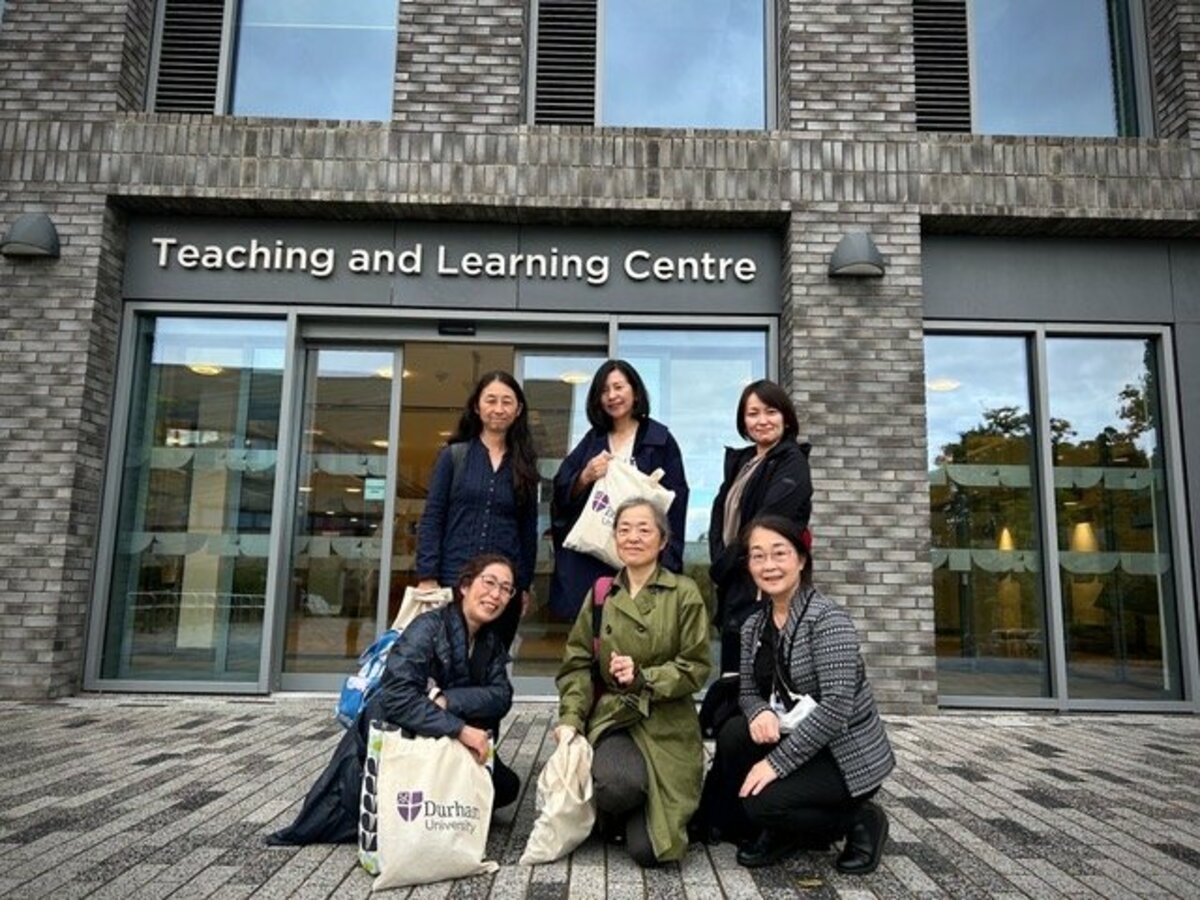
Six members of the British Association for Teaching Japanese as a Foreign Language (BATJ), who launched a project to survey teachers and members, recently discussed the findings with Kyodo News.
Chieko Yonezawa, from Manchester Metropolitan University, said the survey showed a wide variety of Western stereotypes — for example that Japanese are polite, kind and hardworking — are now being reevaluated in lessons.
Other stereotypes of Japan as “exotic and alien” have also been challenged. These have been partly reinforced through the “Cool Japan” campaign promoting games, manga, anime, and traditional culture and cuisine.
Through DtC, educators try to present a more balanced view of Japan and ask students to look for similarities as well as differences.
Yonezawa commented, “Some teachers have been telling us that it is important to approach cultural differences not as alien or exotic but as an opportunity to engage with and respect cultures on an equal footing.”
“Teachers are encouraging students to, whilst acknowledging differences, find commonalities between Japanese culture and their own, in order to deepen understanding and reevaluate their own cultural practices.”
As a simple example, students were asked to compare the annual pilgrimage that Japanese make to ancestral graves with their experiences in Britain.
Historically, Western institutions have felt students must learn “standard” Japanese.
However, DtC has led teachers to introduce a variety of dialects and expressions “to respect the diversity of the Japanese language, expand students’ linguistic abilities and deepen their cultural understanding,” said Kaoru Umezawa, from Durham University.
Teachers reported using a variety of dialects, including Hakata and Osaka. Students who spent a year in Japan were encouraged to continue using dialects and expressions they picked up. Assessments and projects were adjusted to take account of students using dialects.
Educators also aimed to highlight diversity by introducing the Okinawan and Ainu cultures.
Of course, even before the advent of DtC, Japanese language teaching had been evolving, with teachers using their own materials to show a more realistic image of Japan.
Fumiko Narumi-Munro, from the University of Edinburgh, said textbooks have also been upgraded. Now, a diverse range of characters is represented in terms of ethnicity and occupation, rather than relying on stereotypical figures like the white American businessman.
But DtC is not only about tackling stereotypes. It also means looking at how Western perspectives can frame the curriculum and exams.
For example, one teacher surveyed noted the system assumes that, at the age of 16, students of Japanese will have the same level of vocabulary and grammar as those learning European languages. But the teacher said this does not take into account the fact that, in their opinion, Japanese is harder to learn.
The teacher also felt that occasionally the topics being discussed in lessons were framed through a Western, rather than global lens. For example, a discussion about globalization focused on the spread of the English language, rather than being about mutual exchanges between people from different countries.
Akiko Tomatsuri, from the University of East Anglia, said the project team now plans to arrange workshops in order to spread awareness of DtC.
She said it is important to “challenge assumptions and celebrate linguistic diversity” adding, “Teachers serve as windows for students looking into Japan, so it’s essential that we teach the language in an unbiased and inclusive manner.”
AloJapan.com