
Dior’s Bamboo Pavilion opens in Tokyo with an expansive indoor garden, blending fashion, landscape design, and Japanese craftsmanship in a new retail concept.
Dior’s next retail opening in Asia centers on landscape as much as fashion. When the Dior Bamboo Pavilion opens on February 12 in Tokyo’s Daikanyama district, the House will introduce a temporary structure shaped by vegetation, architectural craft, and long-standing cultural ties between France and Japan. The Pavilion continues Dior’s recent series of experiential retail projects in cities including Bangkok and Seoul, while placing an unusually strong emphasis on gardens and plant life as organizing principles.
The exterior draws on Dior’s historic flagship at 30 Avenue Montaigne, incorporating recognizable house motifs such as the star Christian Dior regarded as his good luck charm. In Tokyo, those references take the form of a golden, bamboo-inspired facade, aligning the structure with the surrounding neighborhood. Daikanyama’s residential character, marked by small shops, cafes, and independent galleries, provides a subdued setting for the Pavilion’s architectural presence.
A garden as the pavilion’s core
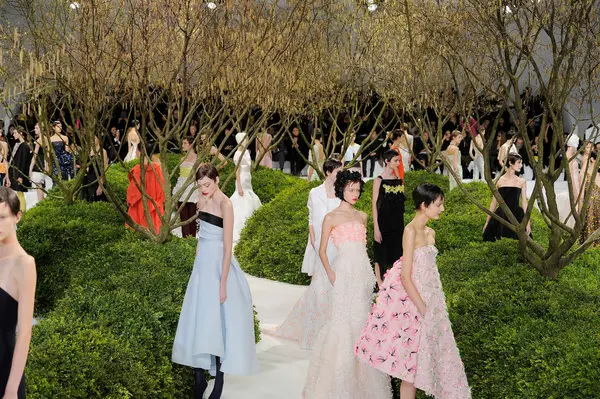
Vegetation shapes the Pavilion from the inside out. The indoor green space conceived by floral artist Azuma Makoto forms the spatial center of the project, spanning more than 19,000 square feet. Makoto’s work for Dior has previously translated botanical forms into sculptural installations; in Tokyo, the scale expands to create an immersive environment that moves through layered plantings and architectural framing. The installation reflects Christian Dior’s documented fascination with gardens and their influence on his approach to color, silhouette, and composition.
Additional landscape elements extend throughout the Pavilion. A Zen garden designed by landscape designer Seijun Nishihata introduces a contemplative rhythm to the space, while a terrace and a pond populated with koi carp rendered in luminous glass introduce water and light as design elements.
The emphasis on gardens aligns the Pavilion with broader developments in luxury retail design, where biophilic environments have become increasingly common. Dior’s approach distinguishes itself through scale and integration, with vegetation shaping circulation, sightlines, and the pacing of the retail experience.
Fashion, craft, and cultural continuity
Within this landscaped setting, Dior will present women’s and men’s collections designed by creative director Jonathan Anderson, including ready-to-wear, shoes, accessories, and jewelry. A dedicated room for the customization of Lady Dior and Book Tote bags introduces a focused area for bespoke interaction, consistent with the Pavilion’s attention to craftsmanship.
Interior finishes combine established Dior codes with Japanese materials and techniques. Versailles parquet flooring appears alongside ceilings and walls finished in washi paper, while lanterns modeled after the Lady Dior bag punctuate the space. The Pavilion also includes works by contemporary designers and studios such as Takt Project, Sho Ota, Ayumi Shibata, We+, Hana Mitsui, and Chikaken, reinforcing connections to Tokyo’s design community.
The Pavilion will house Café Dior, featuring an exclusive menu developed by chef Anne-Sophie Pic, extending Dior’s ongoing collaboration with the Michelin-starred chef. The opening follows the launch of the Monsieur Dior restaurant in Beijing and reflects the House’s continued expansion into hospitality as part of its broader lifestyle strategy.
Related on Ethos:
AloJapan.com