
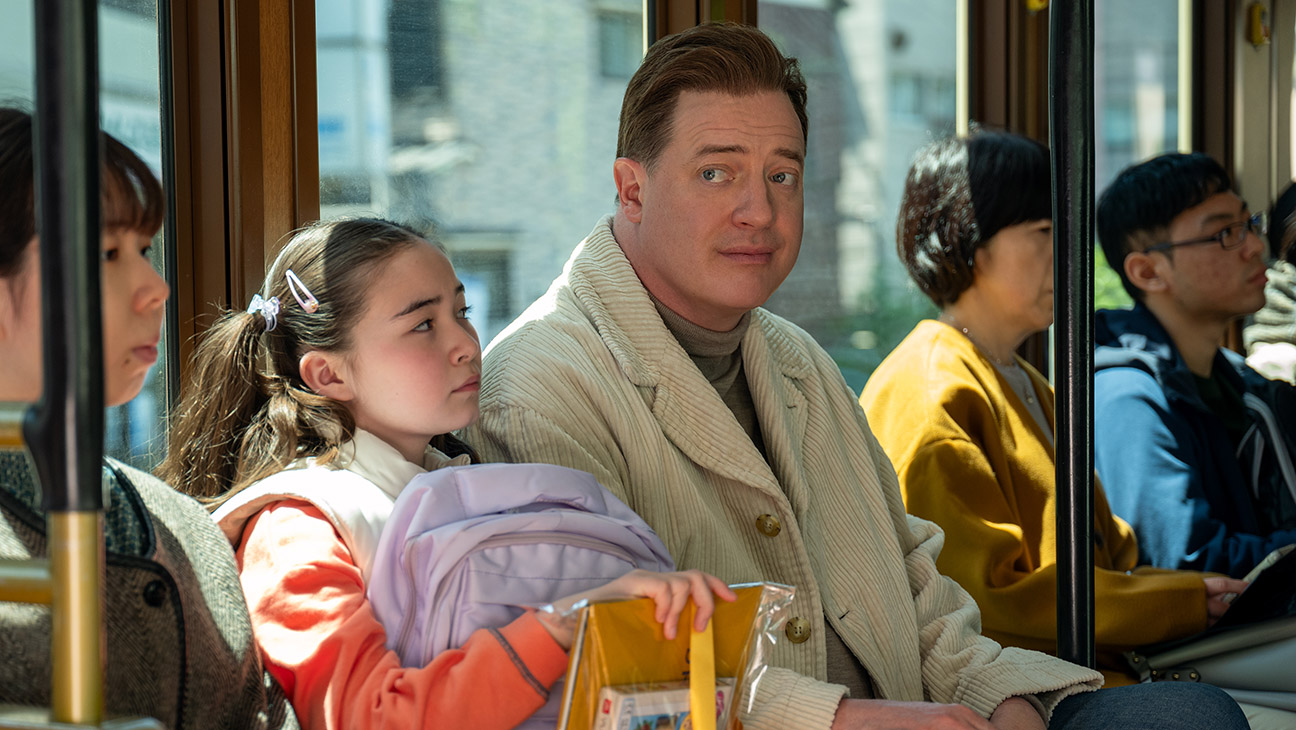
In the spring of 2024, the Rental Family team was preparing to shoot a scene at an apartment building in Tokyo when they got word they were no longer welcome. A neighbor had expressed concern about the commotion the shoot would cause, so the owner pulled out.
In America, a property owner backing out of a location agreement can lead to legal action and is rare. But in Japan, there’s no legal recourse and canceling a location shoot with short notice is an accepted part of the culture.
“They’re not willing to jeopardize the sense of community and the individual responsibility for each other,” explains producer Julia Lebedev.
It’s the sort of thing that might make an American producer apoplectic, but Lebedev and her Sight Unseen partner Eddie Vaisman grew to understand and accept it.
Says Vaisman: “There was always a backup to the backup. ‘In case this happens, we can go do this, and in case that happens, we can go do that.’”
All that contingency planning paid off. The Searchlight-backed film, which stars Brendan Fraser as a struggling American actor who takes a job role-playing for clients during key moments in their lives, bowed to strong reviews at the Toronto International Film Festival in September ahead of its theatrical release Nov. 21. “Oscar winners, especially those coming from left field, don’t always find worthy successors to their award-winning roles. But Brendan Fraser has come up with a beaut in his first starring part since The Whale,” wrote Frank Scheck in his review for THR.
Lebedev and Vaisman’s Rental Family journey began in 2019, when they began early discussions with director and co-writer Hikari about the concept.
They sold the package to Searchlight in 2023 and held countless Zooms with their Japanese producing counterparts, where conversations scheduled for an hour might turn into a four-hour affair, as translators attempted to capture the nuances that are tricky to convey. Their counterparts explained the cultural differences (such as location agreements being far from iron-clad), while it was Lebedev and Vaisman’s jobs to get buy-in from Searchlight for making a film the Japanese way.
Nearly five years after Vaisman and Lebedev first met with Hikari, they landed in Japan for a 50-day shoot that put them 17 hours ahead of their spouses and children back home. They found themselves in the middle of a city so sprawling that it can take three hours to drive from one end to the other, meaning that they would generally only shoot at one location per day to save time.
“It ended up being a really nice way to make the film, because the actors weren’t rushed,” says Lebedev.

From left: Julia Lebedev, Brendan Fraser, Shannon Gorman, Mari Yamamoto, Hikari, Akira Emoto, Takehiro Hira and Eddie Vaisman
Photo by Phillip Faraone/Getty Images for Searchlight Pictures
In Hollywood, time is money. (See: certain mega-stars on other productions peeing in bottles just to save time on set.) But slowing down was built into the DNA of Rental Family.
When you’re making a film in Japan, everyone takes their shoes off before entering a location.
“It creates a real slowdown, but it is not even a question that we would damage the location or insult the location owners by wearing our shoes inside,” says Lebedev.
Adds Vaisman: “Oscar-winning actor to key grip, producer to director, everyone takes off their shoes.”
A key relationship in the film is between Fraser’s Philip and a young girl, Mia (Shannon Gorman), whose mother hires Philip to pretend to be the girl’s absentee father. The climax of the film features the two reuniting amid the backdrop of the city’s famous cherry blossoms — which proved to be one of the more anxiety-inducing shots to get. The production used an app that tracks when they should bloom — but it wasn’t an exact science.
“It was off by 15 days. So you can imagine the type of chaos that caused during production,” says Vaisman.
Julia Lebedev
Amid all the beauty of Tokyo, one of the enduring memories had nothing to do with cherry blossoms or the architecture. Rather, it was how the city handles trash. At the end of lunch, the entire crew scoops their leftover food into a compost bin, and then neatly stacks their containers on top of each others.
“It’s one trash bag for a hundred people. Everyone takes the time, regardless of their position in the crew, to handle their own garbage,” says Lebedev, who next will tackle the George Clooney-Annette Bening movie Love with Vaisman. “It said a lot about the culture, that one little course of action that you did every day at lunch.”
AloJapan.com