

Japan has an established reputation as a highly organized country where everything moves at breakneck speed. However, Japan’s striking nature has led some travelers to question whether it’s still safe to travel to Japan.
“If anything, Japan has become safer in the last few years,” says Cory Varga of You Could Travel (Instagram: @youcouldtravel). “More people speak English, so they can help you if you get lost or need help with navigating.”
Cory is not alone in her opinion – other experts say Japan is safe, and the metrics back them up.
Japan Travel Safety: What Travelers Need To Know
Japan is richly deserving of its status as one of the safest countries on earth. However, travelers need to be vigilant, even in the world’s safest places. In Japan, that means watching out for:
Traffic, if you drive (or walk around cities)
Natural disasters, like typhoons or volcanic eruptions
Language barriers leading to travel confusion
Occasional political demonstrations or political violence
That’s not much! You can understand why Japan is considered a safe destination.
Japan Travel Safety By The Numbers
The State Department has Japan at a level-one status, the status reserved for the safest countries on earth.
Numbeo has Japan as the 11th safest country, Tokyo as the world’s 41st safest city (out of 334) and Osaka as its 103rd-safest city.
Global Peace Index puts Japan 12th out of 163 countries, noting its effective security forces and its population’s general disposition towards safety.
The Global Finance ratings of safest countries have Japan 22nd out of 134.
American travelers ranked Japan 9th overall in the 2025 Safest Places Ratings conducted by Berkshire Hathaway Travel Protection, after ranking ninth the previous year.
With all that said, travelers may still have some trepidation about visiting Japan.
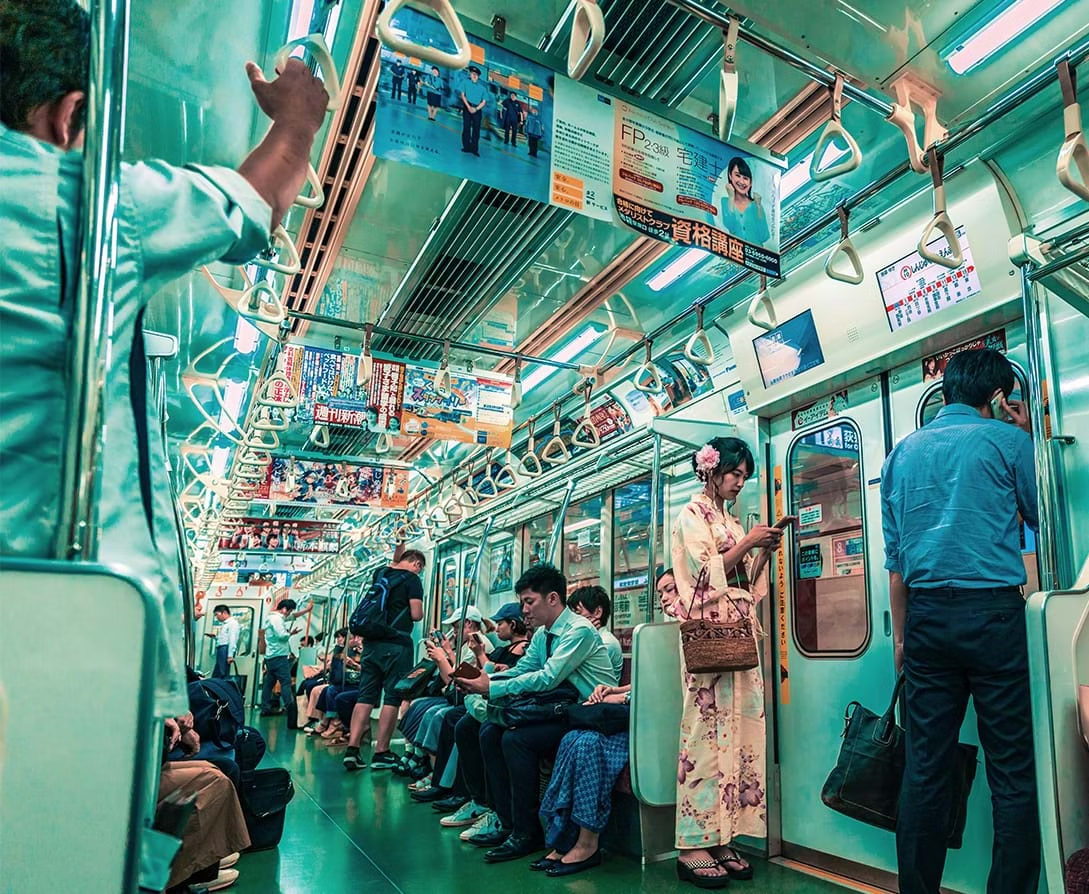 Photo by Jezael Melgoza on Unsplash
Transportation Safety In Japan
The images of transportation in Japan are of sleek bullet trains hurtling through the countryside and business-suited junior executives cramming themselves into subway trains like sardines.
And for the most part, those images align with reality.
Public transport
“Public transport is generally safe, clean and always on time in Japan,” Varga says. However, “subways can get very busy in large cities – so avoid travelling during rush hour in Tokyo.”
To avoid any confusion, we suggest downloading the trust the route it offers.
As for traveling by bullet train (Shinkansen), Varga endorses it as an alternative to flying, “so you can enjoy the views while you speed by in your comfortable chair.” She also recommends buying a Japan Rail Pass before your Shinkansen trip to save money.
 Photo by Keith Chan on Unsplash
Flying
Japan is served by several national and regional airlines, including All Nippon Airways, Peach, Spring, Starflyer, and Jetstar Airways.
When it comes to flying, Varga says while flights are convenient, you should “check the rules of the airline in case they are different from what you are used to,” especially regarding carry-on luggage and added fees.
Driving
Driving in Japan can be challenging, for its city traffic and narrow country roads.
Varga recommends you:
Always follow the rules
Drive carefully (And remember that cars drive on the left in Japan)
Stick to the 100kmh speed limit
Finally, ask for an “I am a foreign driver” sticker if you rent a car, so other road users will give you more space.
Getting Around In The Cities
Japan is one of the most densely populated countries on earth. As a result, if you visit Japan chances are you’ll be spending time in one of its cities.
Varga says that it’s safe to walk around even at night in Japan, though it’s important to be mindful of your surroundings.
“Cities are anything but chaotic in Japan,” she continues. ”If you stop for a second, you’ll see that everybody follows a set of simple rules: Walk on the right side of the pavement, don’t stop in the middle of the street, no eating or drinking.”
Best of all, she notes, “You’ll find signs everywhere gently guiding you to your destination.”
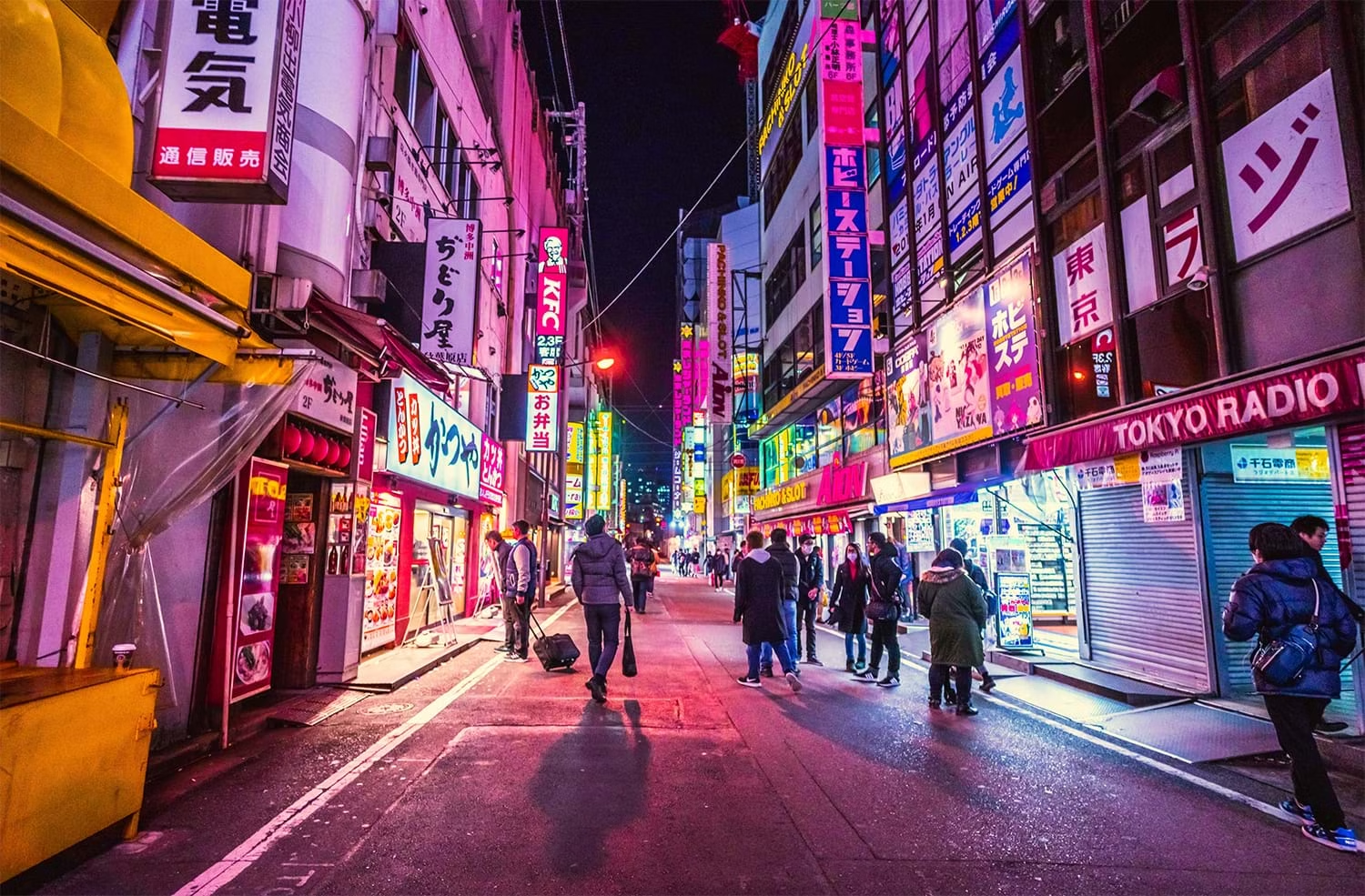 Photo by Jezael Melgoza on Unsplash
AloJapan.com