
Improved weather conditions to stabilise production in coming season while gradual structural decline to pose continued challenges
Japan’s citrus production areas continue to decline driven by aging producers and labour shortages, according to a recent USDA report. These challenges combined with adverse weather in the 2024/25 marketing year (MY) (October 2024 – September 2025) saw lower production for the country and increased imports to stabilise availability.
Mandarins
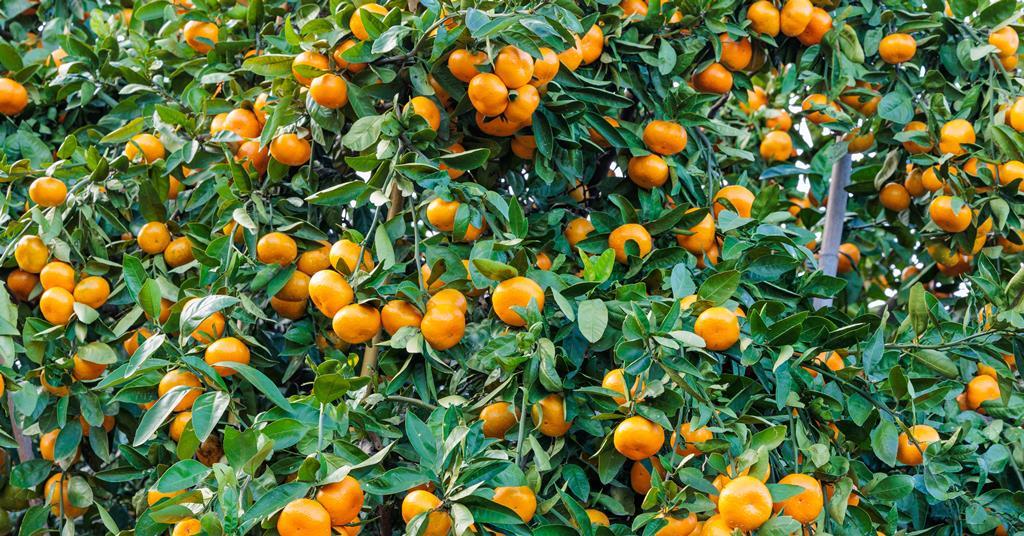
According to the report Japan’s mandarin production dropped sharply to 744,000 tonnes in MY 2024/25 due to extreme heat and inadequate rainfall. Labour shortages also reduced growers’ capacity to perform timely canopy and crop-load management, further impacting yields.
In the coming 2025/26 season, production is estimated to rebound to 816,000 tonnes, supported by more favourable weather conditions. However, Japan’s mandarin production area, which was 46,900ha in MY 2024/25, is expected to fall to 45,700 ha in MY 2025/26.
To supplement the decline in domestic supply, Japan’s mandarin imports increased in MY2024/24 reaching 24,845 tonnes. However, this is expected to be short lived with the USDA estimating imports will decline to 20,000 tonnes (a drop of around 17 per cent) as domestic production looks set to rebound, reducing the need for additional imported fruit.
Despite the drop in production, Japan’s mandarin exports remained steady. The country exported 1,548 tonnes to key South-East Asian markets. This is expected to continue into MY 2025/26.
Oranges
Japan’s fresh orange production continues to see decline as growers prioritise more profitable crops including mandarins. The USDA estimated that Japan’s harvest area would decrease from 332ha in MY 2024/25 to 317ha in MY 2025/26, a decline of about 4.5 percent. Production, too, is expected to drop by 4.7 per cent from 4,090 tonnes in MY 2024/25 to 3,900 tonnes in MY 2025/26. However, given the limited total volume, these fluctuations only have a small effect on supply.
Japan continues to rely heavily on imported oranges which increased to 86,438 tonnes in MY 2024/25. The USDA tied this uptick to the shortfall in domestic mandarin production. In MY 2025/26, imports are anticipated to decline to 75,000 tonnes, a decrease of 12.8 per cent on MY 2024/25, as domestic mandarin production improves.
Grapefruit
Japanese grapefruit production consists almost entirely of Japanese pomelo. The harvested area for Japanese pomelo was 1,150ha in MY 2024/25, yielding about 26,000 tonnes. The USDA expects this to reduce nominally to 1,140ha and 26,000 tonnes in MY 2025/26.
While yields remain relatively stable, the USDA suggests continued structural constraints will see the sector mirror other citrus varieties with incremental declines in production area and a gradual reduction in output.
Imports reached 32,850 tonnes in MY 2024/25, supplied primarily by South Africa, this is estimated to decrease to 32,000 tonnes in MY 2025/26 reflecting Japan’s declining preference for tart citrus.
Lemons/Limes
In contrast to other citrus varieties, Japan’s production of lemons, limes, and other acid-type citrus – particularly kabosu, sudachi, and yuzu – have shown a gradual expansion or stability. While the projected increase – from 4,700ha in MY 2024/25 to 4,750ha in MY 2025/26 – is minimal, the USDA expects growing consumer interest in low-pesticide fruit and a comparatively high market value to encourage growers to maintain or slightly expand production in coming years.
Japan produced 49,000 tonnes of lemons and limes in MY 2024/25 and this is estimated to remain steady into MY 2025/26. It imported a total of 43,900 tonnes in the same year (2,023 tonnes of limes and 42,000 of lemons). The USDA projects a slight decrease in MY 2025/26 to 43,000 tonnes, reflecting stable domestic production and soft softening demand for imported lemons for certain processed-food categories. However, the report suggested Japan will continue to rely on lemon imports for foodservice and industrial processing.
AloJapan.com