
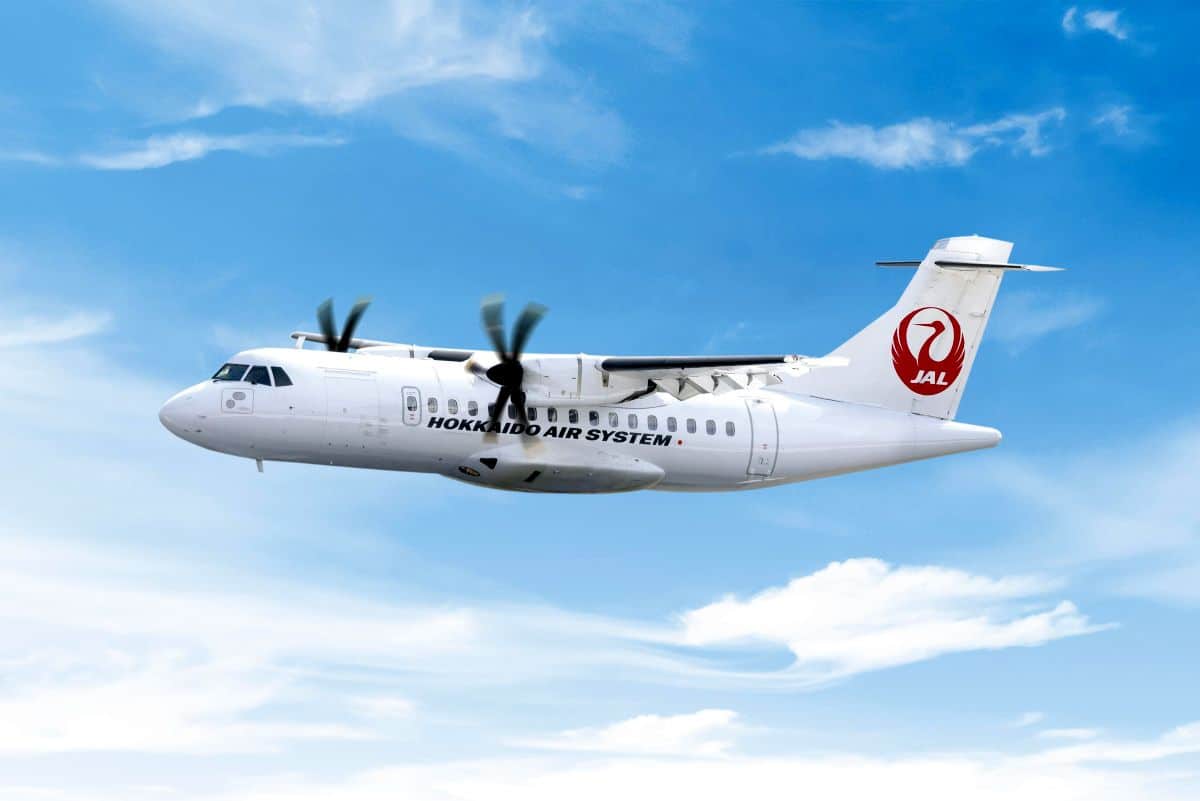
The Japanese regional airline Hokkaido Air System, a subsidiary of Japan Airlines, faces massive restrictions in flight operations at the beginning of 2026.
The widespread disruptions are due to the ongoing grounding of an ATR42-600, which requires extensive repairs following an incident in December. The airline stated that the impact on the flight schedule is expected to last until at least January 9, 2026. Regional routes within Hokkaido Prefecture are particularly affected, with hundreds of passengers facing cancellations and rebookings. The situation highlights the logistical challenges faced by smaller airlines when technical failures occur within a specialized fleet.
Background to the technical outage in Hakodate
The current crisis originated on December 11th of last year. On that day, the aircraft, registration JA14HC, was involved in an incident that necessitated its immediate grounding. Since then, the regional jet has been undergoing technical repairs at Hakodate Airport. Although the airline has not provided detailed information about the exact nature of the damage, the length of the repair work and the need for specialized technicians suggest a complex problem. The ATR42-600 is a modern turboprop aircraft specifically designed for short runways and the challenging climatic conditions common on Japan’s northernmost main island.
Repairing this type of aircraft at a regional location like Hakodate presents specific challenges. Spare parts often have to be flown in directly from the manufacturer or from central logistics centers, which can lead to delays, especially during the winter months. Since Hokkaido Air System operates a very lean fleet structure, the downtime of a single aircraft immediately impacts overall capacity. The company states that it is striving to complete the work as quickly as possible but must adhere to the strict safety regulations of the Japanese aviation authorities.
Challenges of a minimized fleet size
The current situation at Hokkaido Air System exposes the vulnerability of regional network operators. The company’s entire fleet consists of just four ATR aircraft. To make matters worse, at the time of the crisis, only one of these four aircraft was in active service. The others were either undergoing scheduled maintenance or were also subject to technical inspections. With only 25 percent of its available aircraft capacity, maintaining a dense flight schedule that normally connects key cities like Sapporo, Hakodate, Misawa, and Kushiro is virtually impossible.
Between December 27, 2020, and January 9, 2026, the airline anticipates the cancellation of a total of 80 flights. A further 112 flights will need to be rescheduled to make the best possible use of remaining resources. These figures are substantial for an airline of this size and will place a significant burden on customer service. Regional flights in Hokkaido are often vital connections for the local population and economy, as alternative land-based transportation options are frequently much more time-consuming due to the topography and winter weather conditions.
Operational adjustments and passenger information
To maintain the stability of the remaining route network as much as possible, Hokkaido Air System’s management has implemented a temporary operating concept. Priority is being given to high-volume routes and those for which no timely alternatives exist. Passengers are asked to regularly check the company’s website for the current status of their flights. Rebooking processes have been intensified, in some cases utilizing cooperation with the parent company, Japan Airlines, to reroute passengers onto larger aircraft or alternative routes, where logistically feasible.
The economic consequences of such disruptions are significant for regional airlines. In addition to the direct revenue losses from canceled flights, there are costs for accommodating or compensating passengers, as well as the high expenses for expedited repairs. Furthermore, maintaining passenger confidence in the reliability of regional connections is crucial, which poses a particular challenge in a market with strict punctuality expectations like Japan.
Technical profile of the ATR fleet in northern Japan
The ATR42-600 was chosen as the standard model for Hokkaido Air System due to its high efficiency and suitability for the demanding terrain. The model features modern avionics and engines designed to operate reliably even in extremely low temperatures. The incident of December 11th is therefore being thoroughly analyzed internally to determine whether it is a problem specific to aircraft JA14HC or whether preventative measures are necessary for the entire sub-fleet. Maintenance programs in Japan are considered among the most stringent in the world, which guarantees safety but also leads to longer downtimes in the event of unforeseen defects.
The aviation industry is closely watching developments at Hokkaido Air System. It’s becoming clear once again that while reducing operations to a single aircraft type offers advantages in pilot training and spare parts inventory, a series of malfunctions or an accident can paralyze the entire company. The airline had planned to stabilize its network by 2026, but the unsuccessful start to the new year is forcing management to focus on crisis management rather than expansion.
Outlook on the normalization of air traffic
The expectation that disruptions will continue until January 9th is based on the current progress of repairs in Hakodate. If the final test flights are successful and regulatory approvals are granted in time, a gradual return to the regular flight schedule could begin in the second week of January. Until then, the situation remains challenging for commuters and travelers in Hokkaido. The company has assured that it will use all available resources to restore fleet availability to the necessary level and avoid further cancellations after that date.
The airline’s long-term strategy is to align maintenance intervals even more closely with peak operational periods in the future, in order to create buffers for unforeseen events. However, as long as the damaged aircraft is not operational again, the scope for operational planning remains minimal. The focus is now on safely and permanently reintegrating JA14HC into flight operations.
AloJapan.com