

Remember the time when midsize sedans used to be popular worldwide? Today, we’re down to just five models, all of which are from Asian brands. A long, low passenger car, when styled right, leads to a vehicle with beautiful proportions.
Today, we’ll be exploring a long-forgotten Japanese car—a midsize sedan, in this case, that I think still looks so good in 2025. Granted, by the time it was discontinued, it was nearly 10 years old already, and so a replacement was more than needed. Yet, thanks to tasteful updates over the years, I’d argue that this midsize sedan has aged extremely well.
Related
10 Japanese Cars Known For Their Bulletproof Engines
These are the standouts among some of the most reliable Japanese cars out there.
Hope You Remember The Mazda6
Mazda
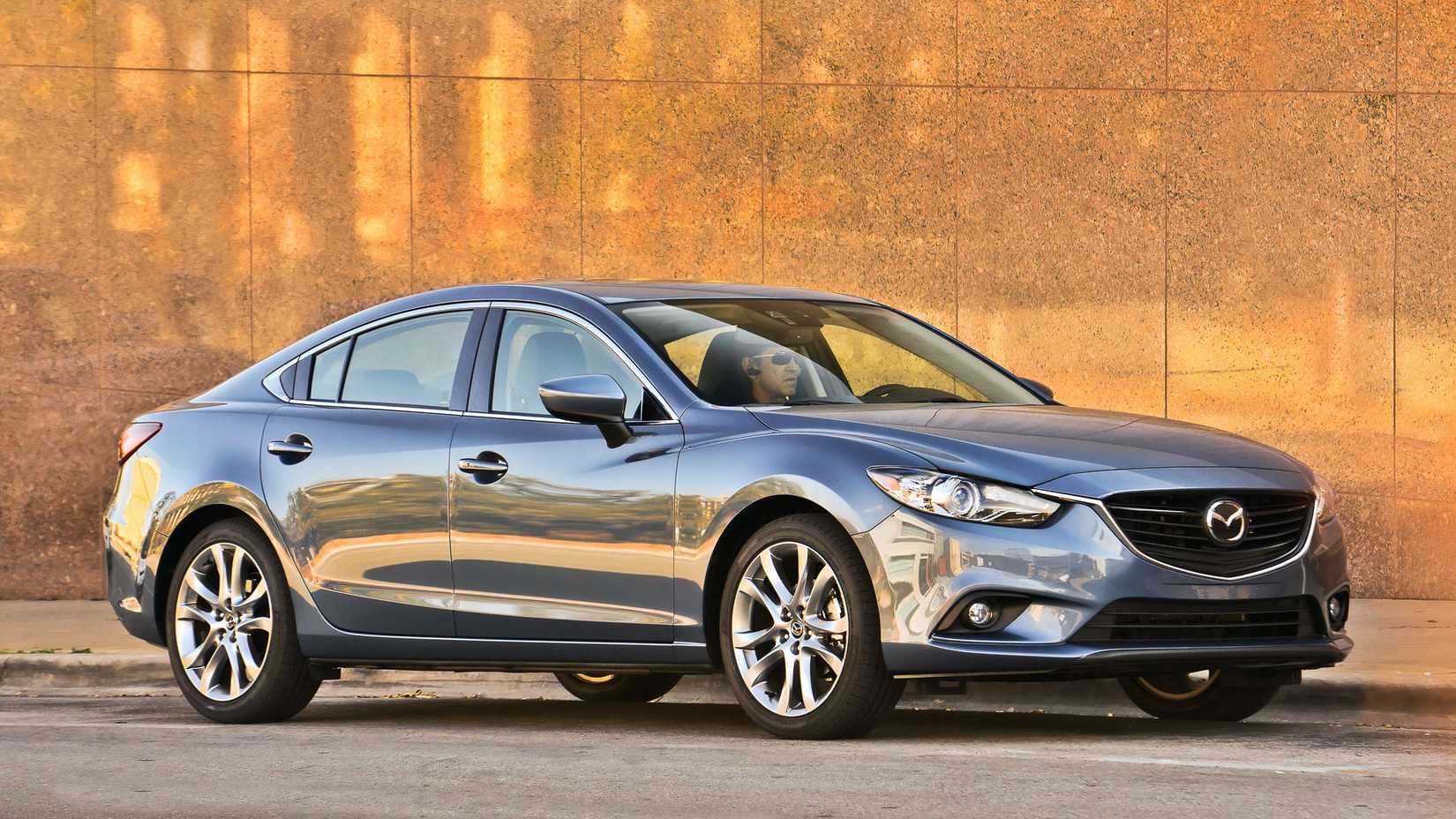
The final generation of the Mazda6, which had a model year run in North America from 2014 to 2021, is a midsize sedan that was universally praised for its style. In fact, the moment it came out in wagon form for Europe and Asia, it became my dream car. Confession time, I’m currently on my second Mazda 6 wagon already.
Universally-Praised Design
2017 Mazda 6, front 3/4Mazda
Mazda’s first implementation of its Kodo design was shown in 2012 with the release of the first-generation CX-5. Kodo design officially debuted in 2011 with the Minagi Concept—a vehicle that previewed the then-new CX-5. But it won’t be until the Takeri Concept that the full potential of Kodo will be fully realized. By the time the Mazda 6 was being teased for its 2012 Los Angeles Auto Show debut, hopes were high as the Japanese automaker is proud to highlight that it closely mirrors the Takeri concept it was based on.
2021 Mazda 6 side shotWilliam Clavey | TopSpeed
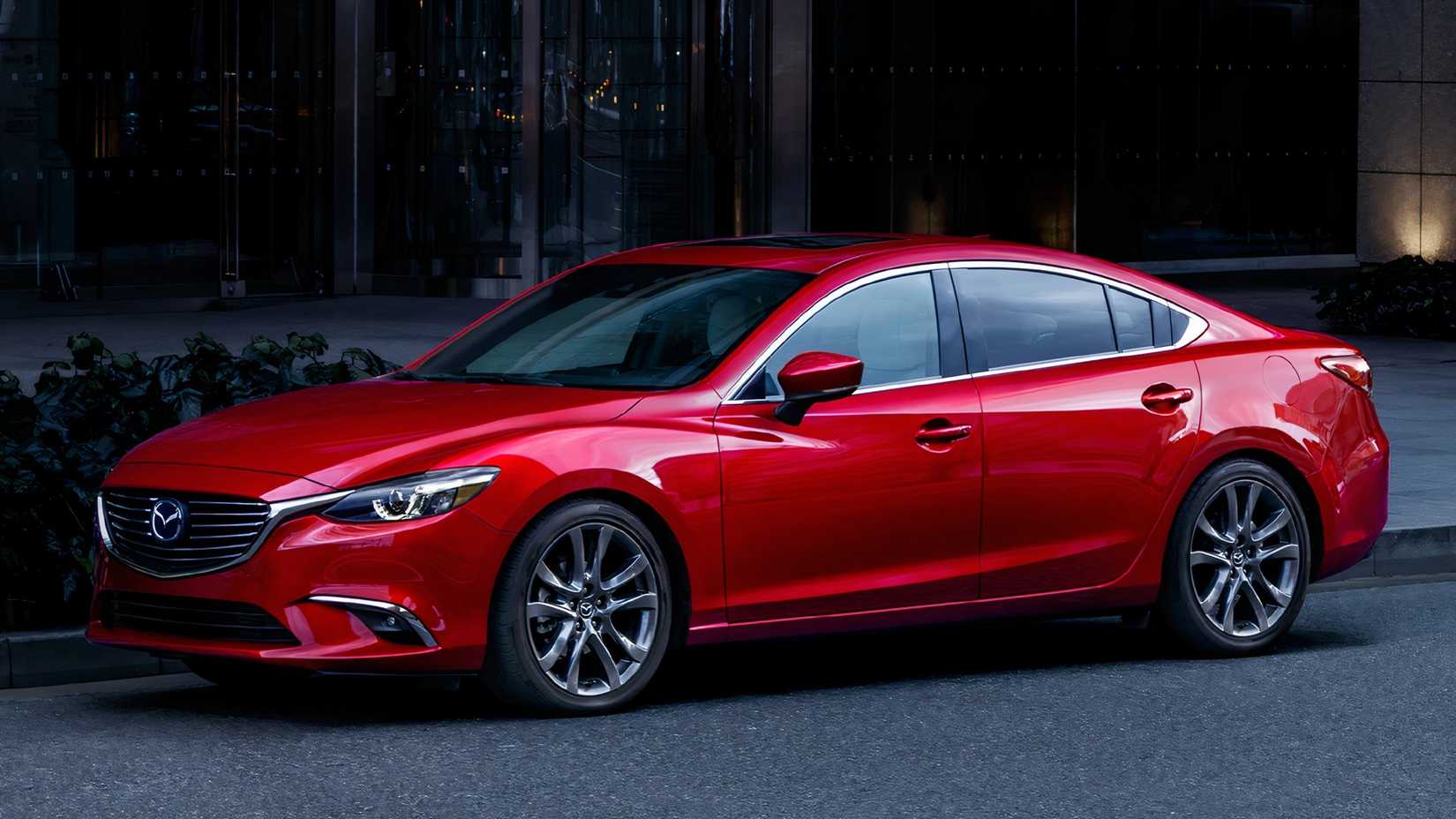
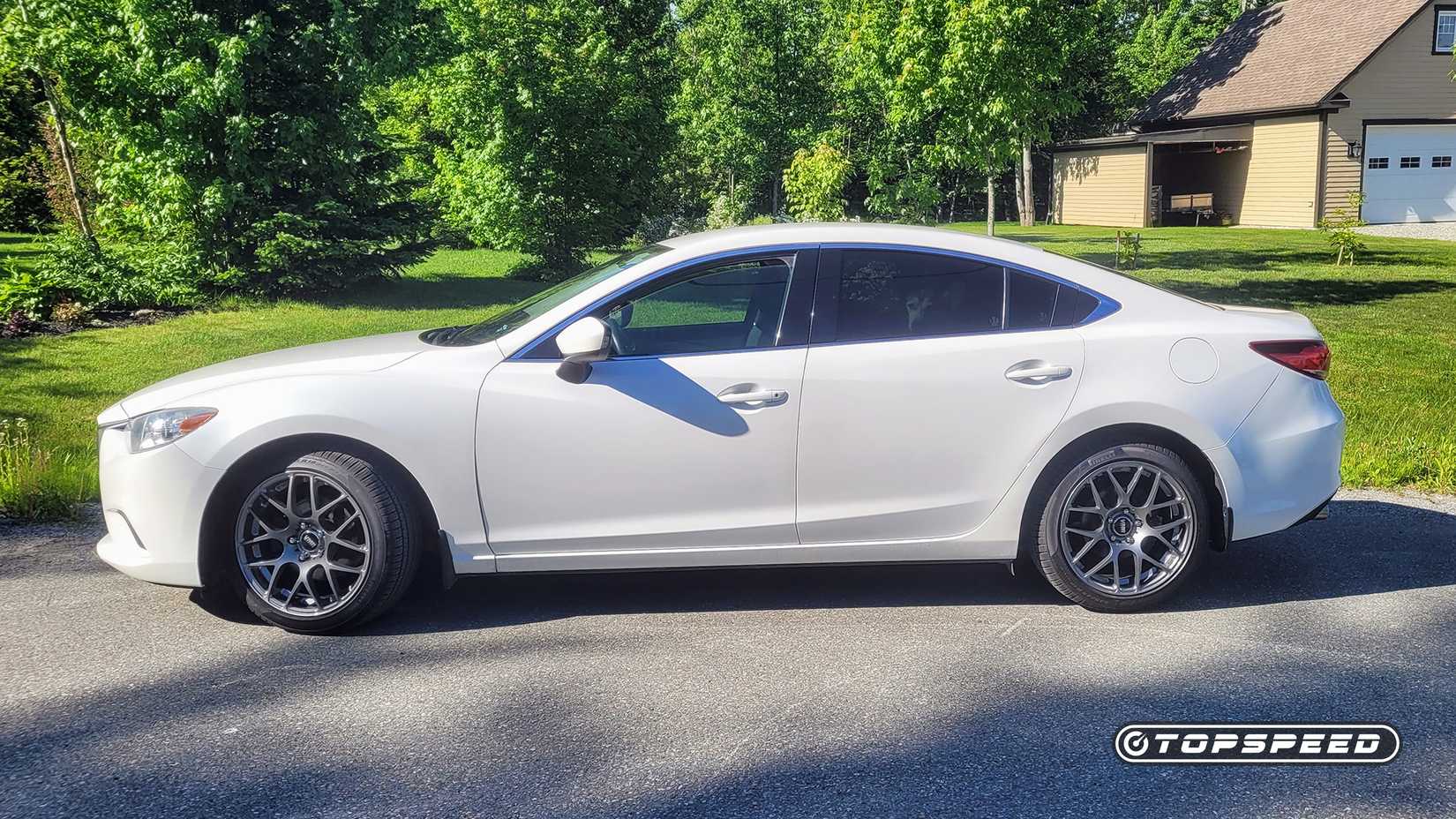
Lo and behold, when the Mazda6 finally debuted, everyone’s jaws dropped. A long hood, combined with its sculpted haunches that flowed from the front fenders to the sides of the vehicle, gave it so much sleekness. The curvaceous roof and short rear deck gave the traditional midsize sedan format a beautiful shape. 19-inch wheels, which were still a rarity at the time, filled the wheel wells with perfect proportions. The result is a midsize sedan so universally praised for its design that it became a finalist for the 2013 World Car Design of the Year.
Evolved To Finer Quality
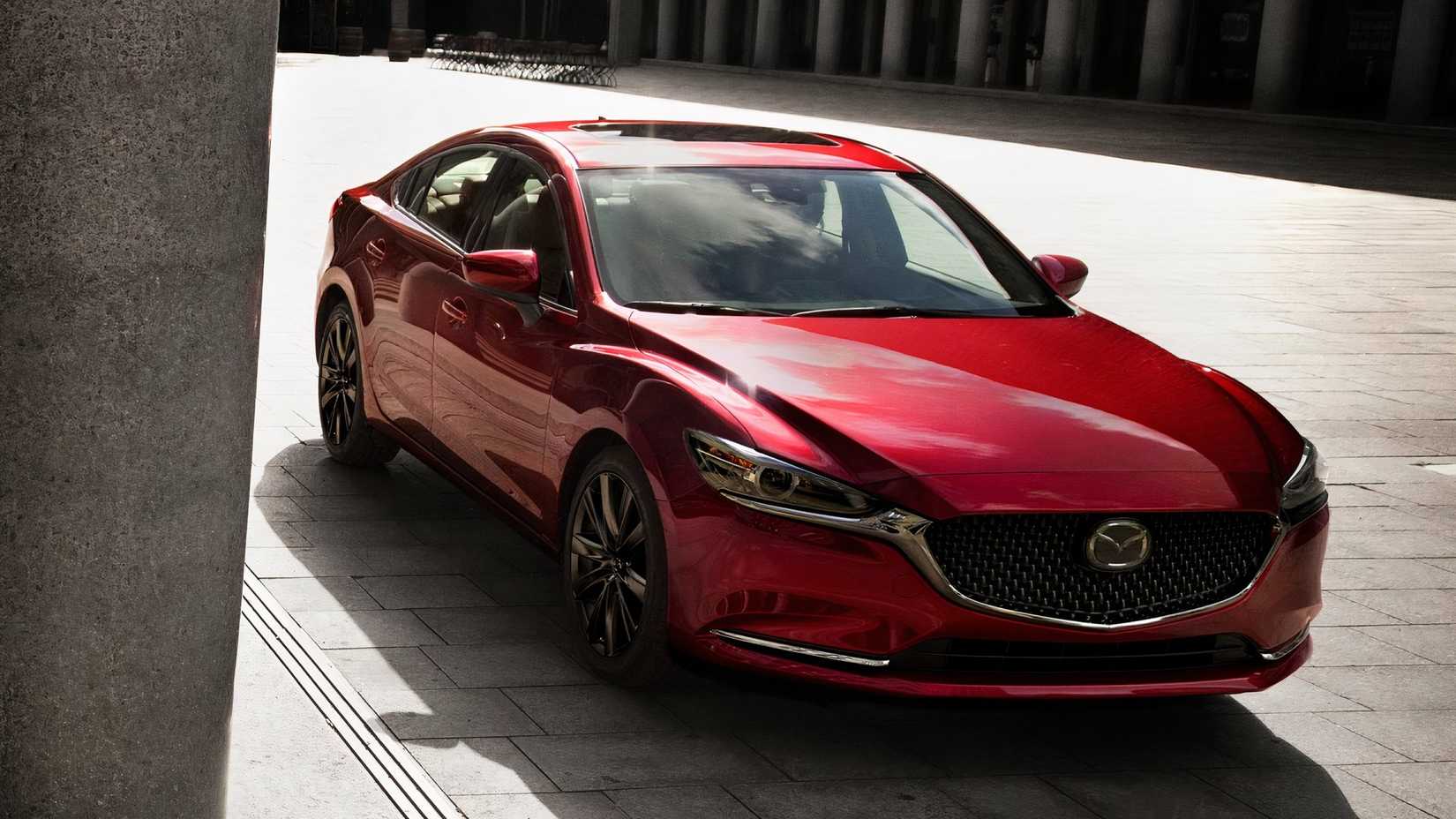
2018 Mazda 6, front 3/4Mazda
Just as Mazda was going all-in on designing beautiful cars, they also decided around 2015 that they were heading in an upmarket direction. With that, the Mazda6 saw two facelifts, one refining the original design, while the next one transformed the Mazda 6 into something more stately and elegant. I had the privilege of owning both facelifted iterations, with my current Mazda 6 Wagon 20th Anniversary Edition having the more elegant design revamp. Each facelift made the Mazda 6 even more desirable, cementing its position as the more emotional choice versus the usual Accord and Camry choices.

Related
Life Goes On: Breaking Up With A Great Daily Driver
The 2015 Mazda6 was one of the best daily drivers I ever owned, even if it wasn’t an SUV.
From Sporty To Premium
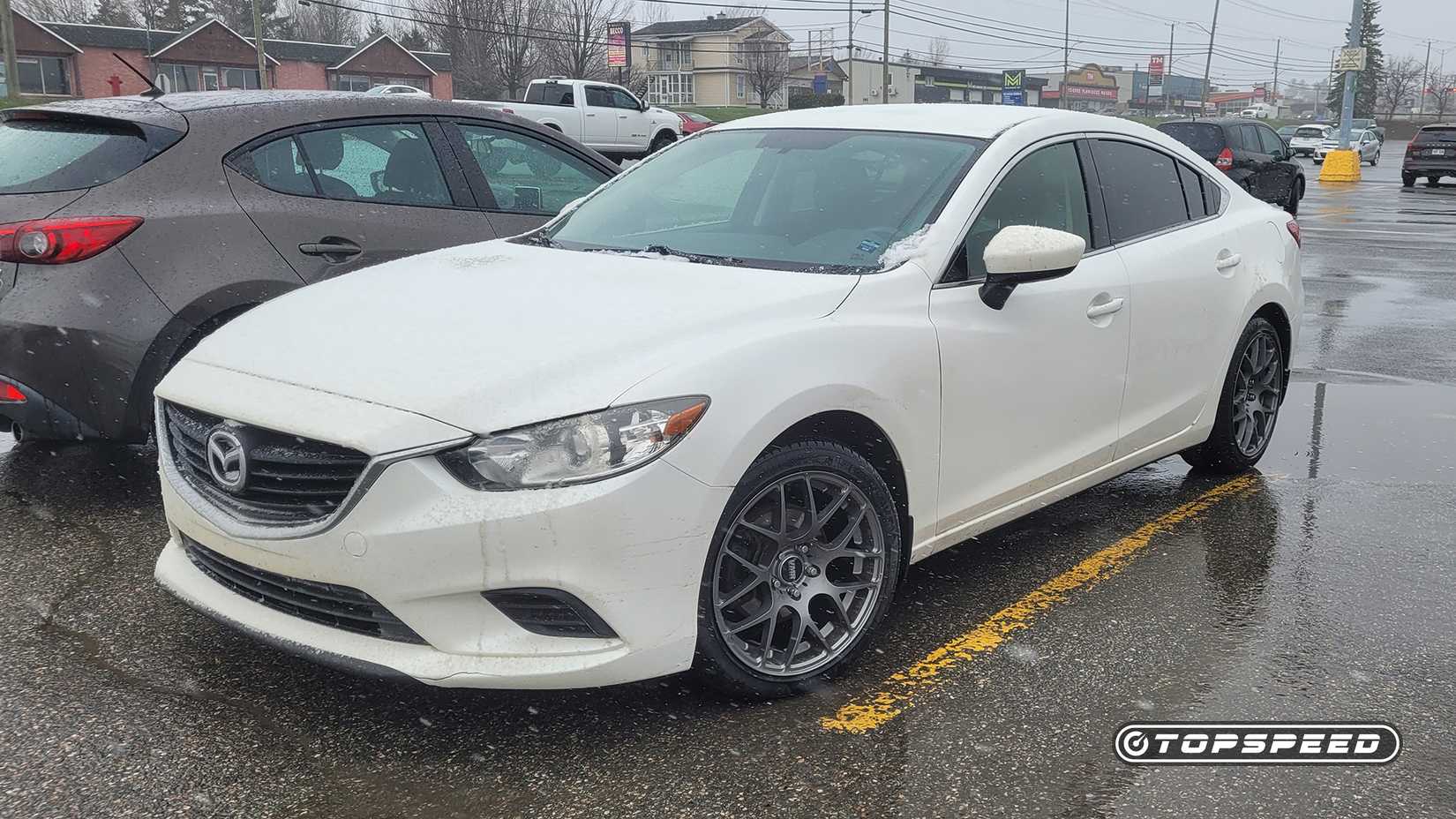
William Clavey | TopSpeed
As the Mazda6 evolved through its 10-year cycle, its orientation has changed from truly sporty to eventually embracing elegance. This was more evident in how its interior design evolved. By the end of its life cycle, you’d even question why you would even need to splurge for a European luxury car.
Setting Premium Benchmarks

Interior of the 2016 Mazda 6Mazda
The first iteration of this Mazda6 had an underwhelming interior. Contrary to its stylish Kodo design exterior, the interior was sad, sombre, and dull. The tech it got was also so-so in execution, but an available white leather interior aimed to liven things up. Finally, however, by its first facelift for the 2016 model year, the Mazda6 finally got the interior that it deserved. A subtle update refined the exterior, but the boring interior was ripped out in favor of a more stylish and significantly upmarket interior that had similar aesthetic choices to the then-new 2014 Mazda 3.
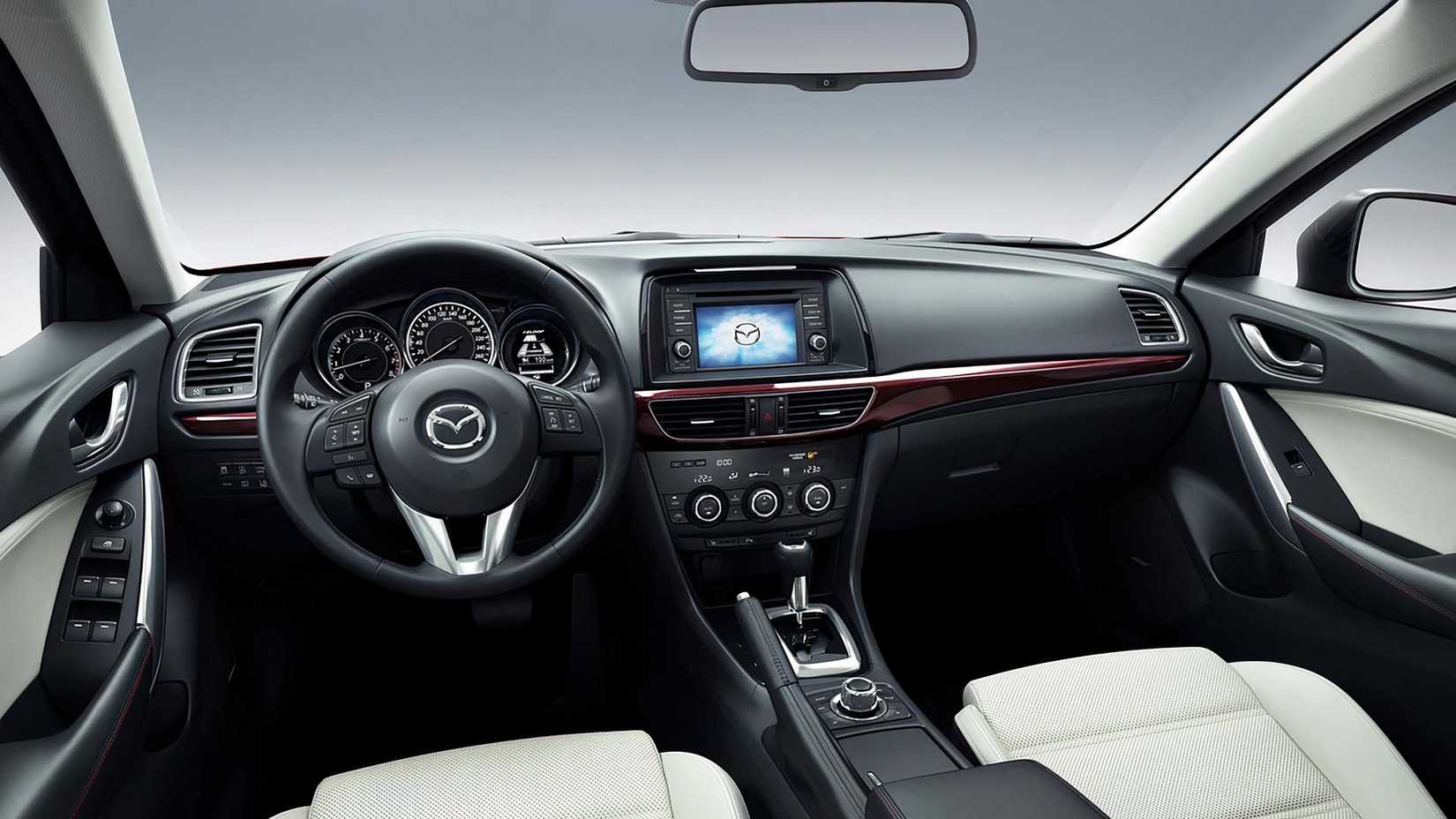
Interior of the 2013 Mazda 6Mazda
Soft-touch materials and leatherette surfaces abound, and so is a well-executed first-generation MZD Connect 7-inch rotary dial-based infotainment system. Yes, it was aping BMW’s iDrive rotary control logic, but MZD Connect was arguably one of the most intuitive infotainment systems ever. The 2016 Mazda 6’s interior, along with the second-generation CX-5’s for the 2017 model year, cemented Mazda’s reputation for making interiors that set the premium benchmark among mainstream cars.
Mazda 6
Sedan
2014
Base MSRP: $20,990
A Drive That Matched Its Emotion

Interior of the 2018 Mazda 6Mazda
Trust me when I say this, especially as I’m in my second Mazda6 wagon already, but the Mazda6, throughout its 10-year production lifecycle, has evolved from being all-out sporty to offering a greater sense of refinement near the end of its life. The initial release gave us a midsize sedan (or wagon, in my case) that focused so much on sportiness, but one that’s a bit too stiff and with a bit more road noise than its competitors. The second facelift addressed this by adding thicker sound deadening and acoustic front glass (on higher trims), and slightly softer suspension—all the while improving its direct sporty feel through recalibrated steering, as well as the addition of G-Vectoring Control.
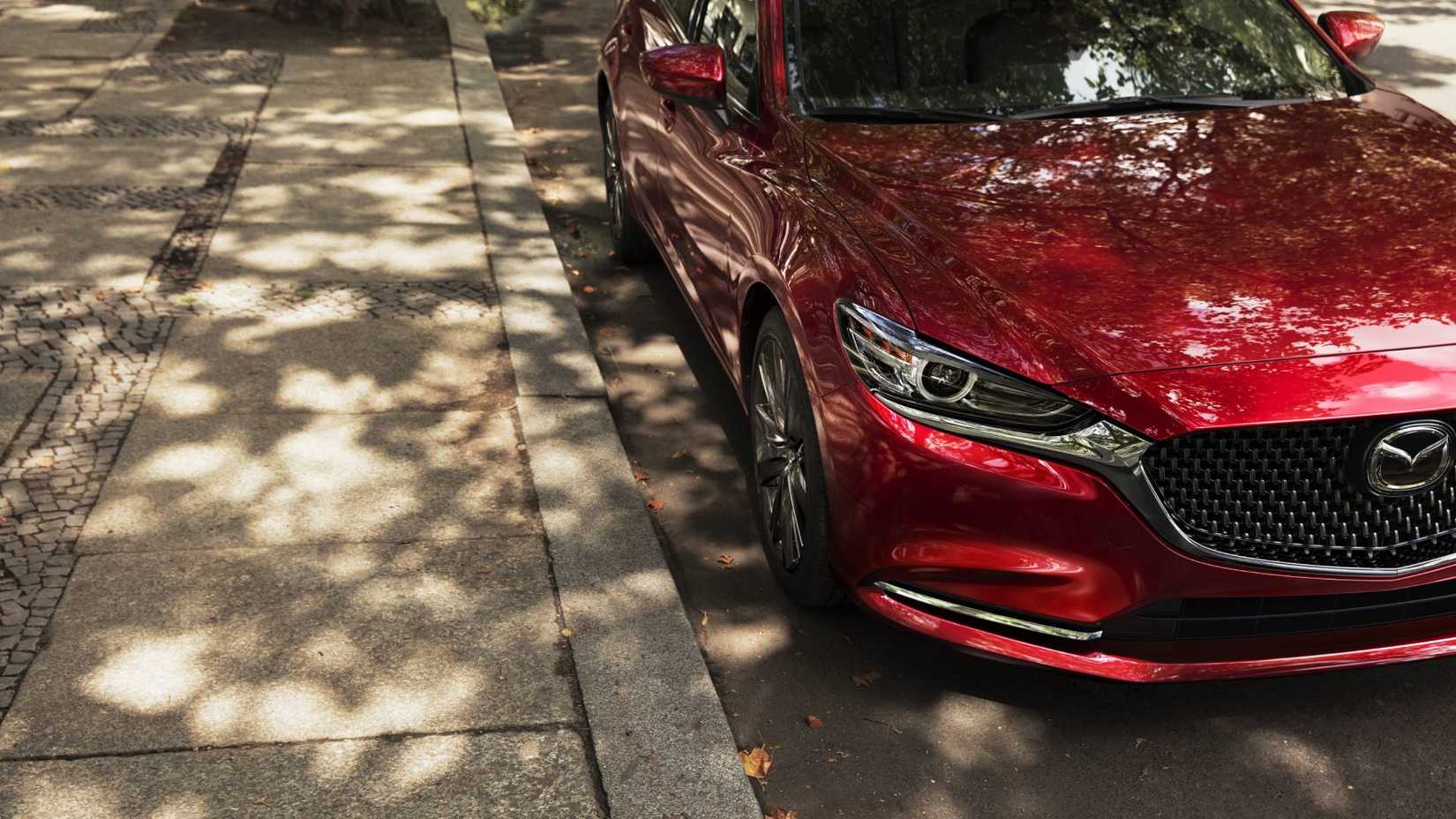
Front-Right View of Mazda 6Mazda
A second facelift brought the Mazda6 to new heights in terms of premium feel and refinement. Through a new steering rack that’s now directly mounted on the chassis, the steering feel has become even more direct, whilst also being slightly lightened up. Additional sound deadening was added, while the suspension now has a longer stroke. While its ride quality remains on the slightly stiff side, the longer suspension stroke means that the shocks and springs have more room to stabilize the body, especially when driven on undulations. Lastly, this final facelift also introduced a new 2.5-liter turbo four-cylinder that is torquey and powerful, while the naturally-aspirated 2.5-liter received cylinder deactivation. Production for North America ended in the 2021 model year, while my 2024 Mazda 6 20th Anniversary Edition wagon was the swansong for this iconic nameplate.
Related
10 Modern Sedans With V6 Engines That Skipped The Turbo Trend
These models prove that natural aspiration, though a fading aspect, still delivers solid results in today’s market.
What You Need To Know About Ownership
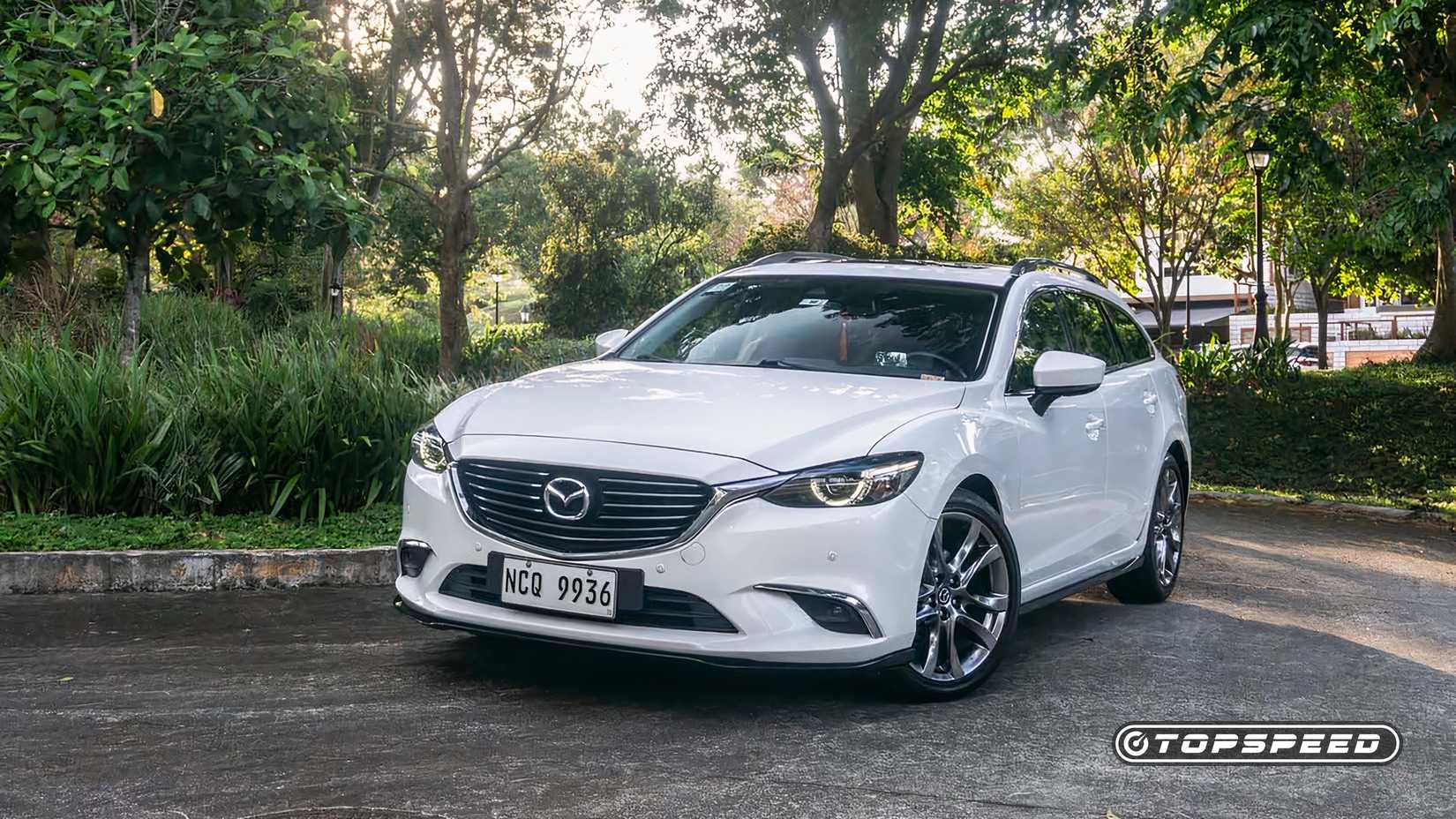
Front 3/4 view of a 2017 Mazda 6 WagonIsaac Atienza
Mazdas are known to be very reliable and robust, and this generation of the Mazda6 is no exception. Here’s what you need to know about ownership, as well as its market value if you’re interested in getting one.
Exceptionally Reliable

Dynamic shot of a 2024 Mazda 6 Wagon 20th Anniversary EditionIsaac Atienza
Being in my second Mazda6 wagon is a testament to its reliability. In fact, for the six years I owned my first Mazda 6 wagon which’s mostly highway driven, the stabilizer link was the only part that got replaced. The robust 2.5-liter four-cylinder only needed routine maintenance, and that applies to the turbo version as well. Do note, however, that as with all direct-injected engines, carbon buildup does happen. The rate at which it accumulates can be slowed through fuel additives, or when it’s already accumulated, visit a shop that does walnut blasting or chemical stripping. iSeeCars also ranks the Mazda 6 as one of the most reliable midsize sedans, with an 8.3 out of 10 reliability score, an 11.1-year or 146,420-mile average lifespan, and a 15.5 percent probability of reaching 200,000 miles.
Engine
2.5-liter four-cylinder
2.5-liter turbo four-cylinder
Horsepower
184 hp (2013-2018)
187 hp (2018-2021)
227 hp (regular fuel) / 250 hp (premium fuel)
Torque
185 lb-ft (2013-2018)
186 lb-ft (2018-2021)
310 lb-ft (regular fuel) / 320 lb-ft (premium fuel)
Transmission
6-speed A/T
6-speed M/T (until 2018)
6-speed A/T
Layout
FWD
FWD
Fuel Economy (Combined)
29 MPG (A/T)
27 MPG (M/T)
26 MPG
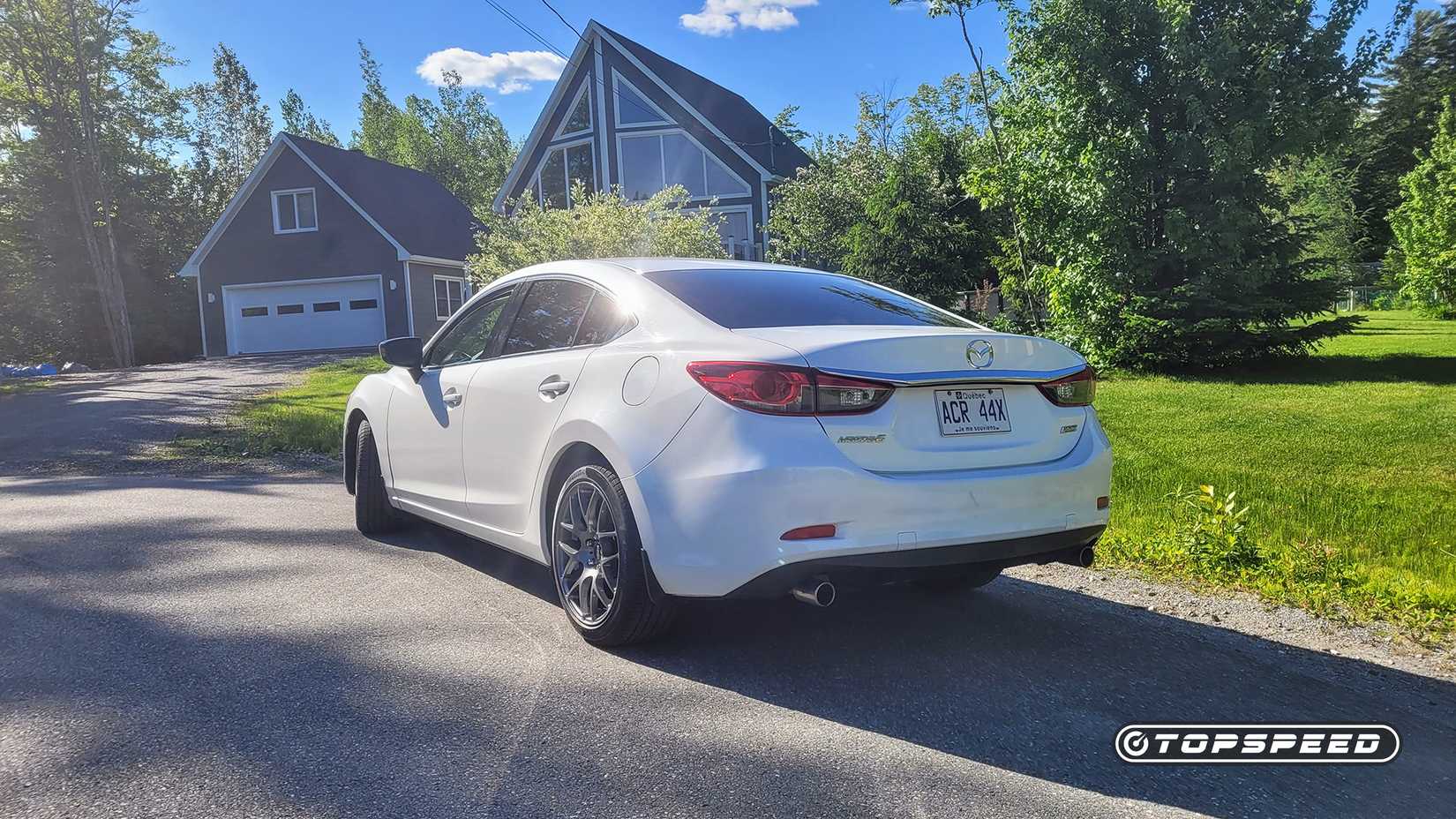
William Clavey | TopSpeed
The only major component you need to look out for, if it’s equipped, is the capacitor for the i-ELOOP regenerative braking. Though it is a major contributor to its exceptional fuel efficiency, the capacitor isn’t a lifetime part. When left unused for such a long time, errors can pop up if the i-ELOOP gets severely drained. Since this is linked to the EFB 12V battery, the battery itself can also suffer the same consequence. As with many cars left unused for a long time, use a battery charger first before starting the vehicle. The i-ELOOP, however, lasts for around 8 to 10 years. Since I sold my first Mazda6 in the sixth year, it was a part I never replaced. If it does need replacing, the capacitor will be your most expensive part in a Mazda, at around $800.
How Much To Buy One Used
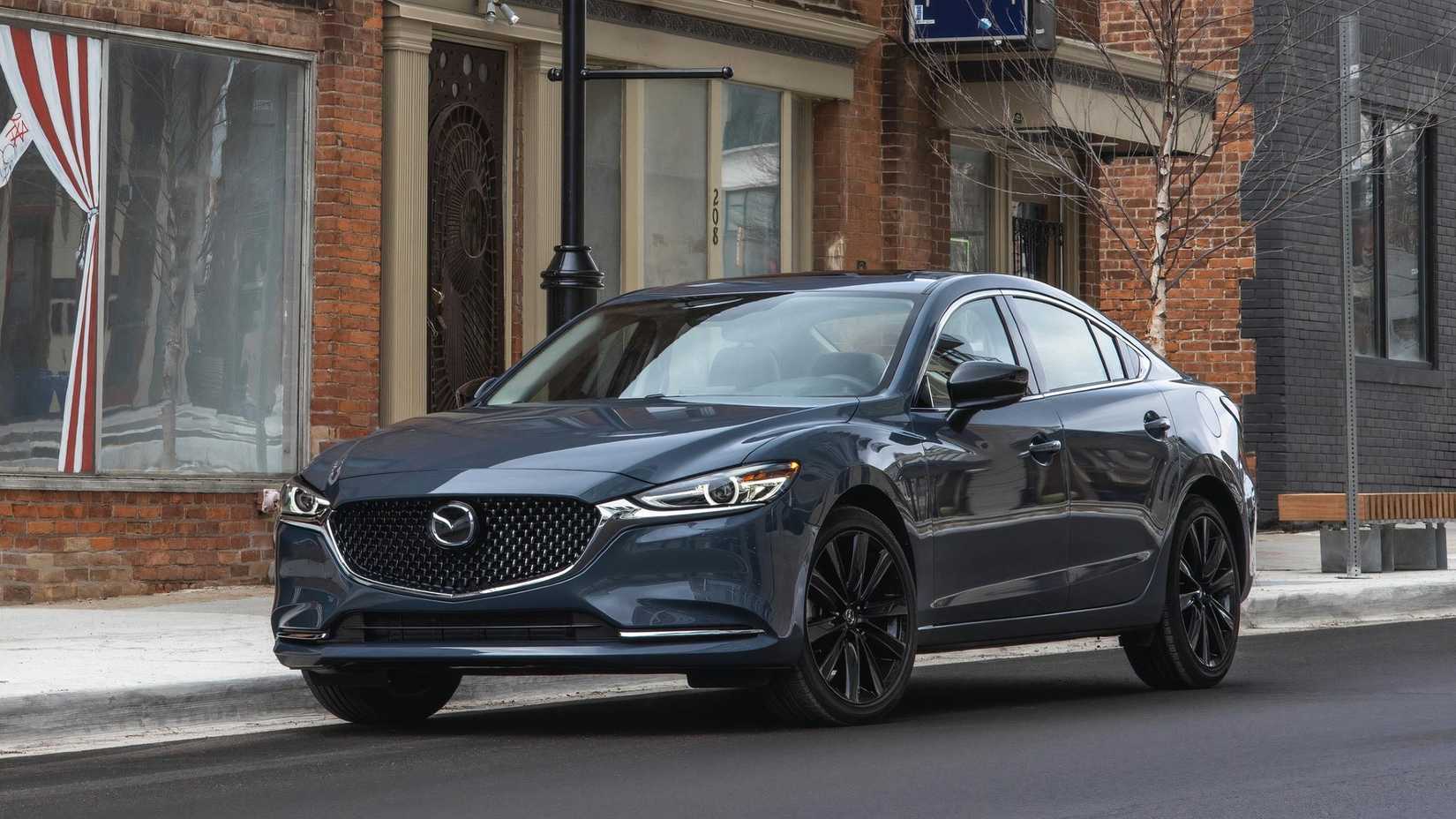
2021 Mazda 6 front 3/4 shotMazda
According to iSeeCars, a 2021 Mazda 6, which is the final model year for this midsize sedan, has an average used price of $21,363. A five-year-old model will have an average price of $19,858, or 56.7 percent of its remaining value. This means it has a five-year depreciation of 43.3 percent, which is slightly less than the average of 41.5 percent for the midsize sedan segment. The Mazda 6’s used values are just right—not exceptionally strong, but not bad, either. For reference, a five-year-old Camry loses 35.5 percent of its value in five years, while a Hyundai Sonata loses 46.2 percent of its value in five years.
Source: iSeeCars
AloJapan.com