

Japan’s elderly care industry faces a severe labor shortage – and the problem has only deepened as its population ages.
In 2023, Japan had 2.126 million care workers. That number fell by about 29,000 from the previous year. This marked the first annual decline. At the same time, the elderly population continues to climb.
Young Japanese workers rarely enter the care sector. Long hours and demanding physical labor discourage many applicants.
As a result, foreign workers now fill essential roles across the country. Without them, daily care operations would stop. The care industry no longer debates whether it needs foreign workers. It debates how to secure and retain them.
Foreign workers have now become essential caregivers
 Picture: Ushico / PIXTA(ピクスタ)
The Japanese government, recognizing the shortfalls in elderly care, plans to allow up to about 1.23 million foreign workers under specific residency programs by fiscal 2028. These include the “Specified Skilled Worker Type 1” status and the new “Development Employment” system. The policy reflects how dependent Japanese society has become on foreign labor.
Yet politics complicate the issue. Some leaders still favor stricter immigration controls. This tension shapes policies that balance economic need and political caution.
On the ground, the need is obvious. Facilities report constant shortages. Managers say recruitment efforts for Japanese workers often fail. That’s resulted in an increasing reliance on foreign care workers, many of whom are earning high praise for their skills and work ethic.
At a special nursing home in Oizumi, Gunma Prefecture, foreign staff play a central role. The facility, called Ai no Hana, employs 35 care workers. Twelve come from Myanmar, the Philippines, and Bolivia. Eight years ago, only one foreign worker worked there.
Deputy facility manager Kima Daisuke calls foreign workers indispensable. He says Japanese applicants no longer gather. Three years ago, the home strengthened its foreign recruitment, a decision that kept the facility in operation.
Similar patterns appear nationwide. About 90,000 foreign workers now work in elderly care. They hold various residency statuses. Some entered through economic partnership agreements, while others arrived as technical interns or specified skilled workers. Many later advanced to long-term roles.
Foreign staff perform the same duties as Japanese colleagues, assisting with meals, bathing, and daily living. Residents often praise their dedication, saying these workers show exceptional effort and kindness.
Planning a trip to Japan? Get an authentic, interpreted experience from Unseen Japan Tours and see a side of the country others miss!

“Noah [at Unseen Japan] put together an itinerary that didn’t lock us in and we could travel at our own pace. In Tokyo, he guided us personally on a walking tour. Overall, he made our Japan trip an experience not to forget.” – Kate and Simon S., Australia

See a side of Tokyo that other tourists can’t. Book a tour with Unseen Japan Tours – we’ll tailor your trip to your interests and guide you through experiences usually closed off to non-Japanese speakers.


Want more news and views from Japan? Donate $5/month ($60 one-time donation) to the Unseen Japan Journalism Fund to join Unseen Japan Insider. You’ll get our Insider newsletter with more news and deep dives, a chance to get your burning Japan questions answered, and a voice in our future editorial direction.
In Yamanashi Prefecture, a day service center serves 47 elderly users daily. Three of its seven care workers come from Myanmar and Nepal. At this facility, one worker has earned praise from the residents for her commitment to improving her Japanese, as she carries a notebook around with her for writing down and memorizing new words.
These stories show a clear trend. Foreign workers no longer fill gaps temporarily. They support the core of Japan’s care system. Facilities increasingly rely on them to maintain service quality.
A policy that brings workers to Japan
Japan uses several pathways to bring foreign caregivers. The earliest began in 2008 through economic partnership agreements. Indonesia, the Philippines, and Vietnam sent nurse and care worker candidates. Participants stayed up to four years. Those who failed the national exam had to return home. Only about 2,670 workers remain under this program.
In 2017, the government added care work to the technical intern system. Interns mainly come from Vietnam, Myanmar, and Indonesia. About 20,065 interns worked in care as of December 2024. Their stay usually lasts three years, with a possible extension to five.
The biggest change came in 2019, when Japan introduced the “Specified Skilled Worker” status. As a result, the number of workers in elderly care rose rapidly to 54,916 by June 2025. Workers mainly come from Myanmar, Indonesia, Nepal, and Vietnam.
Another pathway allows those who earn the national care worker qualification to stay longer. About 12,227 foreign workers held this status in December 2024. They can renew their residency and bring family members.
The government also plans reforms. New systems aim to shift from short-term labor to long-term development. Policies now emphasize training, retention, and career growth, reflecting the scale of the labor shortage and the need for stability.
Retention, mobility, and local struggles
 Picture: 8×10 / PIXTA(ピクスタ)
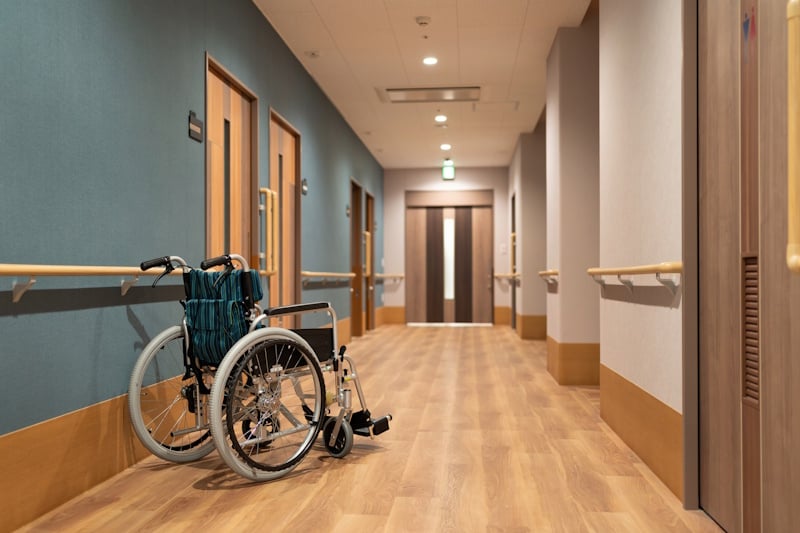
While foreign workers fill vacancies, retention poses challenges. Under the specified skilled worker system, job changes are allowed. Many workers move after gaining skills and language ability, often heading to cities with higher wages. This reflects a growing trend in Japan of people moving from regional areas to the country’s large cities.
Local operators feel the strain. They invest time in training workers, teaching Japanese and care techniques – but just as workers become independent, some leave. One Okinawa operator lost four of five trained workers to other regions.
Surveys show this trend clearly. More than half of the facilities employing foreign workers experienced departures within five years. Many workers moved to Tokyo, Kanagawa, or Aichi. Rural areas struggle to compete on wages alone.
However, research reveals important nuances. Employers often assume workers leave for higher pay. Yet surveys of foreign workers show different priorities, with many valuing personal growth more than salary. Over time, career development matters more than income.
Yamanashi Prefecture offers a counterexample. A cooperative there supports about 250 foreign care workers. Around 70 percent stay after moving to the specified skilled worker status – a rate far exceeding other regions.
Planning a trip to Japan? Get an authentic, interpreted experience from Unseen Japan Tours and see a side of the country others miss!
“Noah [at Unseen Japan] put together an itinerary that didn’t lock us in and we could travel at our own pace. In Tokyo, he guided us personally on a walking tour. Overall, he made our Japan trip an experience not to forget.” – Kate and Simon S., Australia
See a side of Tokyo that other tourists can’t. Book a tour with Unseen Japan Tours – we’ll tailor your trip to your interests and guide you through experiences usually closed off to non-Japanese speakers.
Want more news and views from Japan? Donate $5/month ($60 one-time donation) to the Unseen Japan Journalism Fund to join Unseen Japan Insider. You’ll get our Insider newsletter with more news and deep dives, a chance to get your burning Japan questions answered, and a voice in our future editorial direction.
The cooperative builds trust before arrival, explaining rural life clearly and ensuring suitable housing and learning opportunities. These steps reduce dissatisfaction and encourage long-term commitment.
Looking ahead to a sustainable workforce with foreign workers
Successful facilities treat foreign workers as long-term professionals. They offer equal conditions and clear career paths. Some even promote foreign staff to leadership roles. In Yokohama, one nursing home employs mostly foreign workers, with some serving as floor leaders and mentors.
Managers report positive effects. When foreign workers gain responsibility, Japanese staff feel motivated. Turnover among Japanese workers has dropped in some facilities, showing that inclusion improves overall workplace stability.
Education also matters. Many foreign workers aim to pass the national care worker exam. Support programs help them study by providing facilities that run regular classes and training sessions. Workers who feel supported are more likely to remain.
Japan also faces global competition. Other regions actively recruit care workers. Surveys indicate that many candidates prefer places such as Hong Kong or Taiwan, with Japan attracting fewer applicants from some countries. (The weak yen likely plays a sizable factor in this.)
Experts say Japan’s strengths lie in training and support. Structured skill instruction and detailed life guidance earn praise. To remain competitive, Japan must enhance these qualities and promote them overseas.
Sources
頭の中は「いつも外国人採用」 人手不足の介護業界が訴える「現実」毎日新聞
施設は「給料」、働き手は「成長」 外国人介護人材の転職に認識の差 朝日新聞
どうすれば外国人が定着する?──「奪い合い」の介護人材が山梨にとどまる理由とは #日本社会と外国人 Yahoo! Japanニュース
介護現場で働く外国人は9万人、海外との獲得競争は激しくなるばかり…日本の強みは「技術指導や生活指導」読売新聞
無料オンラインセミナー】「育成就労」と「パート合格」、国が舵を切った外国人の長期育成と介護施設経営の一手とは? PR Times
AloJapan.com