
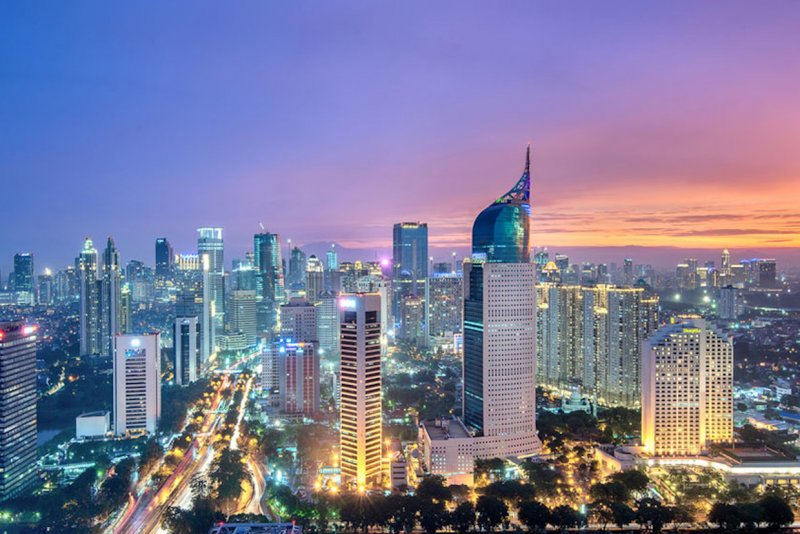
Jakarta has been ranked as the world’s largest city, with 41.9 million inhabitants, followed by Dhaka, while Tokyo has slipped to third place amid population growth in developing countries and Japan’s aging society, according to a recent U.N. report on urbanization prospects.
The population of Japan’s capital has increased more slowly than those of Indonesia and Bangladesh, causing its ranking among the world’s most populous cities to fall from first in 2000 to third by 2025, News.Az reports, citing foreign media.
The report uses an assessment method designed to allow for international comparisons.
Looking ahead, the population of the Tokyo urban area is projected to decline from 33.4 million in 2025 to 30.7 million by 2050, dropping Tokyo’s rank to seventh. Meanwhile, Dhaka is expected to rise to the top with 52.1 million people, followed by Jakarta, Shanghai, New Delhi, Karachi, and Cairo.
The report defines a “city” as “any agglomeration of contiguous geographic area” with a population density of at least 1,500 inhabitants per square kilometer and a total population of at least 50,000.
Using the methodology from the U.N. Department of Economic and Social Affairs, which published the report in November, Tokyo’s total counts only the city’s urban areas along with neighboring Saitama, Chiba, and Kanagawa prefectures. By contrast, the official population of Tokyo as a whole is about 14 million.
The estimates aim to provide data to help policymakers and researchers plan for urban futures. Managing city growth sustainably is seen as crucial not only for populations but also for achieving global climate goals.
The world has become increasingly urbanized, with cities now housing 45 percent of the 8.2 billion people on Earth—more than double the proportion in 1950, the report noted. Two-thirds of global population growth between 2025 and 2050 is expected to occur in cities, with most of the remainder in towns.
Although Japan’s total population fell by around 4 million between 2015 and 2025, Tokyo still added over 300,000 people during that period.
In the coming decades, however, many countries are projected to face significant urban population declines by 2050, the report said, citing Japan and China as examples, primarily due to persistently low fertility rates and overall population decrease.
Among the 10 largest cities in 2025, only Tokyo and Seoul are expected to see their populations shrink by mid-century, the U.N. paper noted.
News.Az
AloJapan.com