
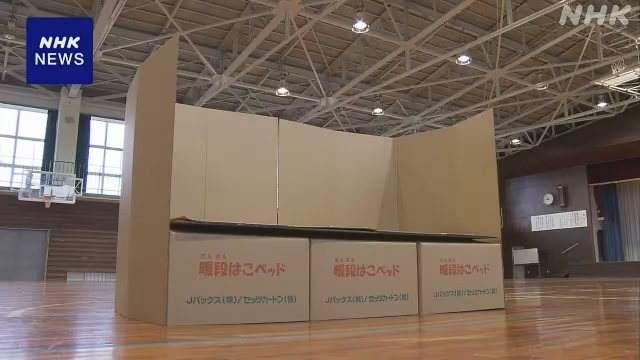
A group of Japanese doctors has found cardboard beds helped prevent blood clots in people who evacuated after the Noto Peninsula Earthquake in central Japan.
The doctors, based in the prefectures of Ishikawa, Toyama and Niigata, examined evacuees in four municipalities in the hard-hit Oku-Noto region from January, 2024, when the quake occurred, to March of that year.
Of the 1,291 evacuees in shelters and temporary housing they examined, 9 percent had blood clots, which can lead to so-called economy class syndrome. That’s far higher than the average occurrence under normal conditions.
The rate was 11.3 percent in Suzu City, 11 in Anamizu Town, 8.2 in Wajima City, and 6.4 in Noto Town, the lowest.
At shelters in Noto Town, cardboard beds were delivered about two weeks after the quake as per the town’s agreement with private contractors.
The doctors say the incidence of clots was the lowest there because evacuees there did not sleep on the cold floor. They were likely more active because of the ease of getting up from the beds, compared to rising from floor level. In Japan, evacuees typically sleep on the floors of evacuation centers immediately after the disaster.
Dr. Kobata Takashi at Kanazawa Medical University’s Himi Municipal Hospital is a member of the group.
He says it is inevitable for some to evacuate after a disaster, but that evacuees should stay active in shelters. He says the quick deployment of cardboard cots will help reduce blood clot cases.
AloJapan.com