
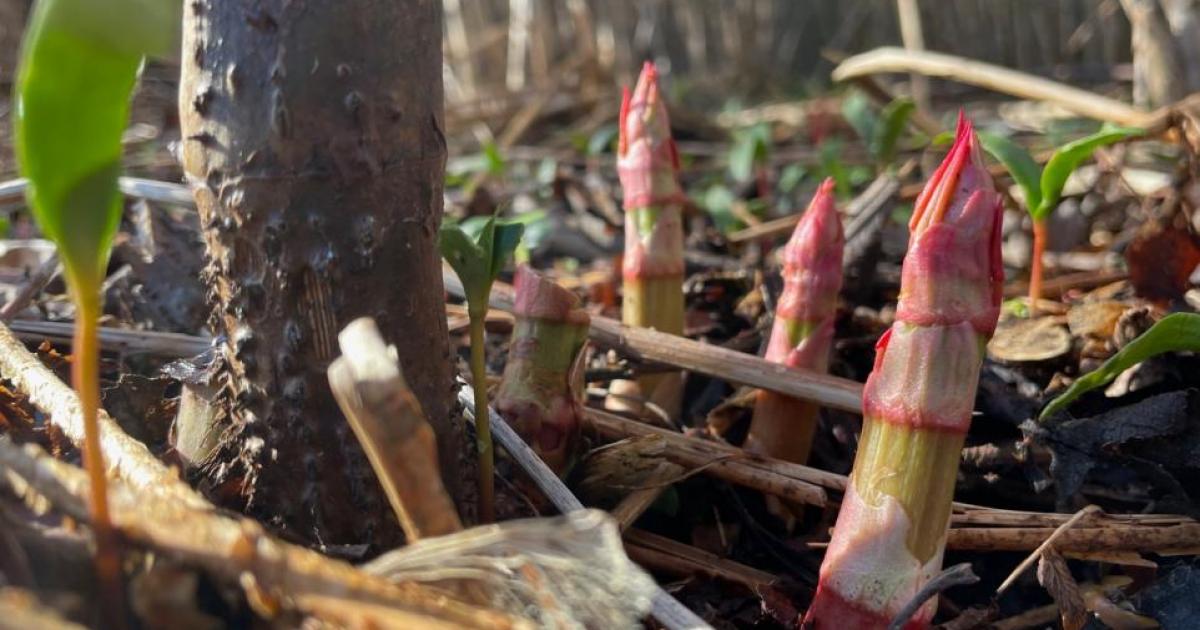
Japanese knotweed is native to East Asia and was introduced to the UK in the 1800s, where it has since spread out of control.
It can grow up to four inches a day and forms dense thickets which can kill native plant species, making it particularly harmful to the countryside.
With wet weather almost certain to continue over the next few months, it provides the perfect conditions for Japanese knotweed to thrive.
In Cumnock, there are a total of six sightings reported within five miles, according to research by Environet.
Ayr and its surrounding areas has a much higher number of reported sightings, with 63 sightings within five miles.
Data has revealed the areas in Ayrshire affected by the spread. (Image: Environet)
Irvine has upwards of 40 sightings within five miles, while Kilwinning has a further 34.
Stevenston and Saltcoats appear relatively unaffected by the plant, according to the data.
However, it is likely that Saltcoats and Stevenston are factored into the Ardrossan figures, where 22 sightings have been reported within five miles.
Heading deeper into North Ayrshire, Seamill has a reported 26 sightings within five miles, with Largs having 24 sightings.
The plant is identified by “distinctive” red stems and bamboo-like appearance. It can grow up to 8ft tall, and its roots can reach as wide as 28ft.
AloJapan.com