
Editor’s note: Ahmet Sağlam is a specialist in business development, sales and marketing, B2B collaboration, and corporate communications. Most recently, he served as business development and international relations coordinator at the Hacettepe University Technology Development Zone. The views expressed are the author’s own and do not necessarily reflect those of News.Az.
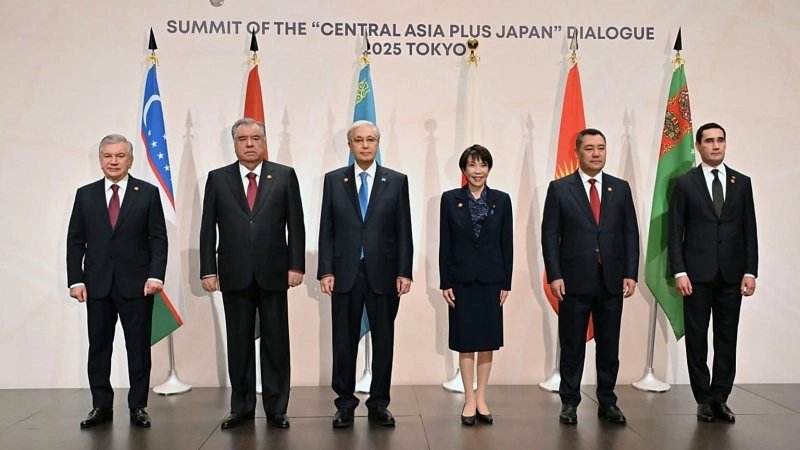
The first leaders-level summit held within the framework of the “Central Asia plus Japan” Dialogue Summit (Central Asia plus Japan Dialogue – CA+JAD) took place in Tokyo on December 20, 2025. The meeting marked a significant milestone by elevating the institutional framework of relations between Japan and the Central Asian states to the level of heads of state.
Hosted by Japanese Prime Minister Sanae Takaichi, the summit was attended by Kazakhstan’s President Kassym-Jomart Tokayev, Kyrgyzstan’s President Sadyr Japarov, Tajikistan’s President Emomali Rahmon, Turkmenistan’s President Serdar Berdimuhamedov, and Uzbekistan’s President Shavkat Mirziyoyev.
Following the dissolution of the Soviet Union, Japan became the first country to initiate a regular dialogue mechanism with the Central Asian states under the “Central Asia + 1” format. The first foreign ministers’ meeting was held in Astana in 2004 under the name “Central Asia + Japan Dialogue,” and this framework remained at the ministerial level for many years. The Tokyo Summit in December 2025 represents a structural transformation by raising this process to the level of heads of state.
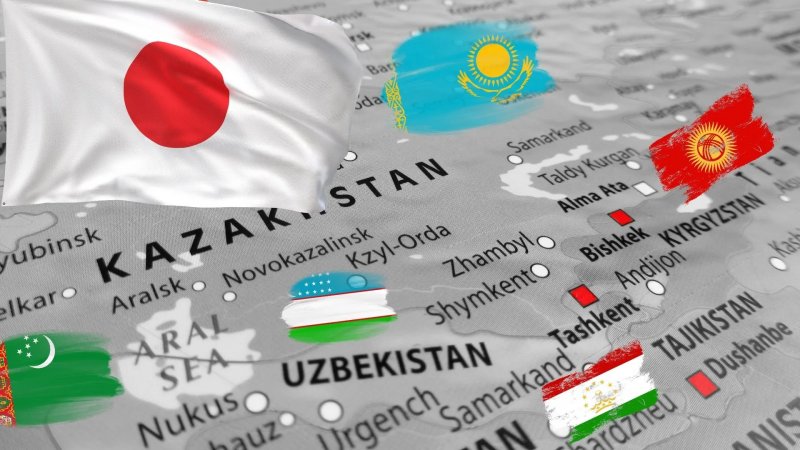 Photo: eureflect.com
Within the framework of the summit, numerous bilateral cooperation documents were signed between Japan and the Central Asian countries, involving both public and private sector actors. These agreements cover a broad range of areas, including political dialogue, trade and economy, energy, infrastructure, agriculture, environment, digitalization, education, health, science, artificial intelligence and technology, and disaster management. The scope of the documents reflects Japan’s multidimensional and cross-sectoral approach toward Central Asia.
A country-by-country review of the signed agreements shows the following:
Between Kazakhstan and Japan, cooperation documents were signed in the fields of trade and economy, energy, including nuclear, environment, agriculture, transportation, digitalization, education, and science. Energy, nuclear technology, and industrial investment featured most prominently.
The agreements between Kyrgyzstan and Japan focused on the prevention of double taxation, energy infrastructure, health, education, disaster management, and space technologies. Infrastructure projects and human capital development emerged as priority areas.
Documents signed with Uzbekistan covered strategic partnership, renewable energy, health, agriculture, water management, digitalization, education, and industry, with energy, health, and higher education projects standing out.
Cooperation between Tajikistan and Japan concentrated on investment protection, energy infrastructure, agriculture, transportation, satellite and climate monitoring technologies, and education. Electricity infrastructure and disaster and climate monitoring projects were particularly prominent.
The agreements between Turkmenistan and Japan addressed energy, petrochemicals, transportation, banking, digital technologies, and higher education. Natural gas and petrochemical projects constituted the main focus areas.
Beyond these bilateral arrangements, one of the most significant regional outcomes of the summit was the announcement by Prime Minister Sanae Takaichi of the “Central Asia plus Japan Tokyo Initiative.” For the Central Asian countries, this initiative represents an important step toward diversifying industrial development through Japan’s technological and institutional support.
In recent years, China’s growing role in Central Asia’s industrial development has increased the region’s external economic dependence. In this context, industrial cooperation projects between Japan and the Central Asian states have the potential to reduce structural dependence on China and contribute to a more balanced regional power structure, particularly in the industrial sphere.
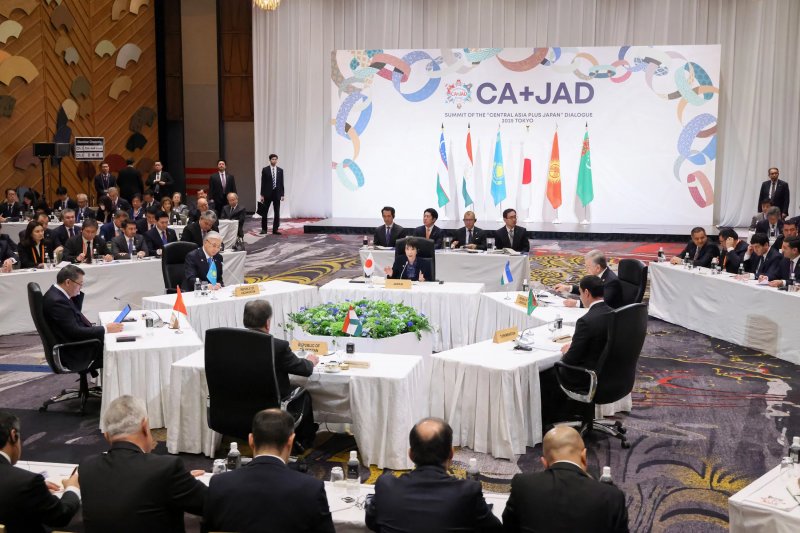 Photo: Japanese PM’s Office
Another strategic balancing element introduced by Japan through this summit is its emergence as an alternative partner, alongside the United States and China, in the development of critical minerals. This creates new opportunities for diversification and negotiation for Central Asia and represents a potential turning point for the region. Central Asian leaders at the summit explicitly welcomed cooperation in critical minerals, particularly within the framework of the “Central Asia plus Japan Tokyo Initiative.”
Another notable feature of the summit was the increased diplomatic-level visibility of the Uyghur Turkic and Uzbek Turkic languages.
Uzbekistan’s President Mirziyoyev was welcomed at the airport in Japan by Deputy Foreign Minister Arfiya Eri, who is of Uyghur origin and Uzbek descent. According to footage shared from Eri’s social media account, Mirziyoyev was greeted in the Uyghur Turkic language. His warm response and conversation with Eri strengthened the summit’s symbolic dimension. The footage’s caption also showed Mirziyoyev telling Eri, “I am proud of you.”
In recent years, Eri, a politician of Uyghur origin and Uzbek descent who has become increasingly prominent in Japanese politics, has played a growing bridge-building role, both symbolically and practically, in relations between Japan and the Turkic-Islamic world.
(If you possess specialized knowledge and wish to contribute, please reach out to us at opinions@news.az).
News.Az
AloJapan.com