
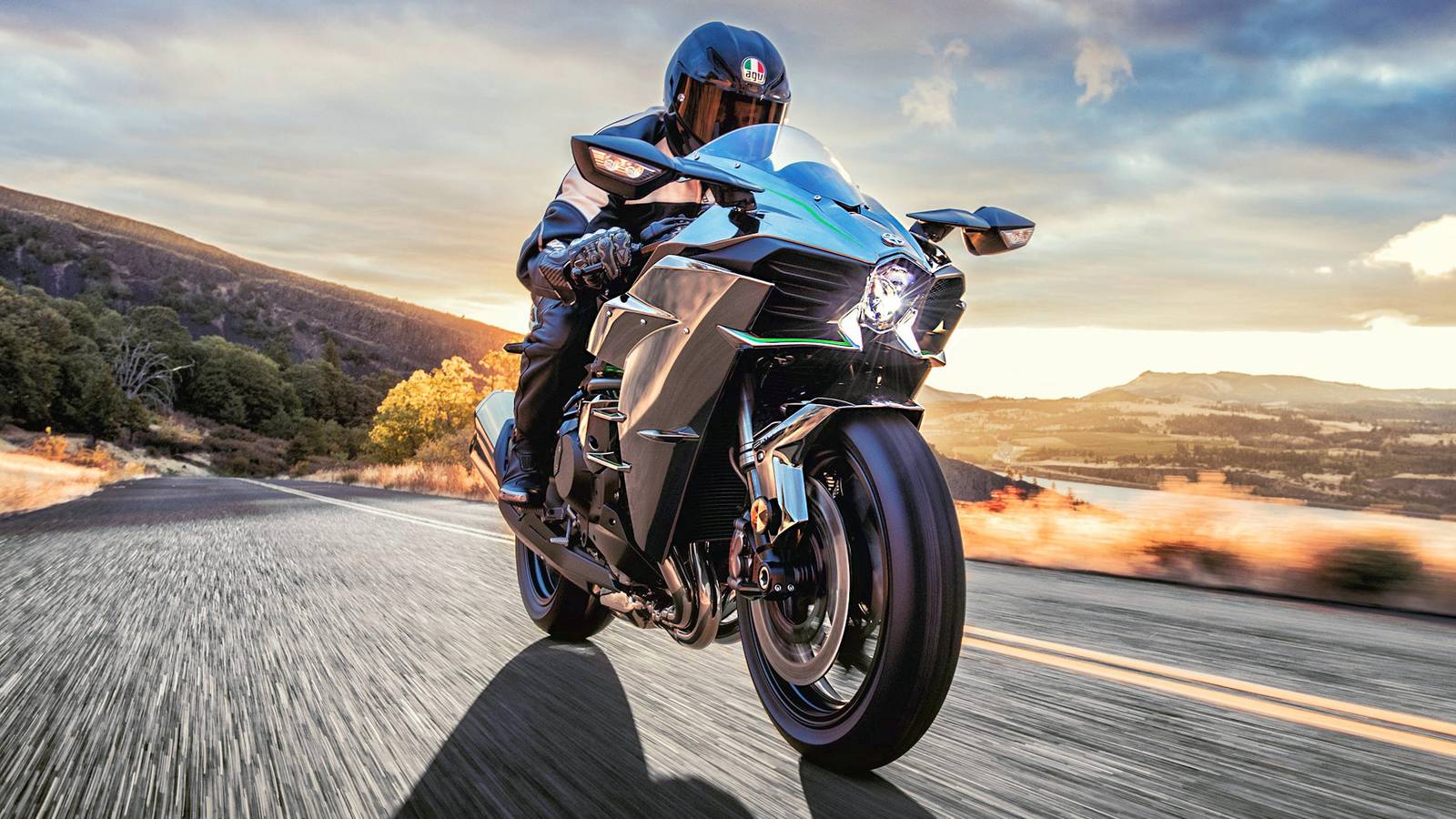
Japanese manufacturers have been shaping the sports bike world since the late 1960s. They gave us machines that redefined speed, reliability, and affordability, and along the way created legends like the Honda CB750, Kawasaki Z1, Yamaha R1, and Suzuki Hayabusa. These bikes didn’t just sell well; they set the tone for what a road-legal sports bike could be.
One of the boldest innovations came from Kawasaki with the launch of a production motorcycle powered by a supercharged engine. It was ground-breaking when it arrived, but over time, it slipped into the shadows. With no major updates, a price tag that makes it feel exotic, and limited production numbers, it is easy to forget. Yet when you look closer, it still can embarrass rivals and remind you why Kawasaki dared to build it in the first place.
The Kawasaki Ninja H2 Is A Forgotten Japanese Motorcycle That Still Looks The Business
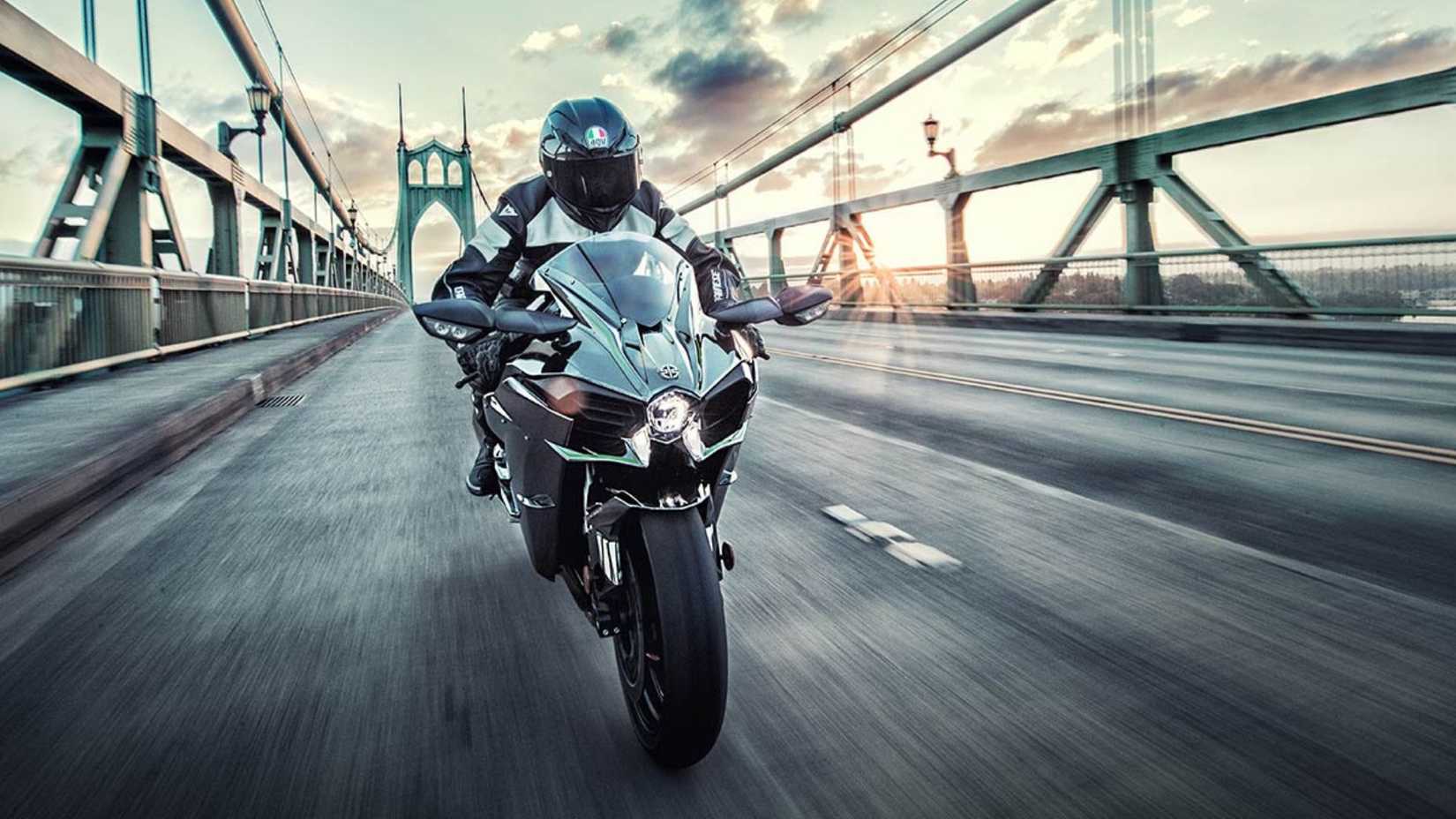
Front view shot of the Kawasaki Ninja H2 riding on a bridge.Kawasaki
When Kawasaki launched the Ninja H2 in 2015, it instantly made headlines as the first production motorcycle with a supercharger. But here’s the thing: the spotlight quickly shifted. The track-only H2R stole the show with outrageous numbers, while the touring-friendly H2 SX SE found a wider audience thanks to its practicality. Somewhere in between, the standard road-legal H2 became almost invisible in the lineup.
A decade later, the H2 has barely changed since its debut, and that lack of updates makes it feel frozen in time. Add in the fact that it has always been rare and hard to find, and you start to understand why it feels forgotten. To make matters even more exclusive, the model has been discontinued outside the USA, which adds another layer of rarity.
Kawasaki Ninja H2 Starts At $34,400

Rider on a 2024 Kawasaki Ninja H2 CarbonKawasaki
Price is one of the biggest reasons the H2 feels forgotten. At $34,400 for the 2025 Ninja H2 ABS and $36,200 for the Carbon ABS edition, this is not a motorcycle you buy on a whim. Factor in destination charges and dealer markups, and you are looking at a machine that costs more than plenty of new cars. That puts it in exotic territory. For perspective, Kawasaki’s own Ninja ZX‑14R starts at $17,599.
Kawasaki Ninja H2 Engine
Kawasaki
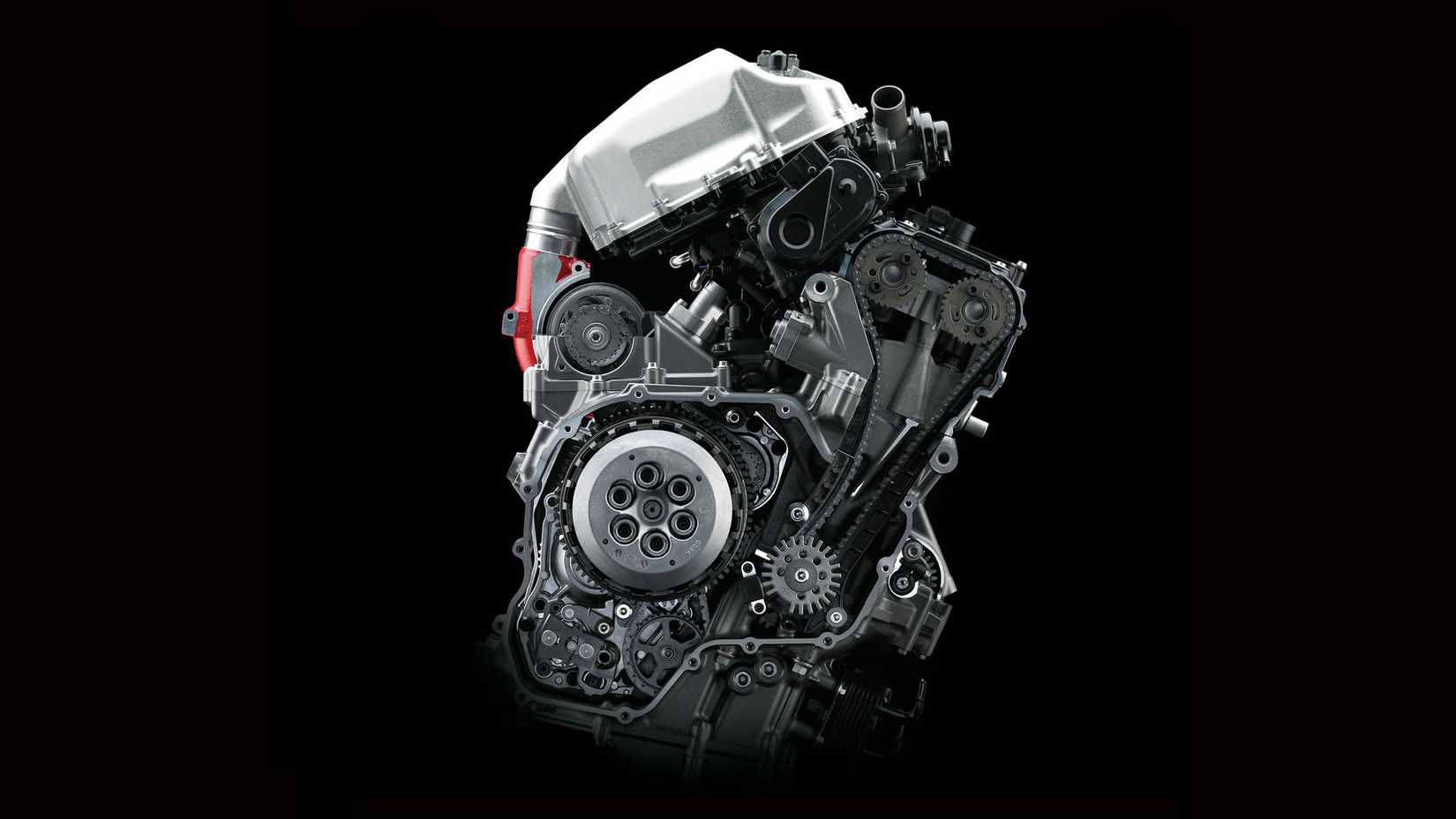
Kawasaki took a huge risk bringing forced induction back to motorcycles. The H2’s 998cc inline four, paired with a supercharger designed in-house, is still one of the most fascinating engines on the market. Kawasaki’s Gas Turbine and Aerospace divisions even contributed to the design, which explains the engineering finesse.
Kawasaki
The setup keeps intake air cool enough to avoid an intercooler, while a RAM air intake feeds the supercharger in a straight path. The impeller spins at an incredible 130,000 rpm, pushing airflow to levels no naturally aspirated rival can match. Forged pistons and heat-resistant components make sure the engine can handle the pressure.
Supercharged Fury That Redefines Speed
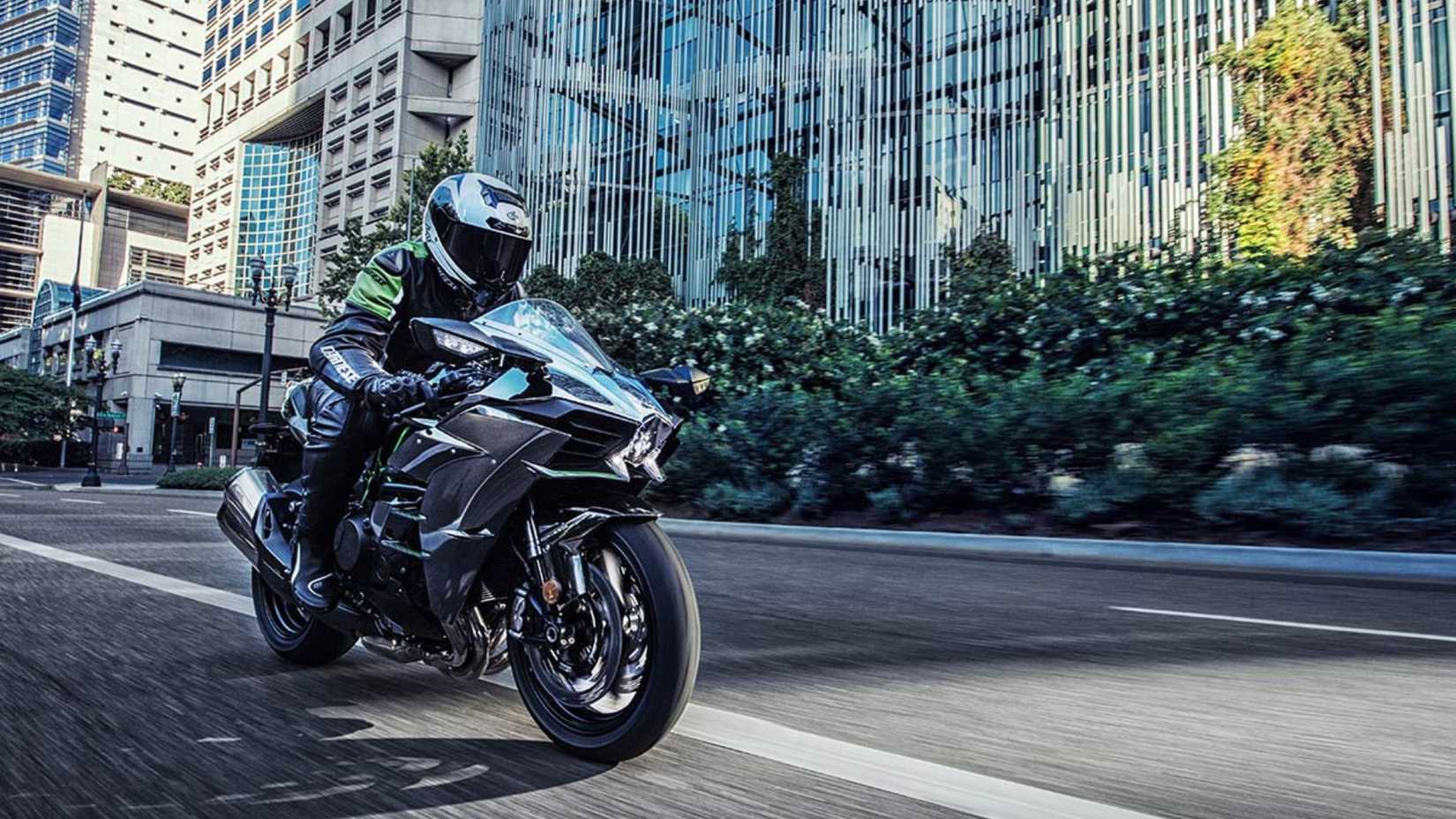
Front three-quarter angle shot of the Kawasaki Ninja H2 ABS riding on an urban street.Kawasaki
The Ninja H2 delivers 228 horsepower and 105 pound-feet of torque. With RAM air induction engaged, that figure climbs to an incredible 240 horsepower. In contrast, most liter-class superbikes hover around 210 horsepower, so the H2 still sits in a league of its own. Power is sent through a six-speed dog ring gearbox with a two-way quickshifter, backed by electronics.
The dog ring design keeps gears fixed while lightweight rings engage them, allowing lightning-fast shifts. A hydraulic Assist and Slipper clutch smooths out aggressive downshifts and self-adjusts for consistent performance. Put it all together, and you have one of the fastest-accelerating motorcycles you can buy.
Related
10 Powerful Sports Bikes That Turn 10-Years-Old In 2025
Although we’re talking about 10-year-old bikes, there are several superbikes here with over 200 ponies
Kawasaki Ninja H2 Chassis
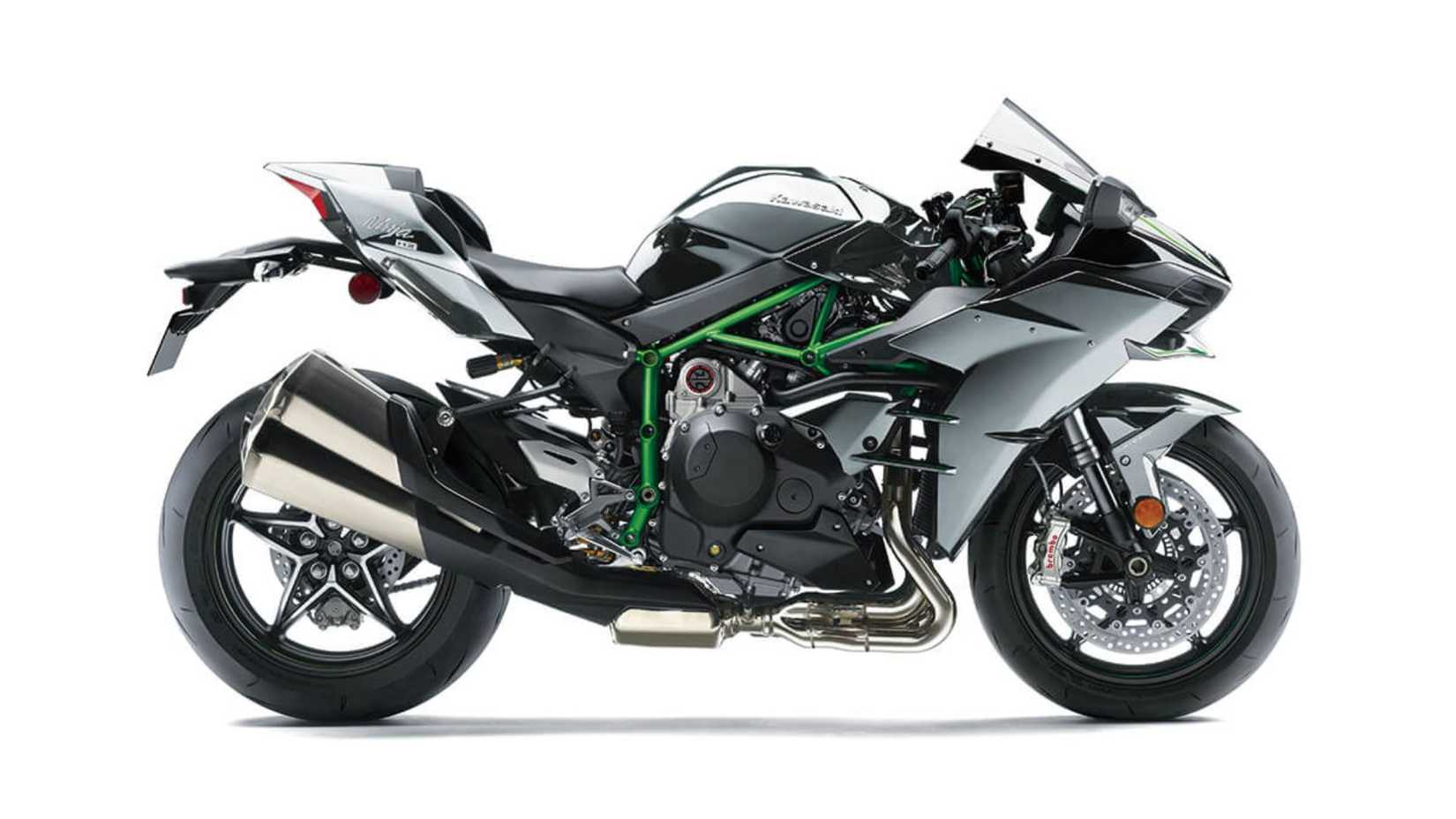
Side profile studio shot of the Kawasaki Ninja H2 ABSKawasaki
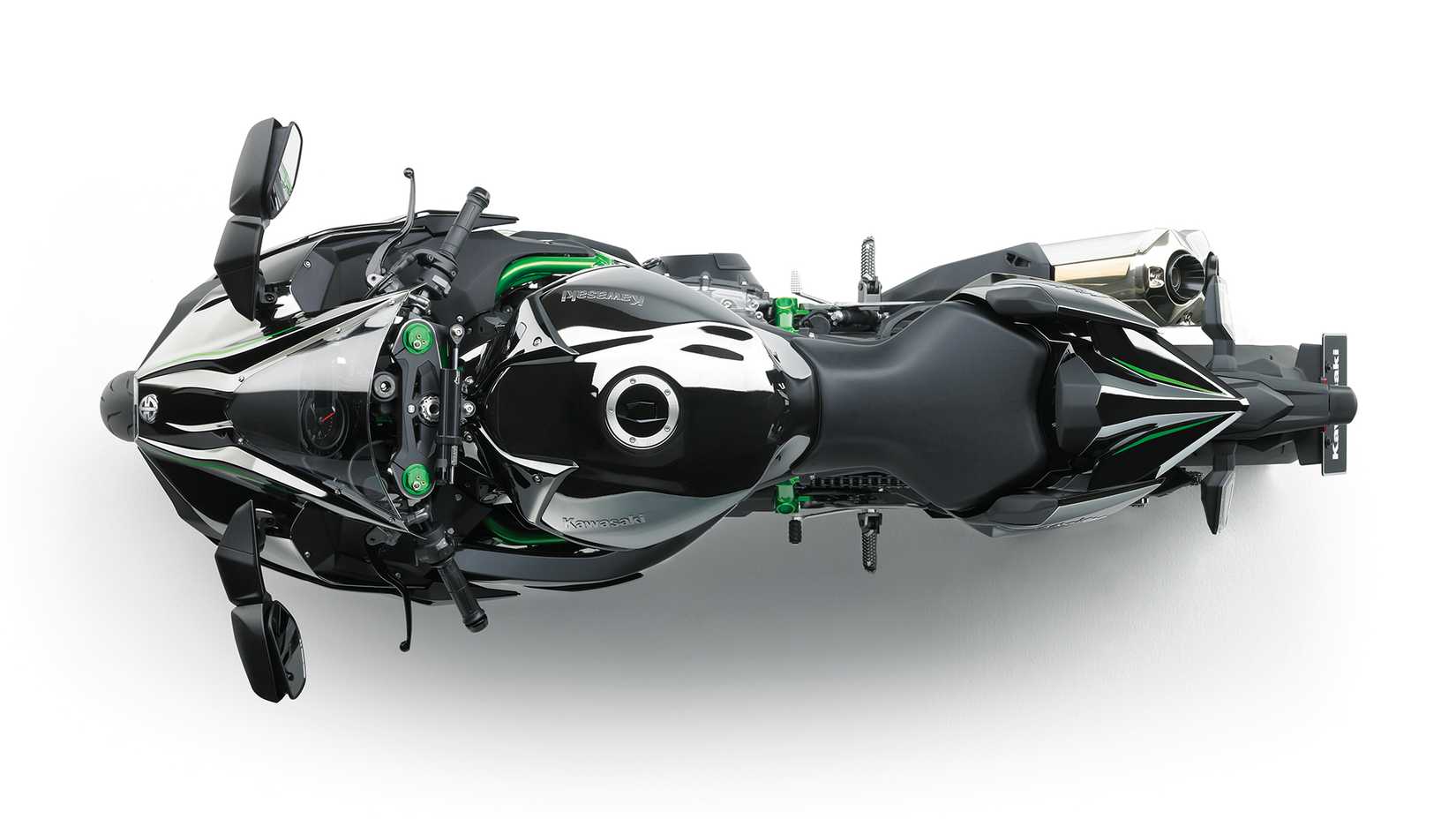
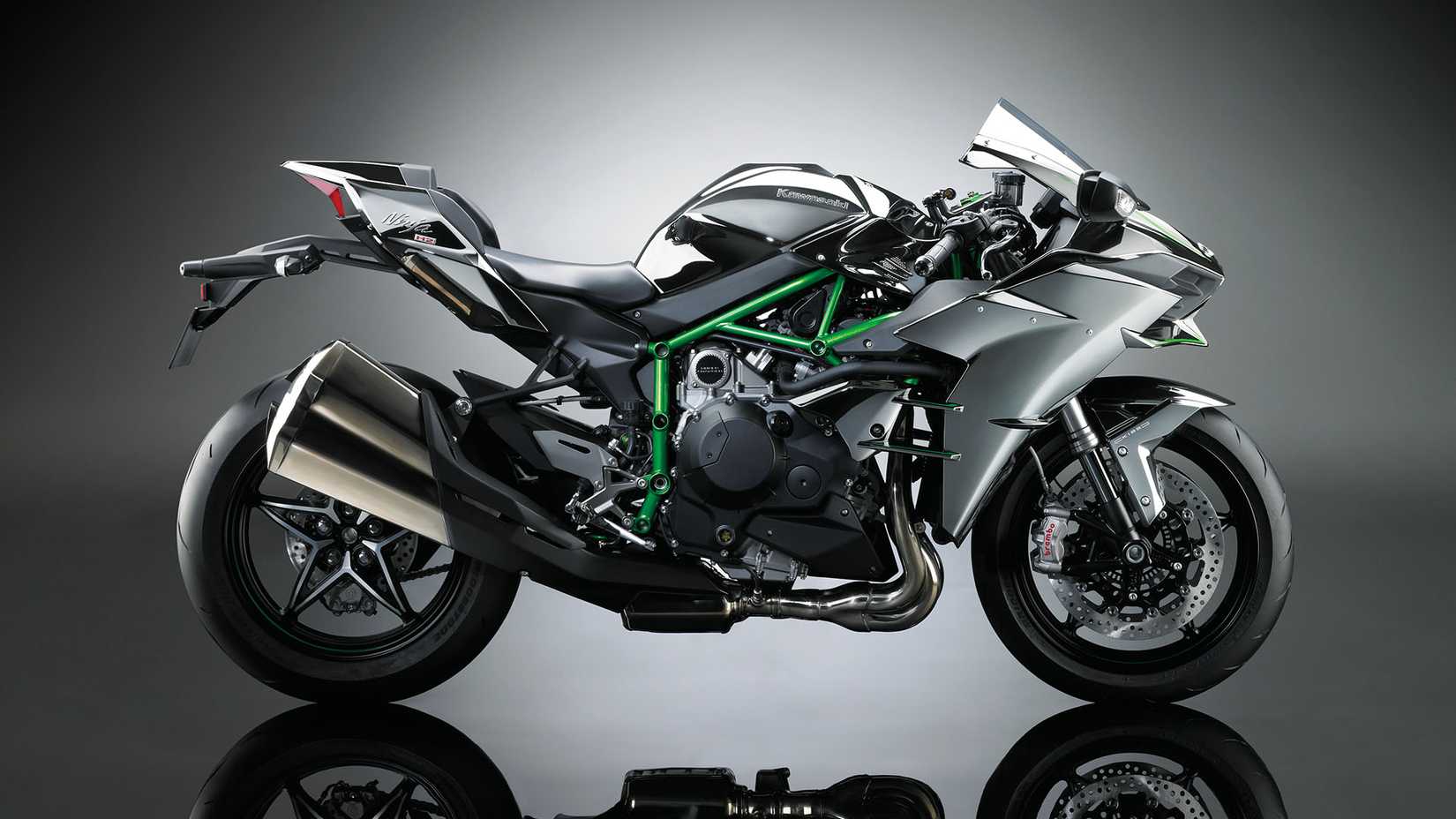
Most superbikes use aluminum twin spar frames, but Kawasaki gave the H2 a steel trellis frame. That choice helps dissipate heat from the supercharged engine and adds a touch of engineered flex that works with the suspension to give riders feedback. Suspension is top-shelf, featuring KYB AOS II forks up front and an Öhlins TTX36 shock at the rear, both of which are fully adjustable.
Braking is handled by Brembo Stylema calipers with dual 330mm discs at the front and a 250mm disc at the rear. At 525 pounds curb weight, the H2 is heavier than most liter-class sports bikes, but that heft gives it a planted, powerful feel that matches its character.
Kawasaki Ninja H2 Dimensions
Fuel Capacity
4.5 gallons
Seat Height
32.5 inches
Wheelbase
57.3 inches
Ground Clearance
5.1 inches
Weight
524.8 lbs
Related
Why This Kawasaki Is A Forgotten Touring Motorcycle That Still Looks The Business
Its Achilles heel: being unconventionally extreme for a sports tourer.
Kawasaki Ninja H2 Features
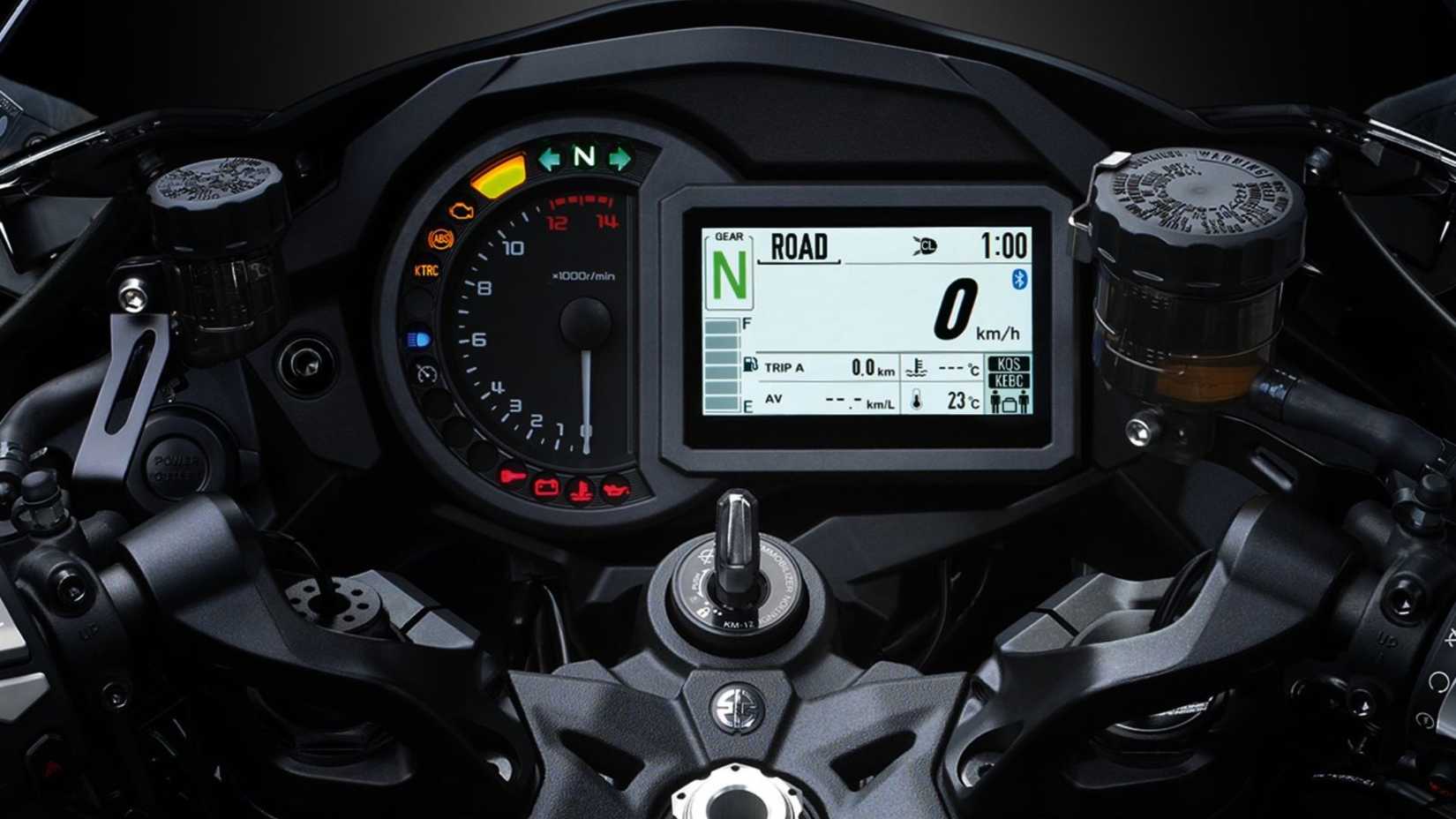
Close up shot of the Kawasaki Ninja H2 ABS instrumentation cluster.Kawasaki
Even though the mechanical design is nearly a decade old, the electronics feel current. You get a TFT display with smartphone connectivity, full LED lighting, and Kawasaki’s suite of rider aids powered by a six-axis IMU. Blind spot detection, forward collision warning, electronic suspension, and engine braking management are all included, along with cornering ABS, traction control, launch control, and multiple riding modes.
Then, there is the finish. The H2 wears Kawasaki’s exclusive River Mark paint, a chemically reacted silver mirror coating that demands attention. Non-carbon bodywork gets a self-healing top coat that repairs minor scratches, keeping the bike looking fresh even after regular use.
Kawasaki Ninja H2 Competitions
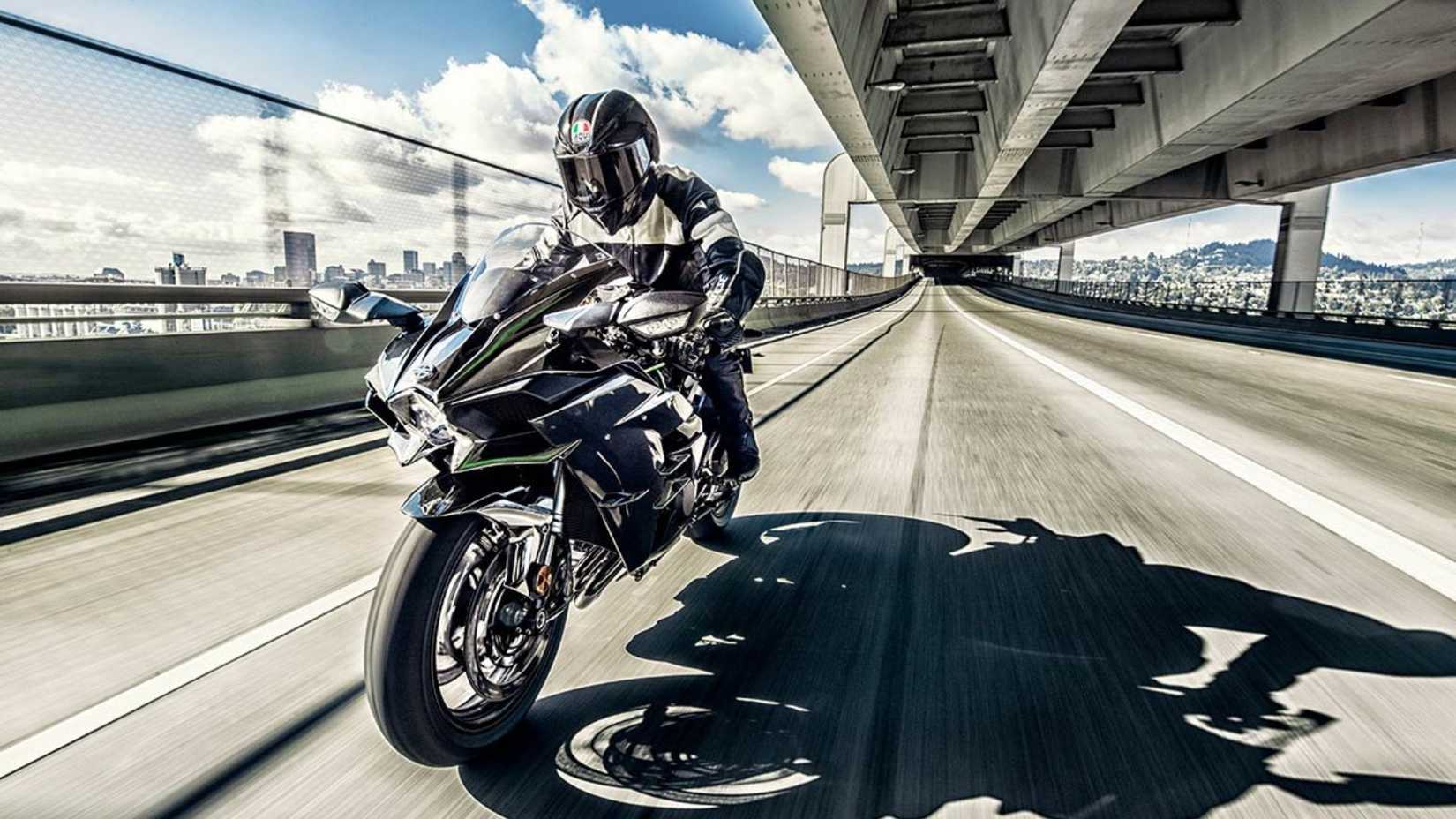
Front angle shot of the Kawasaki Ninja H2 ABS riding on the road.Kawasaki
The H2 really does sit in a unique place. It is not the wild, track-only H2R, and it is not the practical touring-focused H2 SX SE. Instead, it stands as the purest supercharged superbike you can buy. When you put it up against naturally aspirated rivals like the Ducati Panigale V4 S or the BMW M 1000 RR, the H2 shows its strength in straight-line acceleration and torque. The European machines may be lighter and sharper on track, but very few bikes can match the surge of the H2 when the supercharger comes alive.
Kawaskai
Against the Suzuki Hayabusa, the H2 feels lighter, more advanced, and more aggressive in its riding position. Other manufacturers have explored patents for supercharged engines, yet Kawasaki remains the only brand to deliver a road-legal production model. That makes the Ninja H2 not just rare, but a statement piece that proves Kawasaki still knows how to lead the game.
Kawasaki Ninja H2 vs Rivals
Feature
Kawasaki Ninja H2
Ducati Panigale V4 S
BMW M 1000 RR
Suzuki Hayabusa
Starting Price
$34,400
$34,595
$35,395
$19,499
Engine
998cc supercharged Inline-four
1,103cc Desmosedici Stradale V4
999cc Inline four-cylinder
1,340cc Inline four-cylinder
Max Power
240 HP
209 HP
205 HP
187 HP
Max Torque
105 LB-FT
89.5 LB-FT
83 LB-FT
110 LB-FT
Sources: Kawasaki
AloJapan.com