
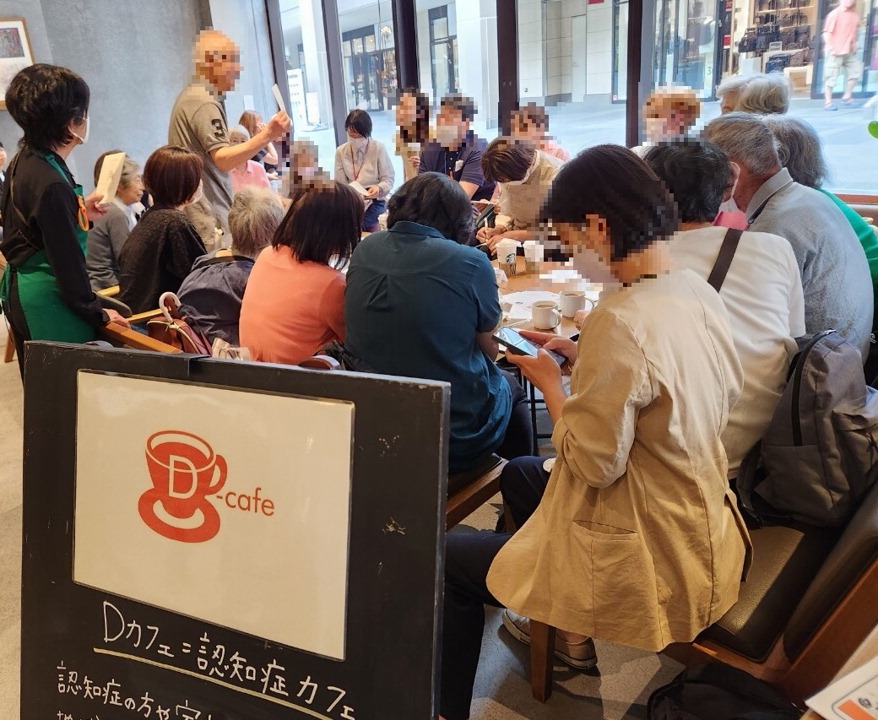
 사진 확대 Cafe D, run in collaboration between Machida City in Tokyo, Japan, and Starbucks, a private company. at the end of the day
“Here’s your iced coffee.”
A cafe in Tokyo, Japan. An old man in an orange apron carefully approached the customer with a tray. It was called ‘ice coffee’, but what was actually delivered was hot coffee. However, the customer who ordered did not panic or complain. Rather, I laughed and received the glass saying, “It’s a cold day, so I wanted to drink something warm, but that’s great.”
This is “Orange Day Sengawa,” a social participation cafe for the elderly with dementia operated by a private non-profit organization in the Sengawa area of Johu City, Tokyo, with local residents.
It is an ordinary space where residents can stop by for a cup of tea while going grocery shopping, but the special thing about this place is that rather than isolating people suffering from a disease called dementia, they try to coexist with them and solve problems. Even elderly people with dementia visit this place and read newspapers and talk like ordinary people.
In fact, 8,182 cognitive (dementia) cafes such as Orange Day Sengawa are active in Japan as of 2023. As of 2023, there are 5,366 regional comprehensive centers established to maintain the health and stability of life for the elderly with dementia and their families.
Foreign companies are also participating in Japan’s “coexistence with dementia.” Machida City and Starbucks in Tokyo are running a “D Cafe” named after the first letter of the English word “Dementia,” which means dementia. D Cafe is a base where the elderly with dementia, their families, social workers, cognitive supporters, and local residents blend together, and a total of 26 are operating. More than a decade ago, a non-profit organization listened to the opinions of elderly families with dementia and decided on Starbucks, a comfortable and everyday space, and D Cafe was created when the Starbucks owner readily allowed it. “There are cognitive supporters in Japanese communities who understand the elderly with dementia correctly and provide related education,” said Kim Myung-joong, a senior researcher at the Nissay Basic Research Institute. “As of early 2025, there were a total of 16.22 million cognitive supporters.”
[Tokyo reporter Cha Changhee]
AloJapan.com