
.jpg)
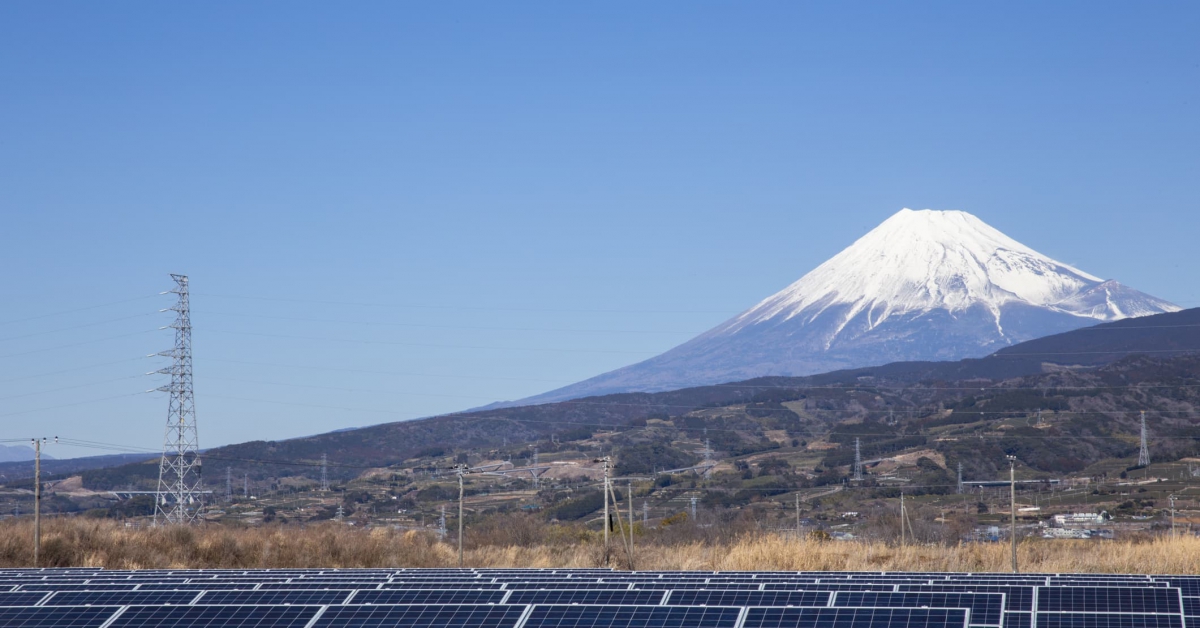
Japan plans USD 1.34 billion in subsidies to support companies using 100% decarbonized electricity. (Photo: iStock)
Japan will deploy JPY 210 billion (USD 1.34 billion) in subsidies to support companies that rely entirely on decarbonized electricity, with support covering up to 50% of capital expenditure, government officials said on Monday.
The program is part of Tokyo’s broader effort to nurture regional industrial clusters by backing facilities that manufacture highly competitive products such as semiconductors, industrial robots and pharmaceuticals. Data center operators meeting the same criteria will also be eligible. Funding will be provided over five years starting in fiscal 2026, according to Juntaro Shimizu, director of the Green Transformation (GX) policy group at the Ministry of Economy, Trade and Industry.
Clean power subsidy to support the GX 2040 vision
A key requirement of the scheme is that electricity used must be 100% derived from renewable or nuclear sources, including next-generation technologies such as perovskite solar cells. Japan will subsidize up to half of an investment if a newly built factory uses fully decarbonized electricity and operates in the same area as the power source. If the factory is located outside the power source’s region, the subsidy rate will fall to around 20%.
The measures form part of Japan’s “GX 2040 vision,” a national strategy approved by the Cabinet earlier in 2025 that integrates decarbonization with industrial policy to drive both the energy transition and economic growth.
Under the framework, the government will establish a “GX Strategy Region” system aimed at creating new industrial clusters in areas with access to decarbonized power sources. Beyond accelerating the build-out of power transmission networks needed for data centers, Japan also plans to pursue regulatory reforms, including improving access to industrial water, to help local governments attract corporate investment.
Japan is the world’s fifth-largest carbon dioxide emitter. The government targets renewables to account for up to 50% of electricity supply by fiscal 2040, with nuclear power contributing another 20%, up from 22.9% renewables and 8.5% nuclear in fiscal 2023.
World’s largest nuclear plant to restart as renewables face headwinds
Rising electricity demand from data centers is adding urgency to Japan’s policy shifts. Power consumption from data centers in Japan is expected to reach 44 terawatt-hours by fiscal 2034, a fifteenfold increase from the fiscal 2025 forecast, according to Nikkei Asia.
However, Japan’s renewable energy buildout is facing growing headwinds. In August, a consortium led by Mitsubishi Corp. withdrew from an offshore wind project it had won in 2021, citing rising materials costs that made the project unprofitable. Some solar power plants have also curtailed output amid weak market prices.
Following the inauguration of Prime Minister Sanae Takaichi in October, the administration signalled a clearer shift in emphasis toward perovskite solar technology and nuclear power. While progress has been made toward restarting Tokyo Electric Power Co. Holdings’ Kashiwazaki-Kariwa nuclear power plant and Hokkaido Electric Power’s Tomari nuclear plant, many nuclear facilities nationwide have yet to clear safety inspections or secure local consent.
.jpg)
Japan is shifting policy emphasis toward nuclear power and perovskite solar technologies. (Photo: iStock)
The Kashiwazaki-Kariwa plant, the world’s largest nuclear power facility with a total generation capacity of about 8.2 GW, is scheduled to resume operations next month. Tokyo Electric Power is exploring plans to develop data centers and hydrogen production facilities in the surrounding area.
Meanwhile, Hokkaido Electric’s power generation mix for fiscal 2030 is projected to comprise nearly 40% fossil fuels, 40% nuclear power, and more than 20% renewable energy.
Source: Reuters, Nikkei Asia (1) (2)

AloJapan.com