
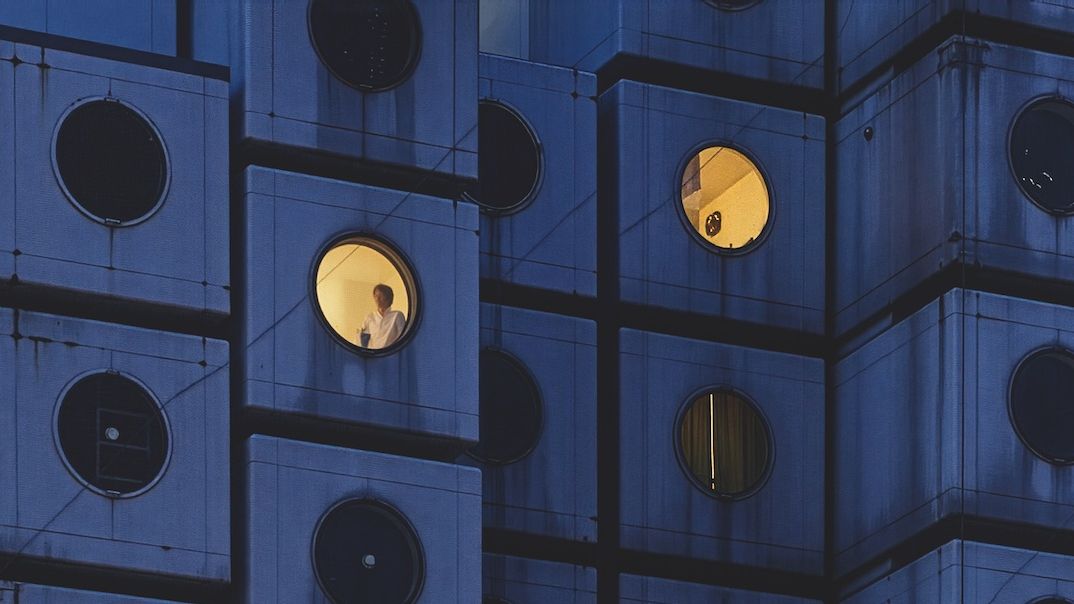
It was 1972 when Kisho Kurokawa (1934-2007), one of the youngest and most visionary architects of his generation, was completing his most audacious work: the Nakagin Capsule Tower, a building with two concrete and steel cores to which 140 prefabricated capsules were attached, each measuring about ten square metres or six tatami mats and equipped with a bathroom, integrated furniture and electrical appliances. Touted as a symbol of modernisation, at one end, its iconic circular window served as the only eye to the outside world. The central structure of the Nakagin was intended to last forever and the capsules were to be replaced every 25 to 35 years. It never happened.
From salarymen to the creative community
Conceived for salarymen (as low-ranking company workers are known in Japan) who worked with trains, offices and hotels, the tower proposed a compact, modular model of urban living. Over time, theory became practice: many capsules were repurposed internally as offices, tea rooms, mini-galleries or even DJ booths. Reality applied the flexibility that the industrial system had failed to achieve. Among the most committed residents we met Tatsuyuki Maeda. “I bought my first capsule in 2010 and ended up with 15,” he explains. “At first I was attracted to the theoretical idea of the building, but soon I became much more fascinated by the creative community that had formed inside,” he adds.
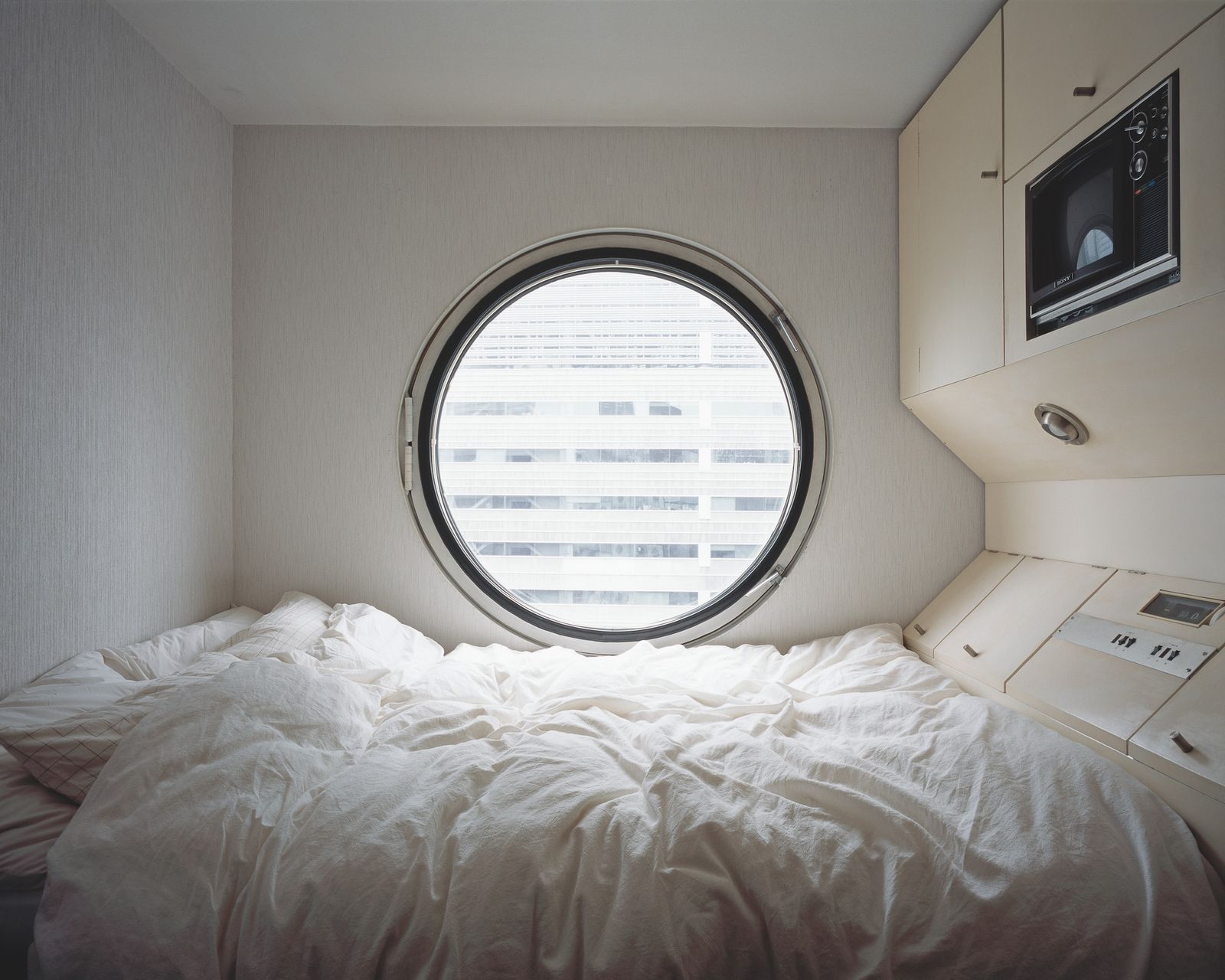
© Noritaka Minami
What could not be
The building’s decline, however, was moving inexorably forward. Aging facilities (especially the central column and piping) and stringent Japanese seismic regulations made comprehensive rehabilitation unfeasible. “The aging structural core was the main cause,” Maeda admits, “and the COVID-19 pandemic made it impossible to attract foreign investment.” In 2022, already wrapped in nets to prevent landslides, the Nakagin Capsule Tower was dismantled and demolished. Beforehand, several residents worked with architectural documentation specialist Yuta Tokunaga to generate a highly accurate 3D model that preserved its spatial memory.
AloJapan.com