
Several days ago, Australian authorities approved Hanwha Group’s increase in its stake in Australian defense shipbuilder Austal from 9.9% to 19.9%. This move drew strong opposition from Japan, which claimed it could lead to the leakage of its naval frigate design technology and impact shipbuilding operations at Austal’s facilities.
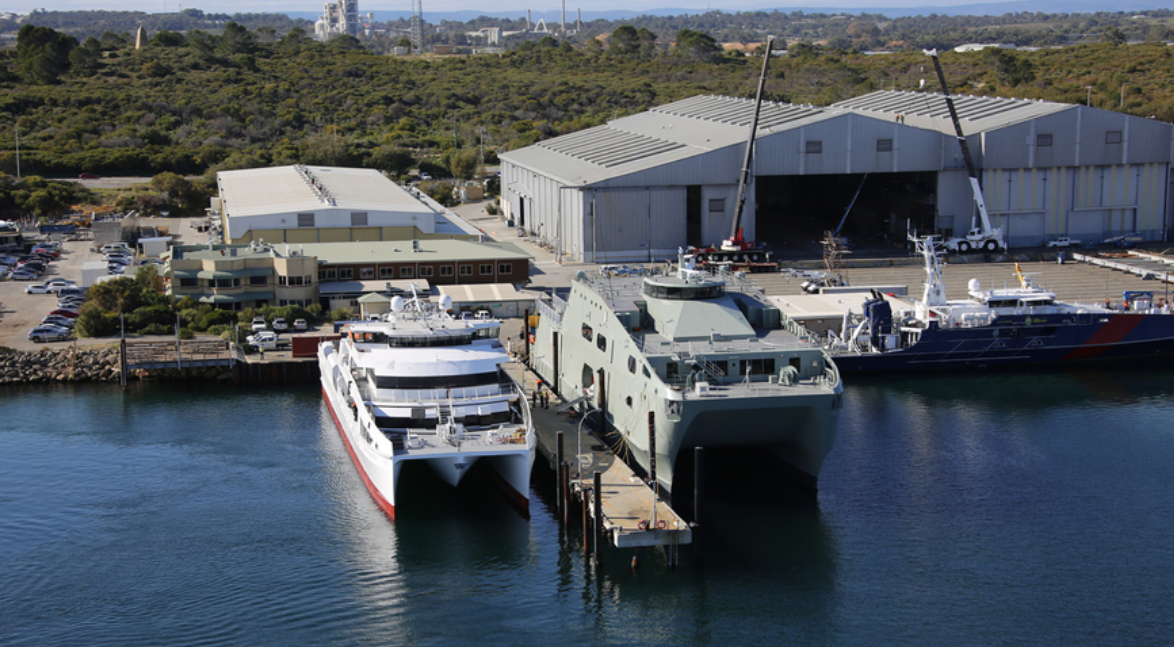
Multiple foreign media outlets reported on the 17th that an anonymous Japanese source stated: “The decision by Australia’s Foreign Investment Review Board (FIRB) [to approve Hanwha Group’s increase in its stake in Austal to 19.9%] will negatively impact the SEA 300 project… The project is highly likely to face delays.”
The SEA 300 program aims to construct 11 frigates. Following a competitive bidding process involving Japan, Germany, South Korea, and Spain, the contract was ultimately awarded to a consortium comprising Japan’s Mitsubishi Heavy Industries and Mitsui E&S Holdings. On August 5, 2025, the Australian government announced the award of the design and construction contract for 11 frigates to Mitsubishi Heavy Industries. The order is valued at US$6.5 billion, with the first vessel expected to be delivered in 2029.
Mitsubishi Heavy Industries plans to develop a new series based on the existing Mogami-class frigate design, significantly reducing preliminary engineering time compared to a completely new design. The first three vessels will be constructed at Japanese shipyards, while the remaining eight will be built at Austal-affiliated facilities.
Reports indicate that Japan’s strong reaction to Hanwha Group’s acquisition of Austal shares stems directly from the aforementioned 11-frigate project. Japan fears that if Hanwha Group becomes Austal’s largest shareholder, Japan’s core warship construction technology could potentially be leaked.
Regarding this acquisition, the Acquisition, Technology and Logistics Agency (ATLA) under Japan’s Ministry of Defense has twice issued cautionary letters to Australia’s Department of Defense, urging vigilance against Hanwha Group’s equity acquisition. Austal executives have publicly supported Japan’s position and repeatedly rejected Hanwha Group’s non-binding acquisition requests.
Despite the Australian authorities’ final decision, the Japanese side continues to emphasize that “substantial additional measures have been taken to protect Mitsubishi Heavy Industries’ warship technology… The risk of technology leakage objectively exists, and it is impossible to completely eliminate such malicious acts.”
The Australian stated that this approval was a carefully considered decision and hinted at establishing security safeguards. Australian Treasurer Jim Chalmers explained: “This decision incorporates recommendations from relevant departments including the Department of Defence, the Department of Home Affairs, the Department of Foreign Affairs and Trade, and national security agencies. It will implement a rigorous governance structure and security provisions, including restrictions on access to sensitive information.”
Regarding Japan’s concerns, some observers interpret that Tokyo’s linkage between post-acquisition operational involvement and the potential leakage of core destroyer technologies is overly stringent. However, other analyses suggest that this acquisition will help Hanwha Group secure a favorable position in the North American market, while Japanese shipbuilders competing in the same market are effectively using this opportunity to restrain Hanwha Group.
AloJapan.com