
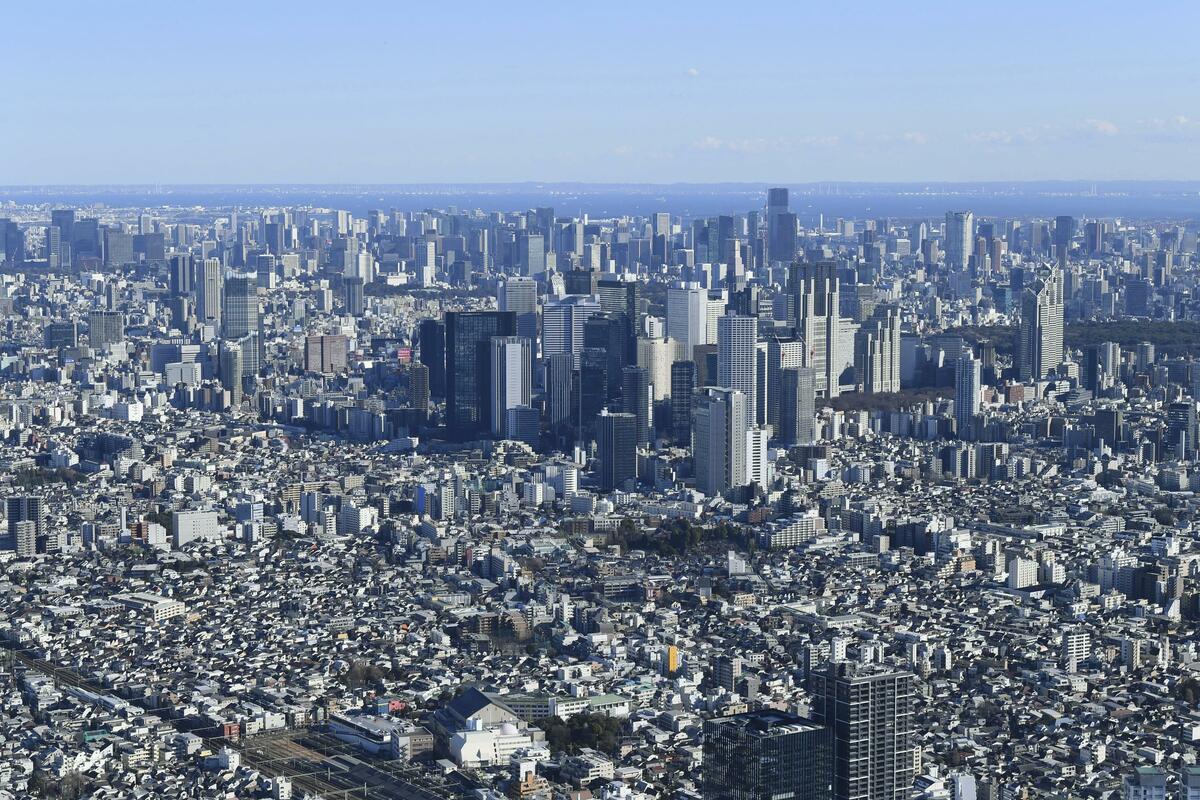
TOKYO – A powerful earthquake that has a high probability of occurring beneath Tokyo and nearby areas within the next few decades could kill up to 18,000 people, with two-thirds of the estimated deaths caused by fires, a government panel showed Friday.
But the latest estimate, made on the basis of a magnitude 7.3 quake hitting the metropolitan area, is 5,000 lower than the previous calculation in 2013, reflecting an increase in seismic-prepared buildings and fire prevention measures in densely packed districts with many wooden houses.
For comparison, there were 15,900 deaths related to the magnitude 9.0 earthquake and tsunami that devastated northeastern Japan on March 11, 2011.
Economic losses from factory destruction and reduced production, meanwhile, are projected at 82.6 trillion yen ($530 billion) in the worst-case scenario, down around 13 trillion yen from the previous estimate.
The government plans to update its disaster preparedness for a Tokyo inland earthquake and strengthen efforts to reduce damage and maintain core government functions under a new disaster management agency to be launched in fiscal 2026.
The government sees a roughly 70 percent chance of a magnitude 7 quake occurring beneath the metropolis within the next 30 years. The scenario assumes it being centered in the southern central area of Tokyo, where the capital’s core infrastructure would be hardest hit.
The worst-case scenario involves the quake hitting on a winter evening with winds of 28.8 kilometers per hour. Fatalities are expected across Tokyo and four nearby prefectures, with 8,000 deaths, or more than 40 percent of the total, projected in Tokyo alone.
Up to 402,000 buildings could collapse or burn down, down by around 210,000 from the previous estimate, with evacuees expected to gradually rise to 4.8 million after two weeks.
The projection for the first time also included estimates of deaths linked to people being forced to live in disaster shelters, putting it somewhere between 16,000 and 41,000.
In the event of a quake on a weekday at noon, an estimated 8.4 million people in Tokyo and four surrounding prefectures — Chiba, Kanagawa, Saitama and Ibaraki — would be unable to return to their homes. An additional 650,000 to 880,000 visitors to the areas, including tourists from overseas, could also be stranded.
In a separate estimate by the panel about a magnitude 8 earthquake along the Sagami Trough south of the capital, the death toll was reduced from 70,000 to 23,000.
Although the likelihood of such a quake occurring in the near future is considered low, potential casualties are greater than in the Tokyo inland scenario due to the high risk of tsunami and the need for rescue operations to cover a much wider area.
AloJapan.com