
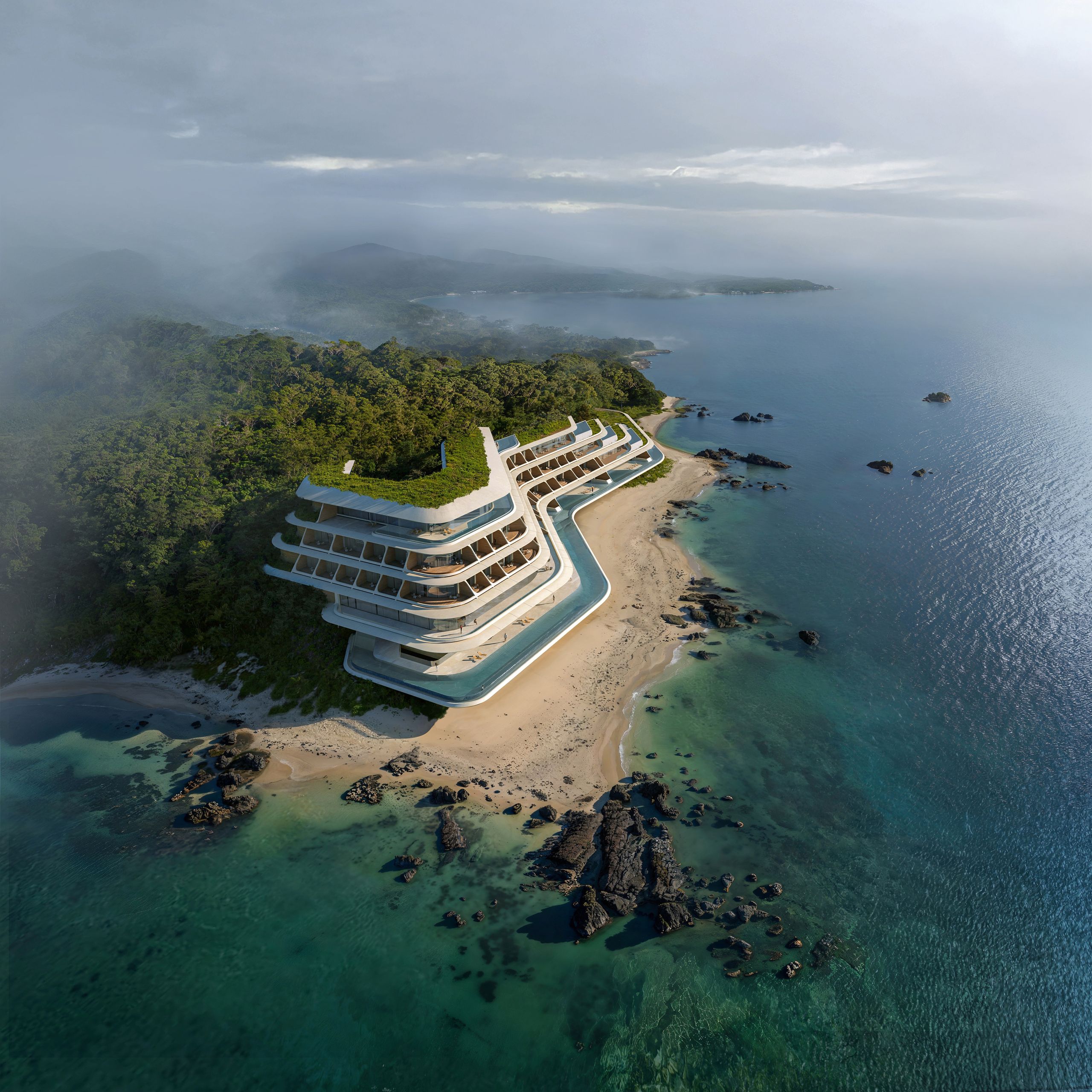
Not A Hotel, the irreverent brand behind architectural showpieces in Tokyo, Rusutsu and Ishigaki Island (and a 2023 Wallpaper* Design Award winner) is charting a bold new course. Its latest ventures, Heritage and Vertex, take hospitality in two different directions: Heritage by Not A Hotel reimagines landmarks – temples, museums and cultural sites – through a contemporary lens, while Vertex by Not A Hotel explores the fusion of avant-garde architecture, design and technology.
For the debut Vertex property, only one architecture firm could bring such a vision to life: Zaha Hadid Architects (ZHA). The late Zaha Hadid, lauded as ‘the queen of curves’, left a legacy of fluid, futuristic forms, and that signature is unmistakable here. The hotel will be located in Okinawa, Japan, where renderings show a bold architectural statement set against the island’s turquoise waters, white sand beaches and lush subtropical forests.

(Image credit: Negativ)
Despite its striking appearance, the 25,322 sq m building has been designed to integrate into its sensitive coastal environment. Every aspect – from engineering and site planning to material selection and construction – prioritises minimising ecological impact on Okinawa’s ecosystems.
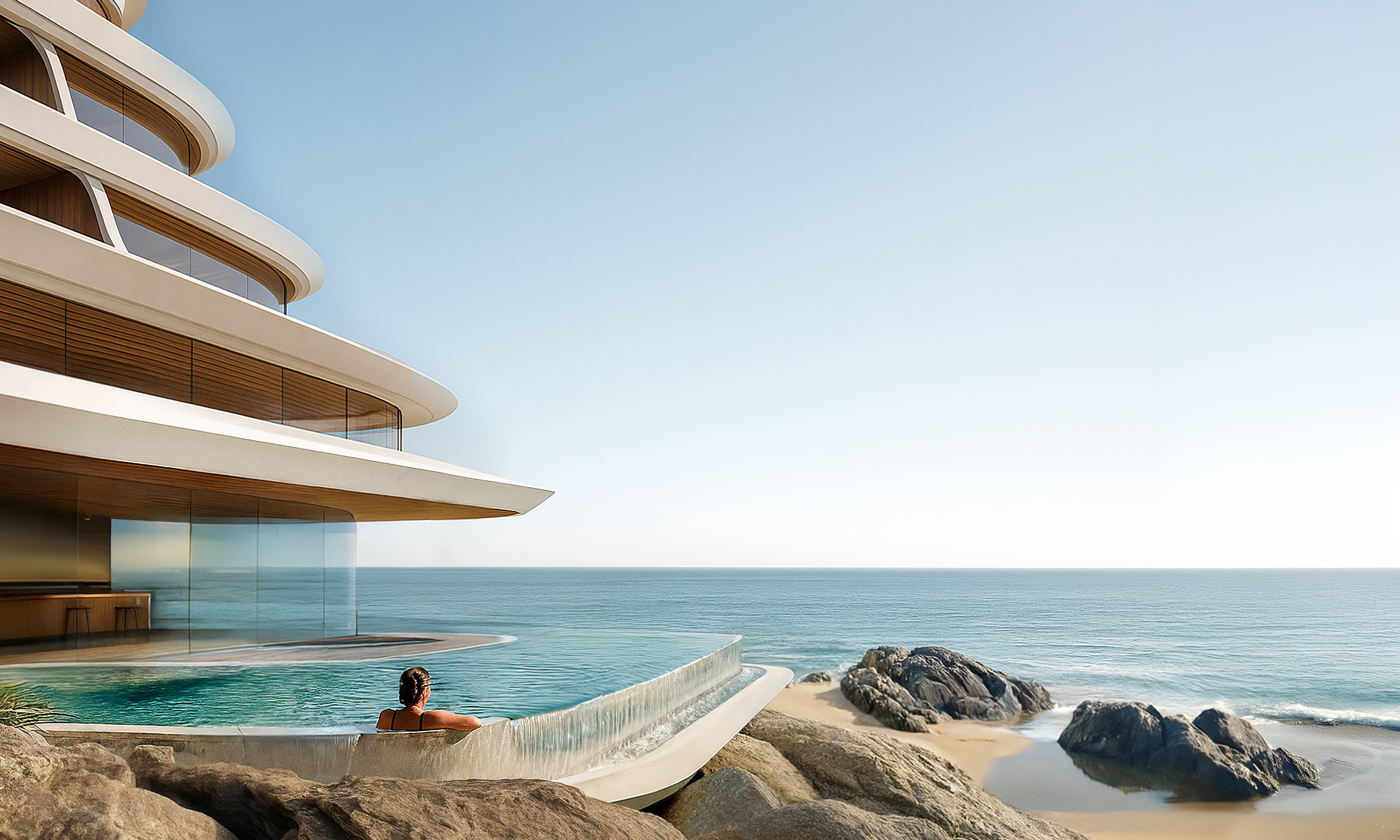
The site sits atop Ryukyu limestone formations – Pleistocene coral reef sediments over 400,000 years old – and is subject to strict regulations from environmental authorities. In order to minimise its footprint, the hotel will appear to ‘float’ above the interface between forest and beach, with terraces, gardens and courtyards that trace the natural contours of the land and echo its rock formations.

(Image credit: Negativ)
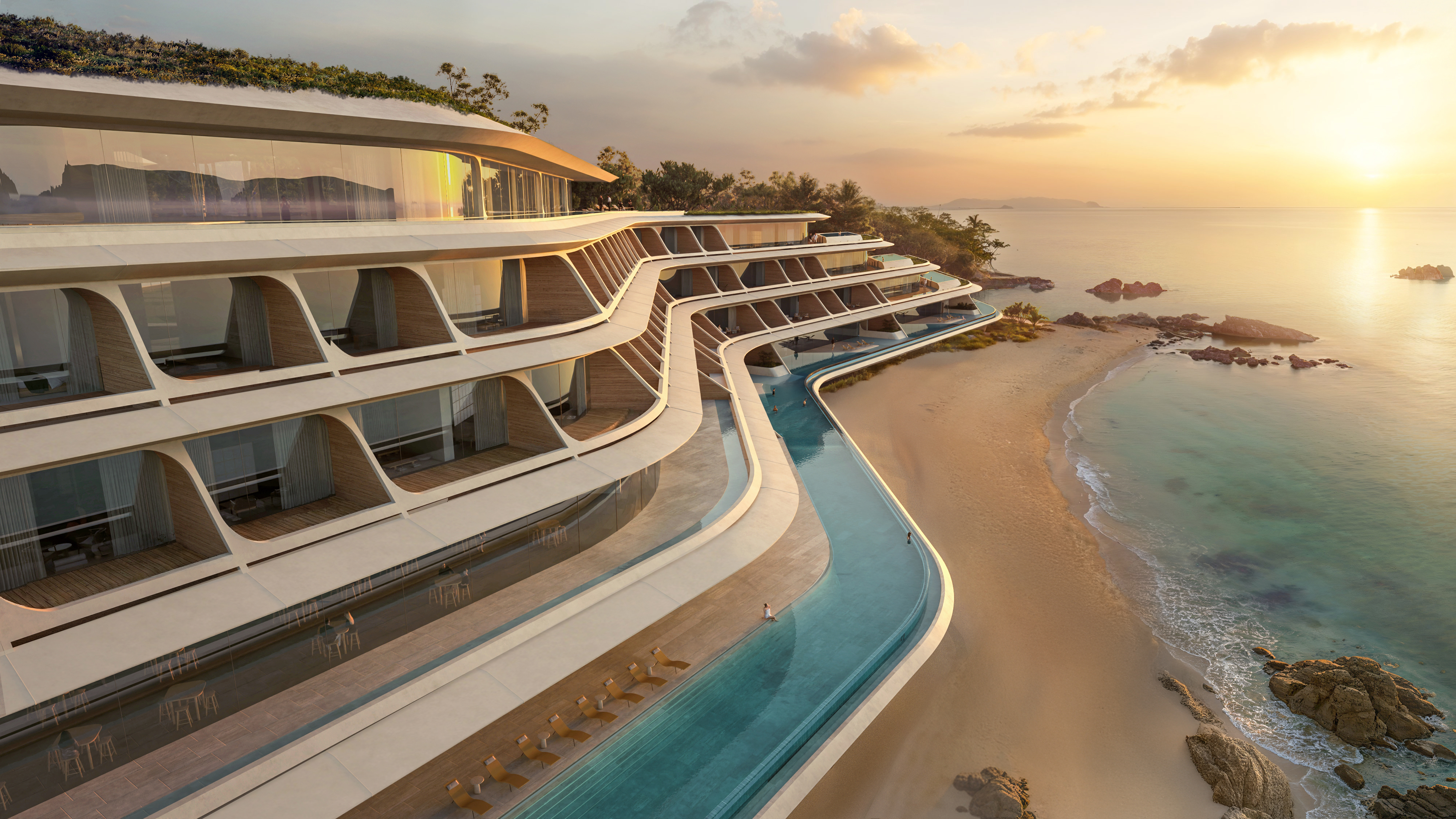
The building design also responds to Okinawa’s tropical climate. Year-round digital mapping of temperature, humidity, rainfall, winds, solar exposure and sea conditions shaped the hotel’s orientation and form. Its cascading canopies will provide shaded outdoor spaces and reduce heat gain, referencing the deep eaves and overhangs of traditional Okinawan architecture. The structure will also capture the island’s Kāchibē winds for natural ventilation, and its elevation – 6.5m above the high-water mark – protects against typhoons, storm surges and seismic activity.
Construction will combine modular, prefabricated components with finishes that reflect the colour and texture of local coral sands, incorporating recycled materials from decommissioned island structures. Locally sourced Okinawa pine, quarried limestone and regionally produced ceramics will further embed the building within its cultural and material context.
(Image credit: Negativ)
(Image credit: Negativ)
The result is a visually striking, ecologically sensitive and resilient property – a bold inaugural statement for Not A Hotel that will resonate with architecture aficionados and off-beat travellers alike.
AloJapan.com