
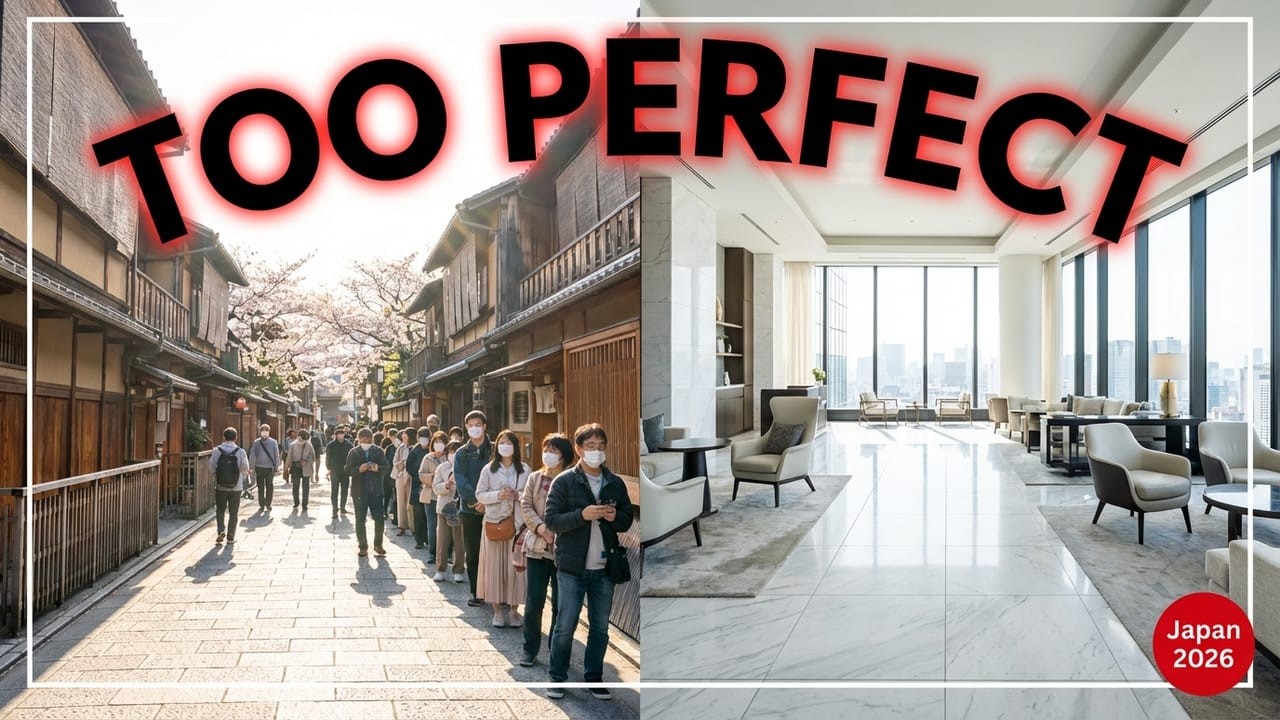
Japan’s Luxury Travel Boom Is Hiding a Serious Problem — What 2026 Tourists Don’t See
Japan has never looked more perfect than it does in 2026. For many Western travelers, it feels like the ultimate destination, finally within reach. The trains run flawlessly. The streets feel impossibly clean, and every detail appears precisely controlled. Yet, beneath this polished surface, something quieter is beginning to trouble returning visitors. The boom in Japan’s tourism has not slowed. Instead, it has intensified in ways few expected. Luxury hotels are fully booked months in advance. Iconic neighborhoods feel permanently crowded. From Tokyo to Kyoto, from Osaka to Hakone, demand remains relentless. Japan is no longer a hidden dream destination. For firsttime visitors, the experience often feels extraordinary. Precision, courtesy, and order deliver exactly what was promised. But returning travelers are noticing something different. The emotional reward feels thinner than expected. In Tokyo, the skyline glows brighter than ever. Neon districts buzz with activity every night. Yet, many travelers describe the city as emotionally distant. Everything works, but little invites spontaneity. Crowds move efficiently rather than playfully. Interactions feel correct rather than warm. This is not a criticism of Japanese culture. It is a consequence of scale. Tokyo was never designed to absorb this level of global attention. The system holds, but pressure accumulates. Luxury hotels respond by tightening control. Access becomes gated. Experiences become scheduled. Personal moments are replaced by process. Efficiency replaces discovery. In Kyoto, the strain becomes more visible. Ancient streets feel overwhelmed by constant foot traffic. Temples remain breathtaking, but silence has become rare. Reverence competes with tourism flow. Locals quietly adjust their routines. Entire neighborhoods feel staged rather than lived in. Luxury Ryokans remain exquisite. Yet prices climb faster than expectations. Travelers pay more but receive less emotional space. The experience feels compressed. This compression defines Japan’s hidden problem. Perfection leaves little room for surprise. In Osaka, energy still exists. Food culture remains vibrant and expressive. Yet, even here, popular areas feel managed. Lines replace exploration. Tourists move through highlights quickly. Few linger long enough to connect. Japan’s success has made it predictable. Predictability reassures, but rarely transforms. Luxury brands adapt by emphasizing exclusivity. Private access becomes the new promise. Smaller experiences cost more than ever. Personal moments are monetized aggressively. For western travelers, this creates an unexpected tension. Japan delivers excellence but demands obedience. Rules shape movement everywhere. Behavior is guided, not invited. Many visitors admire this structure. Others feel subtly constrained. This difference rarely appears in photos. It appears in memory. Japan remains visually stunning, but emotional intimacy becomes harder to reach. Returning travelers notice trips feel shorter. The sense of wonder fades sooner. Days feel full yet emotionally light. Satisfaction replaces awe. This shift is not accidental. Japan is protecting itself from overload. Policies limit behavior quietly. Cultural boundaries are enforced gently. The country chooses preservation over spontaneity, long-term stability over short-term thrill. This choice makes sense locally, but it changes the visitor experience profoundly. Luxury hotels increasingly market calm and silence. Noise becomes the enemy. Experiences focus on observation rather than participation. Distance becomes part of the design. For some travelers, this feels deeply peaceful. For others, it feels isolating. Japan’s hospitality remains impeccable, but warmth feels formal rather than personal. Staff perform flawlessly under pressure. Emotional labor remains invisible. Rising tourism volumes increase this strain. Expectations continue to rise. Prices rise alongside them. Value becomes harder to measure. Travelers pay premium rates for access, but access does not guarantee connection. This is Japan’s quiet dilemma. Success protects the country while diluting its magic. Those who visit for aesthetics leave satisfied. Those seeking emotional resonance struggle. Japan still offers profound moments, but they require patience and humility. Travelers who slow down benefit most. Those who rush feel disconnected. Longer stays unlock deeper meaning. Short trips skim the surface. Japan now rewards intention more than curiosity. Preparation matters more than impulse. This shift explains growing mixed reactions. Praise and disappointment coexist. Japan has not become worse. It has become precise. Precision eliminates chaos. But chaos once carried discovery. The luxury boom amplifies this effect. Everything feels optimized. Optimized experiences rarely surprise. They rarely linger. Japan’s tourism future depends on balance. Too much control risks emotional fatigue. Too little risks collapse. The country walks a narrow path. For 2026 travelers, awareness changes everything. Expectations shape experience. Those who arrive seeking perfection receive it. Those seeking magic must search harder. Japan remains extraordinary, but it no longer reveals itself easily. The boom continues. The problem deepens quietly, and most tourists never realize what they missed. Japan’s hidden problem becomes clearer the longer travelers stay. Short visits often feel impressive, while longer stays reveal emotional distance. Days fill with activity quickly. Yet, the experience feels complete sooner than expected. Travelers notice they stop wandering. Instead, they begin following patterns. Recommended routes replace exploration. Popular schedules replace curiosity. This is especially visible in major cities. Tokyo feels efficient rather than inviting. Neighborhoods feel optimized for flow. Fewer spaces invite lingering. Cafes remain beautiful but transactional. Conversations feel limited and brief. Visitors observe more than they participate. The city becomes something to watch. In Kyoto, this sensation deepens. Reverence competes with tourism mechanics. Silence feels scheduled rather than organic. Calm exists, but it feels managed. Temples remain breathtaking. Yet emotional stillness feels harder to reach. Photography replaces reflection. Movement replaces pause. Travelers move respectfully but quickly. Depth gives way to completion. Luxury Ryokans promise escape, yet time feels tightly structured. Meals follow perfect pacing. Experiences end precisely on schedule. Nothing overstays its welcome. Nothing surprises either. This precision impresses firsttime visitors deeply. Returning travelers feel constrained. Osaka offers warmth and expression. Yet, tourism pressure shapes behavior here, too. Popular districts feel crowded yet impersonal. Lines replace spontaneity. Food remains extraordinary. But discovery requires patience. Japan’s hospitality remains flawless. Emotional availability does not always follow. Staff perform with professionalism. Personal connection remains subtle. This is not a failure of culture. It is a consequence of volume. Japan’s tourism success changed expectations permanently. Perfection became mandatory. Mistakes vanished. Humanity became invisible. Luxury experiences now emphasize control. Access replaces openness. Private tours promise intimacy, but intimacy feels rehearsed. Travelers pay more for less unpredictability. Comfort replaces wonder. This creates emotional fatigue. Trips feel satisfying but shallow. Memory fades faster after departure. The experience does not linger. Japan once felt like discovery. Now it feels like execution. Visitors complete Japan rather than experience it. Checklists replace curiosity. This shift affects how long travelers stay. Shorter trips feel sufficient. Why linger when surprise is limited? Why wander when route is? Roots are fixed. Japan’s preservation strategy works physically. Culturally, it creates distance. The country protects itself carefully. Visitors feel this protection. Rules shape behavior quietly. Guidance replaces invitation. Many travelers admire this deeply. Others feel subtly excluded. Neither reaction is wrong. Both reflect Japan’s new reality. Luxury branding reinforces this shift. Silence becomes a selling point. Minimalism becomes safety. Calm becomes control. For western travelers, this feels familiar. Japan begins to resemble home. Contrast fades. Transformation weakens. Travel becomes observation rather than immersion. Distance replaces intimacy. Japan’s beauty remains unquestionable. Emotional access becomes selective. Those who arrive with humility connect more deeply. Those who arrive with expectations struggle. Longer stays reveal nuance. Short stays preserve illusion. Japan now rewards patience over excitement, awareness over impulse. This explains the mixed reactions emerging in 2026. Praise and disappointment coexist. Japan did not lose its soul. It protected it. But protection comes with cost. Distance becomes the price. Tourists leave impressed. Fewer leave changed. This is the problem hidden beneath the boom. Success reshaped the experience. Japan remains extraordinary. It simply no longer gives itself away. Those who understand this leave with respect. Others leave confused. The boom continues. The silence grows. And the real story stays invisible to most travelers.
Japan’s Luxury Travel Boom Is Hiding a Serious Problem — What 2026 Tourists Don’t See explores the quiet reality unfolding beneath one of the world’s most admired travel destinations. In 2026, Japan looks more polished, more efficient, and more luxurious than ever — yet many Western travelers are leaving with a feeling they struggle to explain.
In this long-form documentary-style video, Luxury Escape Guide reveals what has changed beneath Japan’s flawless surface. From Tokyo’s perfectly controlled flow and Kyoto’s compressed serenity to the rising cost of intimacy in luxury ryokans and the emotional distance created by overtourism, this video explains why Japan’s tourism boom is also its hidden challenge.
This video is designed for Western travelers planning a Japan trip in 2026, returning visitors comparing past experiences, and anyone trying to understand why Japan still impresses — but no longer surprises in the same way. Rather than hype or fear, this guide focuses on emotional realism, cultural pressure, and how travelers can experience Japan more meaningfully in the new era of luxury travel.
References
Japan National Tourism Organization (JNTO) — Visitor Trends & Capacity Reports
OECD Tourism Committee — Overtourism & Destination Saturation Studies
Hospitality Net Asia — Luxury Travel Demand in Japan
UNWTO — Cultural Carrying Capacity in Urban Destinations
Asian Development Bank — Tourism Sustainability in East Asia
#JapanTravel
#Japan2026
#LuxuryTravelJapan
#JapanTourism
#WesternTravelers
#JapanLuxury
#TravelDocumentary
#LuxuryEscapeGuide
#JapanTravelReality
#Overtourism
Japan travel
Japan tourism 2026
Japan luxury travel
Japan travel documentary
Japan tourism boom
Japan travel reality
Japan luxury hotels
Japan overtourism
Japan travel truth
Japan tourism problems
Tokyo travel 2026
Kyoto travel 2026
Osaka travel 2026
Japan ryokan luxury
Japan hotel prices
Japan travel experience
Western travelers Japan
Japan travel expectations
Japan tourism analysis
Japan travel emotions
Japan travel future
Japan tourism pressure
Japan cultural tourism
Japan travel changes
Japan tourism saturation
Japan travel guide
Japan luxury reality
Japan travel insight
Japan tourism trend
Japan destination pressure
Japan travel crowds
Japan luxury boom
Japan tourism impact
Japan hospitality culture
Japan travel planning
Japan travel advice
Japan long stay Japan
Japan slow travel
Japan luxury experience
Japan tourism demand
Japan tourism strategy
Japan travel value
Japan tourism capacity
Japan visitor experience
Japan tourism economy
Japan travel cost
Japan tourism shift
Japan travel psychology
Japan emotional travel
Japan luxury dilemma
Japan tourism control
Japan travel awareness
Japan tourism future
Luxury Escape Guide
Luxury Escape Guide shares travel insights and observations for informational and entertainment purposes only. The experiences, conditions, and perspectives described in this video reflect personal research and on-the-ground trends that may change quickly. Travel rules, prices, availability, and local circumstances can shift without notice, so viewers should verify all details independently before making plans. Nothing in this video is financial, legal, or safety advice. All content is created with respect for local cultures, tourism workers, and the destinations featured.
1 Comment
Japan still impresses — but it doesn’t surprise the same way anymore.
If you’ve visited Japan recently or are planning a 2026 trip, what did you notice?