
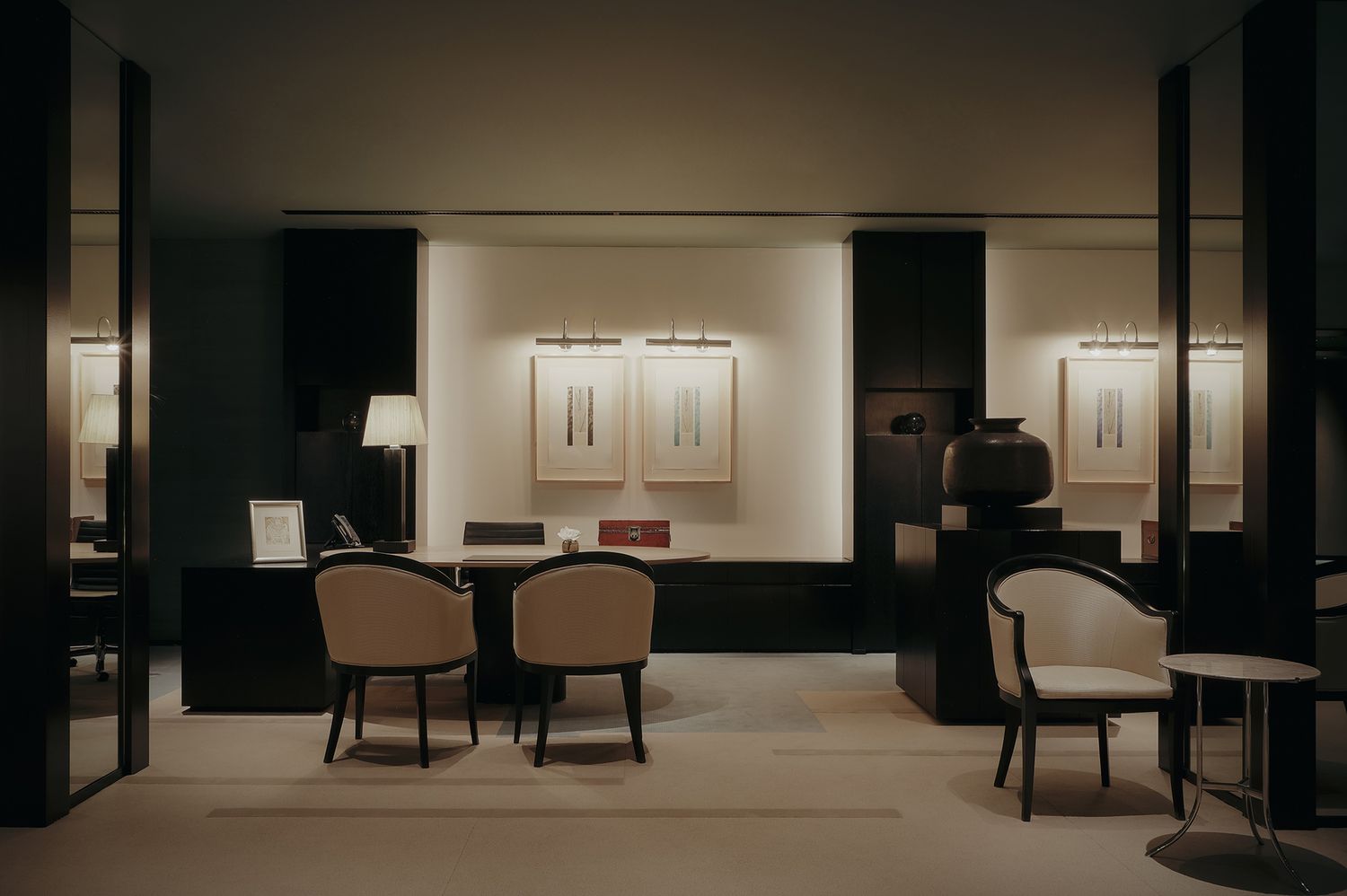
While much of the hotel was stripped bare during the recent renovation, most of it has been carefully restored to its original look, so it lost little of that Lost in Translation movie magic.A workout in the 47th-floor swimming pool and fitness center, with its soaring glass ceilings, is worth it for the sweeping views over Tokyo’s glittering skyline alone.Even if you’re not sleeping over, a live jazz-sountracked martini in the New York Grill remains one of Tokyo’s great hotel rituals.
I could feel my heart rate rising as the elevator whooshed toward the 41st floor of Tokyo’s Shinjuku Park Tower, a trio of hulking granite-grey monoliths designed by the late Japanese starchitect Kenzo Tange. In a few moments, I would step into the refreshed Park Hyatt Tokyo, a landmark hotel that, at the tail end of 2025, emerged from a 19-month, top-to-bottom renovation—the most ambitious in its three-decade history.
Had it been any other five-star stay, I would’ve been looking forward to the changes: a ritzy new bar, perhaps, or refreshed suites that would now feel ahead of their time. Here, however, I quietly hoped that most of it had remained just how I remembered it from previous visits.
Opened in 1994 as the brand’s first outpost in Asia, the Park Hyatt Tokyo is as much a pop culture artifact as it is a place to sleep. Immortalized on the silver screen in Sofia Coppola’s moody cult flick “Lost in Translation” (which I rewatched for the umpteenth time on the flight over), the hotel, with interiors by American designer John Morford, became a portal into a particular Tokyo fantasy, a world of neon haze, Suntory Time, and off-key karaoke leaking from tinny speakers. A version of that Tokyo still exists in pockets, but as the city barrels ahead at breakneck speed, it feels increasingly elusive.
That nostalgia, though, helps explain the excitement around the hotel’s return. Few reopenings have generated as much anticipation—or scrutiny—as this one. “Our guests have a deep emotional connection to the hotel and many have been returning for decades,” Fredrik Harfors, the hotel’s general manager, tells Travel + Leisure. “We felt a strong sense of responsibility to maintain that original design spirit. Maintaining the integrity of key moments in the guest journey was essential.”
For that, Hyatt tapped Sanjit Manku and Patrick Jouin of Paris-based design firm Studio Jouin Manku, who also spearheaded the overhaul of the emblematic La Mamounia hotel in Marrakech. “We approached the project like archaeologists who uncover more than they build,” Manku tells Travel + Leisure of the redesign process. “Inspiration came from the emotional experience the Park Hyatt Tokyo creates. There’s a very specific sensation when one rises above a city that never stops. The horizon expands. The mind becomes quiet. That feeling is universal and timeless. We wanted to support it rather than change it.”
Interior of the Library.
Park Hyatt Tokyo
That became clear the moment the elevator opened to the Peak Lounge, a bamboo garden in the sky under an origami-angled glass ceiling, from where Tokyo’s neon jumble unfurled in all directions. The lounge’s furniture had been softened with curvy sofas and roly-poly club chairs, but that sensation of floating above the city felt familiar. The tightly calibrated welcome felt like a déja-vu, too: from the open sweep of the lounge past the chrome-framed Le Corbusier chairs parked exactly where I remembered them, through the book-lined library, and on to the hushed, windowless reception. Even the slightly unsettling bronzes and jester pencil drawings by Mieko Yuki were still on display. For a hotel that had just been stripped to the bones, remarkably little felt displaced.
The extent of the refurbishment became clear only in my room, which just vaguely resembled the idiosyncratic abodes of the past. Many of Morford’s oddball-but-endearing design details—the spider-legged paper lanterns by the bed, the framed Yoshitaka Echizenya artworks above the bathtubs—were eschewed for a look that played things a little safer. The results are more contemporary and, undeniably, sleeker.
Still, over the weekend I spent here, it was easy to slip back into that familiar, nostalgia-tinged headspace. One evening, I stopped by the New York Bar for drinks and dinner. It was buzzing as ever, and the staff was unfailingly warm (if slightly rusty, which I’m sure will resolve itself once the reopening jitters fade). Most importantly, that old sensation remained: the feeling of being sealed off from Tokyo’s madcap rush, suspended high above it all.
The indoor pool at Club On The Park.
Park Hyatt Tokyo
Somewhere toward the end of “Lost in Translation,” Charlotte (Scarlett Johansson) tells Bob Harris (Bill Murray), “Let’s never come here again, because it will never be as much fun.” I had a similar inkling before checking in, but now I’m not convinced she was right. The Park Hyatt Tokyo may no longer be frozen in its early-2000s moment, but it still occupies a singular place in the city’s hotel scene. It doesn’t rely on the most lavish rooms or a constellation of Michelin stars, but on the increasingly rare ability to shape a mood that few, if any, competitors have managed to replicate.
Read on for my review of the Park Hyatt Tokyo after its landmark renovation.
The Rooms
The guest rooms, now pared back to 171 from the original 177, have received the most noticeable makeover. Thanks to their sky-high perch—all rooms sit on or above the 42nd floor—they’re still among Tokyo’s best when it comes to views, best savored after dark with the curtains wide open.
Inside, the changes aren’t quite night-and-day, but obvious nevertheless. Morford’s signature turquoise-green carpet has been swapped for one a few shades lighter; the straight lines have been smoothed with round edges, and the overall color palette of beiges and soft grays brings the rooms, for better or for worse, closer to the broader Park Hyatt house style. I’m glad at least some of the peculiar decor details were preserved: I spotted one of the original wooden ducks resting on the redesigned coal-black TV and minibar console in my room; the dried magnolia leaves still float above the newly leather-clad headboards, and in the suites’ living rooms, Isamu Noguchi’s original washi lights still cast a soft glow.
“The rooms and suites now embrace life,” Manku says of the changes.. “They offer comfort that is felt in the body. Furniture curves toward you. Light is shaped to reveal rather than to dominate. In a way, the hotel feels more human.”
Bathrooms have been recast as well. The nostalgist in me would have happily kept the brown-orange checkerboard floor tiles, one of those delightfully quirky details that made the old rooms feel so unmistakably of their time. The new design, according to Manku, takes inspiration from the Japanese onsen, with double vanity sinks and a separate, marble and chrome-covered wet room housing a deep bathtub and rain shower. Unlike at other Park Hyatts, where bathrooms come stocked with the brand’s signature Le Labo toiletries, the Tokyo outpost doubled down on its partnership with Aesop (they were the first hotel to distribute the brand in Japan back in the day). You’ll now find Aesop’s bergamot and geranium leaf-scented shampoos and shower gels in all rooms rather than just the suites (as was the case pre-renovation).
Tech, mercifully, has gotten an upgrade too, with USB-C outlets, wireless phone-charging pads, and sleek brushed-copper control panels embedded into the headboard beside the bed. The look is slick, though a subtle backlight on the buttons would have helped me when fumbling for the light switch at 3 a.m.
Food and Drink
The hotel’s bars and restaurants have always been top-notch, so the team was smart not to tinker with them too much. Girandole, long a fixture for date nights and power breakfasts, remains the social centerpiece, but has tightened up the Parisian brasserie vibe with the help of French super-chef Alain Ducasse (it’s now called Girandole by Alain Ducasse). The refreshed menu isn’t overly chi-chi, and includes modern spins on brasserie staples such as vol-au-vents, veloutés, and soufflés (the upside-down cheese soufflé had me contemplating a second order); many made with Japanese produce. The international comfort foods from Girandole’s previous iteration have been rerouted to the in-room dining menu.
Design wise, it’s still a fantasy of deep red velvet, glossy granite, and mirrored walls. Even the black-and-white portraits of European cafes, shot by German photographer Vera Mercer, still peer down from the now-iconic collage lining the double-height ceiling. The biggest change has been the addition of a red Italian marble bar at its center, which doles out martinis and Roederer bubbles at night, and turns into a buffet counter in the morning.
On that note, the breakfast—also served here—remains a standout. Ducasse has introduced a collection of so-called “Écrin,” available from the menu or on the aforementioned buffet counter, where they’re displayed as glass jewel boxes filled with bite-sized creations spanning everything from Kristal caviar to charcuterie and creme caramel. My favorites: the cherry tomatoes with fennel shavings and goat cheese, and the leek mimosa with slivers of pickled red onion.
Most iconic, still, is the New York Grill, the 52nd-floor steakhouse and jazz bar with eye-popping views over virtually all of the city. It played a major role in “Lost in Translation” and has become one of Tokyo’s top-ticket drinking dens since. To my (and everyone’s) relief, even after a floor-to-ceiling renovation, it re-emerged virtually the same, with every black-and-chrome detail, down to the leather-clad Bellini cab chairs, restored to its former glory. Of course, the steak—perfectly marbled rib eye, sirloin, tomahawk, you name it—was fine, but the real highlight was the Hokkaido burrata with persimmon and finger lime, which had me spooning up the cream to the very last drop.
For local flavor, there’s Kozue, chef Nobuhiro Yoshida’s walnut-clad kaiseki kitchen, which has also been left seemingly untouched. It’s a choice spot for sashimi, shabu-shabu, and soba noodles—all served on gorgeous lacquerware and porcelain sourced from around the country.
Accessibility and Sustainability
The hotel offers a few accessible rooms within its 2 Twin Beds City View category. Located on the 42nd through 50th floors, these 538-square-foot guest rooms feature bathrooms with deep soaking tubs and an accessible shower configuration. Most of the public spaces, including all restaurants, have ramps to make them wheelchair accessible, and the hotel allows guide dogs inside.
Calling a hotel of this caliber sustainable would be a stretch, but the Park Hyatt makes eco-moves where possible. They’re big on responsible seafood sourcing, and you’ll find certified sustainably caught fish marked on the menu. Water bottles in the rooms are made from recyclable aluminum, and rooms are almost entirely free of single-use plastic.
Location
The hotel’s perch in the western end of Tokyo’s Shinjuku district has always been a little awkward, especially given that many of its five-star peers stand smack in the middle of some of Tokyo’s buzziest areas. Central Shinjuku, with its top-table restaurants and endless designer boutiques, is a 15-minute stroll away, while getting to mall-packed Shibuya will take you about half-an-hour on foot. The green expanse of Yoyogi Park, a favorite for early-morning runs, sits about 10 minutes from the lobby; and a taxi to Haneda Airport will take you around 40 minutes if you avoid the morning commuter rush.
How to Book
The hotel is part of Hyatt’s World of Hyatt loyalty program, which allows members to earn and redeem points for each stay, and offers additional perks like free upgrades and late checkout, depending on your membership tier.
Nightly rates at Park Hyatt Tokyo start from $1,145.
Every T+L hotel review is written by an editor or reporter who has stayed at the property, and each hotel selected aligns with our core values.
AloJapan.com