
Australia has approved South Korean shipbuilding and defense conglomerate Hanwha Group’s plan to nearly double its stake in Austal, a move that would make Hanwha the Australian company’s largest shareholder and has raised concerns in Japan about protecting sensitive defense technology.
Under the decision, Hanwha will raise its shareholding in Austal from 9.9% to 19.9%. While Hanwha will remain a minority shareholder, the increased stake gives the South Korean group a more influential position in Australia’s largest defense shipbuilder at a time when Austal is poised to play a central role in major naval programs.
In August, the Australian government selected an upgraded version of the Japan Maritime Self-Defense Force’s Mogami-class frigate—known in Tokyo as the “New FFM” and also called as the 06FFM—as the Royal Australian Navy’s next-generation general-purpose frigate.
Against this backdrop, Australia’s approval of Hanwha’s investment has heightened concerns in Japan over whether confidential technical information and intellectual property associated with the frigate program can be adequately safeguarded. Japanese officials have questioned whether there is a risk that sensitive data related to the design and construction of the nation’s latest state-of-the art vessels could be exposed to South Korea, a direct competitor in the global shipbuilding sector.
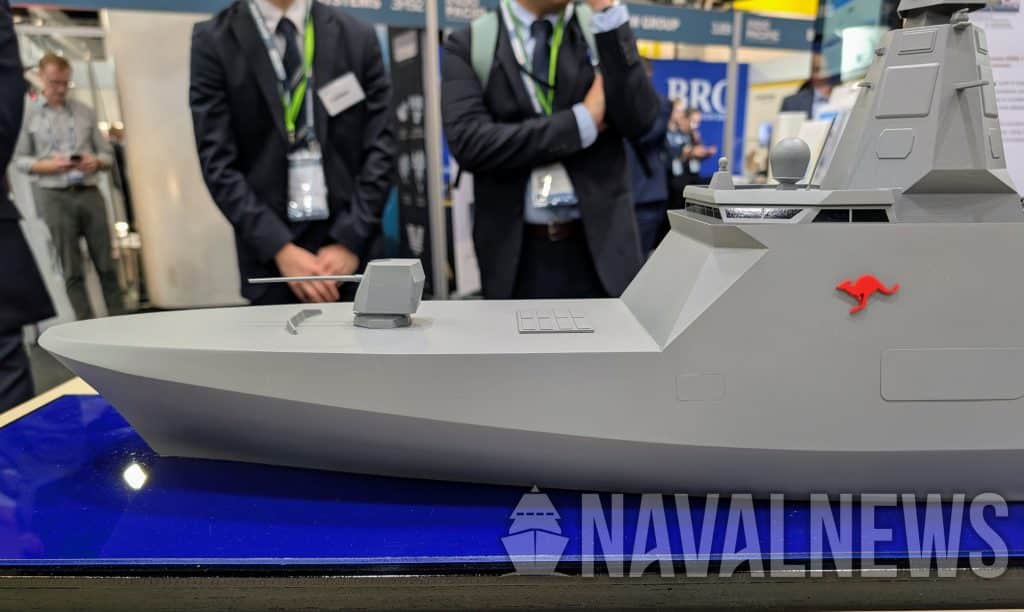
The Royal Australian Navy will buy the first three Upgraded Mogami frigates from Japan, with eight more to be built in Australia. (Credit: Xavier Vavasseur)
The decision has also highlighted the growing complexity of defense-industrial cooperation among close U.S. allies in the Indo-Pacific. Canberra has framed the approval as part of a broader effort to strengthen Australia’s domestic shipbuilding capacity and deepen strategic and industrial ties with South Korea. However, the move has done little to reassure Tokyo, which remains wary of potential implications for the Japan–Australia defense cooperation and the long-term management of shared defense technologies.
On December 12, Australian Treasurer Jim Chalmers approved Hanwha’s proposal to increase its shareholding in Austal from 9.9% to 19.9%, following months of scrutiny by the Foreign Investment Review Board (FIRB). The move makes Hanwha Austal’s largest single shareholder, edging past Tattarang Ventures, the investment arm of billionaire Andrew Forrest, which holds a 19.28% stake. Chalmers emphasized, however, that Hanwha would be barred from increasing its stake beyond 19.9%.
The approval comes with what the government describes as “a number of strict conditions.” These include limits on Hanwha’s access to and storage of sensitive information, as well as stringent criteria for any Hanwha-nominated candidate to Austal’s board. Chalmers said the decision followed a “a thorough and robust process that took account of all the relevant economic, national security and other national interest issues,” adding that the conditions were designed to protect Australia’s sovereign interests in shipbuilding and defense.
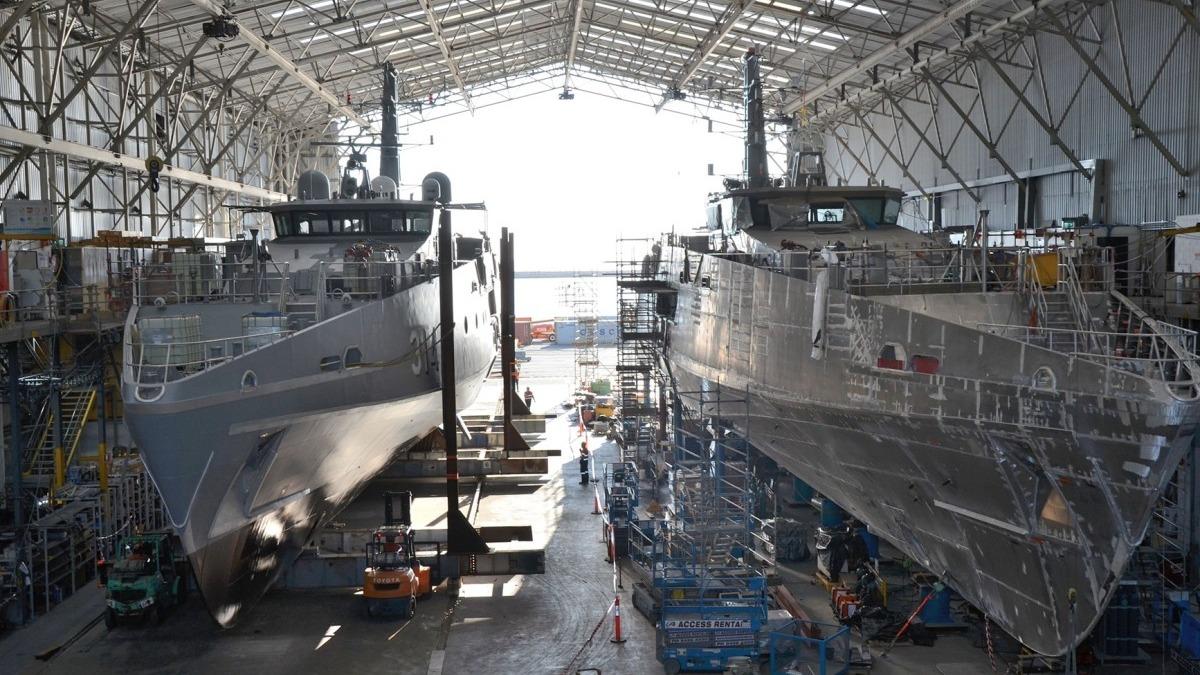
Austal occupies a pivotal position in Australia’s naval plans. In August, the company was designated a “strategic shipbuilder,” effectively making it the frontrunner for major future naval construction projects. That same month, Canberra selected the upgraded Mogami-class frigate—designed by MHI—for the RAN’s new general-purpose frigate fleet. Under the plan, Australia will invest about AU$10 billion to acquire 11 vessels, with the first three built in Japan and the remaining eight to be constructed by Austal at the Henderson shipyard south of Perth in Western Australia next decade.
The arrangement has sharpened unease in Tokyo. Japan and South Korea are direct competitors in the global shipbuilding market, and Japanese officials have raised concerns with Canberra over the risk of intellectual property and technology leakage should a Korean company gain significant influence over the Australian yard tasked with building Japanese-designed warships.
Those concerns have persisted despite assurances from Australia. Speaking at the National Press Club in Canberra on Nov. 12, Japan’s ambassador to Australia, Kazuhiro Suzuki, warned that “If that decision is made, probably there will be some reaction from the Japanese government.” Japanese officials worry that even a minority stake—particularly if coupled with board-level access—could complicate efforts to safeguard sensitive design data and manufacturing know-how associated with the upgraded Mogami-class frigates.
In November, The West Australian reported the Ministry of Defense in Tokyo had on at least two occasions written to the Defence Department in Canberra detailing its unease with the bid made by Hanwha.
Japan’s defense minister Shinjiro Koizumi has declined to elaborate on reports that Tokyo had raised concerns with Canberra over Hanwha’s plan to increase its stake in Austal, citing the sensitivity of bilateral discussions.
Speaking at a press conference on December 9, Koizumi was asked about media reports claiming that Japan had conveyed its concerns during a recent Japan–Australia defense ministers’ meeting regarding Hanwha’s proposed increase in its shareholding in Austal.
Koizumi said he was aware of the reports concerning Hanwha’s plan to raise its stake in Austal, but noted that Japan and Australia were currently engaged in various coordination efforts aimed at concluding relevant contracts within the current fiscal year.
“Given our relationship with the other party, I will refrain from commenting on the details of those exchanges,” Koizumi said.
He added that the Japanese and Australian governments have maintained close communication on the importance of protecting Japan’s technical information and intellectual property, stressing that measures would be firmly implemented to ensure the safeguarding of sensitive technology and intellectual property in connection with the transfer.
Koizumi’s remarks, however, can also be seen as underscoring the need to ensure the protection of Japan’s technical information and intellectual property.
Hanwha’s interest in Austal is part of a broader strategy to expand its footprint in allied defense markets. The group sees Australia as a critical Asia-Pacific hub and already supplies armored vehicles and self-propelled howitzers to the Australian military, supported by a large manufacturing and maintenance facility in the country. Australia now ranks as Hanwha’s critical second-largest overseas defense market after the United States. In 2024, Hanwha also acquired Philly Shipyard for $100 million, becoming the first South Korean company to secure a U.S. shipbuilding base.
For Austal, the immediate impact remains uncertain. CEO Paddy Gregg said in a statement on December 12 that “Treasurer Chalmers has made his decision and we respect that decision.” Austal noted that the company was not involved in negotiations between the government and Hanwha and has yet to see the full details of the conditions imposed. The company said it would “closely review the opportunities and risks” if Hanwha “seek to partner with Austal on various shipbuilding opportunities and seek a board position.”
Ultimately, Australia’s approval highlights the increasingly tangled web of alliance politics, industrial policy, and national security in the Indo-Pacific. As Canberra pushes to build up its naval capabilities and diversify defense partnerships, it must now manage the delicate task of reassuring Japan that its technology will be protected—while convincing South Korea that it is a trusted, long-term partner. How effectively Australia balances those competing expectations may prove just as important as the ships eventually launched from Henderson.
AloJapan.com