
The Japanese anime market has reached the size of over 21 billion dollars in 2023, and continues to expand at a rapid pace. However, as reported by ITmedia Business via Yahoo! Japan News, among all TV anime titles in the Fall/Winter season of 2025, 85.7% were based on existing source material like manga, novels, games and other IPs. On the other hand, original works made up only 14.3%. And while it seems like the market is walking the safe and profitable route – the lack of talented workforce, and with it, frameworks to support the creation of original content – are what could end up setting the industry back in the long run.
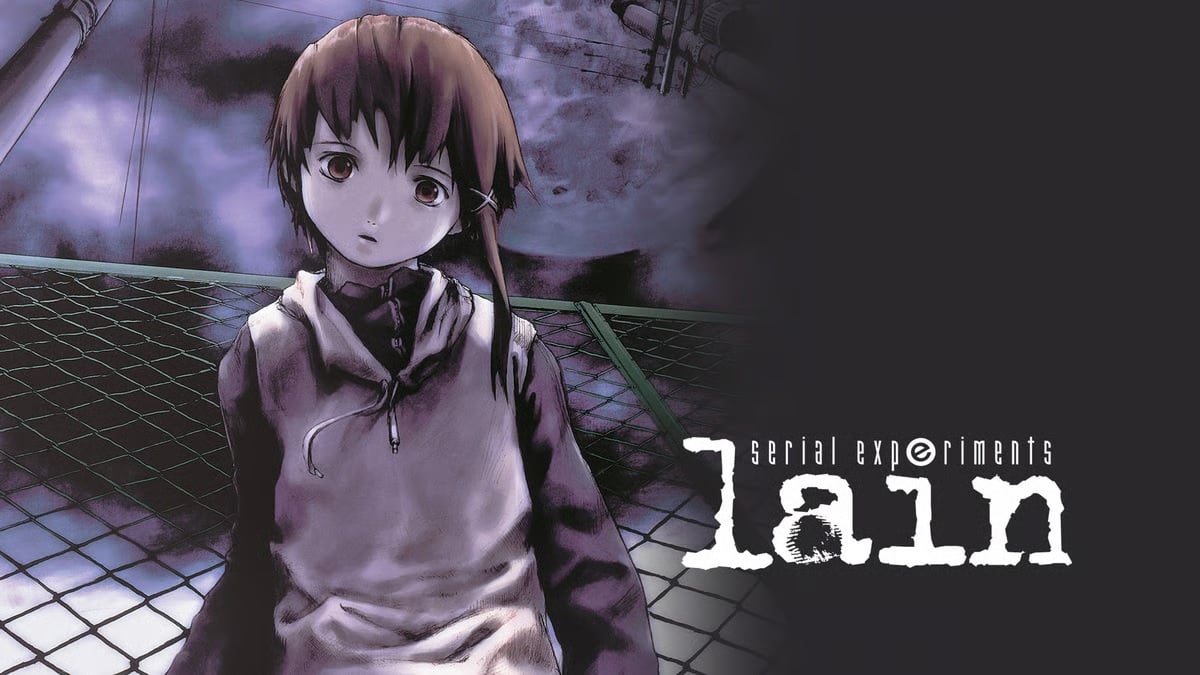
Talking to the outlet, Taro Maki, veteran anime producer known for his work on Tokyo Godfathers, Millenium Actress and Serial Experiments Lain, reflected on the problem, pointing out Japan’s “businessman producer” culture of playing safe as one of the main causes.
As he explains, Japan is witnessing a “lack of producers” who aren’t led by safe business decisions and profitability. “There are many ‘businessman producers,’ and in Japan the system of evaluation basically focuses on minus points, rather than plus points. “In other words, not making any mistakes ends up being their main priority.” Maki explained that, in such an environment, there is no concept of taking on new challenges. “That’s why, as a result, only safe projects and hit genres are the ones circulating,” he added.
As suggested by Maki, this kind of corporate mindset is what might be holding Japan back from creating more original works, and why the industry is oversaturated with “safe” adaptations. “Nowadays, ‘original works’ like manga or novels become hits, and then they get an anime adaptation which would tie into the business of the publisher – almost 90% of the whole industry is built around this kind of framework. This leaves no room for new anime creators to thrive. Ideally, I’d be fine with around 70% of new titles being “safe,” but I think that the remaining 30% should be turning towards taking on new challenges. We can create a ‘healthy’ anime industry only if we manage to find this balance.”
But original films like In This Corner of the World, which Maki personally worked on, didn’t just appear as immediate hits. It took director Sunao Katabuchi around three mid-performing original works before he “hit it big” with In This Corner of the World. Even Hayao Miyazaki had to go through some trial-and-error before producing his first hits, Maki says, and the role of a producer is precisely to create room for those kinds of challenges.
That is why Maki suggests that there should be more spaces that encourage experimentation with unconventional, “difficult-to-understand” anime that doesn’t completely conform to what’s the most profitable. “The truth is, reactions from the audience are not something that can be predicted, and the ‘difficult-to-understand’ works are there precisely to foster an audience. Back in the day, there was a culture of watching ’slightly complex films’ at small arthouse theaters, and that’s what gave us some room to take on new things ourselves. But now, there are no such spaces, and I feel everything has become a bit shallower.”
Related articles:
“No interference in creative works.” Japanese government proposes new policy for anime and game expansion in the West
Western audiences growing tired of “formulaic” Disney titles is what paved the way for Japanese anime, Toei Animation veterans say
AloJapan.com