
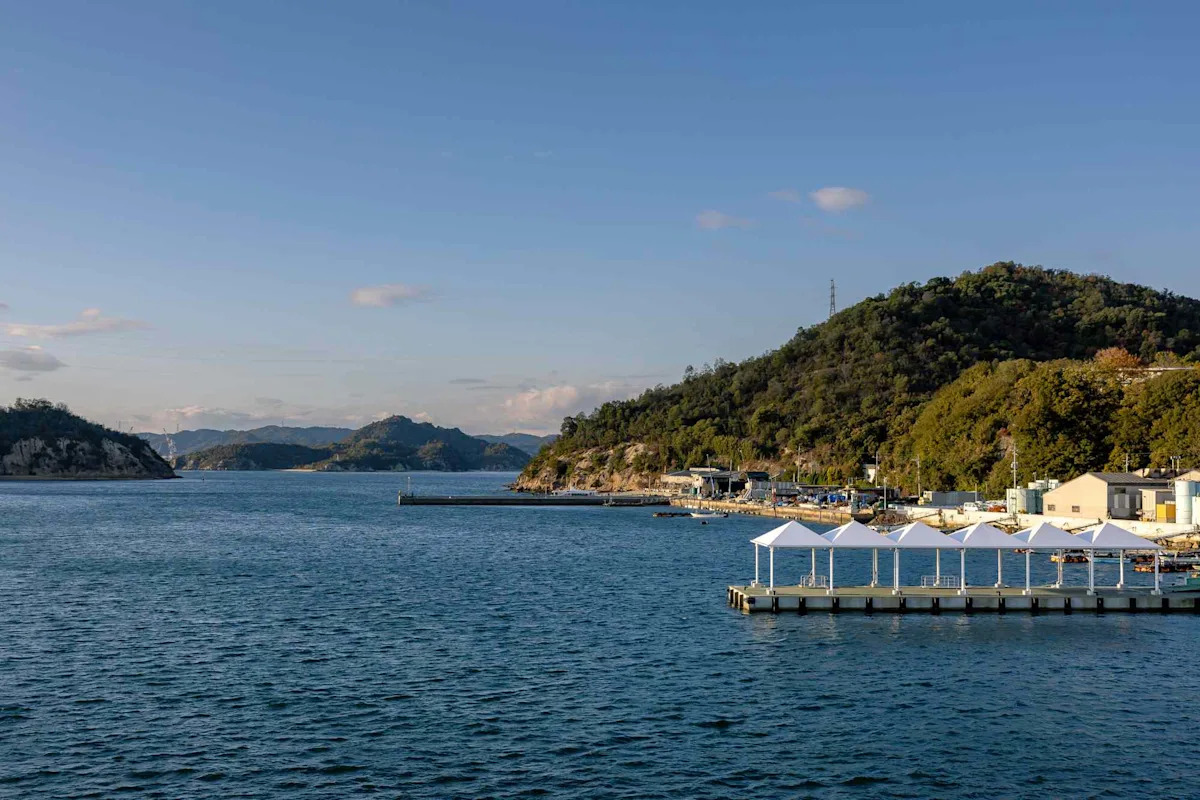
Toward Honshu’s southern tip, Japan’s largest island narrows, yet the landscape remains as dramatic as ever. Down here, the Setouchi region is a tapestry of hazy hills, palm-lined coast, and intriguing islands. And with its mild year-round temperatures, there’s an undeniably Mediterranean feel. But dig a little deeper, and this is far more than just the “Japanese Riviera.” My meander around this region uncovered rich Edo period history, fascinating food, and memorable train journeys.
Here are some of the best things to do in Setouchi.
Best Things to Do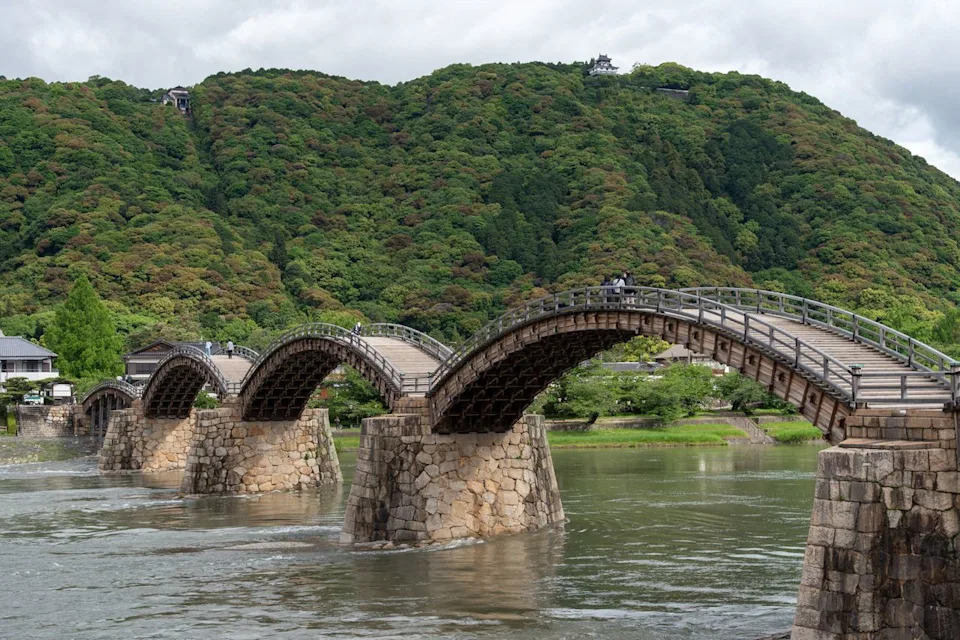
Ta-c/Adobe Stock
People walking over the Kintaikyo Bridge.Take the slow train around the coast.
Running between Onomichi and Hiroshima, the retro-looking etSETOra train is a laid-back delight as it rolls by the calm waters of the Seto Inland Sea for around three hours. While I nursed a local citrus-infused beer and sat on a specially designed window-facing seat, the quaint two-carriage train danced a serpentine route. High cedar-covered mountains, orderly oyster farms, and ghostly offshore islands drifted by. Even seeing the hulking shipbuilding yards at Kure held a strange fascination, as it was here that the Yamato was launched in 1940; upon completion, it was the world’s largest battleship.
Explore Hiroshima’s poignant past.
Speaking of WWII, the train arrives in a Hiroshima that’s much changed since the devastation of the atomic bomb attack on Aug. 6, 1945. Its modern skyline and gregarious okonomiyaki restaurants are vibrant symbols, but the Hiroshima Peace Memorial Park is a well-manicured reminder of the city’s traumatic past.
The Genbaku Dome—the only surviving building from the blast—is one of the most macabre tourist attractions I’ve ever seen, yet its skeletal ruins are oddly beautiful, surrounded by green palms and white azaleas. Take some quiet time to drop by the Memorial Cenotaph, Peace Bell, and the Flame of Peace, alongside a visit to the Hiroshima Peace Memorial Museum. Note, it gets very crowded inside.
Sample local sake at historic breweries.
With its artisanal salt production and busy sake breweries, the small coastal city of Takehara flourished in the Edo period (1603-1868). These days, its quaint historic center still showcases the traditional crafts, and Taketsuru Shuzo has been brewing sake since 1733. Its ancient wooden doors weren’t open when I visited, so I stopped by Fujii Sake Brewery to sample delectable sake. What I wasn’t expecting was the brewery to moonlight as a rustic crafts center. Supported by thick wooden beams, this place is a joyful emporium of colorful ceramics, local honey, and home decorations.
Soak in onsen culture.
Onsen is a way of life in Japan, and further down into Yamaguchi Prefecture, the hidden valley town of Nagato Yumoto Onsen hides one of the prefecture’s oldest and most unique onsens. Said to have been discovered 600 years ago, Nagato Yumoto Onsen’s sleek baths are built directly next to the gushing hot spring water.
With the steam rising and the cleansing sulfuric water washing over me, I entered an almost trance-like state and could see why the owner Otani-san said everyone should take one onsen per day.
Visit epic sights—both natural and human-made.
Yamaguchi’s dense cedar and pine hills are home to some spectacular sights. The wooden, approximately 645-foot Kintaikyo Bridge was originally built in 1673 (but later rebuilt and restored), and its arched design is as compelling as the warm pink cherry blossoms that bloom on either side of the Nishiki River every spring.
Further west, the layered cypress bark roofs of the Rurikoji Temple pagoda, rising five stories, took my breath away. Completed in 1442, it’s one of the most handsome surviving buildings of the Muromachi period. Though perhaps most humbling is Akiyoshido. Hidden beneath Akiyoshidai Quasi-National Park, its hulking pillars, hanging stalactites, and crystalline lakes form Japan’s biggest cave.
Where to Eat and Drink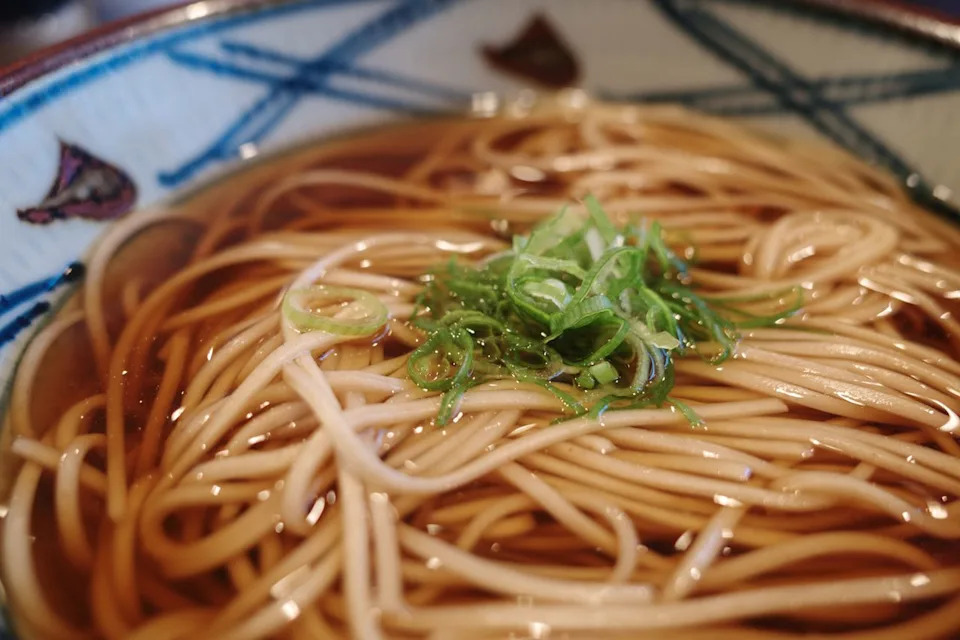
Peeradon Warithkorasuth/Getty Images
A close up of a bowl of soba noodles.Kawara Soba Yanagiya
Served on a piping-hot roof tile, kawara soba is a Yamaguchi specialty, and Kawara Soba Yanagiya in Nagato is a breezy little spot that serves an immaculate rendition. The fluffy green tea soba noodles gradually become crispy on the tile, and lemon and grated radish with chili add a wonderful spice and acidity.
Le Un
French techniques blend splendidly with local Setouchi produce at Le Un, part of the Nipponia Hotel in historic Takehara. Expect fresh sea bream or Togeshita beef to be seasoned in rare Takehara salt and paired with the town’s famous sake.
Where to Stay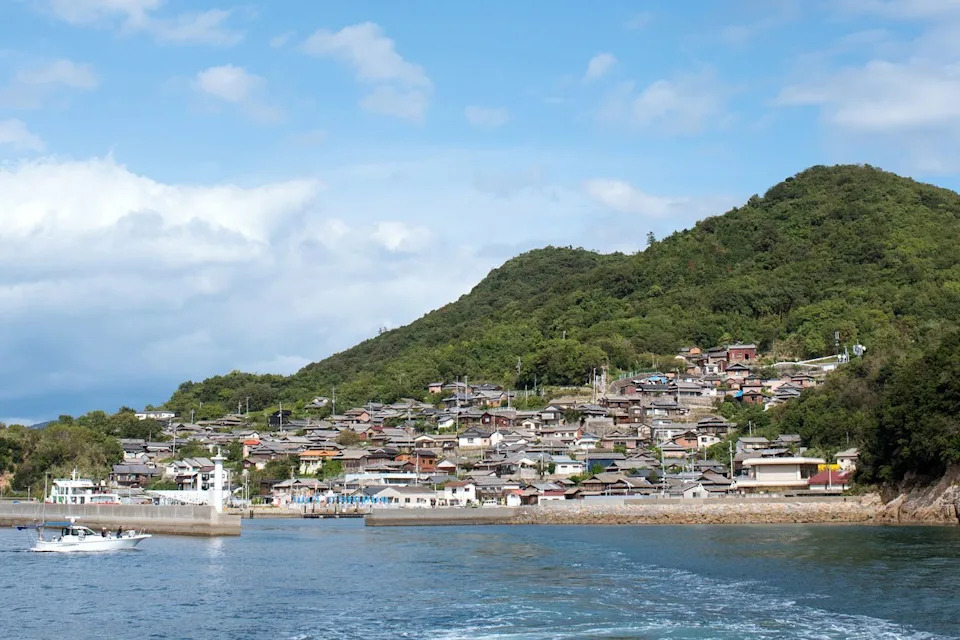
wooooooojpn/Adobe Stock
View of a village in Setouchi, Japan.Simose Art Garden Villa, Otake
These design-led waterfront villas are Japan distilled, with flourishes of understated luxury. Surrounded by a peaceful moat, these wooden modernist villas look out toward cloud-crested islands and sit next to the colorful containers of the Simose Art Museum—winner of the 2024 Prix Versailles and dubbed the “world’s most beautiful museum.”
Sheraton Grand Hiroshima Hotel, Hiroshima
Rising 21 stories above Hiroshima Station, the Sheraton Grand Hiroshima Hotel is a stylish spot in a fine location for traveling the region, with Shinkansen and local trains at your doorstep.
Read the original article on Travel & Leisure
AloJapan.com