
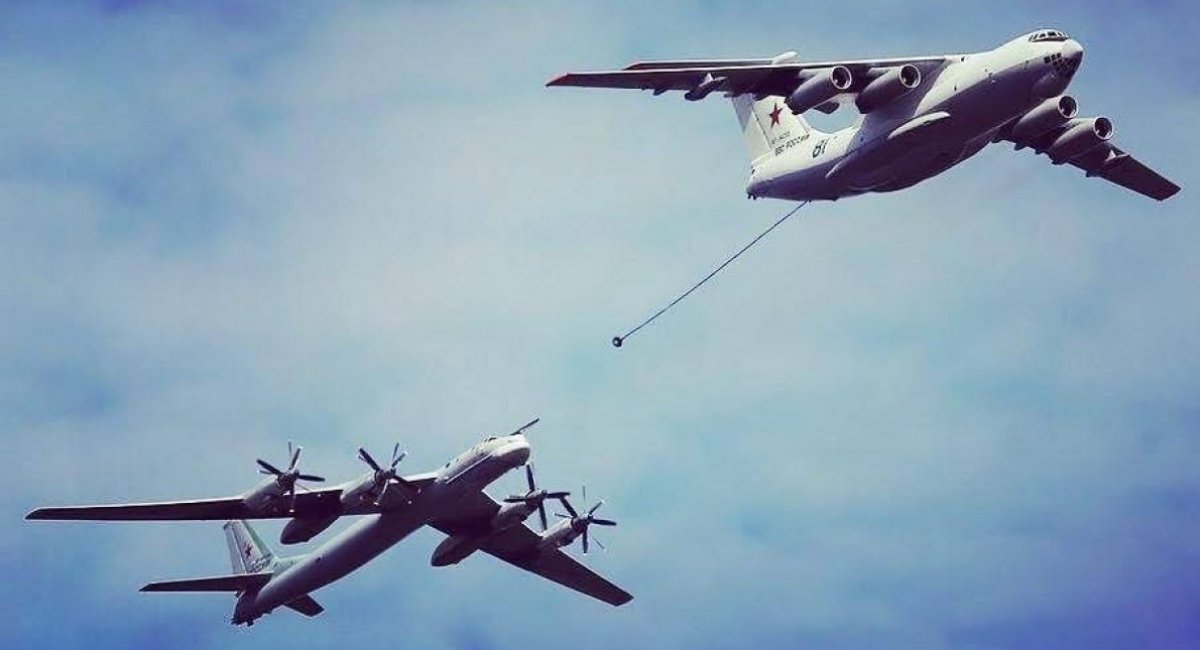
russia’s strategic aviation conducted another provocative demonstration on December 9, 2025, when five Tu-95MS bombers took off from the Ukrainka air base, one of Moscow’s key hubs for long-range aviation. Yet, instead of heading toward Ukraine, the aircraft turned east, flying toward the Japanese archipelago to simulate a strike using Kh-101 cruise missiles. According to AviVector monitoring group, several of these bombers later joined China’s PLA Air Force H-6 bombers for joint patrols over the East China Sea and into the Pacific Ocean.
At first glance, the operation may appear to have little connection to the war in Ukraine, seemingly a one-off display of force in the Asia-Pacific region. However, a deeper examination reveals that these actions form part of a longer russian campaign to pressure Japan, a campaign that directly intersects with Tokyo’s growing role as a political and economic supporter of Ukraine.
Read more: While France Stalls FCAS, General Atomics Offers Germany Its Gambit Fighter Drone
Russia’s coercive signaling toward Japan has been ongoing for more than two years. In March 2023, Moscow sent a pair of Tu-95MS bombers toward Japan during the Japanese prime minister’s visit to Kyiv, a gesture clearly intended as political intimidation. In October 2024, Japan again found itself responding to unpredictable russian bomber maneuvers when four Tu-95MS approached its airspace within what officials described as “pistol-shot distance”.
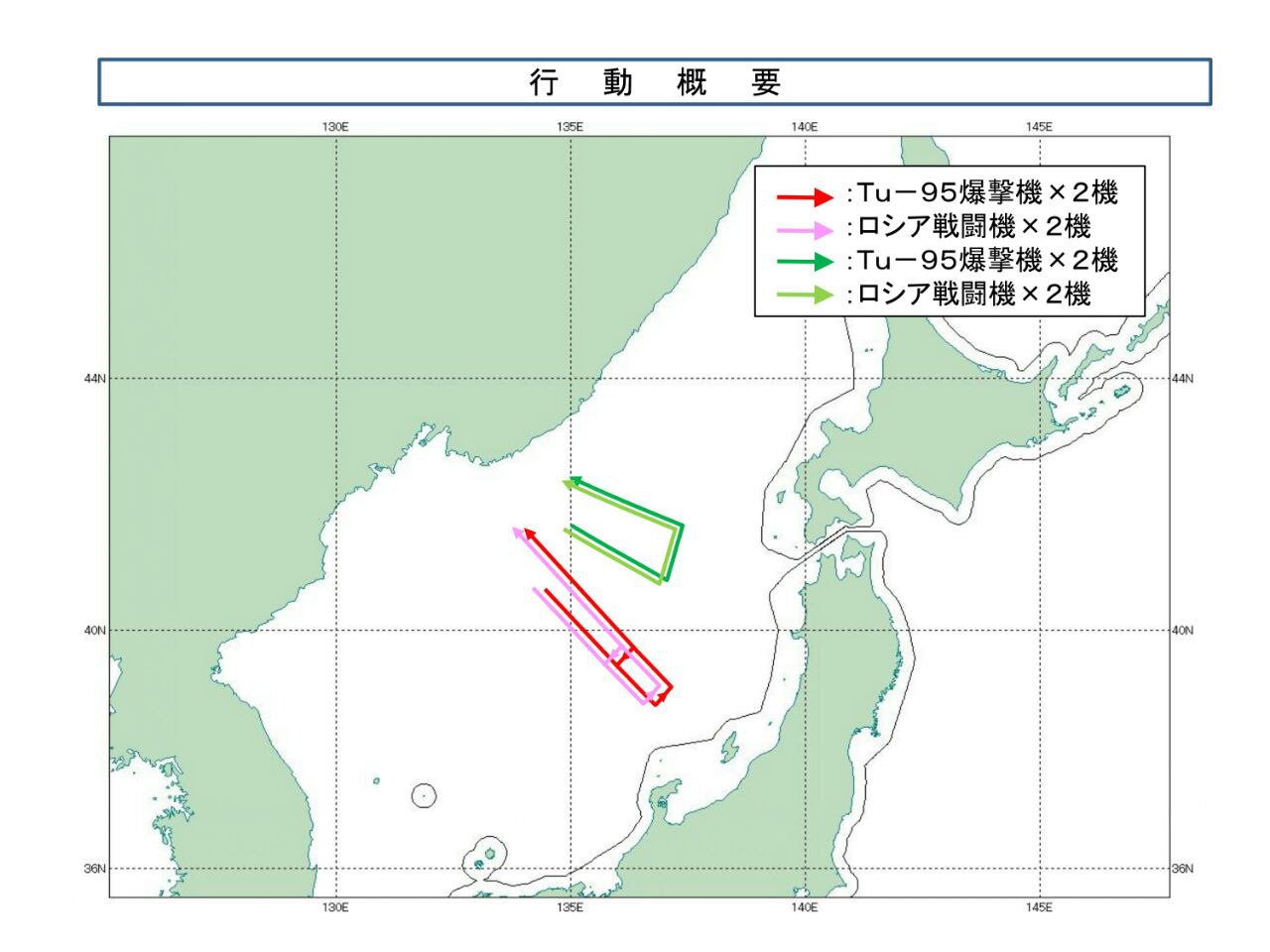 Flight path of russian Tu-95MS aircraft toward the Japanese islands, October 22, 2024 / Photo credit: The Ministry of Defense of Japan
The pressure escalated in August 2025, when russian propagandists openly floated the scenario of a rapid strike campaign against Japanese defensive infrastructure. They claimed such an operation could require 10-12 Kinzhal aeroballistic missiles, around 100 Kalibr sea-launched cruise missiles, and up to 200 Kh-101 air-launched missiles, a level of rhetoric clearly designed to instill fear rather than reflect realistic military capability.
Against this backdrop, the December flight of four Tu-95MS aircraft simulating Kh-101 strikes appears not as an isolated act, but as the culmination of a consistent intimidation strategy. It also highlights the Kremlin’s willingness to stretch its limited fleet of strategic bombers thin, even as russia continues conducting large-scale missile attacks on Ukraine.
This raises the question of why Moscow expends scarce long-range aviation assets on demonstrations abroad while suffering significant operational losses at home. Russia’s aircraft industry cannot replace these losses quickly; after Ukrainian Spiderweb operation on June 1, 2025, the long-range aviation branch of the russian Aerospace Forces lost roughly one-third of its aircraft, prompting speculation that by 2027 the strategic fleet may face severe degradation.
Yet political logic, not military pragmatism, appears to be driving the Kremlin’s decisions. Japan has become an increasingly important partner for Ukraine, providing both economic assistance and political backing. From Moscow’s perspective, pressure on Tokyo, even symbolic pressure, may seem worthwhile, despite the strategic aviation fleet’s dwindling numbers and escalating maintenance challenges.
Read more: Ukraine’s Defense Intelligence Confirms Strike on russian An-26 Aircraft and Two Radars (Video)
AloJapan.com