
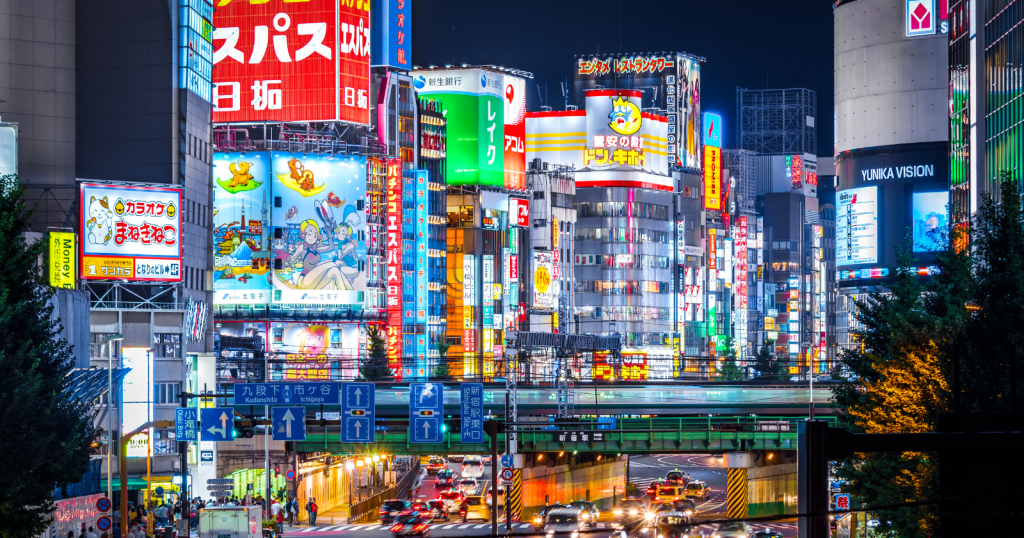
I booked the flight on a Tuesday afternoon, sitting in my cubicle staring at spreadsheets that suddenly felt meaningless. Tokyo. One year. Why not?
That’s how these things happen, right? A moment of clarity, or maybe recklessness, and suddenly you’re googling “how to rent an apartment in Japan” and telling your boss you need to have a conversation.
Everyone had opinions. My parents thought I was throwing away my career. Friends called it brave, which is what people say when they think you’re making a mistake but want to be supportive. My mentor asked if I was running away from something or running toward something.
Honestly? I wasn’t sure.
What I did know was that I needed perspective. I’d spent nearly twenty years in finance, climbing a ladder I wasn’t sure I even wanted to be on anymore. The burnout had been creeping in for years, and I thought distance might help me see my life more clearly.
Tokyo seemed far enough.
I spent months preparing. I studied basic Japanese phrases, researched neighborhoods, joined online expat forums. I read blog posts about culture shock and watched YouTube videos about train etiquette. I thought I was ready.
I wasn’t.
Because here’s what nobody tells you: you can prepare for the practical stuff but not for how profoundly a place will change you. You can’t anticipate which small moments will crack you open or which random Tuesday will make you question everything you thought you knew about yourself.
Living in Tokyo for a year taught me more than any amount of research could have predicted. Some lessons were practical, others existential. All of them mattered.
So if you’re considering a similar leap, or even just curious about what it’s really like, here’s what I wish someone had told me before I boarded that flight with two suitcases and a head full of expectations that would be completely upended.
1) The silence will surprise you more than the noise
Everyone warned me about Tokyo’s sensory overload. The neon lights, the crowded trains, the constant hum of activity. And sure, all of that exists.
But what actually caught me off guard? The silence.
People don’t talk on trains. They don’t chat loudly in restaurants. There’s an unspoken agreement that public space is shared space, and your conversation shouldn’t invade someone else’s bubble.
Coming from a culture where filling silence feels mandatory, this took real adjustment. I remember my first week, standing on a packed morning train surrounded by hundreds of people, and you could hear a pin drop. It felt almost eerie.
Over time, though, I grew to love it. That collective quiet became meditative. My morning runs through Yoyogi Park taught me to appreciate stillness, and Tokyo’s public silence reinforced that same lesson in a completely different context.
The noise exists, but it’s the intentional kind. When Tokyo wants to be loud, it’s loud. When it chooses quiet, everyone respects it.
2) Convenience stores will become your lifeline
Before Tokyo, I thought convenience stores were just places for emergency snacks and overpriced milk.
I was so wrong.
Family Mart, Lawson, 7-Eleven became my grocery store, my bank, my post office, my bill payment center, and my late-night salvation all rolled into one. Open 24/7, these places are everywhere, and they’re actually convenient in ways that completely redefined the word for me.
Need to pay your utilities? Convenience store. Want fresh coffee at 2 AM? Convenience store. Craving a surprisingly decent meal when you’re too tired to cook? You guessed it.
I’d come home from long days of exploring or writing, and knowing I could grab a rice ball, miso soup, and green tea any hour of the night made the city feel less overwhelming. It sounds small, but when you’re navigating a new country, these little reliabilities matter enormously.
Plus, the quality shocked me. We’re not talking stale sandwiches and questionable hot dogs. The food was fresh, often locally sourced, and genuinely tasty.
3) You’ll become obsessed with the train system and also exhausted by it
Tokyo’s train system is a marvel. It’s efficient, clean, and astonishingly punctual. If a train is scheduled for 7:42, it arrives at 7:42.
But here’s what nobody mentions: navigating it will consume more mental energy than you expect.
There are multiple train companies, overlapping lines, express trains that skip your stop, and stations so massive you’ll walk for ten minutes just to transfer lines. I once spent twenty minutes in Shinjuku Station trying to find the right exit, and I’m pretty sure I passed the same vending machine three times.
Learning the system became a personal challenge for me. As someone who spent years analyzing data and solving complex problems in finance, I thought I’d crack it quickly. Nope. It humbled me.
Eventually, though, it clicked. I learned which car to board for the quickest exit, which transfer routes saved time, and which stations to avoid during rush hour. That knowledge felt like unlocking a secret level of the city.
The exhaustion is real, especially during rush hour when you’re packed in like sardwiches. But the pride you feel when you finally master your route? Worth it.
4) The loneliness will sneak up on you
I thought I was prepared for this. I’d read about culture shock. I knew I’d miss home.
What I didn’t anticipate was how isolation could exist even in a city of 14 million people.
Language barriers are real, and they’re more than just not being able to order food. It’s the inability to have spontaneous conversations, to joke with a cashier, to overhear something funny on the train and share a knowing look with a stranger.
I’m naturally analytical and somewhat introverted, so I convinced myself I’d be fine. But humans need connection, and I found myself desperately missing the ease of English, the cultural references I could share, the unspoken understanding that comes from growing up in the same place as the people around you.
There were nights I’d sit in my tiny apartment, eating convenience store dinner, wondering what I was doing there.
The turning point came when I joined a local running group. Trail running had been my therapy for years, and finding people who shared that passion, even across language differences, reminded me that connection doesn’t always need words.
If you’re planning a similar move, my advice? Find your people early. Join something. Anything. Don’t wait for loneliness to become your default state.
5) Your concept of personal space will completely transform
In Tokyo, physical proximity is unavoidable. You’ll be closer to strangers on the train than you’ve been to some people you’ve dated.
Yet somehow, there’s still respect for personal space. It’s just redefined.
People master the art of being physically close while maintaining emotional distance. There’s no eye contact, no acknowledgment of the awkwardness. Everyone just accepts that sometimes you’re going to be pressed against five other humans, and that’s life.
Coming from a culture where we apologize if we accidentally brush someone’s shoulder, this was bizarre at first. I spent my first month on trains rigid with discomfort, hyper-aware of every point of contact.
Then one day, I just relaxed into it. I stopped fighting the proximity and started understanding it differently. Space isn’t always physical. The silence, the averted eyes, the unspoken agreements create a different kind of boundary.
It taught me something valuable about control. I couldn’t control how close people stood to me, but I could control my reaction to it. That lesson extended beyond trains into other areas of my life.
6) The work culture will both impress and horrify you
Japanese work ethic is legendary, and living there, you witness it firsthand.
People stay at the office until their boss leaves. Vacation days go unused. The dedication is extraordinary and, honestly, a bit heartbreaking.
This hit close to home for me. I’d spent nearly two decades in finance, working seventy-hour weeks, sacrificing everything for career advancement. I knew that exhaustion intimately.
Seeing it reflected in Tokyo’s work culture was like looking in a mirror from my past. I’d see salary workers on late trains, practically asleep standing up, and recognize that version of myself at thirty-two.
The difference? Many people I met seemed to accept it as inevitable. The questioning that led me to therapy and eventually a complete career change didn’t seem as common, or at least not as openly discussed.
It made me grateful for the path I’d chosen, even though it meant leaving financial security behind. It also made me sad for the brilliant, hardworking people trapped in a system that values endurance over wellbeing.
If there’s a lesson here, it’s that culture shapes what we accept as normal. Sometimes distance from your own culture helps you see it more clearly.
7) You’ll develop strange new habits without noticing
After a few months, I realized I was bowing. Not consciously, just automatically. Saying thank you to a cashier? Slight bow. Passing someone in a narrow hallway? Tiny bow. Hanging up the phone? Somehow also bowing, even though no one could see me.
I’d also started removing my shoes the second I entered any building, even when it wasn’t required. The slurping of noodles, once something that would’ve bothered me, became normal. I began sorting my trash into about seven different categories without thinking twice.
These tiny adaptations happened below my awareness. My partner Marcus laughed when I came home and told him I’d caught myself bowing to a vending machine.
But that’s how culture works. It seeps in through small cracks. You don’t decide to adapt. You just do.
Some habits stuck even after I left. I still remove my shoes immediately at home. I still feel weird talking loudly in public places. I still bow occasionally, much to the confusion of people around me.
These small changes remind me that we’re always being shaped by our environment. The question is whether we’re conscious of it.
8) Food will be both easier and harder than expected
Being vegan in Tokyo presented interesting challenges.
On one hand, Japanese cuisine has incredible plant-based options. Buddhist temple food is entirely vegetarian. Vegetables are treated with reverence. The quality of produce is stunning.
On the other hand, fish stock (dashi) is in everything. I mean everything. That innocent-looking miso soup? Dashi. The vegetable dish? Probably dashi. Even some rice dishes contain it.
I learned to ask questions, to research extensively, to find the handful of fully vegan restaurants scattered across the city. I discovered that convenience stores actually had decent options if you knew what to look for.
But beyond the vegan challenge, food culture itself was fascinating. The attention to detail, the seasonality, the presentation. Meals weren’t just fuel. They were art, ritual, meditation.
I found myself slowing down when I ate, really tasting things, appreciating the care that went into preparation. This was so different from my old life of scarfing down lunch at my desk between spreadsheets.
Tokyo taught me that how we eat matters as much as what we eat. That mindfulness, that presence, carried over into other parts of my life.
9) You’ll understand “clean” on a completely new level
Tokyo is immaculately clean. Streets are spotless despite a shocking lack of public trash cans. Trains are pristine. Public restrooms are cleaner than some people’s homes.
And yet, there’s no army of cleaners constantly sweeping. It’s collective responsibility and cultural pride.
This blew my mind initially. How does a city of millions stay this clean? The answer: everyone takes responsibility for their own impact.
You carry your trash with you until you find a bin, which might be at a convenience store or back at home. You clean up after yourself at fast food restaurants. You respect shared spaces because they belong to everyone.
It made me acutely aware of my own habits. The casual littering I’d overlooked back home suddenly seemed disrespectful. The expectation that someone else would clean up after me felt entitled.
This collective responsibility extended beyond cleanliness. It was about considering how your actions affected others. It was about being part of a system that functioned because everyone played their part.
I’m not saying the system is perfect, or that this cultural value doesn’t come with its own pressures. But it taught me something about community and shared responsibility that individualistic cultures sometimes miss.
10) Leaving will be harder than arriving
I went to Tokyo thinking it would be an adventure, a year abroad, a line on my resume and a story to tell.
I didn’t expect to leave a piece of myself there.
The city changed me in ways I’m still discovering. It taught me patience through language barriers, humility through cultural differences, and mindfulness through its countless small rituals.
When my year ended and it was time to go home, I felt genuinely torn. Tokyo had challenged every assumption I had about how cities work, how people interact, how life could be structured.
Marcus met me at the airport when I returned, and I remember crying in the car trying to explain what I was feeling. It wasn’t that I wanted to stay in Tokyo forever. It was that I’d grown there, and leaving meant acknowledging that chapter was closing.
The real preparation nobody gives you isn’t about what to pack or which apps to download. It’s the emotional preparation for how much you’ll change, how differently you’ll see the world, and how bittersweet it feels when something transformative ends.
Tokyo gave me perspective I desperately needed. It showed me that the corporate grind I’d escaped wasn’t the only way to overwork yourself—every culture has its own version of burnout. It taught me to find stillness in unlikely places. It reminded me that discomfort is often where growth happens.
Would I do it again? Absolutely. Would I do it differently? Probably. But that’s the thing about transformative experiences. You can’t know what they’ll teach you until you’re in them, fumbling through train stations and bowing at vending machines and discovering that you’re capable of more adaptation than you ever imagined.
What’s Your Plant-Powered Archetype?
Ever wonder what your everyday habits say about your deeper purpose—and how they ripple out to impact the planet?
This 90-second quiz reveals the plant-powered role you’re here to play, and the tiny shift that makes it even more powerful.
12 fun questions. Instant results. Surprisingly accurate.
AloJapan.com