
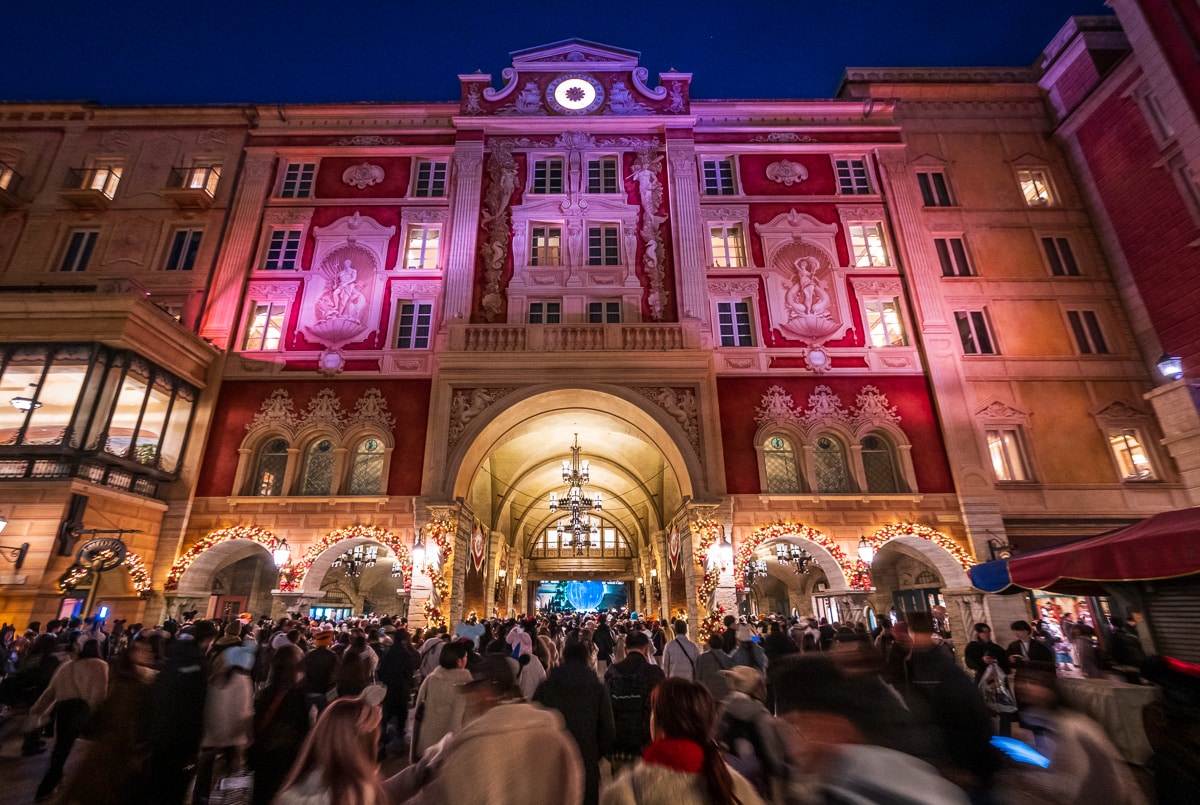
We just got back from a week at Tokyo Disney Resort, and have a lot of thoughts to share on our experiences–both good and bad. For now, we wanted to start with a simple ‘quick hit,’ which revolves around wait times and crowd calendars.
Although Tokyo Disneyland and DisneySea are obviously the emphasis of this blog, our Japan trip actually revolved around fall colors season in Kyoto. That’s our favorite city in the world and our favorite time of year there. Even as it faces record visitor numbers, we’ve spent a ton of time there over the years and are pretty adept at beating the crowds there. (See this on our sister site: Kyoto Is Crowded. Here’s How You Can Avoid Japan’s Infamous Overtourism!)
Because our trip was dictated by the timing of fall colors in Kyoto and our dates were otherwise boxed in, we didn’t have a ton of flexibility over our days at Tokyo Disney Resort. We did, however, have plenty of them. That ended up being a good thing, as the crowd levels we encountered ran the gamut, from light crowds to incredible crowds. And that’s by TDR standards, where light is busier than recent holidays at Walt Disney World and incredible is worse than the week between Christmas and New Year’s Eve.
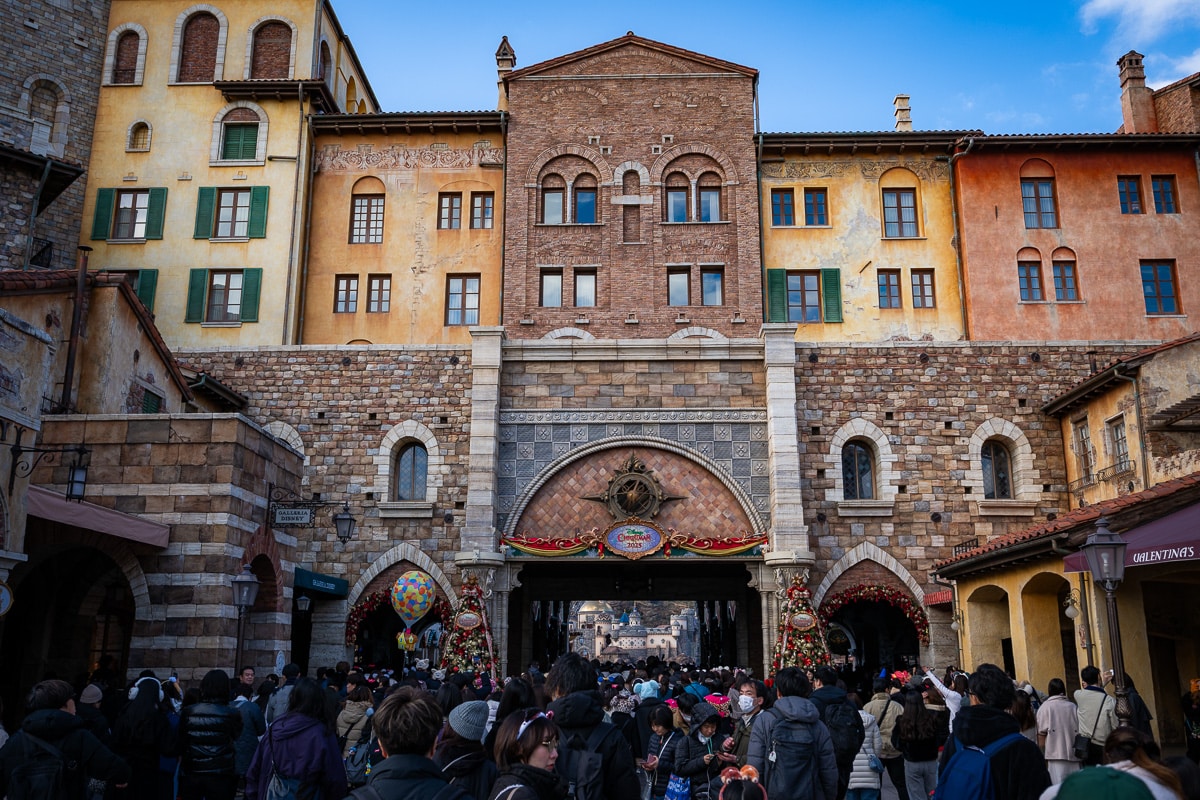
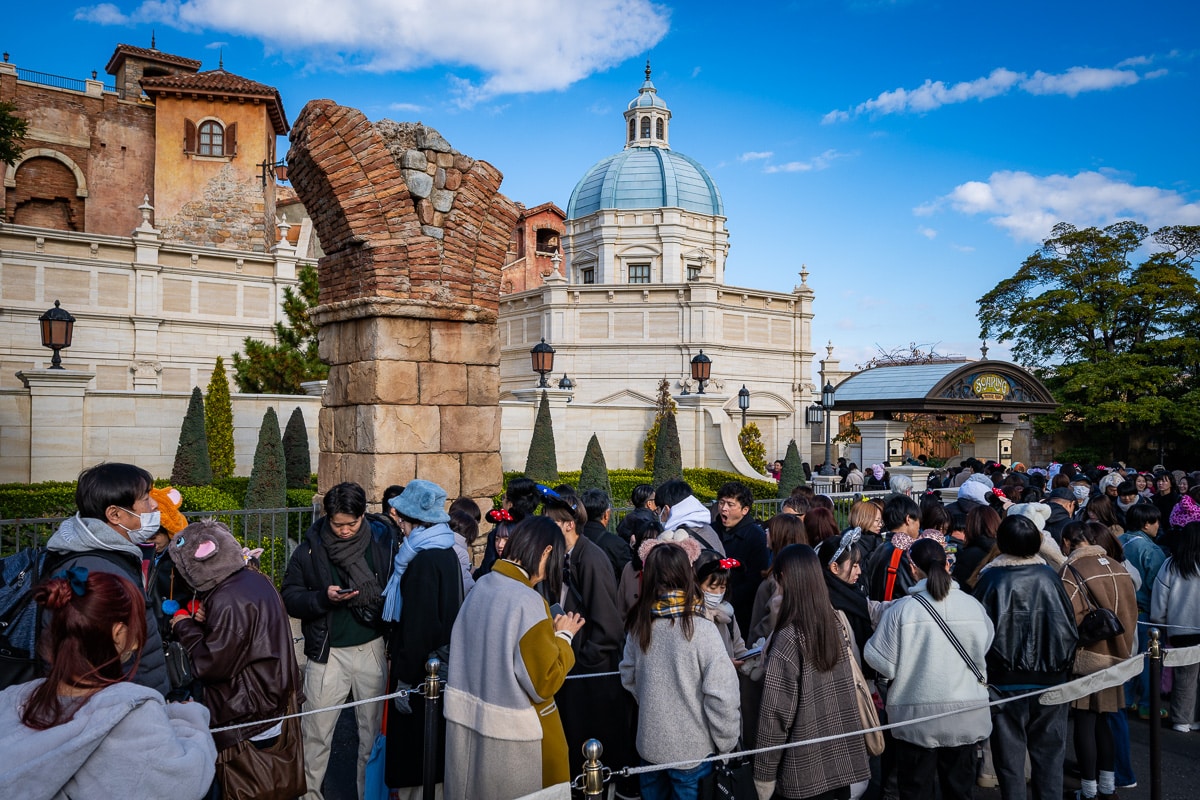
Even as a seasoned visitor, the incredible crowds day ended up being quite the test of our savvy strategy. It was a sold out day at Tokyo DisneySea with 10/10 crowd levels and average wait time of 67 minutes, making it one of the ~5 busiest days of the year at Tokyo Disney Resort.
The day had easily the worst wait times we’ve ever encountered at Tokyo DisneySea, and we were Annual Passholders back when that was a thing (albeit ones who avoided weekends at all costs). We also did Tokyo Disneyland on a crowded day, which was busier than we’d experienced there in a while–but the most notable aspect of that was a 40 minute wait time for Jingle Bell Jamboree (Country Bear Christmas). It was not bad-bad like TDS.
I’ll be honest with you: this 10/10 day at TDS was a humbling experience. As someone who prides myself in putting together plans for helping others beat the crowds, has done DisneySea tons of times, and is a parent to a toddler (meaning we’re more interested in lower-profile attractions and less so in headliners), I figured we’d be able to “beat” Tokyo DisneySea even on a busy day. We knew exactly what we were getting ourselves into–and in fact, did have a fun day–but we underestimated just how much worse incredible crowds are than “only” heavy crowds. Whoops.
With that said, I’m actually pleased that we had that whole range of crowd experiences.
While it would be preferable from a personal perspective to only experience low crowds, it would be a professional dereliction of duty. We write a website offering planning advice for Tokyo Disney Resort and need to understand potential outcomes in order to help people plan around and avoid them.
I also wanted to see just how much of last year’s post, Why Disney’s #1 Park is Getting 1-Star Reviews, still holds up. The answer, unfortunately, is too much. Thankfully, not all of that holds up–not even on busier days.
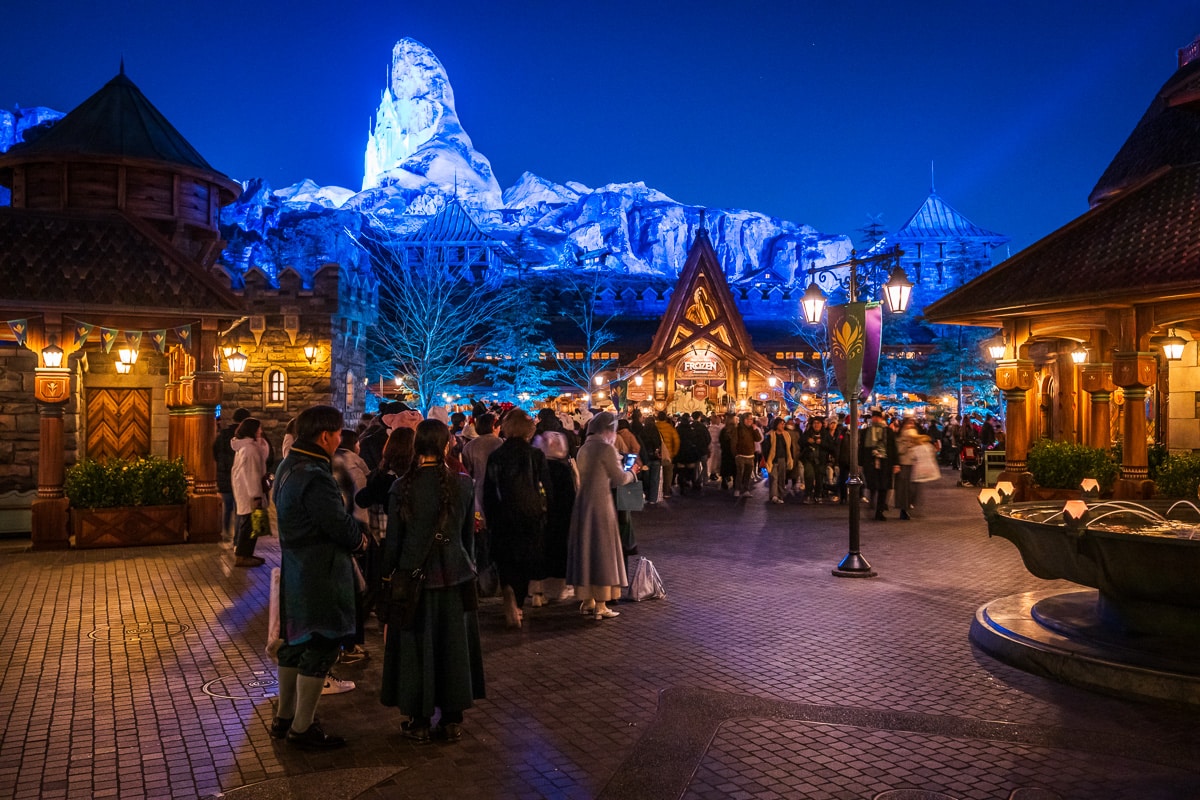
It’s also worth emphasizing that not every day has heavy or incredible crowds at Tokyo DisneySea. We also visited on a day that was “only” crowded, and that was so much more pleasant. It was like time-traveling to the “old” TDS, plus Fantasy Springs and minus the many things that’ll been cut since 2019.
If you’re planning a TDR trip and have heard a range of reports about crowds, our dramatically different experiences in the span of less than a week should illustrate that they’re all actual possibilities. That the negative are not fear-mongering, nor are the positive viewing the park through rose-colored glasses. Both outcomes are real, and often, the result of choosing wisely vs. poorly when it comes to visit dates within the same timeframe.
Against that backdrop, I wanted to drop a ‘plug’ for the Tokyo Disney Resort crowd calendar we’ve come to rely on more often now, and why it’s taken the lead as our #1 pick…
Longtime readers might know that for over a decade, we’ve recommended AOKSoft’s Tokyo Disney Crowd Calendar in our Guide to Tokyo Disney Resort Crowd Calendars and other planning posts.
We’re not suddenly turning on the AOKSoft TDR Crowd Calendar. To the contrary, we still have found it to be largely accurate. But there’s also the reality that it’s not particularly intuitive or user-friendly to English-speaking visitors, and we’ve previously spent a lot of time explaining how it works.
This would be fine if it were, without question, the most accurate crowd calendar–a little bit of a learning curve is fine for such an important subject, as choosing a day with even one level of lower crowds makes that much of a difference. However, we found greater success with a different crowd calendar this trip.
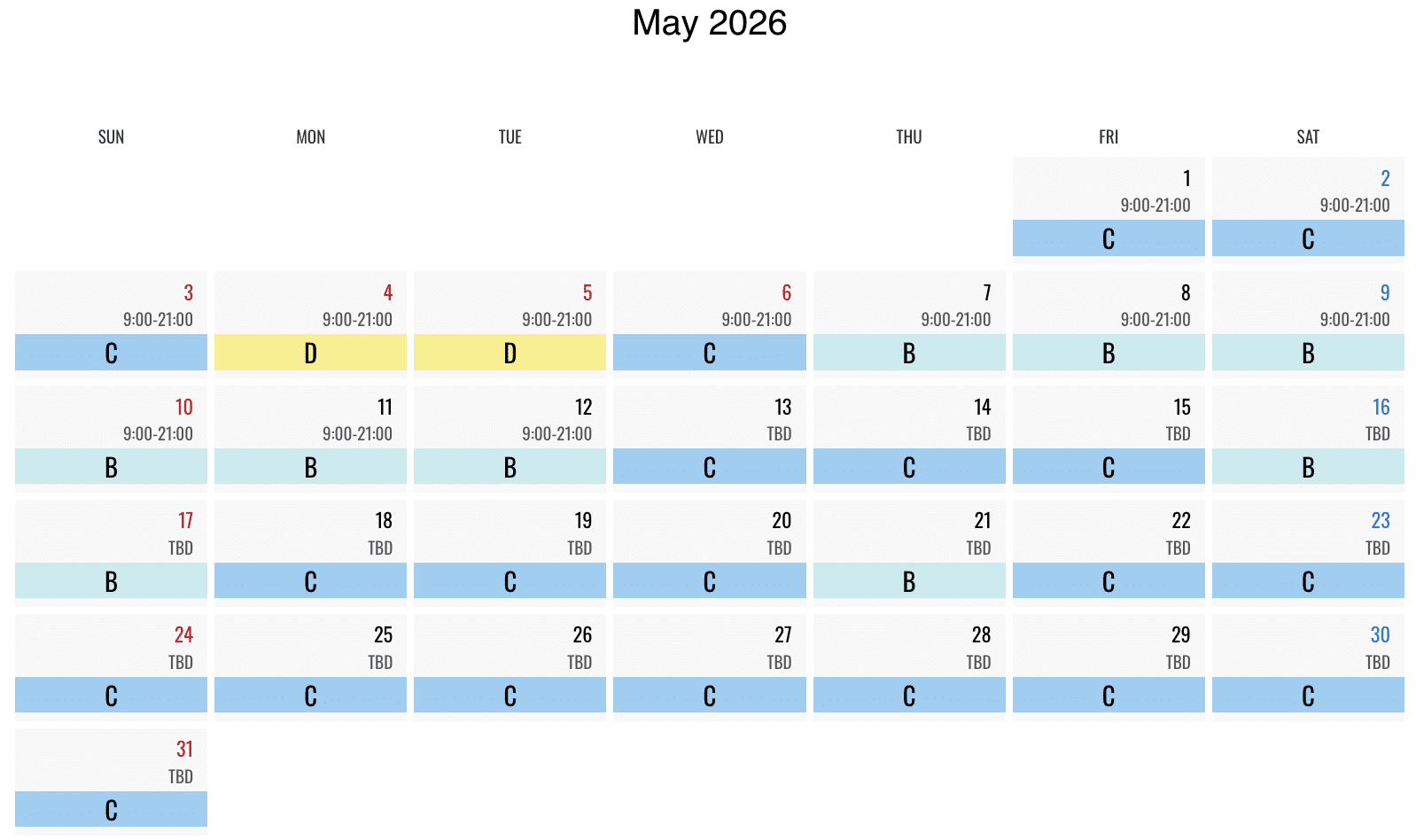
The one we used to greater success this go-round is the Kidokoma or “Disney Real” Tokyo Disney Resort Crowd Calendar.
This is actually a crowd calendar we started watching after our visit last Christmas, and began recommending earlier this year. Based on our observations from afar, it seemed like the Kidokoma crowd calendar often nailed crowd levels, including more unlikely ones.
As noted in our last TDR crowds update, Kidokoma has become my favorite of the newer generation of crowd calendars. It’s the only one of the bunch that’s Japanese and seems to be based on more than just past wait times data.
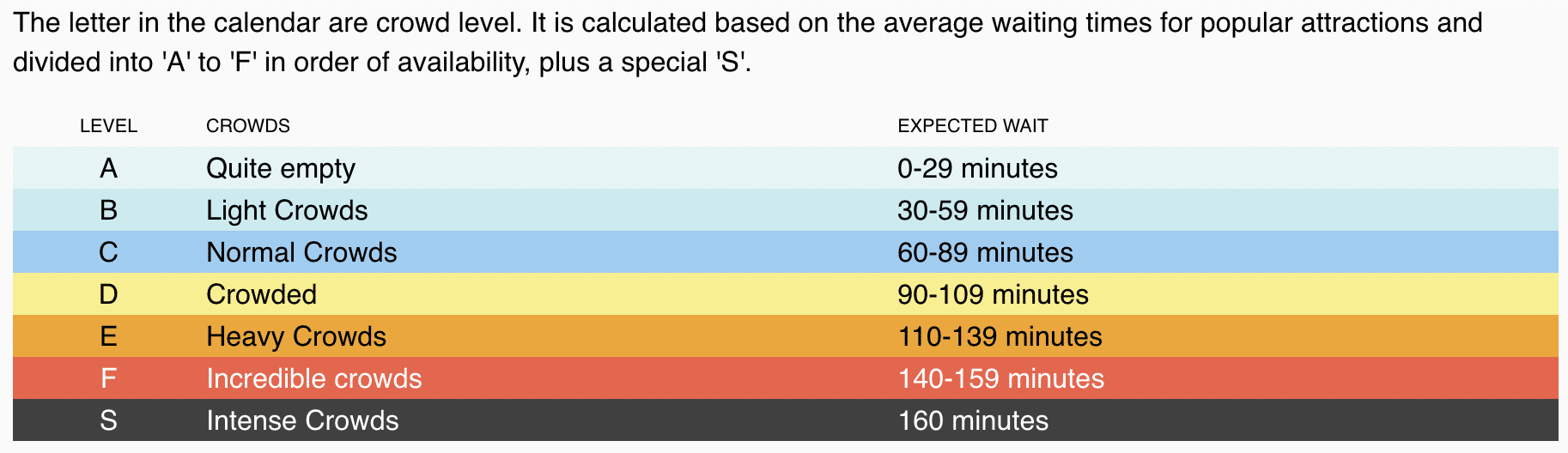
Don’t get me wrong–past data is valuable and the single best predictor of future crowds. But there’s more to it than that, and the English TDR crowd calendars are pure data models that do not seem to adjust for Asian holidays, pricing, or anything else.
I appreciate that the Kidokoma Tokyo Disney Resort crowd calendars publish their accuracy, which is great for transparency. They claim a 90% accuracy rate, which is pretty impressive.
I also prefer the scale used by Kidokoma. Even though it’s industry standard to use 1/10 to 10/10 for crowd levels, I don’t love that approach for Walt Disney World or Disneyland for a number of reasons beyond the scope of this post. Having 6 levels, plus a special tier for especially atrocious crowds strikes me as logical (especially the latter part–we’ve long commented that New Year’s week is so divorced from the rest of the year at WDW that there should be a distinct 10+/10 level).
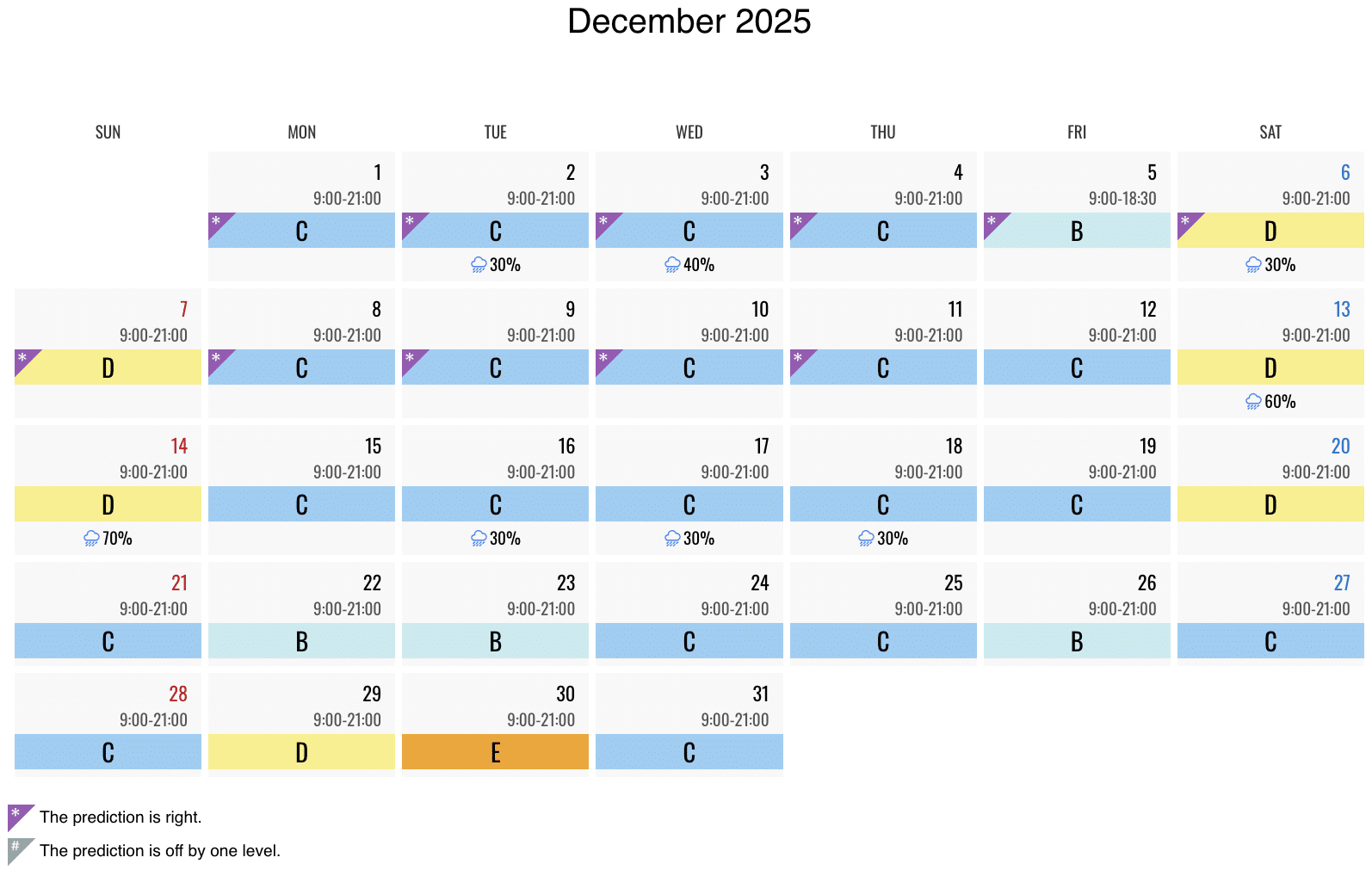
What really sold me on Kidokoma was their prediction for December 5th at Tokyo Disneyland.
This was the only day of our trip that had light crowds forecast for either park, and was a seemingly inexplicable prediction for a random Friday. It was a date that, intuitively, I would’ve expected to be as busy (if not busier!) than the Tuesday through Thursday before it.
And yet, Kidokoma accurately predicted an island of light crowds amidst a sea of above-average ones. The difference was actually quite remarkable, with every headliner except Enchanted Tale of Beauty and the Beast posting walk-on wait times at some point during the day. Pooh’s Hunny Hunt was 8 minutes for the last hour-plus, Splash Mountain was 5 minutes, and even the Happy Ride with Baymax was down to 15 minutes. All huge wins to what we experienced other days at TDL!
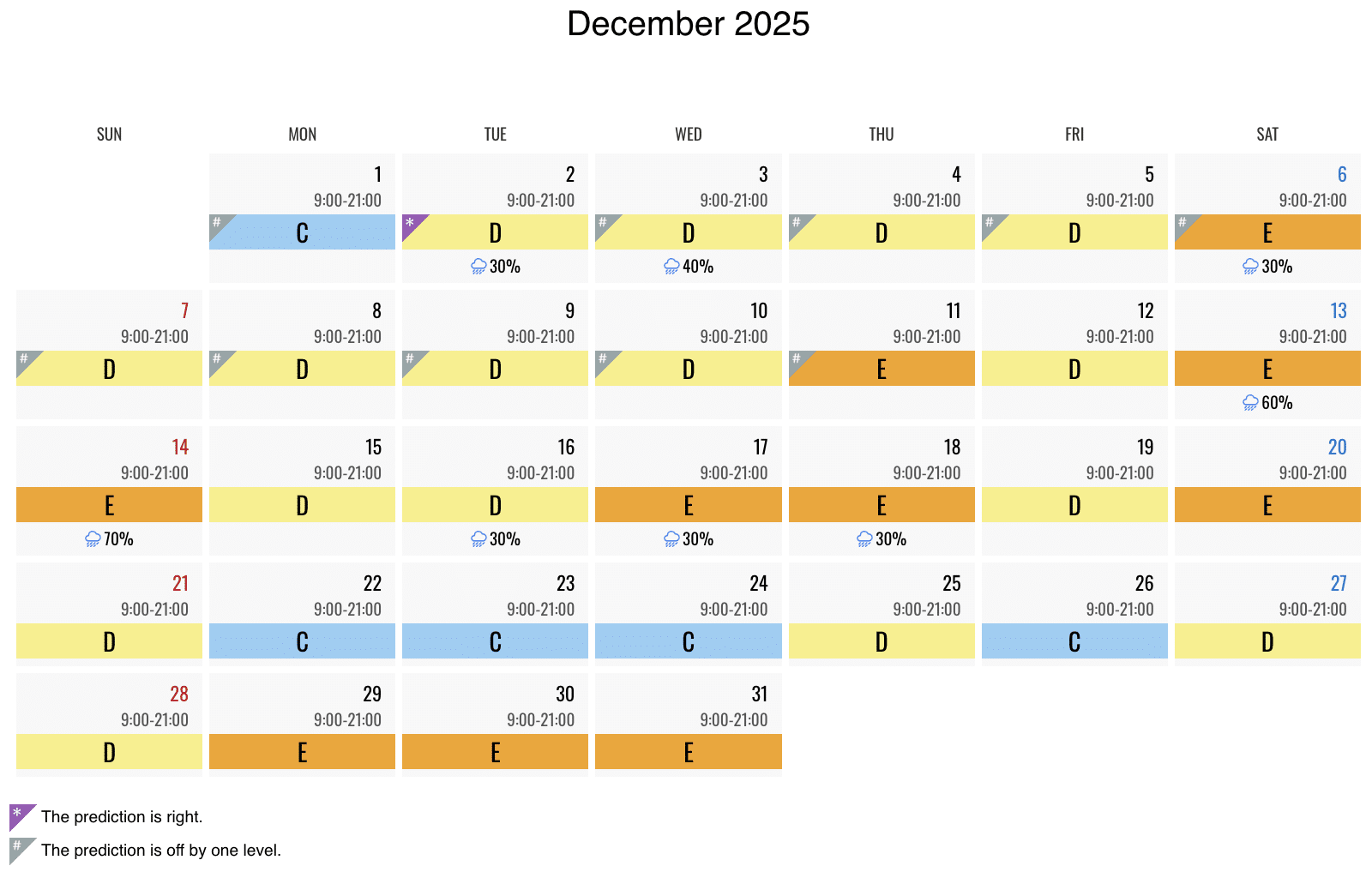
From the outside looking in, I have absolutely no clue what Kidokoma saw in that Friday to lead to the lower crowd level prediction. Whatever it was, it presumably was not obvious, as the other crowd calendars seem to have missed it.
With that said, I will note that Kidokoma’s crowd calendar for Tokyo DisneySea was off by one level for pretty much the duration of our visit. So it’s not as if their prediction track record is flawless.
However, I will also note that this is still more accurate than the other crowd calendars we consulted, and none of those have the same transparency about their results. Given the totality of the circumstances, being one level off doesn’t strike me as that bad.
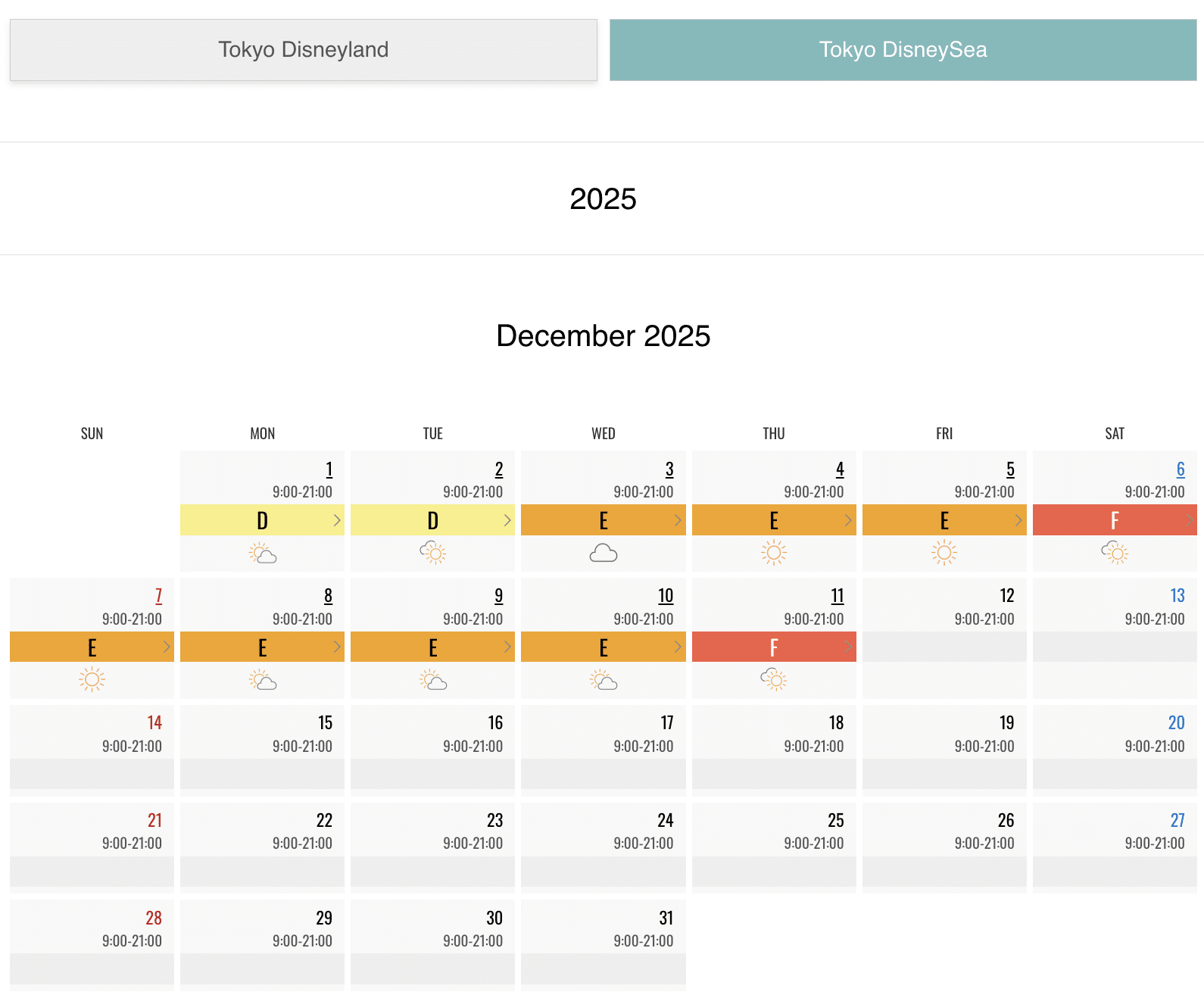
Ultimately, that’s all this post boils down to–a recommendation to rely on the Kidokoma Tokyo Disney Resort crowd calendars. While we have a lot to share from our recent trip once I have a chance to dig out and start editing photos (I’m thinking of writing up the 10/10 day at TDS next, assuming there’s interest?), this is the most immediate and impactful piece of actionable advice for those visiting soon.
If you have the flexibility of choosing park days on your upcoming trip to Japan, go with the ones they’re predicting will be lower. Honestly, you might want to start by choosing when to visit Japan in the first place based on Kidokoma. While we love fall colors and sakura season in Kyoto, I think that’s what we might do in the future. May is looking awfully good right about now!
Planning a trip to Tokyo Disney Resort? For comprehensive advice, the best place to start is our Tokyo Disneyland & DisneySea Trip Planning Guide! For more specifics, our TDR Hotel Rankings & Reviews page covers accommodations. Our Restaurant Reviews detail where to dine & snack. To save money on tickets or determine which type to buy, read our Tips for Saving Money post. Our What to Pack for Disney post takes a unique look at clever items to take. Venturing elsewhere in Japan? Consult our Ultimate Guide to Kyoto, Japan and City Guide to Tokyo, Japan.
Your Thoughts
Have you used the Kidokoma Tokyo Disneyland Crowd Calendar to plan your park days? Did you find it relatively accurate? Experienced heavy or worse crowds at Tokyo DisneySea since the opening of Fantasy Springs? Do you agree or disagree with our take on Tokyo Disney Resort crowd levels? Any questions? Hearing your feedback–even when you disagree with us–is both interesting to us and helpful to other readers, so please share your thoughts below in the comments!
Get our free newsletter!
Sign up for news, Disney deals & free planning tips
AloJapan.com